
Heat-Induced Hives: What Causes Them and How to Manage Them
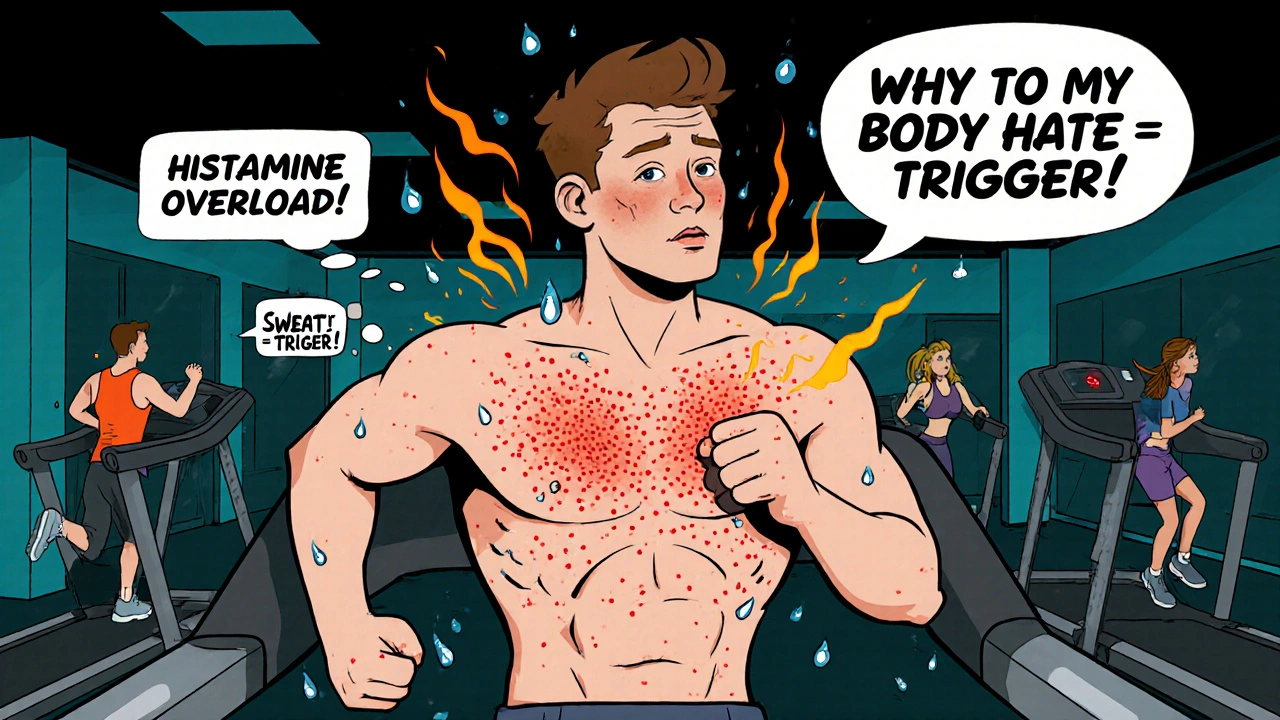
When your skin breaks out in itchy red bumps after a hot shower, a workout, or even a sunny day, you might be dealing with heat-induced hives, a skin reaction triggered by a rise in body temperature. Also known as cholinergic urticaria, this isn’t just a rash—it’s your body’s nervous system overreacting to sweat or warmth. Unlike regular allergies, you’re not reacting to pollen or food. You’re reacting to your own body heat.
This happens because rising body temperature causes mast cells in your skin to release histamine, the same chemical that triggers allergic reactions. The result? Tiny, burning, raised welts that show up within minutes of getting hot. They often appear on your chest, neck, arms, or back—areas where sweat collects or clothing rubs. Some people get them after exercise, others after a hot bath, or even from eating spicy food. The trigger isn’t always obvious, but the pattern is: heat leads to hives.
What makes this tricky is that most people assume hives mean an allergy to something external. But with heat-induced hives, the trigger is internal. That’s why antihistamines like cetirizine or loratadine often help—they block the histamine response. But they don’t stop the root cause. The real fix? Managing your body’s temperature before it spikes. Wear loose, breathable clothes. Avoid intense workouts in hot rooms. Take cooler showers. Cool down slowly after exercise. These aren’t just tips—they’re proven ways to reduce flare-ups.
Some people with this condition also have other related skin or immune responses. For example, if you get heat hives, you might also notice reactions to stress, tight clothing, or even sudden temperature shifts. It’s not always just about the heat—it’s about how your body handles change. And while it’s rarely dangerous, it can be frustratingly persistent. If you’ve tried avoiding heat and still get outbreaks, you might need to look at other factors like medications you’re taking, underlying thyroid issues, or even how your nervous system responds to stress.
What you’ll find below are real, practical guides from people who’ve been there. You’ll see how others manage flare-ups with lifestyle tweaks, what meds actually work (and which ones don’t), and how to tell if what you’re experiencing is truly heat-induced hives—or something else. No guesswork. No jargon. Just clear, tested advice that fits into your daily life.
Cholinergic Urticaria: How Heat-Induced Hives Work and How to Prevent Them
