When you think of a pharmacy, you probably picture a neighborhood store handing out pills for high blood pressure or antibiotics. But there’s another kind of pharmacy - one that deals with drugs costing thousands of dollars a month, stored in refrigerators, and given through infusions or injections. This is specialty pharmacy. It’s not just about filling prescriptions. It’s about managing complex illnesses like cancer, multiple sclerosis, and hepatitis C, where every detail matters: storage, timing, patient monitoring, and even how the pill looks.
Then there’s generics. You’ve heard the pitch: same active ingredient, way cheaper. But in specialty pharmacy, that simple idea gets messy. Not all generics are created equal. Some are safe to switch. Others? Not so much. And when the drug is a biologic - a living, complex molecule made from cells - the generic version isn’t even called a generic. It’s a biosimilar. And that changes everything.
What Makes Specialty Drugs Different?
Specialty medications aren’t just expensive. They’re complicated. Many are biologics, meaning they’re made from living organisms - not chemicals in a lab. That makes them harder to copy. They often need refrigeration between 2°C and 8°C. Some must be given by IV in a clinic. Others require daily injections with strict timing. Patients might need weekly blood tests to check drug levels or liver function.
These drugs treat chronic, life-altering conditions. A patient with rheumatoid arthritis might be on a biologic that costs $80,000 a year. A single vial of a specialty drug can cost more than a monthly mortgage. And unlike a statin you pick up at CVS, specialty drugs rarely come with a simple refill. They need prior authorization, step therapy, and ongoing monitoring by a pharmacist trained in disease management.
The American Society of Health-System Pharmacists says specialty drugs make up just 2% of prescriptions but over half of all drug spending in the U.S. That’s because each patient on one of these drugs often needs a whole support team: nurses, pharmacists, social workers, and insurance liaisons.
Generics in Specialty Pharmacy: The Reality
Traditional generics are cheap, reliable, and widely used. In community pharmacies, over 90% of prescriptions are filled with generics. But in specialty pharmacy? That number is under 15%. Why? Because most specialty drugs don’t have generics - yet.
When a generic does become available, the savings can be huge. Take Copaxone, a drug for multiple sclerosis. Its brand version cost about $78,000 a year. When the generic version (glatiramer acetate) hit the market, the price dropped to $45,000. That’s a 42% savings. For patients on long-term therapy, that’s life-changing.
But here’s the catch: not all generics are equal. The FDA says they must be bioequivalent - meaning they deliver the same amount of active ingredient into the bloodstream at the same rate as the brand. That’s true. But what the FDA doesn’t control? The inactive ingredients. Color, shape, fillers, preservatives - those can change between manufacturers. A patient who’s been stable on one generic might get a new bottle that looks completely different. And if they’ve been told their drug is "the same," they might panic. "Did they switch me to something weaker?"
The Narrow Therapeutic Index Problem
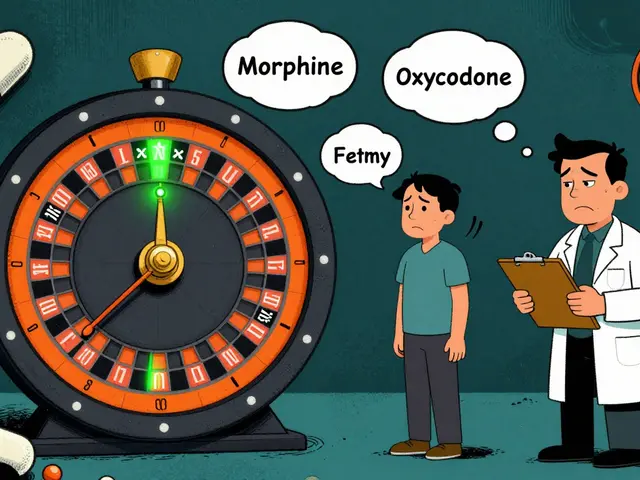
Some drugs have what’s called a narrow therapeutic index (NTI). That means the difference between an effective dose and a toxic one is tiny. Levothyroxine - used for hypothyroidism - is a classic example. Even a 5% change in blood levels can cause symptoms like heart palpitations, weight gain, or anxiety.
Studies show patients on NTI drugs often report side effects after switching between different generic brands. One patient on Reddit described feeling "off" after switching from one generic levothyroxine to another. Their pharmacist said, "It’s the same drug." But the patient didn’t feel the same. And they weren’t imagining it.
Specialty pharmacists know this. They don’t just dispense. They track which manufacturer a patient is on. They document allergies to specific excipients. They avoid switching unless absolutely necessary - especially if the patient is stable. The U.S. Pharmacist journal recommends that once a patient is on a specific generic, you keep them on it. Don’t switch manufacturers unless you have to.
How PBMs Make It Harder
Pharmacy Benefit Managers - or PBMs - are the middlemen between insurers, pharmacies, and drug makers. They decide which drugs get covered and how much pharmacies get paid. In specialty pharmacy, they often create impossible situations.
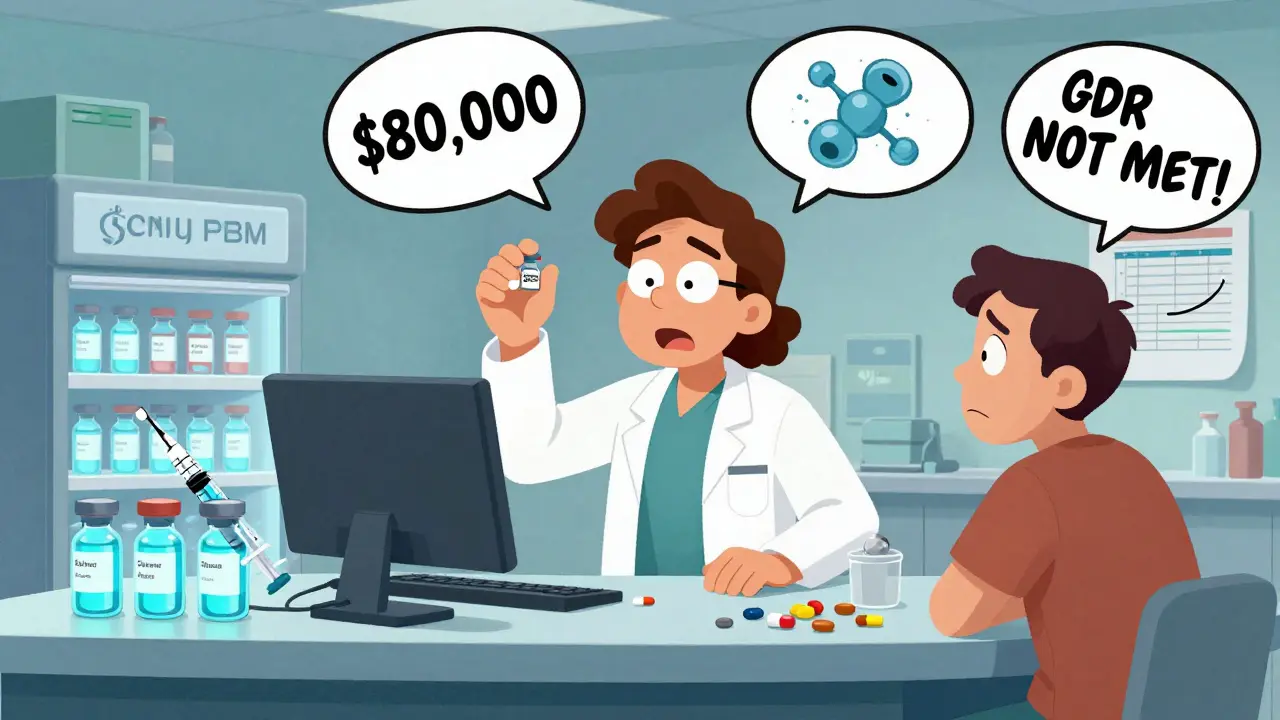
Many PBMs track a metric called the Generic Dispensing Ratio (GDR). They expect pharmacies to dispense a certain percentage of generics. But what if your specialty pharmacy only handles drugs with no generic? You can’t hit their target. So they penalize you. Some reduce reimbursement. Others charge fees. One specialty pharmacy reported being fined $12,000 in a single quarter because they didn’t dispense enough generics - even though 98% of their inventory had no generic alternative.
And here’s another twist: PBMs sometimes push generics even when it’s risky. They might require a patient to try a cheaper generic before approving the brand, even if the patient was stable on the brand for years. This creates clinical friction - and emotional stress for patients who don’t understand why their doctor says "no" to the PBM’s choice.
Biosimilars: The Next Frontier
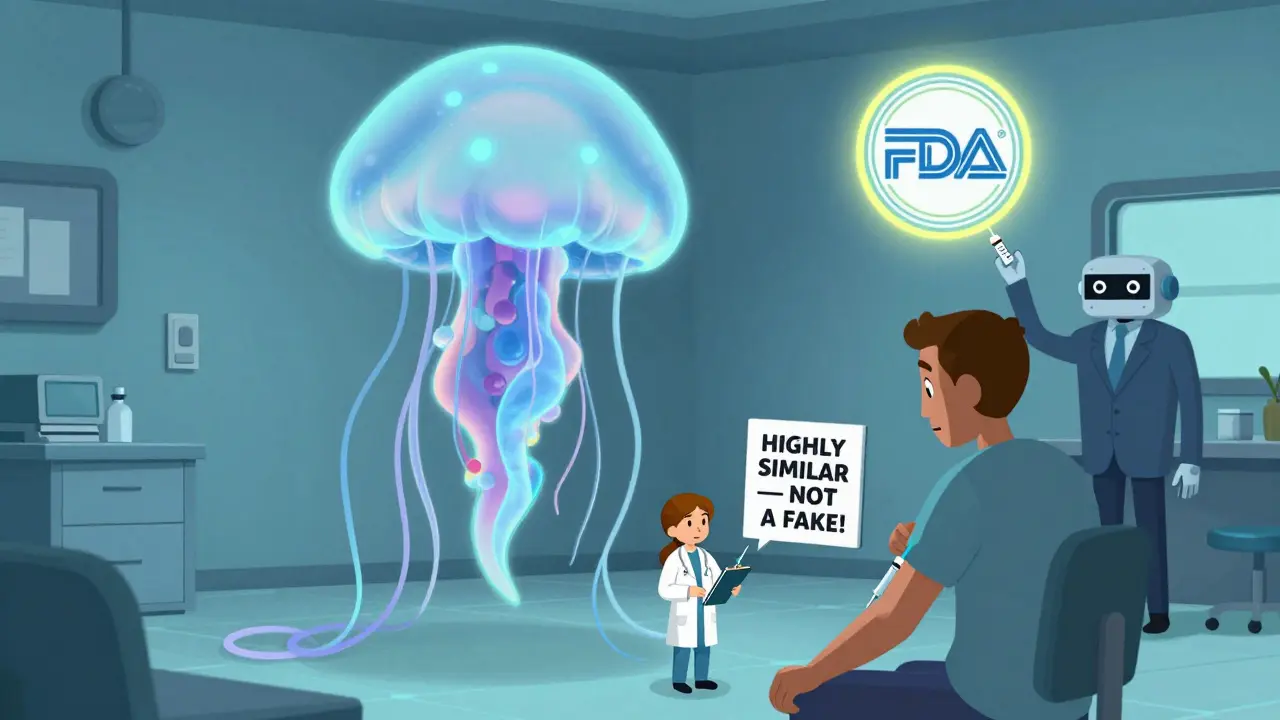
When a biologic drug loses patent protection, it doesn’t get a generic. It gets a biosimilar. These aren’t exact copies. Because biologics are made from living cells, no two batches are identical. But biosimilars must prove they’re "highly similar" to the original, with no clinically meaningful differences in safety or effectiveness.
The FDA has approved 35 biosimilars as of December 2023. The first interchangeable biosimilar - Semglee, for insulin - was approved in 2021. That means pharmacists can substitute it without asking the doctor. But for most others, substitution still requires a prescriber’s OK.
The savings? Big. The Congressional Budget Office estimates biosimilars could save the U.S. system $54 billion over the next decade. Humira, once the world’s top-selling drug, now has multiple biosimilars on the market. Their prices are 30-50% lower. But adoption is slow. Why? Because PBMs still favor the original brand through rebates. And many prescribers don’t trust biosimilars - or don’t know enough about them.
Specialty pharmacies are on the front lines here. They’re the ones educating patients: "This isn’t a fake drug. It’s been tested in thousands of people." They’re the ones managing cold chain logistics for these delicate products. And they’re the ones dealing with insurance denials when a biosimilar isn’t on the formulary.
What Specialty Pharmacists Actually Do
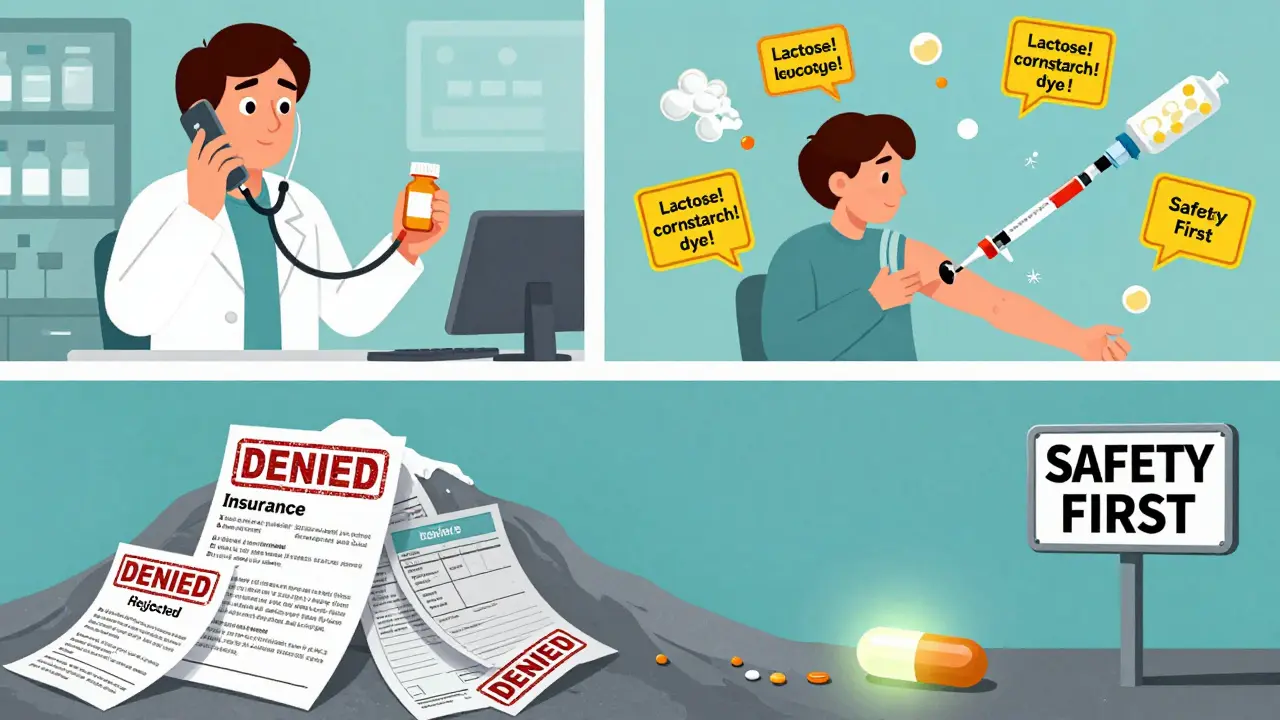
Forget the stereotype of a pharmacist just counting pills. In specialty pharmacy, the role is clinical. A typical day might include:
- Calling a patient every week to check for side effects
- Coordinating with a nurse to schedule an infusion
- Appealing an insurance denial for a drug the patient needs
- Tracking which manufacturer’s generic they’re using - and why
- Documenting an allergy to lactose in a patient’s file because it’s in one generic version
- Training a new patient on how to inject themselves with a biologic
They don’t just dispense. They manage. They monitor. They advocate. And they’re the first to notice when a patient’s lab results start to drift after a generic switch.
Best Practices for Managing Generics in Specialty Pharmacy
If you’re running a specialty pharmacy or working in one, here’s what actually works:
- Start with your top therapies. Don’t try to manage generics for everything. Focus on the 5-10 conditions you handle most - MS, RA, hepatitis C, etc.
- Standardize your inventory. Use one manufacturer per generic when possible. Fewer SKUs mean fewer errors.
- Track excipients. If a patient has a known allergy to cornstarch or dye, document it. And don’t assume all generics are the same.
- Don’t switch stable patients. If someone’s been on a brand or a specific generic for over six months? Leave them alone unless there’s a cost crisis.
- Train your staff. Front desk staff need to know how to explain why a pill looks different. Pharmacists need to know how to answer questions about biosimilars.
- Build relationships with prescribers. If a doctor knows you’re looking out for patient safety - not just cost - they’ll trust your judgment.
What’s Next?
The number of specialty drugs with generics or biosimilars is growing fast. By 2027, over 20 more biologics will lose patent protection. That means more options. More savings. But also more complexity.
Pharmacists will need better tools - not just to track inventory, but to monitor patient outcomes after substitutions. Regulators will need to improve oversight of biosimilar manufacturing. And PBMs will need to stop penalizing pharmacies for doing the right thing.
For now, the message is clear: generics have a place in specialty pharmacy - but not every time. Not every drug. Not every patient. The goal isn’t to maximize substitution. It’s to maximize safety, adherence, and outcomes. And that takes more than a price tag.
Can a specialty pharmacy substitute a generic without a doctor’s approval?
For traditional small-molecule generics, yes - if the prescription allows substitution and the patient consents. But for biosimilars, substitution rules vary. Only interchangeable biosimilars (like Semglee) can be substituted without the prescriber’s input. For others, the doctor must approve the switch. Specialty pharmacies must follow state laws and payer rules, which often require prior authorization even for generics.
Why do patients get confused when their generic medication looks different?
Generics must contain the same active ingredient as the brand, but they can differ in color, shape, size, and inactive ingredients (like dyes or fillers). Patients often associate a specific look with effectiveness. When their pill changes, they worry it’s weaker, fake, or a different drug. Specialty pharmacists need to explain that appearance doesn’t affect performance - and reassure them with documentation from the FDA or manufacturer.
Are biosimilars as safe as brand-name biologics?
Yes. The FDA requires biosimilars to undergo rigorous testing to prove they’re "highly similar" to the reference product with no clinically meaningful differences in safety, purity, or potency. Thousands of patients have used biosimilars for years with outcomes matching the original biologics. The biggest barrier isn’t safety - it’s lack of provider education and payer policies that favor the original brand.
Why do some specialty pharmacies get penalized for not dispensing enough generics?
Pharmacy Benefit Managers (PBMs) use metrics like Generic Dispensing Ratio (GDR) to measure how often pharmacies choose generics. But many specialty drugs have no generic alternative. When a pharmacy can’t meet the GDR target because they’re dispensing only branded specialty drugs, PBMs sometimes impose penalties - even if the pharmacy is following clinical best practices. This creates a conflict between cost-saving goals and patient safety.
How can specialty pharmacies reduce costs without compromising care?
By focusing on three things: 1) Choosing generics and biosimilars when clinically appropriate, 2) Negotiating contracts with distributors that offer stable pricing and single-source supply, and 3) Investing in medication therapy management (MTM) to improve adherence. Studies show that patients who receive MTM services from specialty pharmacists are 30% more likely to stay on therapy - which reduces costly hospitalizations and emergency care.
Specialty pharmacy isn’t about doing more. It’s about doing better. The future belongs to pharmacists who understand that a cheaper drug isn’t always a better one - and that patient trust matters more than a PBM’s spreadsheet.