
The Engine of Food Safety: The Traceability Lot Code
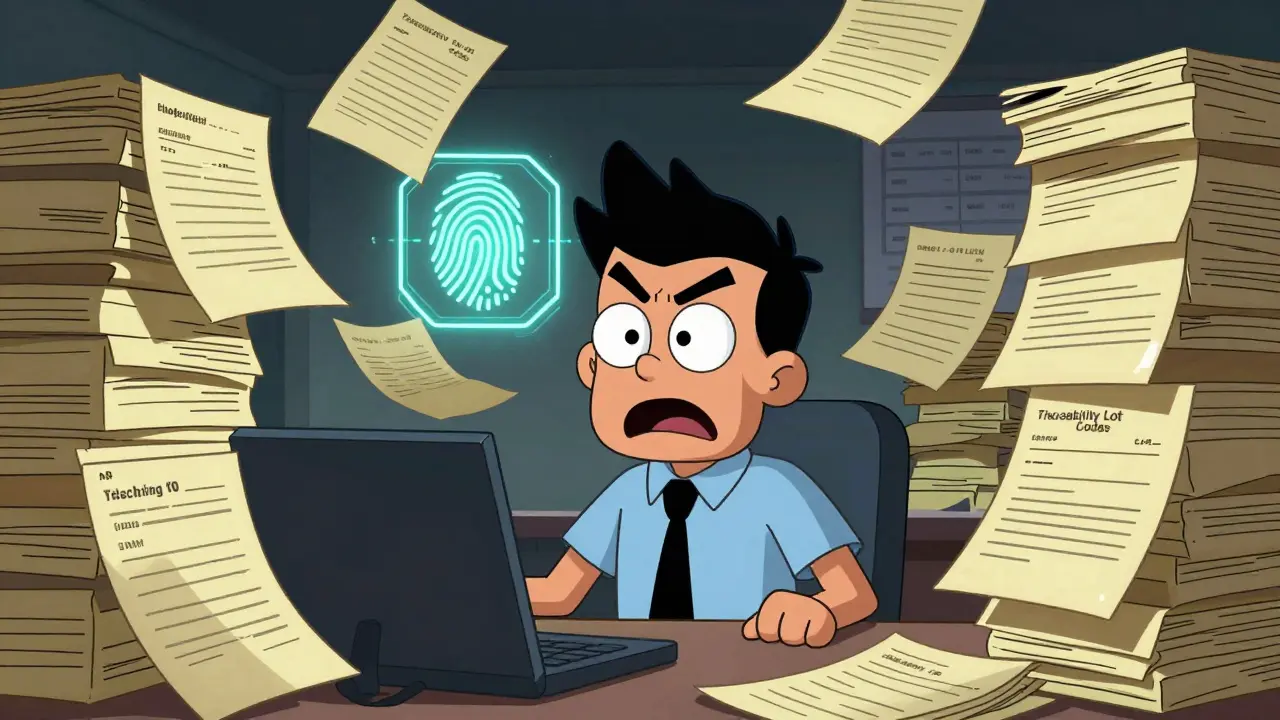
At the heart of this effort is the Traceability Lot Code or TLC, which is a unique alphanumeric descriptor used to identify a specific batch of food within the records of the firm that assigned it. Think of a TLC as a digital fingerprint for a specific group of products. Unlike old-school lot codes that companies used only for their own internal quality checks, the TLC is designed to travel with the food across the entire supply chain. This isn't just a suggestion; it's a requirement under Section 204 of the Food Safety Modernization Act, also known as FSMA 204. The goal is simple: if a batch of romaine lettuce is flagged for E. coli, the FDA shouldn't have to guess which warehouse it sat in or which truck hauled it. They can use the TLC to see exactly where that specific batch has been and where it is headed right now.Which Foods Actually Need Tracking?
Not every single item in a grocery store is tracked with this level of intensity. The FDA created the Food Traceability List, or FTL, which is a curated list of high-risk foods that require mandatory traceability records due to their history of causing outbreaks. These foods represent about 15% of the U.S. food supply but account for a huge portion of safety risks. Common items on the FTL include:- Leafy greens and fresh-cut fruits/vegetables
- Tomatoes, onions, and certain seafood products
- Cheeses, eggs, and nut butters
Where and When Are Lot Codes Assigned?
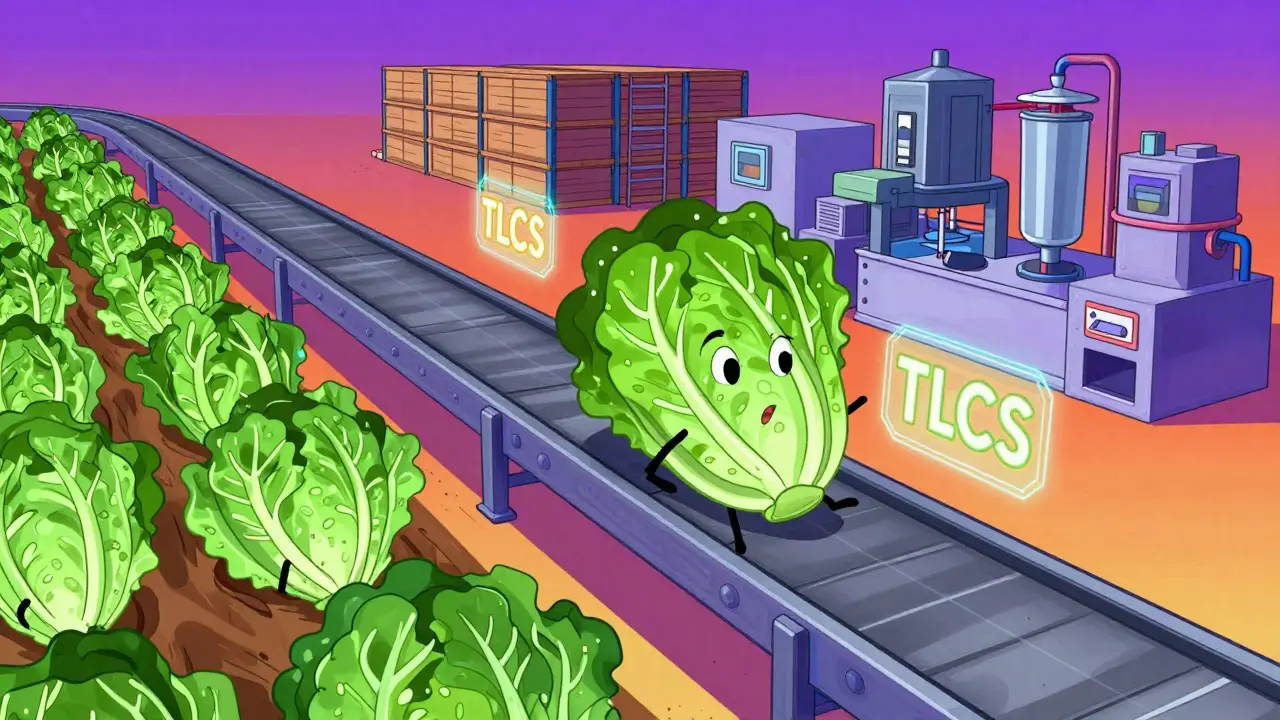
One of the biggest changes with the new system is that you can't just slap a code on a box whenever you feel like it. The FDA has strictly defined three critical points where a TLC must be assigned to ensure there are no "blind spots" in the history of the food:- Initial Packing: When raw agricultural commodities (excluding seafood) are first packed for shipment.
- First Land-Based Receiving: When seafood arrives at its first port or facility after leaving a fishing vessel.
- Transformation: Whenever the food changes its physical state or packaging (for example, turning whole carrots into bagged baby carrots).
Beyond the Code: Key Data Elements (KDEs)
A lot number by itself is useless if you don't know what it represents. To make the TLC work, the FDA requires it to be linked to seven Key Data Elements or KDEs. These are the specific pieces of information that turn a random string of numbers into a useful map.| Data Element | What it Tells the FDA | Example Value |
|---|---|---|
| TLC Source | The exact physical location where the code was assigned. | Farm X, Warehouse Y |
| Product Description | Exactly what the item is. | Organic Baby Spinach |
| Quantity | How much was in that specific lot. | 500 lbs |
| Unit of Measure | The metric used for quantity. | Kilograms / Pounds / Cases |
| Transaction Info | Who sent it and who received it. | Shipped from A to B on 04/01/26 |
How This Differs from Other Tracking Systems
It's easy to confuse the TLC system with other types of tracking, but it's quite different from what you'll find in pharmacies or general logistics. For example, the Drug Supply Chain Security Act (DSCSA) tracks pharmaceutical packages using individual serial numbers. That's "unit-level" tracking. The FDA's food system uses "lot-level" tracking, which groups products together. It's more efficient for food because you don't need to know where one specific apple went, but rather where the entire bin of apples from Tuesday's harvest ended up. Furthermore, while some retailers like Walmart use Blockchain for leafy greens, the FDA's TLC system is a regulatory mandate, not a corporate choice. While blockchain is a great tool for recording TLCs, the FDA doesn't require it; they just require that the data is accurate, sortable, and delivered quickly.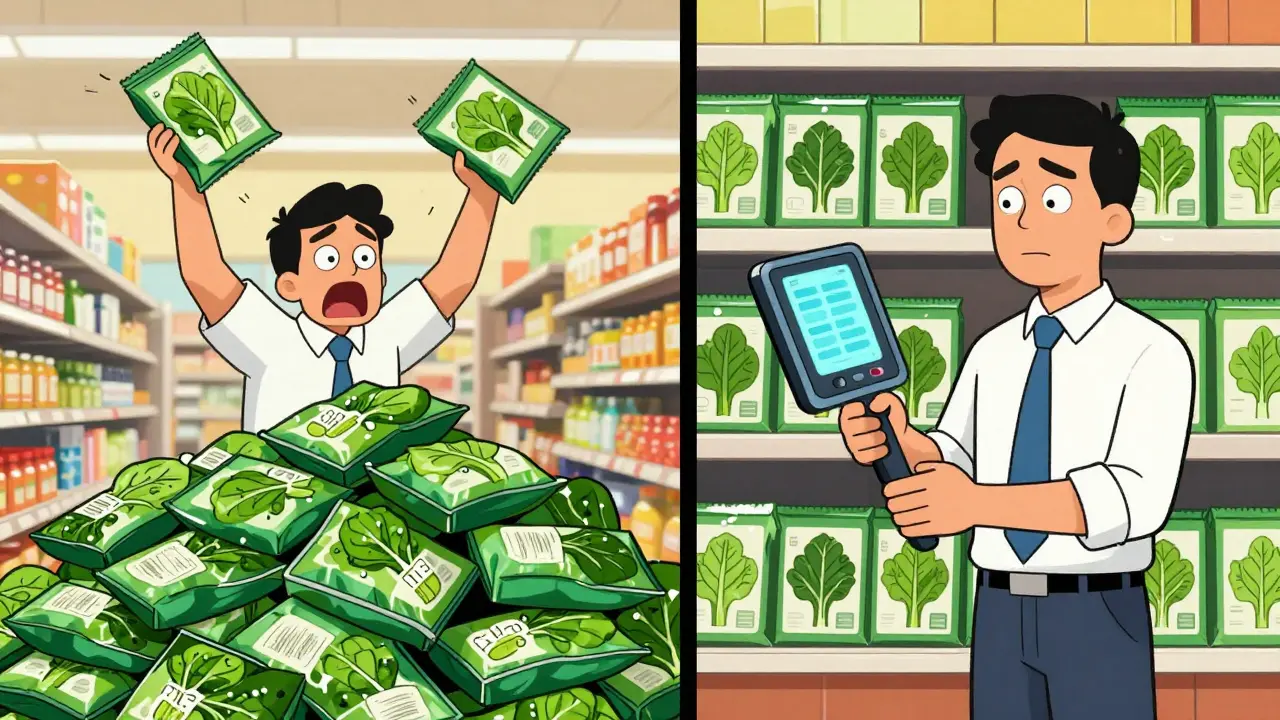
The Hurdles to a Safer Food Supply
Despite the benefits, the transition hasn't been seamless. Many companies face the challenge of "tandem coding." This happens when a business has its own internal quality control lot codes and feels they have to create a second, separate set of codes just for the FDA. The FDA has tried to ease this by stating that any existing internal lot code can serve as a TLC, provided it is passed along the supply chain. There's also the issue of data silos. Experts warn that if one company uses one software and their supplier uses another, the TLCs might exist in separate digital worlds. Without a standardized way to share this data, the "real-time" dream could be delayed. This is why the FDA is currently developing standardized electronic data formats to ensure that different software systems can actually talk to each other.Future Outlook: Smarter Food Safety
Looking ahead, the list of tracked foods will likely grow. The FDA has already hinted that melons and more ready-to-eat foods may be added to the FTL soon. We are also moving toward a "Smarter Food Safety" era, where the Internet of Things (IoT) and sensors might automatically trigger TLC updates based on temperature or location changes. For the average consumer, these alphanumeric codes on a package might look like gibberish. But in the event of a recall, those codes are the difference between a store removing every single bag of spinach from its shelves (which wastes tons of food) and removing only the specific problematic batches, keeping the rest of the supply chain moving and the public safe.What is the difference between a standard lot code and a Traceability Lot Code (TLC)?
A standard lot code is typically used for internal quality control and may only be tracked within one company's walls. A TLC is a regulatory requirement under FSMA 204 that must be passed from one entity to the next throughout the entire supply chain, allowing the FDA to trace a product from the farm to the retail shelf.
Do I need to change my current lot coding system to comply with the FDA?
Not necessarily. The FDA has clarified that existing internal lot codes can be used as TLCs as long as they uniquely identify the lot and are consistently shared with supply chain partners. You just need to document this methodology in your official Traceability Plan.
What happens if a food product is processed or changed?
When food is transformed (e.g., whole vegetables are sliced), the entity performing the transformation must assign a new TLC. However, they must maintain a record that links the new TLC back to the previous lot code to ensure the chain of traceability remains unbroken.
How quickly must a company provide traceability data to the FDA?
During an investigation or outbreak, firms are required to provide all Key Data Elements (KDEs), including the TLC and transaction information, to the FDA within 24 hours of the request.
Is the FDA requiring blockchain for lot tracking?
No. While the FDA supports the use of blockchain and other advanced technologies to improve efficiency, the regulation only mandates that the data be available and accurate. Companies can use electronic spreadsheets, ERP systems, or specialized software as long as the data is sortable and exportable.

Reviews
Most folks don't realize how messy the old paper trail actually was. I've worked in logistics for years and the lag in communication during a recall was a nightmare. Moving to these digital TLCs is a game changer because it removes the human error of misreading a handwritten manifest or losing a faxed invoice. The 24-hour window for data delivery is tight but it's exactly what's needed to stop people from getting sick while the bureaucrats argue about who is at fault.
Oh sure, because the government is just so efficient at managing data. I can't wait for the first major glitch where a typo in a TLC causes a nationwide panic and millions of tons of perfectly good food get dumped in landfills just because some intern hit the wrong key. Absolute genius.
good step for safety
Wake up people! This isn't about "safety," it's about total surveillance of the food chain. They want a digital fingerprint for every leaf of spinach so they can track exactly who is buying what and where it's going. It's a glorified tracking chip for your salad. Once they have this level of control, they'll start flagging "non-compliant" consumers. The 2028 deadline is just to give them time to build the database for their social credit system. Total dystopian nightmare disguised as health policy!
Finally! Only the USA has the guts to actually implement a system like this to protect its citizens 🇺🇸✨ It's about time we stopped playing around with these archaic methods and used our superior tech to dominate food safety! 💅 Anyone who complains about "privacy" is just being a peasant. Real Americans want safe food and we want it NOW! 🇺🇸💪
The sheer arrogance of assuming a CSV file will solve systemic agricultural failures is quite amusing. One simply cannot quantify the chaos of a global supply chain with a few key data elements.
The paradox here is that we seek safety through quantification. We've replaced the trust in the farmer with a string of alphanumeric characters. It's a hollow victory for the modern age.
Imagine thinking that a digital map actually makes us "safer" while we're all just eating processed sludge anyway. It's purely performative. The FDA is basically just playing SimCity with our romaine lettuce. Absolutely precious. 🙄
Lot tracking is a band-aid. Fix the farms first.
I totally see where you're coming from. It does feel a bit overwhelming for small farmers to keep up with these digital requirements. Maybe we can find a way to support the smaller guys in transitioning to these systems so they don't get pushed out by the big corporate farms.
Let's push for even more foods on that list! Why stop at spinach? We need every high-risk item tracked! The industry is complaining about the cost, but what's the cost of a human life? Let's get aggressive with these standards and force the tech upgrade now, not in 2028! We have the tools, so there is zero excuse for any company to be lagging behind!
just a heads up for anyone in the business the fda is usually pretty lenient if you show you're making a good faith effort to transition your records over to electronic formats before the deadline
It is absolutely imperative that the global community adopts these rigorous standards! The implementation of the Traceability Lot Code is a monumental achievement in public health. We must demand that every single entity in the supply chain adheres to these protocols without exception. Any deviation is an unacceptable risk to human life!
There is a certain poetic irony in the fact that we are reducing the complexity of nature-a seed, a soil, a rain-into a set of Key Data Elements. We are attempting to colonize the unpredictable nature of biology with digital certainty. Whether it works or not, it reflects our deep-seated fear of the invisible.
The FDA must enforce these mandates with the utmost severity! It is completely unacceptable that some companies are still using paper logs in the twenty-first century. We must accelerate the adoption of these technologies immediately to ensure that no more families suffer from preventable foodborne illnesses. Efficiency is not a luxury; it is a moral obligation!