Medication BP Impact Checker
Select the medications or classes you are currently taking to see their potential effect on your blood pressure based on the article data.
Analysis Result
Please select one or more medications to see the analysis.
Imagine spending months adjusting your diet and taking pills to lower your blood pressure, only to find your numbers climbing higher despite your best efforts. It's a frustrating reality for many, and often, the culprit isn't your lifestyle-it's another medication you're taking. Drug-induced hypertension is a condition where blood pressure rises to 130/80 mmHg or higher specifically because of pharmaceutical agents or other substances. It accounts for about 2-5% of all high blood pressure cases, meaning millions of people are fighting a battle against their own medicine cabinet without even knowing it.
Quick Summary of Key Takeaways
- Common triggers include NSAIDs, corticosteroids, certain antidepressants, and decongestants.
- Some drugs cause sodium retention, while others constrict blood vessels or trigger the nervous system.
- Baseline and regular monitoring is essential when starting high-risk medications.
- Management often starts with a professional medication review and potential dose adjustment.
- Lifestyle changes, like limiting salt to 1,500 mg per day, can provide significant relief.
The Usual Suspects: Medications That Raise Blood Pressure
Not every drug is created equal when it comes to your heart. Some cause a subtle creep in numbers, while others can spike your pressure almost instantly. NSAIDs (Non-Steroidal Anti-Inflammatory Drugs) are among the most common triggers. Common over-the-counter options like ibuprofen can increase systolic pressure by 3-10 mmHg in just two weeks of regular use. They work by blocking prostaglandins, which normally help your blood vessels stay open and your kidneys flush out sodium.
Corticosteroids, such as prednisone, are far more potent. Up to 60% of people using high-dose steroids for more than a month develop hypertension. These drugs trick the body into holding onto sodium and water, increasing the overall volume of blood pushing through your veins.
Then there are the stimulants and mood stabilizers. SNRIs (Serotonin-Norepinephrine Reuptake Inhibitors) like venlafaxine can raise blood pressure in up to 15% of patients, especially at doses above 150 mg. Similarly, ADHD medications like amphetamine salts can affect 10-25% of users by increasing sympathetic nervous system activity-essentially putting your body in a constant "fight or flight" mode.
Don't overlook the pharmacy aisle's cold and flu section. Decongestants containing pseudoephedrine or phenylephrine cause blood vessels to shrink (vasoconstriction) to clear your sinuses, but this also increases peripheral vascular resistance, potentially jumping your systolic pressure by 10 mmHg within hours.
| Medication Class | Common Examples | Typical BP Impact | Primary Mechanism |
|---|---|---|---|
| NSAIDs | Ibuprofen, Naproxen | +3 to 10 mmHg (Systolic) | Sodium retention & reduced vasodilation |
| Corticosteroids | Prednisone, Cortisol | Up to +15 mmHg (Systolic) | Mineralocorticoid receptor activation |
| SNRIs | Venlafaxine | Dose-dependent increase | Increased norepinephrine levels |
| Decongestants | Pseudoephedrine | +5 to 10 mmHg (Systolic) | Alpha-adrenergic vasoconstriction |
| ADHD Stimulants | Methylphenidate | 10-25% incidence rate | Sympathetic nervous system activation |
How to Monitor Your Pressure While on Medication
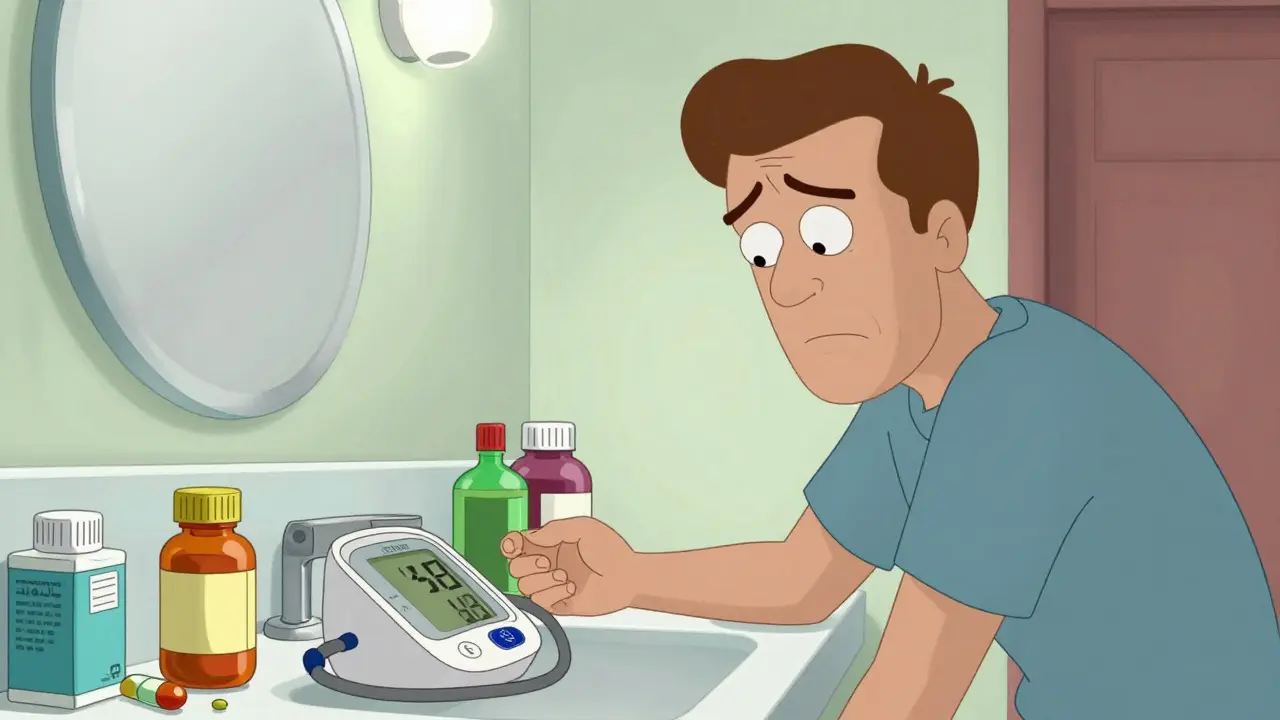
If you're starting a medication known to affect blood pressure, you can't just "wait and see" if you feel different. High blood pressure is often silent. The best approach is to establish a baseline-measure your pressure for a week before the first dose to know what's normal for you.
Once you start the medication, the American Heart Association suggests a structured check-in schedule. Check your readings at the 1-2 week mark and again at 4-6 weeks. If things are stable, a quarterly check is usually enough. For those on corticosteroids, daily checks during the first month are recommended. Be on the lookout for orthostatic changes-where your pressure drops significantly when you stand up-which happens in about 35% of steroid-induced cases.
For high-risk individuals, like those with kidney issues or those taking multiple BP-raising drugs, home monitoring isn't always enough. Your doctor might suggest Ambulatory Blood Pressure Monitoring (ABPM), where you wear a device for 24 hours. This helps distinguish between a temporary spike and a consistent, drug-induced trend.
Management Strategies: What to Do if Your BP Spikes
The first step isn't usually adding another pill; it's looking at what you're already taking. A thorough medication review can resolve hypertension in 60-70% of NSAID cases and nearly half of decongestant cases. If the drug isn't essential, stopping it for 2-4 weeks often returns blood pressure to normal.
If you can't stop the medication-for example, if you're treating an autoimmune disease with steroids-you'll need a management plan. Calcium channel blockers (like amlodipine) or thiazide diuretics are generally the first choice. Interestingly, beta-blockers are often less effective here because they don't target the vasoconstrictive mechanisms that many of these drugs trigger.
You can also fight back with lifestyle adjustments. Limiting your salt intake to less than 1,500 mg per day and increasing potassium (2,500-3,500 mg/day) can drop your pressure by 5-8 mmHg. Adding 150 minutes of moderate aerobic exercise per week further helps your blood vessels relax and reduces the strain on your heart.
The Danger of Overlooked Over-the-Counter Drugs
One of the biggest pitfalls is the "it's just an OTC drug" mentality. Many people don't tell their doctors they take ibuprofen for chronic back pain or a nasal spray for allergies. However, research shows that only about 22% of primary care providers routinely screen for NSAID use in their hypertensive patients. This gap in communication leads to "resistant hypertension," where doctors keep increasing BP meds while the patient continues taking a drug that cancels them out.
It isn't just pharmacy drugs, either. Some herbal supplements, like St. John's Wort, have been linked to blood pressure spikes and hypertensive crises. If you're managing your heart health, every single thing that goes into your mouth-prescription, over-the-counter, or herbal-needs to be on your doctor's list.
Practical Steps for Your Next Doctor's Visit
Don't leave your blood pressure management to chance. When you visit your provider, be proactive about your medication list. Instead of saying "I'm taking some pain meds," be specific: "I take 400mg of ibuprofen three times a day." This level of detail allows your doctor to see the specific risk. Ask them if any of your current prescriptions have a known link to drug-induced hypertension and if there are safer alternatives, such as switching from ibuprofen to acetaminophen for pain.
Can I switch to a different painkiller to lower my blood pressure?
Yes. For many, switching from ibuprofen to acetaminophen (up to 3,000 mg/day) can help. Some studies show that Celecoxib (Celebrex) has a much smaller impact on systolic blood pressure compared to ibuprofen, though you should always consult your doctor before switching.
How quickly does blood pressure drop after stopping a trigger medication?
It varies by drug. Decongestants can cause a spike within hours, and pressure often returns to normal shortly after the drug wears off. For NSAIDs and corticosteroids, it typically takes 2 to 4 weeks of discontinuation for the blood pressure to stabilize.
Why do steroids cause high blood pressure?
Corticosteroids activate mineralocorticoid receptors in the body. This leads to the retention of sodium and the excretion of potassium, which increases the total volume of fluid in your bloodstream, putting more pressure on your artery walls.
Are there any ADHD meds that are safer for blood pressure?
While most stimulants can raise BP, the risk varies. For example, dextroamphetamine has shown a higher incidence of hypertension (about 24.7%) than some other options. Your doctor can monitor you closely or prescribe non-stimulant alternatives if your BP is a concern.
Should I be worried if my blood pressure is 135/85 while taking a prescription drug?
In the context of drug-induced hypertension, a daytime average systolic BP of 135 mmHg or higher is often the threshold for diagnosis. While it may not feel like an emergency, it is a sign that your medication is affecting your cardiovascular system and needs to be reviewed by a professional.
Next Steps for Different Scenarios
If you are healthy but starting a new medication: Set up a home monitoring log. Take your pressure twice a day for a week before starting and again two weeks after the first dose. If you see a consistent rise of 5-10 mmHg, call your doctor.
If you already have hypertension and need a painkiller: Avoid ibuprofen and naproxen. Ask your doctor about acetaminophen or a specific COX-2 inhibitor like Celebrex, which may be gentler on your blood pressure.
If your BP meds aren't working anymore: Perform a "medicine cabinet audit." List every supplement, nasal spray, and OTC pill you've used in the last three months and bring that list to your next appointment to check for interactions.