
CNS Interaction Risk Checker
Input Variables
Assessment Result
Low Potential Impact
Your current combination appears to have minimal immediate interaction risks.
If you experience extreme drowsiness, breathing difficulties, or confusion, seek emergency help immediately.
Combining cannabis with other medicines that slow down your brain can be dangerously unpredictable. You might think mixing a recreational substance with a prescribed medication is harmless if you've done it before without issue. However, research consistently shows that these substances act as CNS depressants, which means they slow down brain activity and nervous system function. When you mix them, the effect isn't just added together; it often multiplies, leading to severe drowsiness, memory blackouts, and life-threatening breathing problems.
How Cannabis Slows Down Your Brain
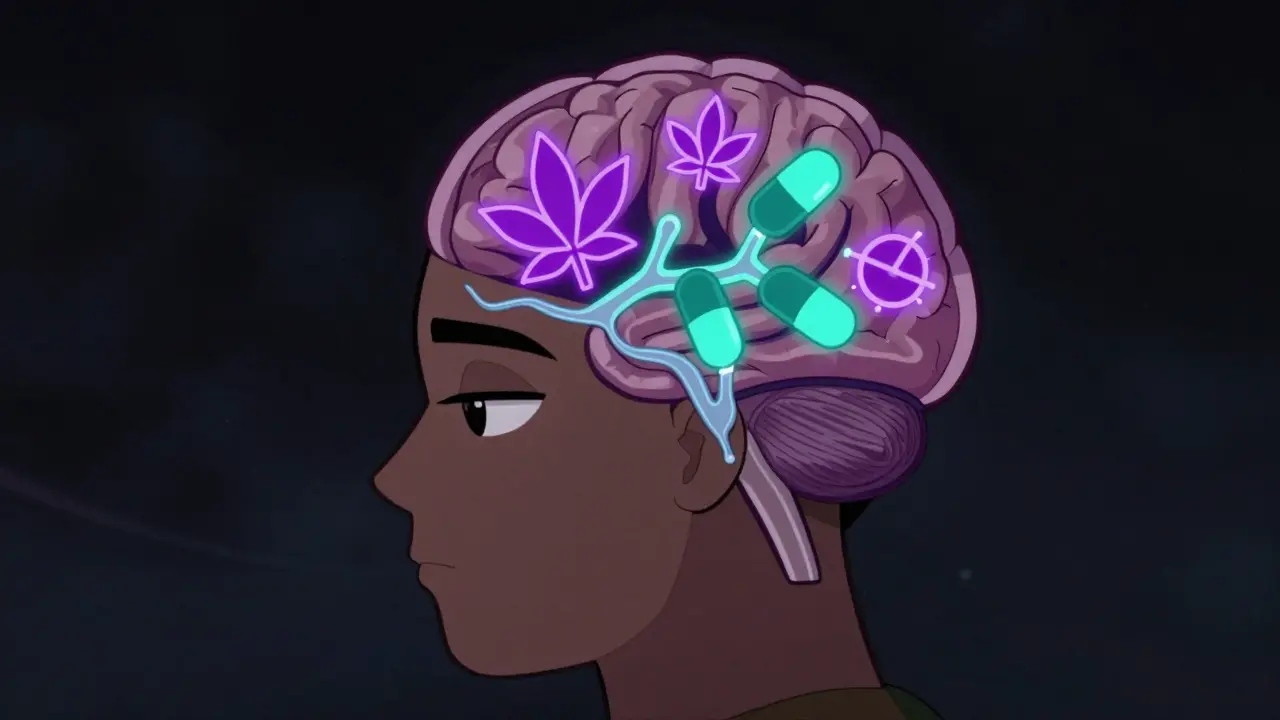
To understand the risk, you first need to know how these substances affect your body. Cannabis works by interacting with the endocannabinoid system, specifically through THC binding to CB1 receptors in the brain. This action mimics the effects of certain prescription medications. According to the National Institute on Drug Abuse (NIDA), both cannabis and traditional CNS depressants enhance gamma-aminobutyric acid (GABA), a neurotransmitter that calms brain activity.
When these pathways overlap, the result is amplified sedation. Studies published in The British Journal of Psychiatry confirm that cannabis impairs cognitive and psychomotor performance in ways similar to alcohol and benzodiazepines. This includes slowing reaction times and impairing complex tasks requiring divided attention. These effects become clinically significant even at relatively small doses, around 5-10 mg of THC. Critically, these impairments are additive when combined with other central nervous system depressants.
The Most Dangerous Combinations
Not all combinations carry the exact same level of risk, but several pairings pose a severe threat to your safety. The interaction varies depending on the type of depressant involved. Here are the most critical ones to watch out for:
- Benzodiazepines: Drugs like Xanax (alprazolam) and Valium (diazepam) are highly effective anxiety meds but have high abuse potential. Combining them with cannabis significantly increases the risk of respiratory depression.
- Opioids: Painkillers like oxycodone or morphine suppress breathing drive. Adding cannabis to this mix creates a multiplicative risk rather than simply an additive one, drastically increasing overdose potential.
- Barbiturates: Although less common now, sleep aids in this class still interact severely with cannabinoids.
- Sedative-Hypnotics: Medications like zolpidem (Ambien) used for sleep disorders also fall into this risky category.
| Substance Combination | Primary Risk | Clinical Consequence |
|---|---|---|
| Cannabis + Benzodiazepines | Additive sedation | Blackouts, falls, ER visits |
| Cannabis + Opioids | Respiratory suppression | Fatal overdose, hypoxia |
| Cannabis + Barbiturates | Deep CNS depression | Coma, cardiac issues |
| Cannabis + Alcohol | Impaired judgment | Accidents, aggressive behavior |
The Hidden Danger of Blackouts
You might experience what feels like falling asleep instantly after using both substances. For some users, this leads to memory blackouts. A patient report from Reddit details waking up on a bathroom floor six hours later with no memory of how they got there, accompanied by oxygen saturation dropping to 82% (normal is above 95%). This isn't just about being tired; it's about your brain shutting down essential functions.
Data from SAMHSA indicates that in 2022 alone, there were 7,842 emergency department visits involving cannabis and benzodiazepine combinations. That represents a 42% increase from 2019 figures. Why did these people seek emergency help? The primary cause was excessive sedation requiring medical attention, respiratory complications, or accidental injury due to motor incoordination. In clinical studies, patients using both substances had a 3.2 times higher risk of visiting the ER compared to those using benzodiazepines alone.
Why Older Adults Are at Higher Risk
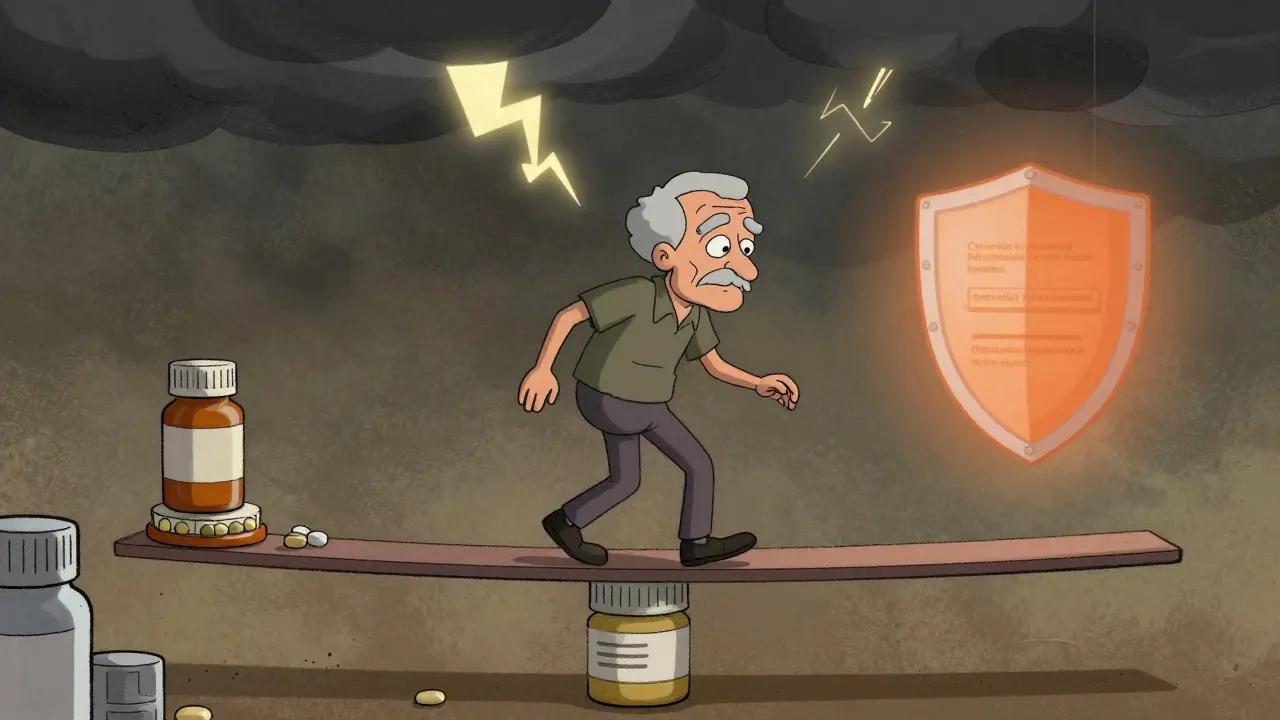
If you or a family member is over 65, the rules change even more strictly. Dr. Igor Grant from UC San Diego testified that the combination of cannabis with other CNS depressants represents one of the most under-recognized polypharmacy risks in contemporary medical practice, particularly among older adults managing multiple conditions. Metabolism slows with age, meaning THC stays in the system longer, and the tolerance for CNS depressants drops.
Medical associations recommend specific risk assessments. The American Society of Health-System Pharmacists developed a tool that assigns points based on THC concentration, the type of depressant, and patient age. If your score exceeds 7, you are in a high-risk zone requiring alternative treatments. Factors include using high-THC products (above 15%) or taking barbiturates, which carry the highest point values in the assessment tool.
Safe Usage Strategies
Avoiding the combination entirely is the safest option. However, many patients have medical needs for both cannabis and depressants. If you must use them together, strict protocols are necessary to prevent harm. The National Institute on Drug Abuse advises staggering dosing times by at least four hours. Start with the lowest possible doses of each substance. Avoid high-THC products if you are on sedatives; CBD-dominant products (with a CBD:THC ratio greater than 20:1) may present lower interaction risks.
A 2022 double-blind trial showed no significant pharmacokinetic interactions between high-CBD oil (<0.3% THC) and alprazolam. This suggests that the non-psychoactive components might be safer companions to prescription meds. Always check with your doctor. Current medical guidelines suggest physicians should routinely screen for cannabis use when prescribing benzodiazepines or opioids, checking specifically for THC concentration and consumption method.
What Regulations Are Saying Now
By 2026, regulatory frameworks have tightened considerably. The FDA updated labeling requirements in 2022, mandating explicit warnings on all prescription depressants about concomitant use with cannabis products. The European Medicines Agency followed suit in 2023. In the U.S., 37 states now require physician education on these interactions as part of medical certification.
California implemented mandatory training modules for certifying physicians, resulting in a documented 28% reduction in high-risk combinations according to state health data. The American College of Physicians called for mandatory interaction screening in all states with medical cannabis programs by 2025. With the date now past 2025, compliance should be standard practice in clinics everywhere, yet many patients remain unaware of these specific dangers.
Can I drink alcohol while using medical cannabis?
You should avoid combining alcohol and cannabis. Both are CNS depressants, and mixing them significantly increases the risk of severe sedation, accidents, and respiratory issues. It is best to choose one or wait several days between use.
Does CBD interact with antidepressants?
CBD has a lower interaction profile than THC, especially with SSRIs, but caution is still needed. High doses of CBD can inhibit liver enzymes responsible for breaking down other medications, potentially altering their effectiveness.
How long does cannabis stay in your system?
It depends on the method of consumption. Smoking peaks at 30 minutes with effects lasting 2-4 hours. Edibles peak in 2-3 hours but last 6-8 hours. Trace amounts can be detected in urine for weeks, though active intoxication lasts much shorter.
What symptoms indicate too much sedation?
Warning signs include extreme confusion, slurred speech, inability to wake up easily, shallow breathing, or blue-tinged lips. If you see these signs in someone else, call emergency services immediately.
Should I tell my doctor about my cannabis use?
Yes, always be honest. Doctors need this information to prescribe safe dosages and avoid dangerous drug interactions. Withholding this info puts you at risk of fatal mistakes in medication management.


Reviews
It is truly wonderful to see people taking this seriousness with their health matters. Many of us forget how important our physical safety is until something bad happens. We need to support each other in making much better choices every single day. Your friends might not realize the hidden danger involved here right now. Sometimes we think we know absolutely everything about medicine usage. But the science clearly shows us something completely different entirely today. I always try to remind my close circle about safety being first. It feels incredibly good when you prioritize your own nervous system function. There is real power in knowing how your specific brain works too. We should all learn more about these dangerous interactions soon enough. It helps greatly to understand why mixing things gets risky fast. You can live fully while staying away from severe harm though. My experience strongly suggests caution is always the best friend. We want everyone to go home safely at night time without issues. Please remember that you absolutely deserve to feel good tomorrow morning.
This stuff looks pretty scary to read about honestly.
We can all overcome these challenges if we work together closely. Energy flows best when we are clear minded and focused. Staying sharp is the key to living a long life ahead. You have the power to make choices that protect your family. Never give up on learning about what keeps you safe. Your potential is huge when you avoid unnecessary risks daily. Keep pushing forward toward a healthy lifestyle for yourself. Believe in your ability to change habits for the betterment of all. The future looks bright when you respect your body limits.
Oh look at the common folk trying to understand basic pharmacology. It is hilarious watching you try to grasp the complexity here. Most people lack the intellect to process these warnings correctly. They probably mix everything in the kitchen sink anyway. Safety is for the weak mind that cannot handle risk factors. Real people know how to manage their intake without help.
I have mixed these before and nothing happened to me personally.
The big labs want us confused about real chemical threats everywhere. They hide the data behind fancy terms to scare normal citizens. It is obvious the agenda is population control disguised as medical advice. Trust your gut feeling instead of these statistics charts.
Perhaps sleep is the ultimate goal and these chemicals are just tools. Life becomes blurry when one considers the nature of consciousness itself. Why fight the sedation if rest brings peace to the soul. We are all just dust waiting for the final silence.
You must adhere strictly to the recommended safety protocols immediately. Your health depends on following these guidelines with precision and care. Failure to act could result in significant consequences for your wellbeing. Please prioritize your medication schedule above all recreational activities.
My cousin passed out in the bathroom and we thought he was sleeping forever. The doctors said his oxygen dropped so low it looked scary. He never woke up like a normal person after that nightmare experience. We were holding his hand while the machines beeped loudly all night.
The pharmacokinetic interaction profile demonstrates significant risk amplification. Clinical trials indicate respiratory depression is a primary concern in elderly populations. Dosing intervals require strict adherence to prevent adverse events occurring unexpectedly.
Why would anyone do this???!!! It is SO dangerous!!! People need to watch their kids!!! The ER visits are up so much!!! Who wants that!!! Parents please listen!!!!
Ive seen patients who just need to space out doses by a few hours. Starting small helps a lot and listening to how you feel matters most. If you have questions talk to your doctor before mixing anything. Stay safe out there friends.
The fear of ending up in the dark is overwhelming sometimes. I hear the silence creeping in around the room slowly. Breathing feels heavy when the world fades away into nothingness. Hope dies quietly when the heart stops beating.
Understanding these risks is vital for global health equity everywhere. We must respect cultural differences in medicine use while prioritizing safety standards. Every community deserves accurate information to protect vulnerable members effectively.