
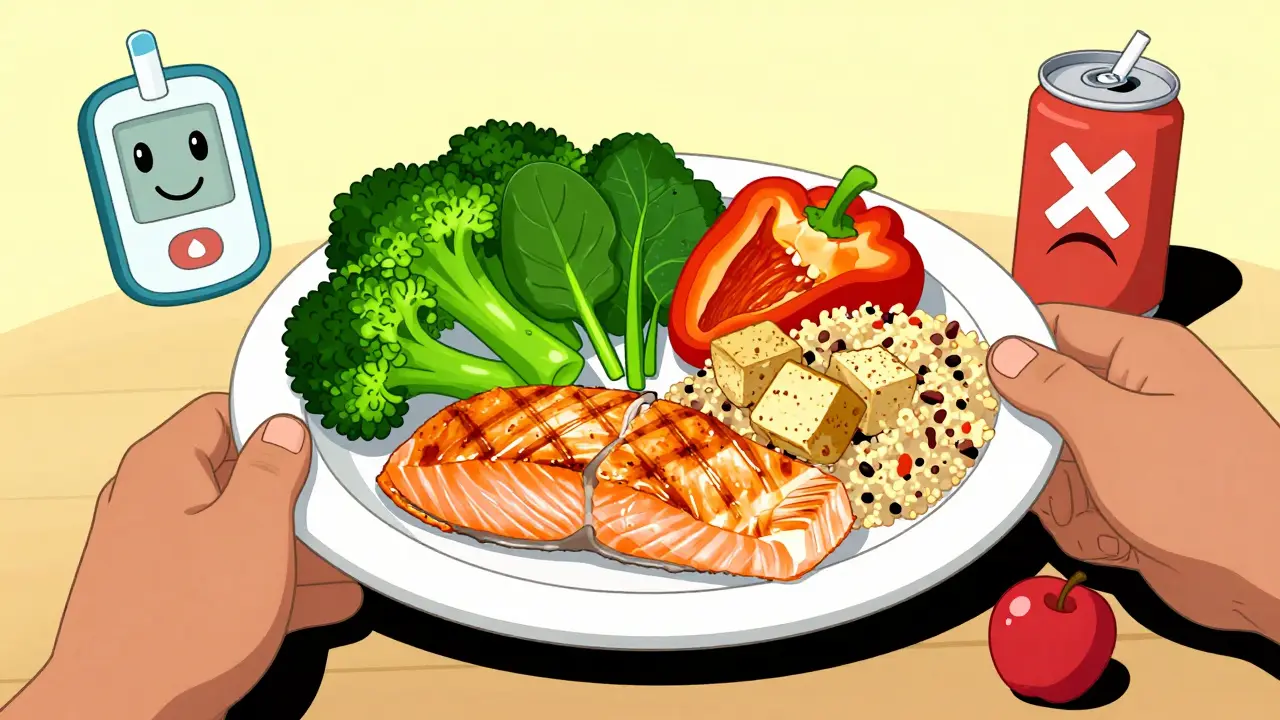
Managing diabetes isn't just about taking medication-it's also about what’s on your plate. Every bite affects your blood sugar, and making smart food choices can mean the difference between stable energy and dangerous spikes. The good news? You don’t need to give up all your favorite foods. You just need to know which ones work for you and which ones work against you.
What Does a Diabetic Meal Plan Actually Look Like?
The easiest way to build a balanced meal for diabetes is the Diabetes Plate Method. Developed by the American Diabetes Association, it doesn’t require counting calories or carbs. Just grab a 9-inch plate-about the size of a standard dinner plate-and divide it like this:
- Half the plate: Non-starchy vegetables. Think broccoli, spinach, kale, peppers, zucchini, mushrooms, or green beans. These are low in carbs and high in fiber, so they fill you up without spiking blood sugar.
- One-quarter: Lean protein. Choose skinless chicken, turkey, fish, tofu, eggs, or beans. Protein helps keep you full and doesn’t raise blood sugar like carbs do.
- One-quarter: Carbohydrates. Go for whole grains like quinoa, barley, or brown rice. Or choose starchy vegetables like sweet potatoes or corn. Even fruit counts here-a small apple or half a banana is fine.
This method works because it naturally balances your meal. No need to memorize carb counts. Just fill the plate, and you’re already ahead of most people with diabetes.
Foods to Eat: What Actually Helps
Not all carbs are created equal. The goal is to choose carbs that digest slowly so your blood sugar doesn’t spike. Here’s what to put on your plate:
- Non-starchy vegetables: These are your best friends. A cup of raw spinach has less than 1 gram of net carbs. Broccoli, cauliflower, cucumbers, and asparagus are all low-carb powerhouses. Eat as much as you want-they’re full of fiber, vitamins, and water.
- Fatty fish: Salmon, mackerel, sardines, and trout are rich in omega-3s. These fats reduce inflammation and lower your risk of heart disease, which is a major concern for people with diabetes. Aim for at least two servings per week.
- Legumes: Beans, lentils, and chickpeas are packed with fiber and protein. A half-cup of black beans has about 7 grams of fiber and only 20 grams of carbs. That fiber slows digestion, keeping blood sugar steady.
- Whole grains: Swap white bread and rice for whole-wheat bread, oats, barley, or quinoa. These have more fiber and nutrients. A slice of whole-wheat bread has about 15 grams of carbs but also 3 grams of fiber, which helps blunt the sugar spike.
- Healthy fats: Avocados, nuts, seeds, and olive oil don’t raise blood sugar at all. They also help you feel full longer. A tablespoon of olive oil or a small handful of almonds makes a great snack or salad topping.
- Dairy (low-fat or unsweetened): Plain Greek yogurt, cottage cheese, and unsweetened almond milk are good choices. Watch out for flavored yogurts-they often have as much sugar as candy.
Portion matters, even with healthy foods. One serving of fruit is about the size of a tennis ball. One serving of grains is about the size of your fist. One serving of meat is the size of your palm.
Foods to Avoid: The Hidden Triggers
Some foods are sneaky. They don’t taste like sugar, but they act like it in your body. These are the biggest troublemakers:
- Sugary drinks: Soda, sweet tea, energy drinks, and even 100% fruit juice. A single 12-ounce can of soda has 39 grams of sugar-that’s over 9 teaspoons. Even a small glass of orange juice spikes blood sugar fast. Stick to water, sparkling water, or unsweetened tea.
- Refined grains: White bread, white rice, regular pasta, and most crackers. These are stripped of fiber and digest like sugar. One slice of white bread can raise blood sugar more than a candy bar.
- Processed snacks: Chips, cookies, pastries, and store-bought muffins. They’re loaded with sugar, unhealthy fats, and sodium. Even “low-fat” versions often add sugar to make up for flavor.
- Added sugars: Check labels. Sugar hides in sauces, salad dressings, canned soups, and even bread. Look for words like high-fructose corn syrup, cane sugar, dextrose, maltose, or anything ending in “-ose.”
- Processed meats: Bacon, sausage, hot dogs, and deli meats. These are high in sodium and preservatives, which increase heart disease risk. Opt for fresh, unprocessed meats instead.
- Full-fat dairy: Whole milk, cream, and full-fat cheese. They’re high in saturated fat, which can worsen insulin resistance. Choose low-fat or fat-free versions, but make sure they’re unsweetened.
Here’s a real example: A person with diabetes might think a yogurt parfait with granola and fruit is healthy. But if the yogurt has 20 grams of sugar and the granola is 30 grams of carbs, that’s 50 grams of carbs in one snack-more than most people should have in a whole meal.

Meal Timing Matters Too
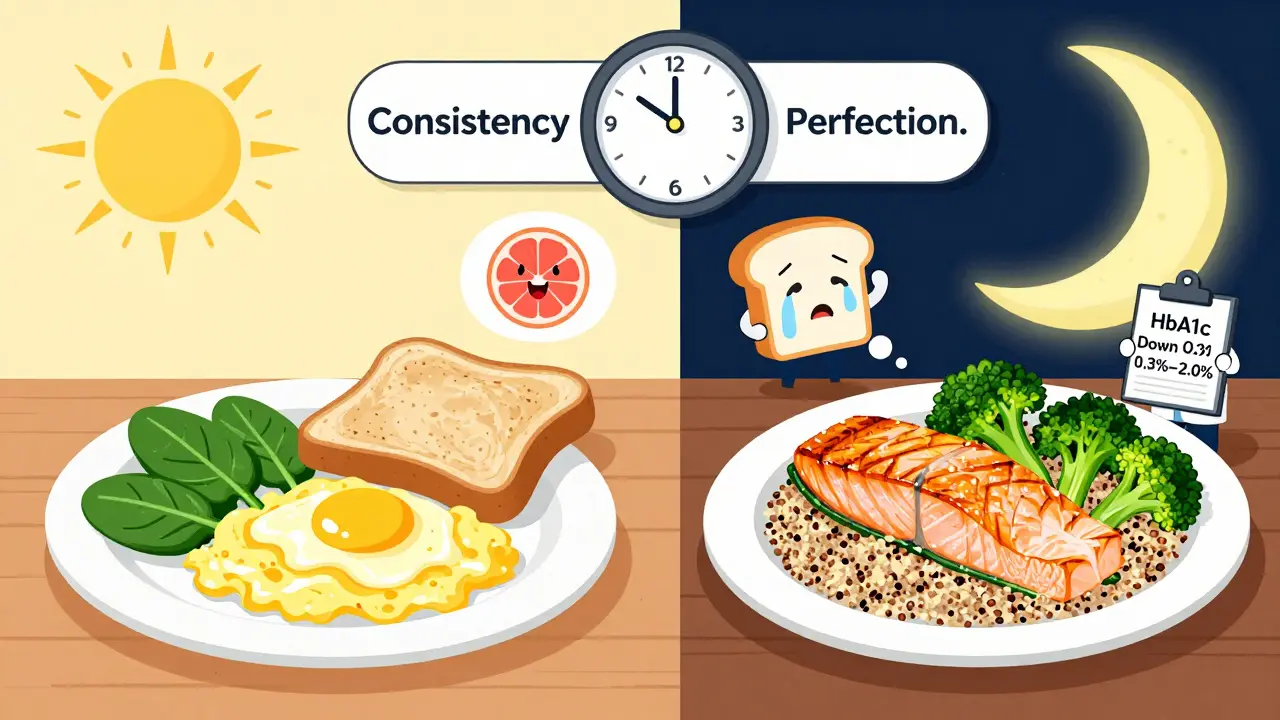
It’s not just what you eat-it’s when you eat. Skipping meals or eating irregularly can cause blood sugar swings. The American Diabetes Association recommends eating at consistent times each day. Try to space meals 2 to 3 hours apart. This gives your body time to process glucose before the next meal.
For people with Type 2 diabetes, eating a larger breakfast and smaller dinner often works better than the reverse. Studies show that front-loading carbs earlier in the day leads to better overnight blood sugar control.
Snacks aren’t bad if they’re smart. A handful of almonds, a hard-boiled egg, or a few slices of cucumber with hummus can keep blood sugar steady between meals. Avoid snacking on carbs alone-always pair them with protein or fat.
Real Meals That Work
Here are two simple meals that follow the plate method:
Breakfast: Two scrambled eggs with spinach and mushrooms, one slice of whole-wheat toast, and half a grapefruit.
Dinner: Grilled salmon, ½ cup cooked quinoa, and a large side of roasted broccoli and Brussels sprouts with olive oil and lemon.
These meals are balanced, satisfying, and don’t require fancy ingredients. The key is sticking to the plate model every time.
What About Carbs? Should I Cut Them?
Some people with diabetes try very low-carb diets. While they can help lower blood sugar short-term, they’re not necessary for everyone. The Dietary Guidelines for Americans recommend that 50-60% of your daily calories come from carbohydrates-especially from whole, unprocessed sources.
The goal isn’t to eliminate carbs. It’s to choose the right kinds and control the portions. A 2022 study in The Lancet found that people who followed a balanced, consistent meal plan for six months or longer lowered their HbA1c (a measure of long-term blood sugar) by 0.3% to 2.0%. That’s a big improvement-and it came from structure, not restriction.
Challenges and How to Overcome Them
Let’s be real: Eating right is harder if you’re short on time, money, or access to fresh food. About 23% of adults with diabetes face food insecurity. That means they can’t always afford healthy options.
Here’s what helps:
- Buy frozen vegetables-they’re just as nutritious as fresh and last longer.
- Choose canned beans and fish in water (rinse them to reduce sodium).
- Plan meals ahead. Cook a big batch of quinoa or chili on Sunday and portion it out.
- When eating out, ask for extra veggies instead of fries or rice. Skip the bread basket.
And don’t feel guilty if you slip up. One meal won’t ruin your progress. Consistency over time is what matters.
Final Thought: It’s About Patterns, Not Perfection
Diabetic meal planning isn’t about being perfect. It’s about building habits that last. You don’t need to eliminate sugar forever. You just need to make it the exception, not the rule.
Start with the plate method. Fill half with vegetables. Add protein and a small portion of whole carbs. Avoid sugary drinks and processed snacks. Eat at regular times. That’s it. You don’t need a diet. You need a routine.
Over time, you’ll notice more energy, fewer cravings, and better blood sugar numbers. And that’s the real win.
Can I still eat fruit if I have diabetes?
Yes, you can and should eat fruit. Whole fruits like apples, berries, oranges, and pears are packed with fiber, which slows down sugar absorption. Stick to one serving at a time-a small apple, a cup of berries, or half a banana. Avoid fruit juice, which removes the fiber and spikes blood sugar fast.
Is the keto diet good for diabetes?
Some people with diabetes see short-term blood sugar improvements on keto, but it’s not recommended for everyone. Very low-carb diets can be hard to sustain and may increase cholesterol or kidney strain in some people. The American Diabetes Association says eating plans should be personalized. A balanced plate with moderate carbs from whole foods is safer and more sustainable for most.
Do I need to count carbs?
Not necessarily. The plate method gives you portion control without counting. But if you’re on insulin or have trouble managing blood sugar, learning carb amounts can help. Start with the plate method first, then add carb counting only if you need more precision.
What’s the best snack for low blood sugar?
If your blood sugar is low (below 70 mg/dL), you need fast-acting sugar: 4 glucose tablets, ½ cup of juice, or 1 tablespoon of honey. After that, follow up with a protein or fat snack-like a handful of nuts or cheese-to prevent another drop. Don’t skip the follow-up snack.
Can I eat out and still follow a diabetic meal plan?
Absolutely. Order grilled or baked protein. Ask for extra vegetables instead of fries or rice. Skip the bread basket. Choose olive oil and vinegar over creamy dressings. Most restaurants will accommodate these requests. If you’re unsure, check the nutrition info online before you go.



Reviews
Okay but let’s be real-no one has time to plate their food like a damn nutritionist at 7pm after work. I just eat what’s in front of me and hope for the best. Sometimes it’s a burrito. Sometimes it’s cereal. Don’t judge me.
The plate method is dangerously oversimplified. Diabetes is not a portion control issue-it’s a metabolic dysfunction. If you’re relying on visual cues instead of carb counting, you’re setting yourself up for complications. This advice is dangerously lazy.
Actually, the plate method is evidence-based and aligns with ADA guidelines for glycemic control without requiring cognitive load. The 50-30-20 macro split (veggies/protein/carbs) creates a low-glycemic load profile that reduces postprandial spikes by 30-40% in RCTs. It’s not about perfection-it’s about sustainable physiological alignment. Carbs aren’t the enemy; refined carbs are. And yes, fiber matters. A lot.
THEY DON’T WANT YOU TO KNOW THIS BUT THE GOVERNMENT AND BIG PHARMA ARE PUSHING THE PLATE METHOD BECAUSE IT KEEPS YOU ON INSULIN AND MEDS FOREVER. REAL DIABETES CURE? KETO. FASTING. NO CARBS. NO SUGAR. NO EXCUSES. THEY MAKE BILLIONS OFF YOUR DEPENDENCE. I LOST 40 LBS AND NORMALIZED MY A1C IN 3 MONTHS WITH NOTHING BUT BACON AND BUTTER. THEY’RE LYING TO YOU. CHECK THE STUDIES-THEY’RE ALL FUNDED BY CORN SYRUP INDUSTRIES. #DiabetesTruth
I tried the plate thing... it’s nice... but honestly? I just eat like normal... and then take my meds... and then check my sugar... and then panic... and then eat a cookie to feel better... and then regret it... and then cry... and then swear I’ll do better tomorrow... and then do it all again... why is this so hard???!!!
There’s a quiet dignity in consistency-not perfection. The plate method isn’t a diet. It’s a rhythm. A way of showing up for yourself, day after day, without needing to be heroic. You don’t need to be flawless to be healing. You just need to show up. Even if today’s meal is imperfect, you’re still learning. And that’s enough.
fr tho-frozen peas are a lifesaver. and canned tuna in water? chef’s kiss. i cook a big pot of lentils on sunday and just grab a cup with some spinach and a boiled egg all week. no stress. no fancy stuff. also-chickpeas in the microwave with cumin? 5 mins. 100% life changing. also-don’t listen to the keto cultists. your kidneys will thank you. 🌱
One small step at a time. Swap the white rice for brown. Skip the soda. Add a handful of spinach to your scrambled eggs. That’s progress. You don’t need to overhaul your life today. Just one better choice. That’s enough.
I used to think I had to eat bland food to manage my diabetes. Then I found out you can make chili with black beans, peppers, and a little dark chocolate. Turns out healthy doesn’t mean tasteless. Just different. And honestly? I like it better now. No more sugar crashes. Just steady energy. That’s worth it.
bro i live in delhi and my aunty makes dal-chawal every day... but i swap white rice for brown... and add extra spinach... and eat it with curd... and my sugar is stable now... and i still eat samosas... once a month... its not about perfection its about balance... 🙏❤️