
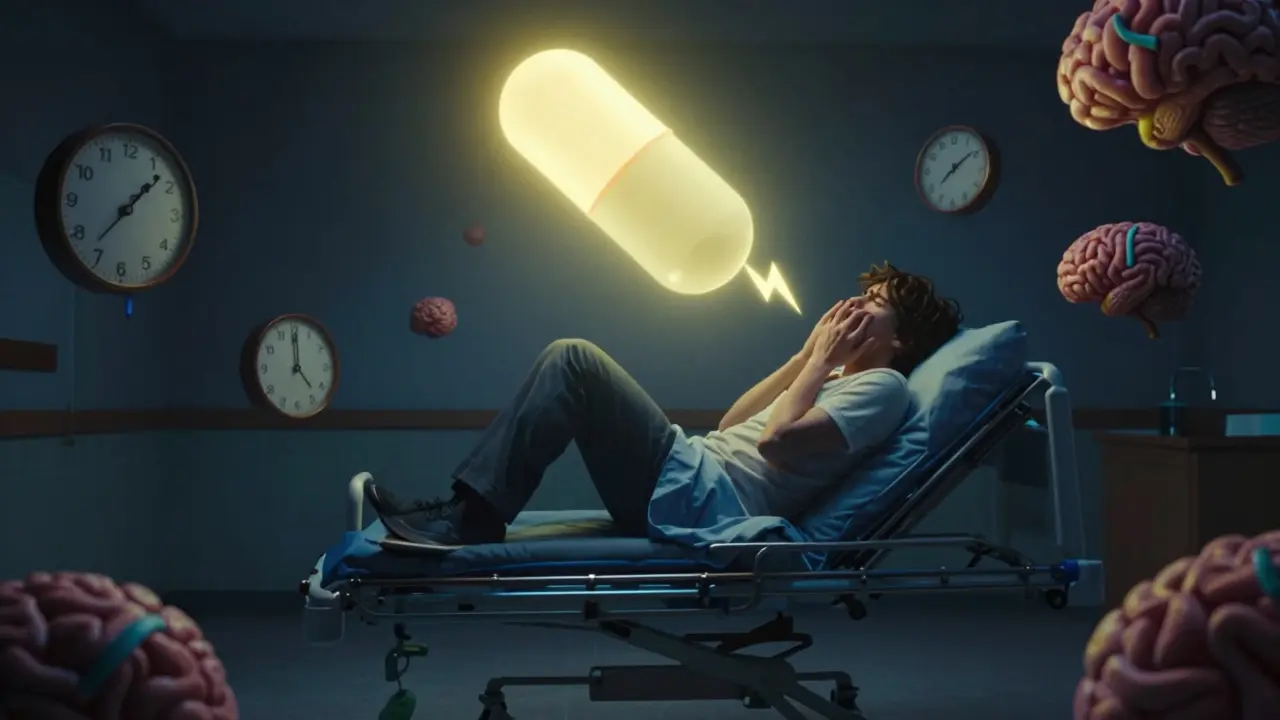
When you're in the middle of a panic attack, time doesn't just slow down-it stops. Your heart pounds like it's trying to escape your chest. Your breath comes in short, sharp gasps. You feel like you're dying, even though you know you're not. That's when benzodiazepines can feel like a lifeline. They work fast-sometimes in under an hour-to calm the storm in your brain. But what happens after that first dose? And what does it cost to keep taking them?
How Benzodiazepines Work
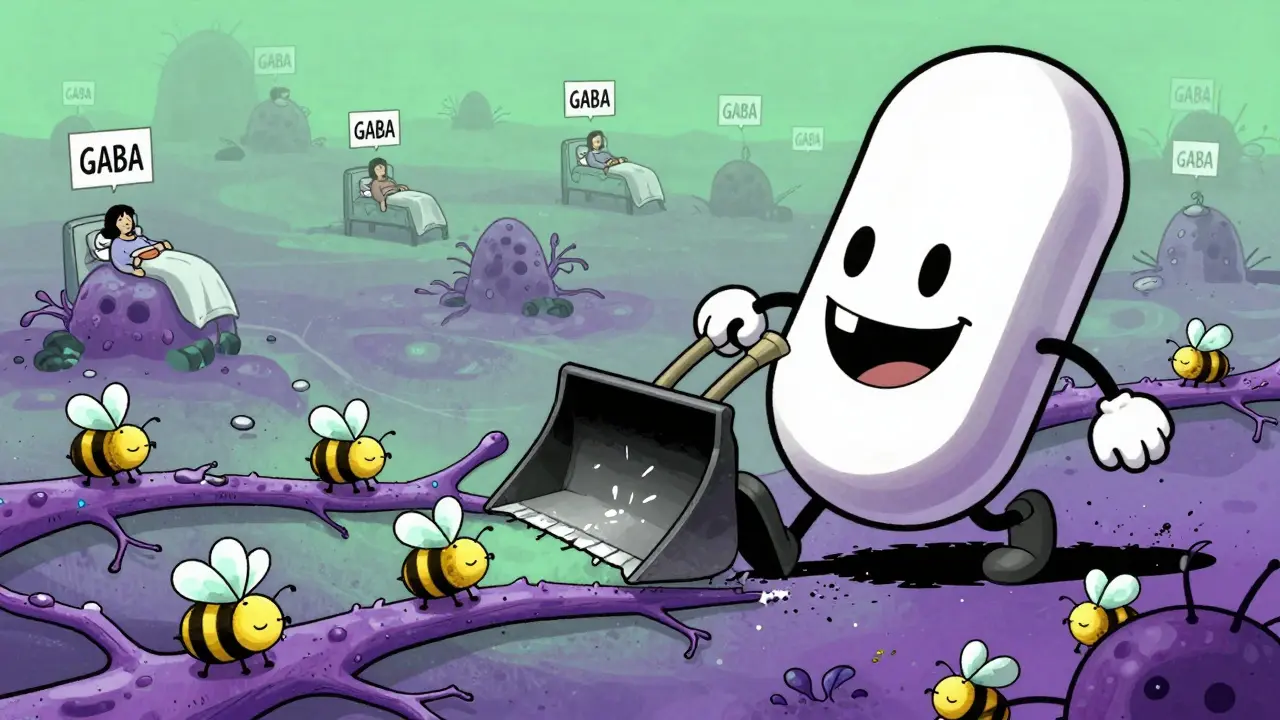
Benzodiazepines don't just make you feel relaxed. They change how your brain functions at a chemical level. They boost the effect of a natural calming chemical called GABA. GABA is like a brake pedal for your nervous system. When it's working right, it keeps your brain from overreacting to stress. Benzodiazepines press that brake harder and faster than your body can on its own.
This is why they're so effective for sudden, intense anxiety. A person with panic disorder might take alprazolam before a flight and suddenly feel like they can breathe again. Someone with severe insomnia might fall asleep within 30 minutes of taking triazolam. These drugs don't fix the root problem-they silence the symptoms. And that's both their power and their danger.
When They Help: Proven Uses
Benzodiazepines aren't just for anxiety. They have real, life-saving roles in medicine. For example, diazepam is used to stop prolonged seizures in emergency rooms. Midazolam is given before surgery to calm patients and prevent memory of the procedure. In alcohol withdrawal, chlordiazepoxide and oxazepam help prevent dangerous tremors, hallucinations, and seizures.
For acute situations, they're unmatched. While antidepressants like SSRIs take weeks to work, benzodiazepines work in hours. This makes them critical for people in crisis. A 2022 study in the Journal of Emergency Medicine found that nearly 90% of patients with status epilepticus responded to benzodiazepines within 10 minutes. That kind of speed saves lives.
They're also used for muscle spasms, severe agitation, and even as a pre-med before medical procedures. In these cases, their benefits are clear and well-documented.
The Hidden Cost: Dependence and Tolerance
Here's the problem: your brain adapts. After a few weeks of regular use, it starts to rely on the drug to function normally. You don't feel calm without it. You start needing higher doses to get the same effect. This is tolerance. And it's not rare-it happens in 30% to 50% of people who take benzodiazepines for more than four weeks, according to the World Health Organization.
Dependence isn't addiction. You can be physically dependent without craving the drug or using it compulsively. But when you try to stop, your nervous system goes into overdrive. Withdrawal symptoms can include:
- Rebound anxiety (worse than before you started)
- Insomnia that won't go away
- Shaking, sweating, heart palpitations
- Memory gaps, confusion, derealization
- In severe cases, seizures or hallucinations
A 2021 study from the Centre for Addiction and Mental Health found that 61% of people who struggled to quit benzos had taken them longer than prescribed-often because they didn't realize how quickly dependence forms. Many thought they were just "staying on top of their anxiety."
Who's Most at Risk?
Not everyone who takes benzodiazepines ends up dependent. But certain factors make it more likely:
- Taking them for more than 2-4 weeks
- Using high doses
- Having a history of substance use disorders
- Being over 65 (risk of falls and memory problems increases sharply)
- Using them with alcohol or opioids
Women are prescribed these drugs more often than men-nearly twice as many prescriptions in the U.S. in 2021. That doesn't mean women are more anxious. It means they're more likely to be offered a quick fix. Older adults are especially vulnerable. The American Geriatrics Society now advises avoiding benzodiazepines entirely in people over 65. Why? Because they increase the risk of falls by 50% and dementia by 32% with long-term use.
Alternatives That Last
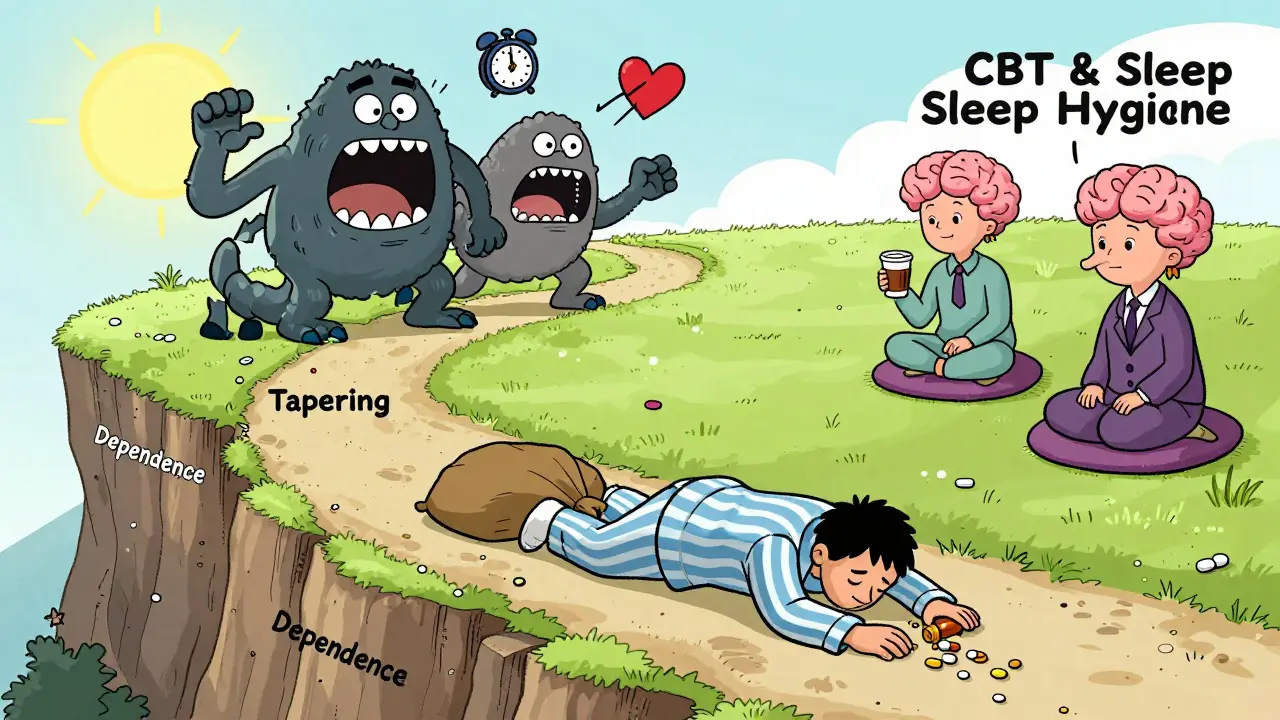
If you're dealing with chronic anxiety or insomnia, benzodiazepines are not the answer long-term. Antidepressants like sertraline or escitalopram take longer to work-four to six weeks-but they don't cause dependence. Cognitive Behavioral Therapy (CBT) for anxiety and insomnia has been shown to work better than medication over time. In fact, a 2023 study in JAMA Internal Medicine found that combining low-dose benzos with CBT reduced the risk of dependence by 58% compared to using medication alone.
For sleep, CBT-I (Cognitive Behavioral Therapy for Insomnia) is now the gold standard. It doesn't involve pills. It reteaches your brain how to sleep naturally. And the benefits last for years.
For panic attacks, exposure therapy helps you face the fear without needing to numb it. These methods take effort. They're not instant. But they're sustainable.
Stopping Safely
If you've been on benzodiazepines for more than a few weeks, quitting cold turkey is dangerous. Seizures and severe withdrawal can happen. The key is tapering-going down slowly.
The Ashton Manual, the most trusted guide for benzo withdrawal, recommends reducing your dose by 5% to 10% every one to two weeks. For someone who's been on a high dose for years, this can take six months or longer. Patience is everything. Support matters too. Many people find relief in peer groups like the Benzodiazepine Support Group, where over 10,000 people share their tapering journeys.
Doctors who specialize in psychopharmacology are trained in these protocols. But not all do. Ask your provider: "Do you follow the Ashton Manual?" If they don't know what you mean, it's time to find someone who does.
The Bigger Picture
Benzodiazepines are not going away. They're still essential for emergency care, seizure control, and acute crisis management. But their role is shrinking. In the UK, NICE guidelines now say doctors should not prescribe them for anxiety at all. In the U.S., Kaiser Permanente cut long-term prescriptions by 37% using automated alerts in electronic records. Prescription rates are falling-not because the drugs stopped working, but because we're learning better ways to help.
Global sales are still rising, but that's mostly due to aging populations and increased anxiety disorders. The real trend? Fewer people using them long-term. More people using them briefly, then switching to safer, lasting solutions.
What You Should Remember
- They work fast-but only for a short time. Don't use them as a long-term fix.
- Dependence can form in weeks. Even at prescribed doses.
- Withdrawal is real and often severe. Never stop suddenly.
- There are better options for lasting relief. CBT, SSRIs, and lifestyle changes don't carry the same risks.
- Ask questions. If your doctor prescribes a benzo for more than 2-4 weeks, ask why-and what else you could try.
Can benzodiazepines be used safely?
Yes-but only in the short term and under strict medical supervision. They're safe and effective for acute anxiety, panic attacks, seizures, or pre-surgery sedation when used for less than 2-4 weeks. Long-term use increases dependence, tolerance, and withdrawal risks dramatically. Always have a clear exit plan before starting.
Is it possible to become addicted to benzodiazepines even if I take them as prescribed?
Yes. Addiction is different from dependence, but physical dependence can develop even when you take your medication exactly as directed. Dependence means your body has adapted to the drug and will experience withdrawal if you stop. Addiction involves compulsive use despite harm. Many people become dependent without being addicted, but the line can blur with prolonged use.
Why are benzodiazepines still prescribed if they're so risky?
Because they're unmatched in emergencies. For someone having a seizure, in severe alcohol withdrawal, or in the middle of a panic attack so intense they can't speak, benzos can be life-saving. The issue isn't their use-it's their overuse for chronic conditions where safer, long-term options exist. Doctors are learning to use them as a bridge, not a permanent solution.
What are the signs I'm dependent on benzodiazepines?
You feel anxious or restless when it's time to take your next dose. You need a higher dose to get the same effect. You've tried to stop but couldn't because of withdrawal symptoms like insomnia, tremors, or increased heart rate. You're taking them more often than prescribed. You're avoiding situations where you won't have access to the drug. These are all signs you've developed dependence.
Are there any natural alternatives to benzodiazepines for anxiety?
There are no natural substances that replicate the exact effect of benzodiazepines, but some proven non-drug approaches work better over time. Cognitive Behavioral Therapy (CBT) is the most effective. Regular exercise, mindfulness meditation, sleep hygiene, and reducing caffeine can also significantly reduce anxiety. These methods don't offer instant relief-but they rebuild your brain's natural ability to handle stress without chemicals.
Next Steps If You're Taking Benzodiazepines
If you're on benzos and want to stop:
- Don't quit cold turkey. Talk to your doctor about a taper plan.
- Ask if you can combine tapering with CBT or another therapy.
- Use the Ashton Manual as a reference (search "Ashton Manual PDF").
- Join a support group. You're not alone.
- Track your symptoms. Write down how you feel each week. It helps you see progress.
If you're still on benzos because you feel you "need" them:
- Ask your doctor: "What's my exit strategy?"
- Ask: "Are there other treatments I haven't tried?"
- Research CBT-I for sleep or CBT for anxiety. Many online programs are free or low-cost.
- Remember: feeling better doesn't mean you need to keep taking pills.


Reviews