
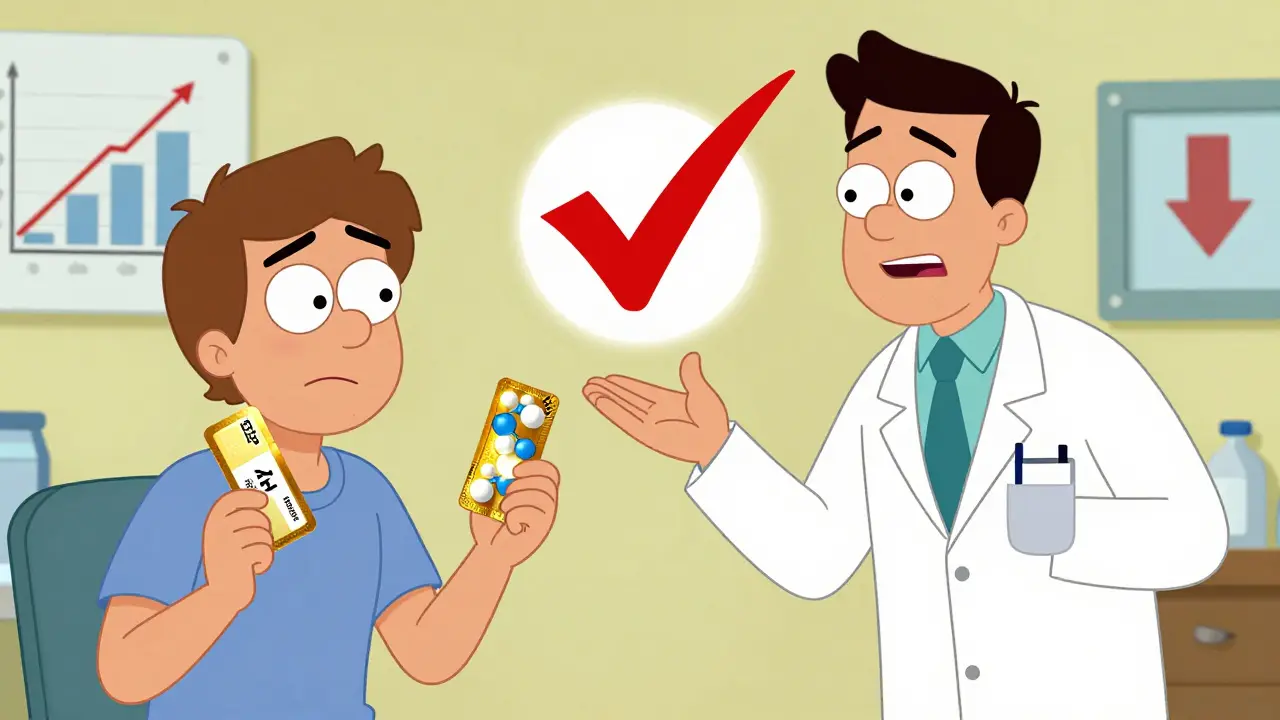
When a patient walks into your office asking why they’re now taking a pill with a different name and color, what do you say? You know the science says it’s the same. But do you have the facts ready - not just the talking points, but the real data that shows generics don’t just cost less, they work just as well?
Let’s cut through the noise. For over 30 years, regulators, researchers, and clinicians have been asking the same question: Do generic drugs deliver the same clinical results as brand-name ones? The answer isn’t opinion-based. It’s buried in millions of patient records, dozens of peer-reviewed studies, and decades of real-world prescribing patterns.
What the data actually shows
A 2019 study in PLOS Medicine looked at 1.3 million patient pairs across 14 different drug classes. They matched people based on age, comorbidities, income, and even pharmacy usage. Then they tracked outcomes like hospitalizations, emergency visits, and disease control. The results? In 12 out of 16 comparisons, there was no statistically meaningful difference between generic and brand-name drugs. Not a hint of inferior performance. Just flat, solid equivalence.
Take blood pressure meds. Amlodipine - the generic version - actually showed better cardiovascular outcomes than the brand-name version. The hazard ratio? 0.91. That’s a 9% lower risk of heart attack or stroke. Same for the combo drug amlodipine/benazepril: 16% lower risk. These aren’t flukes. They’re real-world signals that generics aren’t just equal - sometimes they’re better, likely because patients stick with them longer when they’re cheaper.
For diabetes, a 2023 study of 2.1 million patients found identical HbA1c control between generic and brand-name metformin. The difference? -0.02%. That’s less than a drop in a bucket. No one’s blood sugar went off the rails because they got the generic.
Even in tricky areas like epilepsy or transplant rejection, where people worry about tiny variations, the data holds. A 2020 study in Nature Scientific Reports followed 120 transplant patients switching back and forth between brand and generic tacrolimus over 42 days. They measured blood levels after every switch. No clinically significant fluctuations. No rejection spikes. No safety red flags.
Why do some providers still hesitate?
It’s not about science. It’s about perception.
Some providers remember the early days - when generics had inconsistent dissolution profiles or different fillers that changed absorption. But that was before the FDA tightened its standards. Today, every generic must meet strict bioequivalence rules: the amount of active ingredient must be within 90-110% of the brand, and its absorption curve (AUC) and peak concentration (Cmax) must fall within 80-125% of the original. For high-risk drugs like warfarin or levothyroxine, the range is even tighter.
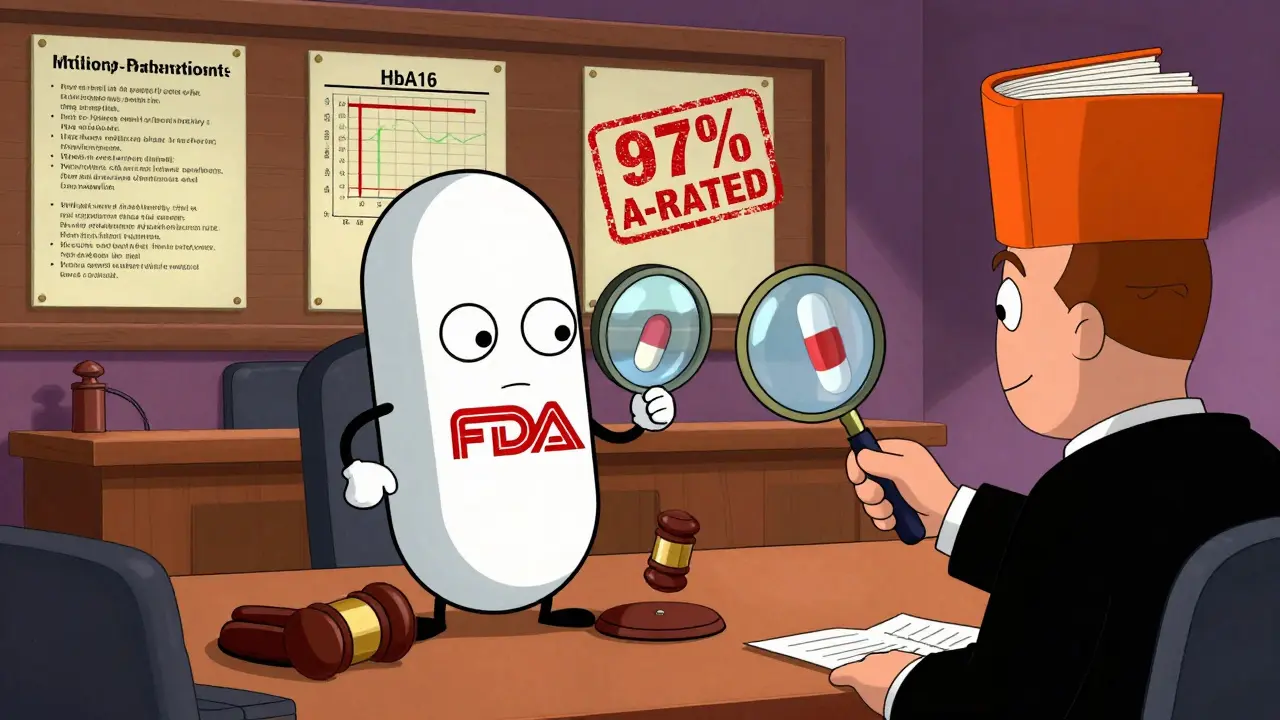
The FDA’s Orange Book lists over 13,000 approved generic drugs. More than 97% are rated “A” - meaning they’re therapeutically equivalent. The remaining 3%? Those are complex products - inhalers, topical creams, or injectables - where bioequivalence is harder to prove. But even those are closely monitored. If a generic gets an “B” rating, it’s flagged. You’ll know before you prescribe it.
And yet, some clinicians still default to brand names out of habit. Or because a patient complained. But here’s what the data says about complaints: a 2017 FDA analysis found no difference in adverse event rates between generic and brand-name users. Only 0.02% of all adverse event reports involved generics. Meanwhile, 3.2% involved brand-name drugs - not because generics are unsafe, but because more people take them.
The cost difference isn’t just a number - it’s a clinical factor
Generics cost 80-85% less. That’s not marketing fluff. It’s a fact backed by the Congressional Budget Office: from 2008 to 2017, generics saved the U.S. healthcare system $1.68 trillion. In 2021 alone, they saved $377 billion.
But here’s what matters most to providers: cost directly impacts adherence. A patient who can’t afford their $300 brand-name statin will skip doses. Or stop entirely. Switch them to the $12 generic? Their adherence jumps. Their LDL drops. Their risk of heart attack falls.
A 2020 study of 3.5 million Medicare beneficiaries showed something startling: in unadjusted data, generic users had higher five-year survival rates. Was the generic better? No. It was because healthier, more financially stable patients were more likely to get generics in the first place. Once researchers adjusted for income, age, and baseline health, the survival gap closed. The real story? Generics don’t improve outcomes because they’re better drugs. They improve outcomes because more people take them.
What about psychiatric meds? The outlier
Yes, there’s a twist. Some studies show slightly higher psychiatric hospitalization rates with generic escitalopram and sertraline. But here’s the catch: the same pattern showed up when comparing authorized generics (same formula as brand, just sold under a different label) to the brand-name version. That means it’s not the drug - it’s the patient’s belief.
Patients associate color, shape, and brand name with effectiveness. Change the pill, and even if the active ingredient is identical, some feel like something’s wrong. That’s not a failure of the generic. It’s a failure of communication.
When providers explain that the FDA requires generics to be identical in performance - not just chemistry - patient trust improves. One study found that after a simple 30-second explanation about bioequivalence, 78% of patients stopped asking to switch back.
What should you do in practice?
Start prescribing generics without hesitation - unless you’re dealing with a narrow therapeutic index drug and the patient has a history of instability. Even then, switch them gradually and monitor.
Use the FDA’s Orange Book. Check the therapeutic equivalence code before you write. If it’s “A,” you’re good. If it’s “B,” dig deeper. But 97% of the time, you’re looking at an A-rated product.
When a patient pushes back, don’t say, “It’s the same.” Say, “This pill has the exact same active ingredient, absorbed the same way, tested in the same way as the brand. The only difference? You’re saving $280 a month.”
Document it. Use shared decision-making. Let them know the FDA reviews each generic for 10 months on average before approving it. That’s longer than many new brand-name drugs get.
And remember: in 2022, 90% of all prescriptions filled in the U.S. were generics. That’s not a trend. That’s the standard. If you’re still prescribing brand-name drugs out of habit, you’re not protecting your patients - you’re just increasing their bills.
Real-world impact: what happens when you switch
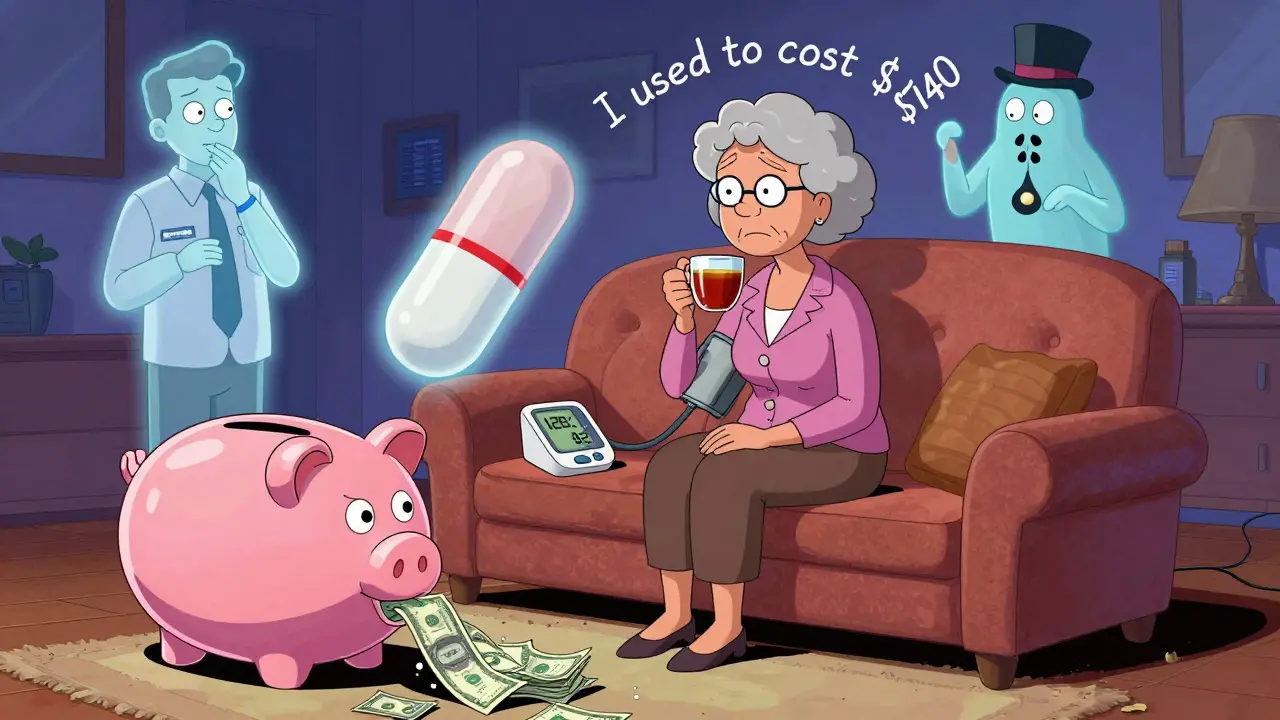
Take a 68-year-old with hypertension. She’s on brand-name lisinopril - $140/month. Her copay is $50. She skips doses. Her BP climbs. You switch her to generic lisinopril - $4/month. She fills it every time. Her BP drops to 128/82. Her kidney function stabilizes. She stops going to urgent care.
That’s not theory. That’s what happens when you use the data.
Generics aren’t cheaper because they’re inferior. They’re cheaper because they don’t carry the cost of marketing, patent litigation, or executive bonuses. The active ingredient? Identical. The clinical outcome? Identical. The patient’s quality of life? Often better.
Are generic drugs really as effective as brand-name drugs?
Yes - for the vast majority of drugs, clinical studies show no meaningful difference in effectiveness or safety. The FDA requires generics to meet strict bioequivalence standards: they must deliver the same amount of active ingredient at the same rate as the brand-name version. Large-scale studies involving millions of patients confirm identical outcomes for conditions like hypertension, diabetes, and high cholesterol.
Why do some patients say generics don’t work for them?
Most often, it’s not the drug - it’s the pill. Generics may look different in color, shape, or size because they use different inactive ingredients. Some patients associate these visual changes with lower quality, even when the active ingredient is identical. Studies show that when patients are educated about bioequivalence, their concerns drop dramatically. Authorized generics - which look identical to the brand - show even fewer complaints.
Are there any drugs where generics aren’t as good?
Rarely. The FDA classifies about 3% of generics as “B-rated,” meaning they aren’t automatically considered equivalent. These are typically complex drugs like inhalers, topical creams, or narrow therapeutic index drugs (e.g., warfarin, levothyroxine). For these, clinicians should monitor patients closely after switching. But even for these, most generic versions still perform as well as brand-name drugs - especially when patients are followed up.
Do generics cause more side effects?
No. Data from the FDA’s adverse event reporting system shows only 0.02% of all drug-related adverse events between 2015 and 2020 were linked to generics. By comparison, 3.2% involved brand-name drugs. This isn’t because generics are safer - it’s because far more people take generics. The risk profile is identical.
Can I trust generics approved by the FDA?
Absolutely. The FDA requires generic manufacturers to prove their product is bioequivalent through rigorous testing in healthy volunteers. The review process takes an average of 10 months - longer than many new brand-name drugs. Each generic is held to the same quality standards as the original. Over 13,000 generic products are currently approved in the U.S., and 97% are rated therapeutically equivalent.
Bottom line: the data doesn’t lie. Generics work. They’re safe. And they save lives - not just money. If you’re still holding back, ask yourself: are you doing what’s best for your patients… or just what’s familiar?



Reviews
Been prescribing generics for years in rural India. Patients notice the price difference right away - and they’re grateful. No drop in adherence. No spike in ER visits. Just people getting their meds and staying healthy. The data’s clear, but real life confirms it too.
Ugh I HATE when patients come in demanding the brand name. Like bro it’s the same damn pill. I had one guy cry because his generic lisinopril was blue instead of pink. I told him the color doesn’t control his BP - his kidneys do. He stared at me like I spoke alien.
Generics work. End of story.
As someone who’s lived in the US and Indonesia, I’ve seen how stigma around generics varies. In the US, it’s ‘brand = better.’ In Jakarta? It’s ‘why pay more if it’s the same?’ Cultural perception matters more than chemistry sometimes.
One must acknowledge the epistemological underpinnings of pharmaceutical equivalence. The bioequivalence paradigm, while statistically robust, does not account for individual pharmacodynamic variance. One cannot reduce clinical outcomes to aggregate data alone.
My grandma switched to generic metformin and said she felt ‘weird’ for a week… then realized it was just her brain being weird. 😅 She’s been on it for 3 years now. No issues. Just saved $200/month. I told her the pill doesn’t care what color it is. She said ‘but baby, the box does.’ 😂
i mean like… i get it. i used to be skeptical too. then i started seeing patients who couldn’t afford their meds. one lady was splitting her 10mg amlodipine in half because she couldn’t afford the $80 brand. switched her to generic - $4. she’s been stable for 2 years. no drama. no side effects. just… life. also i misspell sometimes. forgive me.
Let me tell you something - this isn’t just about pills. It’s about dignity. 💯 When someone can afford their meds? They sleep better. They show up for work. They hug their kids. Generics aren’t ‘cheap’ - they’re *fair*. And that’s worth fighting for. 🙌 #PharmaForThePeople
China and India are flooding the market with cheap generics. The FDA lets them in, but you know what? A lot of them aren’t even made in the same clean rooms as the American ones. You think that’s okay? Our people deserve better.
The real question isn’t whether generics work - it’s why we let marketing dictate medicine. We’ve turned healthcare into a brand loyalty contest. The science says they’re equivalent. The culture says otherwise. That’s not a pharmaceutical problem. That’s a moral one.
They say generics are ‘just as good.’ But when I was in med school, the professor said: ‘If you want to be sure, prescribe the brand.’ And guess what? I’ve never had a patient crash because of a generic. But I’ve had three who swore they felt ‘off’ - and guess what? They all switched back to brand. Coincidence? I think not.
Here’s the truth nobody talks about: generics save lives because they’re affordable. A patient on $12 metformin stays on it. One on $300? Stops after 2 months. The drug doesn’t change. The behavior does. So stop pretending it’s about efficacy - it’s about access. And if you’re still prescribing brand over generic? You’re not being careful. You’re being privileged.