
Sleep Apnea Risk Calculator
This calculator estimates your risk of developing sleep apnea based on your opioid use and other risk factors. Opioids like oxycodone and morphine can significantly increase your risk by suppressing breathing during sleep. Early detection is crucial for preventing life-threatening complications.
Your risk assessment
Why this matters: According to the article, 71% of chronic opioid users have moderate to severe sleep apnea. Each additional 10 mg of morphine-equivalent daily dose increases your apnea-hypopnea index (AHI) by 5.3%. For those taking over 100 mg/day, there's a 65% chance of having more than 20 central apneas per hour.
What you should do
- Ask your doctor about a sleep study if you're on long-term opioids
- Consider discussing alternative pain management options
- If diagnosed with sleep apnea, CPAP therapy is highly effective
- Never stop opioids suddenly - work with your doctor to taper safely
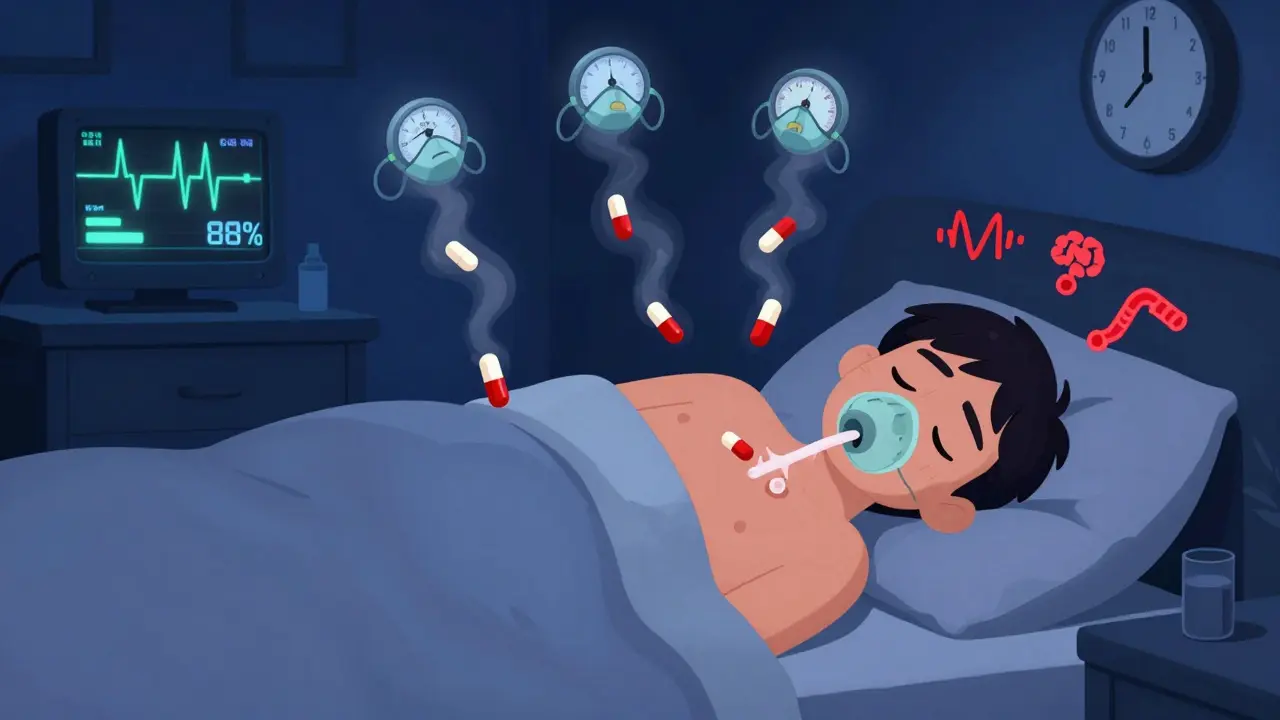
When you take opioids for chronic pain, you might not think about your breathing while you sleep. But for many people, that’s exactly where the danger lies. Opioids don’t just dull pain-they slow down your brain’s natural drive to breathe, especially during sleep. When this happens alongside sleep apnea, the result can be life-threatening drops in blood oxygen levels-known as nighttime hypoxia.
How Opioids Disrupt Breathing During Sleep
Opioids like oxycodone, hydrocodone, morphine, and methadone act on receptors in the brainstem that control breathing. These areas, especially the pre-Bötzinger complex, are responsible for keeping your breathing steady while you’re asleep. When opioids bind to these receptors, they reduce how often you breathe and how deeply you inhale. Studies show that opioids can cut your body’s response to low oxygen by 25-50% and your response to high carbon dioxide by 30-60%. That means when your oxygen levels start to drop during sleep, your body doesn’t react fast enough-or at all-to fix it.On top of that, opioids relax the muscles in your upper airway, including the tongue and throat. This makes it easier for your airway to collapse, especially if you already have obstructive sleep apnea. The combination leads to two types of breathing pauses: central apneas (your brain stops sending the signal to breathe) and obstructive apneas (your airway physically closes). Many opioid users experience both at once, creating a dangerous mix that’s harder to treat than either condition alone.
The Numbers Don’t Lie: How Common Is This?
About 40% of U.S. adults take prescription opioids each year. And among those on long-term therapy, the risk of sleep apnea skyrockets. A 2022 analysis of seven studies found that 71% of chronic opioid users had moderate to severe sleep apnea-defined as 15 or more breathing pauses per hour. Nearly half had severe sleep apnea (30+ pauses per hour). Even more alarming: 80% of opioid users showed signs of central sleep apnea, with an average of 12 breathing pauses per hour caused by brain signaling failure.One study found that 68% of people on opioids had oxygen levels below 88% for more than five minutes during sleep. Compare that to just 22% of people not taking opioids. The higher the dose, the worse it gets. Every extra 10 mg of morphine-equivalent daily dose increases your apnea-hypopnea index (AHI) by 5.3%. People taking over 100 mg/day of morphine equivalents have a 65% chance of having more than 20 central apneas per hour.
Why Pre-Existing Sleep Apnea Makes Things Worse
If you already have untreated obstructive sleep apnea, adding opioids is like lighting a match near gasoline. Research shows that people with both conditions have a 3.7 times higher risk of dropping below 80% oxygen saturation during sleep than those with sleep apnea alone. This isn’t just a theoretical risk-it leads to real, measurable harm. Nightly drops in oxygen can damage your heart, increase blood pressure, raise your risk of stroke, and contribute to daytime fatigue, memory problems, and depression.Experts call this a "perfect storm." During sleep, your body naturally reduces breathing effort. Opioids push that reduction even further. Without the wakefulness drive to compensate, your brain doesn’t wake you up to take a breath-even when your oxygen is critically low. That’s why some people die in their sleep without ever waking up.
Who’s Most at Risk?
Certain factors make opioid-related sleep apnea more likely:- High-dose opioids: Doses over 50 mg morphine equivalent daily (MEDD) significantly increase risk.
- Methadone: This opioid carries the highest risk-4.2 times more likely to cause severe sleep apnea than other opioids.
- Obesity: BMI over 30 doubles the chance of airway collapse.
- Snoring or witnessed apneas: If your partner says you stop breathing at night, that’s a red flag.
- Older age: Breathing control weakens with age, and opioid sensitivity increases.
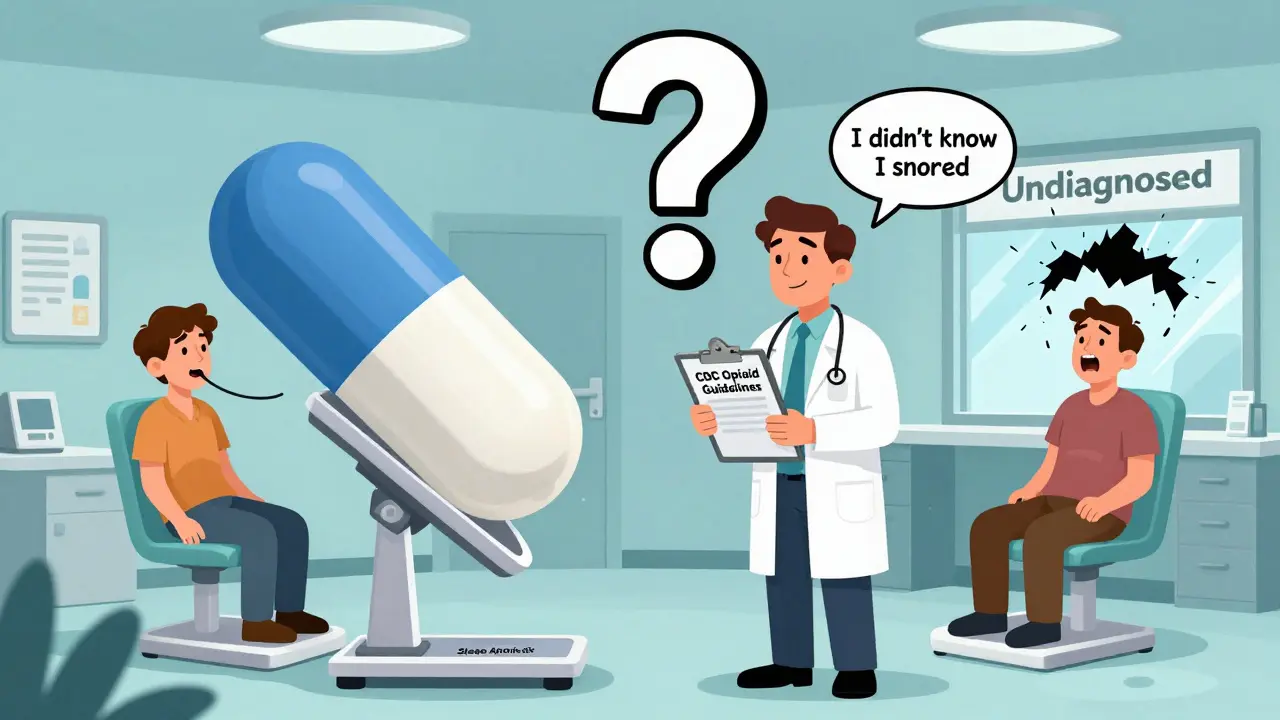
Even if you don’t think you have sleep apnea, you might. Many people with opioid-related apnea have never been tested. At the University of Michigan, 78% of opioid patients referred for sleep studies had undiagnosed sleep-disordered breathing. Some didn’t even know they snored.
What Doctors Should Be Doing
The CDC updated its opioid prescribing guidelines in 2022 to include a clear warning: screen for sleep apnea before starting long-term opioid therapy, especially at doses above 50 MEDD. The American Academy of Sleep Medicine recommends a full sleep study (polysomnography) for anyone starting high-dose opioids, particularly if they have obesity, snoring, or daytime fatigue.But here’s the problem: only 28% of primary care doctors routinely screen for sleep apnea before prescribing opioids. Many say they don’t have access to sleep specialists or don’t know how to start the conversation. That’s a gap with deadly consequences.
What Can You Do?
If you’re on long-term opioids, here’s what you should ask your doctor:- "Could my opioids be affecting my breathing at night?"
- "Should I get tested for sleep apnea?"
- "Is there a lower-risk pain medication I could try?"
- "Would a sleep study help me avoid serious complications?"
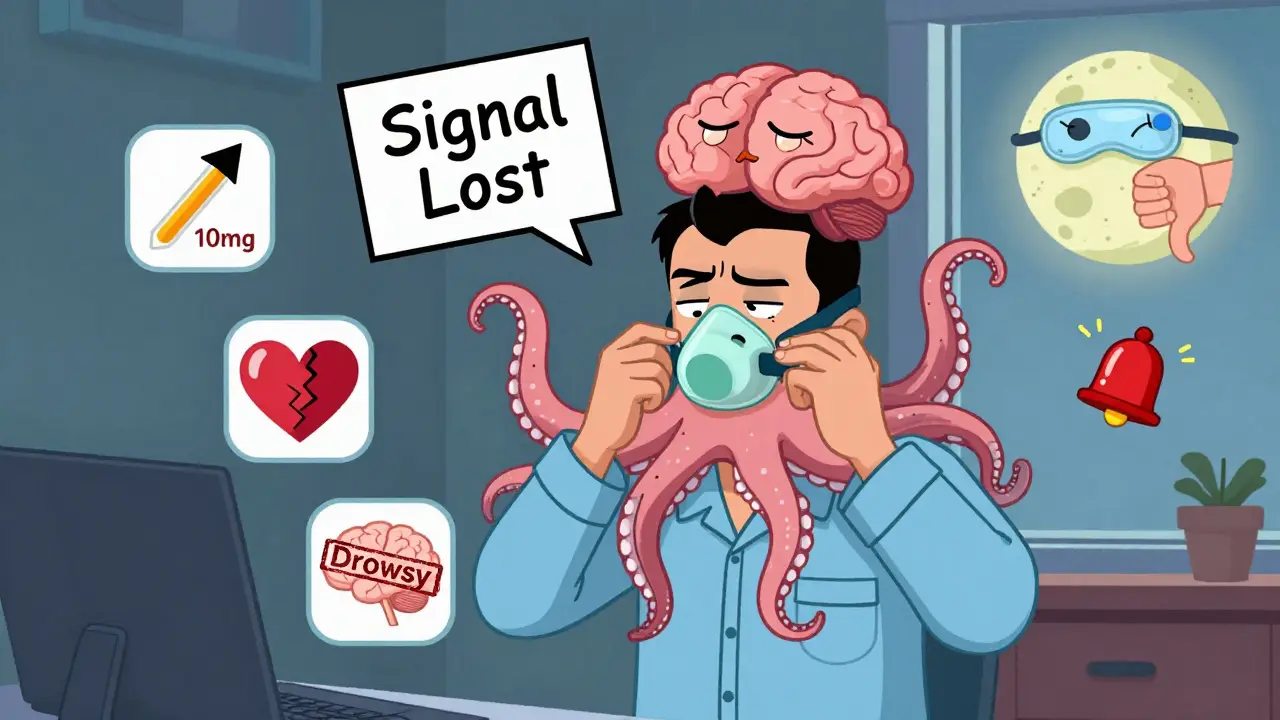
If you’re diagnosed with sleep apnea, treatment can save your life. CPAP (continuous positive airway pressure) is the most common solution. It keeps your airway open and helps your brain respond better to low oxygen. But adherence is low-only 58% of opioid users stick with CPAP, compared to 72% of others. Why? Opioids can cause drowsiness, brain fog, and discomfort, making it harder to tolerate the mask.
Some patients benefit from switching to less respiratory-depressant opioids, reducing their dose, or using positional therapy (sleeping on the side). A new clinical trial at UCSD is testing acetazolamide, a drug that stimulates breathing, and early results show a 35% drop in apnea events. The FDA also cleared a new home sleep test device in early 2023 specifically for opioid users, making screening faster and more accessible.
Real Stories, Real Risks
One Reddit user wrote: "I started oxycodone for back pain and woke up gasping every night. I thought it was just stress. My wife finally pushed me to get tested. I had severe sleep apnea. After starting CPAP, I haven’t felt this awake in years." Another said: "I stopped my opioids after my doctor told me about the risk. But my breathing didn’t improve. I guess my brain got used to it." These stories reflect the complexity. For some, stopping opioids helps. For others, the damage to breathing control may be lasting. That’s why early detection matters.The Future: Better Screening, Better Treatments
Researchers are now looking at genetic markers to predict who’s most at risk. One gene variant, PHOX2B, is linked to a 3.2-fold higher chance of severe central apnea on opioids. If future tests can identify these people before they start opioids, doctors could choose safer pain treatments from the start.Pharmaceutical companies are also developing new painkillers that target pain without depressing breathing. Drugs like cebranopadol show promise in early trials, but they’re still years away from being widely available.
For now, the message is clear: if you’re on opioids long-term, don’t assume your sleep is fine. Nighttime hypoxia doesn’t always come with loud snoring or obvious symptoms. It can sneak up quietly-until it’s too late.
Can opioids cause sleep apnea even if I’ve never had it before?
Yes. Opioids can trigger central sleep apnea in people with no prior history. They suppress the brain’s breathing signals and relax throat muscles, leading to pauses in breathing during sleep. Studies show up to 71% of chronic opioid users develop moderate to severe sleep apnea, even without obesity or snoring.
How do I know if my opioids are affecting my sleep?
Watch for signs like waking up gasping, morning headaches, extreme daytime fatigue, poor concentration, or being told you stop breathing while asleep. If you’re on opioids long-term and have any of these, ask for a sleep study. You don’t need to wait for symptoms to be severe-early detection saves lives.
Is CPAP safe to use with opioids?
Yes, CPAP is not only safe-it’s often life-saving for opioid users with sleep apnea. It keeps your airway open and helps your body respond better to low oxygen. While some people find it uncomfortable, especially with opioid-related drowsiness, most adapt with time and support. Skipping CPAP because you’re on opioids is dangerous.
Can I reduce my opioid dose to lower my sleep apnea risk?
Yes, reducing your dose can significantly lower your risk. Each 10 mg increase in morphine-equivalent daily dose raises your apnea risk by 5.3%. Work with your doctor to explore tapering strategies or alternative pain treatments like physical therapy, nerve blocks, or non-opioid medications. Never stop opioids suddenly-this can cause dangerous withdrawal.
Should I get a sleep study before starting opioids?
If you’re being prescribed long-term opioids at doses above 50 mg morphine equivalent daily-or if you have obesity, snoring, or daytime sleepiness-yes. The CDC and American Academy of Sleep Medicine now recommend screening before starting therapy. A sleep study can catch hidden apnea and help you avoid life-threatening complications.
Are there alternatives to opioids for chronic pain that don’t affect breathing?
Yes. Non-opioid options include NSAIDs (like celecoxib), antidepressants (like duloxetine), anticonvulsants (like gabapentin), physical therapy, acupuncture, and nerve stimulation devices. While they may not work as fast or as strongly as opioids for everyone, they carry far less risk of respiratory depression and sleep apnea. Discuss these with your pain specialist.


Reviews
Bro, I was on oxycodone for a year after my surgery and I’d wake up choking like a fish outta water. Thought it was just bad dreams until my girlfriend recorded me-27 seconds of silence each time. No snoring, no noise, just… nothing. Docs said it was central apnea from the opioids. I quit cold turkey and still get night sweats, but at least I’m not dying in my sleep anymore. 😵💫
It is imperative to recognize the neurophysiological perturbations induced by exogenous opioid ligands upon the pre-Bötzinger complex, which governs respiratory rhythmogenesis. The resultant attenuation of chemoreceptor sensitivity to hypercapnia and hypoxia constitutes a well-documented iatrogenic risk factor for central sleep apnea. Epidemiological data indicate a dose-dependent correlation between morphine-equivalent daily dosage and apnea-hypopnea index elevation, with thresholds exceeding 50 mg MEDD demonstrating statistically significant increases in nocturnal desaturation events. Clinical guidelines from the CDC and AASM necessitate polysomnographic screening prior to long-term opioid initiation, particularly in populations with comorbid obesity or upper airway collapsibility.
So… let me get this straight. You’re saying if I take pain meds, I might stop breathing in my sleep? Wow. I thought the real danger was just getting addicted. 😅
I work in a pain clinic and see this every week. Patients come in saying they’re tired all the time, can’t focus, and blame stress or aging. Nine times out of ten, they’re on opioids and have never been screened. We’ve started doing home sleep tests right in the office now-simple, no overnight stay. It’s changed lives. If you’re on opioids long-term, just ask for the test. No judgment. Just care.
Oh my gosh, this hits so close to home. My mum’s on methadone for chronic neuropathy, and she’s been snoring like a chainsaw for years-but she swears it’s just ‘old age.’ Last month she passed out in the kitchen from a dizzy spell and we rushed her to ER. Turns out her oxygen dipped to 76% overnight. We got her on CPAP, and she’s like a different person-smiling, talking, even started gardening again. I wish someone had told us this sooner. Please, if you’re on opioids and feel like you’re always dragging, don’t brush it off. Get checked. It’s not just about sleep-it’s about staying alive.
I’ve been on long-term opioids for fibromyalgia since 2018. I never thought I had sleep apnea-I don’t snore, I’m not overweight. But after reading this, I finally got tested. Turns out I had 42 central apneas an hour. I started CPAP and honestly? It’s been the best thing I’ve ever done. I still take my meds, but now I’m not waking up gasping, my brain fog lifted, and I can actually remember my kids’ birthdays again. It’s not a cure, but it’s a lifeline. If you’re reading this and you’re on opioids-please, just ask your doctor for a sleep study. It’s not scary. It’s just smart.
CPAP works. But compliance is low because the mask feels like a torture device when you’re already drowsy from opioids. A lot of patients give up. Suggesting positional therapy or lower doses might help more than we think. Also-acetazolamide trials look promising. Keep an eye out.
The PHOX2B gene variant is a critical biomarker for opioid-induced central apnea susceptibility. Population-level screening for this polymorphism could enable precision prescribing, reducing iatrogenic respiratory depression by up to 60% in genetically vulnerable cohorts. Current clinical protocols remain reactive rather than predictive-this is a missed opportunity for preventative medicine.
My cousin’s on methadone and didn’t know she had apnea until she collapsed at a family BBQ. Now she uses CPAP and her kids say she’s ‘back.’ 🤍 If you’re on opioids, please don’t wait until it’s too late. Ask for the test. It’s not weak-it’s brave.
So you’re telling me people are dying because doctors are too lazy to screen for sleep apnea? That’s not negligence-that’s malpractice. If your doctor doesn’t bring this up, find a new one. This isn’t a ‘maybe,’ it’s a guaranteed risk. Stop being polite and start demanding care.