

Bile Acid Sequestrant Timing Calculator
Select Your Medications
Timing Recommendations
Important Safety Notes
Critical medications require extra caution:
- Warfarin - Monitor INR closely. A 2021 study showed 28% of BAS users had INR fluctuations.
- Levothyroxine - Minimum 8 hours separation recommended. 23% absorption reduction reported at 4 hours.
- Birth control - Documented cases of unintended pregnancy with insufficient separation.
When you’re taking a bile acid sequestrant like cholestyramine, colestipol, or colesevelam to lower your cholesterol, it’s not just about the pill you swallow. It’s about when you take it - and what else you take with it. These medications don’t get absorbed into your bloodstream. Instead, they sit in your gut, acting like a sponge that grabs bile acids and flushes them out. That’s how they lower LDL cholesterol. But that same sponge doesn’t care if it’s grabbing bile acids or your blood pressure pill, thyroid medicine, or birth control. And that’s where things go wrong.
How Bile Acid Sequestrants Work (and Why They Interfere)
Bile acid sequestrants (BAS) are resins - not drugs in the traditional sense. Cholestyramine is a styrene-divinylbenzene copolymer, colestipol is a polystyrene hydroxide polymer, and colesevelam is a polyallylamine hydrochloride polymer. They’re designed to bind to bile acids in your intestines, forcing your liver to pull more cholesterol from your blood to make new ones. Simple. Effective. But they don’t pick and choose. They bind to anything with a negative charge - including many medications.
Studies show cholestyramine can bind up to 12 times its weight in bile acids. That’s a lot of surface area. And because they’re not absorbed, they stay in your gut for hours, waiting to grab whatever passes through. If you take your antibiotic, thyroid pill, or birth control within a few hours of your BAS, you risk reducing its effectiveness. In some cases, that means your medication doesn’t work at all.
Which Medications Are Most at Risk?
Not all drugs are equally affected. Some slip through. Others get trapped. Here are the big ones:
- Levothyroxine - Used for hypothyroidism. Even a 4-hour gap might not be enough. One study found 23% less absorption when taken 4 hours apart. Experts now recommend 8 hours between levothyroxine and BAS.
- Warfarin - A blood thinner with a narrow safety window. If BAS binds it, your INR can drop dangerously low, raising your risk of clots. A 2021 study in Thrombosis Research showed INR levels fluctuated in 28% of BAS users on warfarin, even with timing rules.
- Oral contraceptives - Birth control pills can be rendered ineffective. There are documented cases of unintended pregnancy in women who didn’t separate their BAS from their pill by enough time.
- Metformin - Especially the extended-release form. Colesevelam (Welchol) reduces its absorption. The FDA recommends at least 4 hours between them.
- Fat-soluble vitamins - A, D, E, and K. Long-term BAS users have a 12.7% risk of vitamin K deficiency, according to the Journal of Clinical Lipidology (2019). This can lead to bleeding risks or bone loss.
- Antibiotics - Like tetracycline or ciprofloxacin. They can be bound and rendered useless.
It’s not just about the drug - it’s about the formulation. Extended-release pills, enteric-coated tablets, and capsules are more vulnerable than immediate-release versions. And not all BAS are equal. Colesevelam has about 30-40% less binding capacity than cholestyramine, making it a better choice if you’re on multiple medications.
When to Take Your Medications
There’s no one-size-fits-all rule. The old advice - “take it 4 hours before or after” - is a starting point, not a guarantee. Here’s what the evidence says:
- For most medications: Take them at least 1 hour before or 4-6 hours after your BAS.
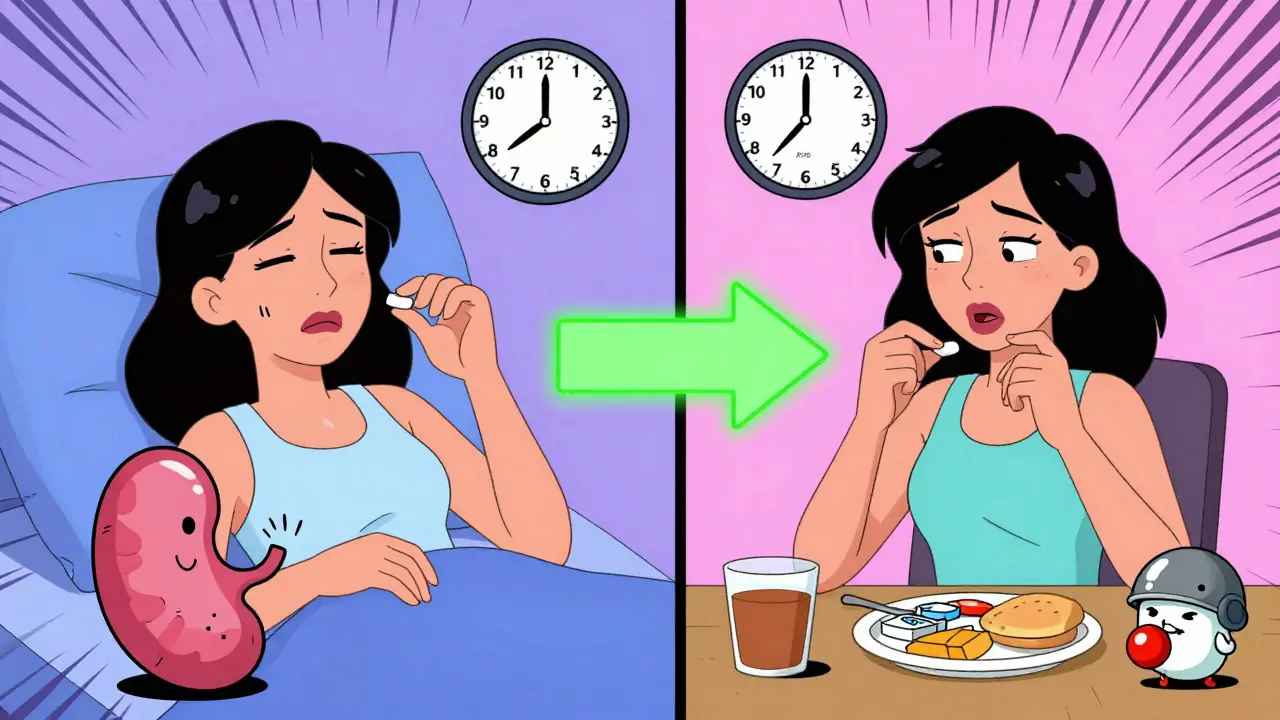
- For levothyroxine: Separate by 8 hours. Take thyroid meds first thing in the morning on an empty stomach, and take your BAS with dinner.
- For warfarin: Aim for 4-6 hours. Monitor your INR closely. Some patients need weekly checks when starting BAS.
- For metformin (ER): Separate by 4 hours. Take metformin in the morning, BAS at night.
- For birth control: Take it 4 hours before your BAS. Many women find it easiest to take their pill at bedtime and BAS at breakfast.
The American College of Cardiology (2022) says: "Medications with narrow therapeutic indices should be administered a minimum of 4 hours apart from bile acid sequestrants." But that’s the floor, not the ceiling. For some, 4 hours isn’t enough. For others, 6 hours is overkill. The key is testing.
Real-World Problems and Patient Stories
People don’t always follow the rules. A 2022 survey by the National Lipid Association found 41% of BAS users had at least one interaction despite trying to time things right. Why?
- “I forgot I was supposed to wait. Took my blood pressure pill with my Welchol and felt dizzy all afternoon.” - 67-year-old man, Perth
- “I was on birth control and BAS. Got pregnant. My doctor said I didn’t separate them enough.” - 32-year-old woman, Reddit r/Cholesterol
- “I took my thyroid pill at 7 a.m. and my cholestyramine at 10 a.m. My TSH went from 4.2 to 12.5 in two weeks.” - Patient log, Mayo Clinic
Side effects make it worse. Cholestyramine causes constipation in 57% of users. If you’re bloated and backed up, your gut moves slower. That means your BAS stays in contact with other drugs longer - increasing the chance of binding. Colesevelam is gentler on the gut. That’s why many patients switch from cholestyramine to colesevelam - not just for fewer interactions, but because they can actually tolerate it.
How to Stay Safe
Managing BAS isn’t just about knowing the rules. It’s about building a system.
- Use a medication log. Write down what you take, when, and how long you waited. Apps like Medisafe (used by 42% of BAS users in 2023) send reminders and track gaps.
- Ask your pharmacist. A 2023 study in the Journal of the American Pharmacists Association showed pharmacist-led education cut interaction incidents by 63%. Don’t just rely on your doctor.
- Review your list every 3 months. If you start a new med, check the interaction first. Don’t assume it’s safe.
- Consider colesevelam. If you’re on 3+ other meds, it’s the safest BAS. It binds less, causes fewer GI issues, and is FDA-approved for type 2 diabetes too.
- Test your levels. If you’re on warfarin, thyroid meds, or birth control, get your levels checked 2-4 weeks after starting BAS. Don’t wait for symptoms.
What’s Changing in 2026?
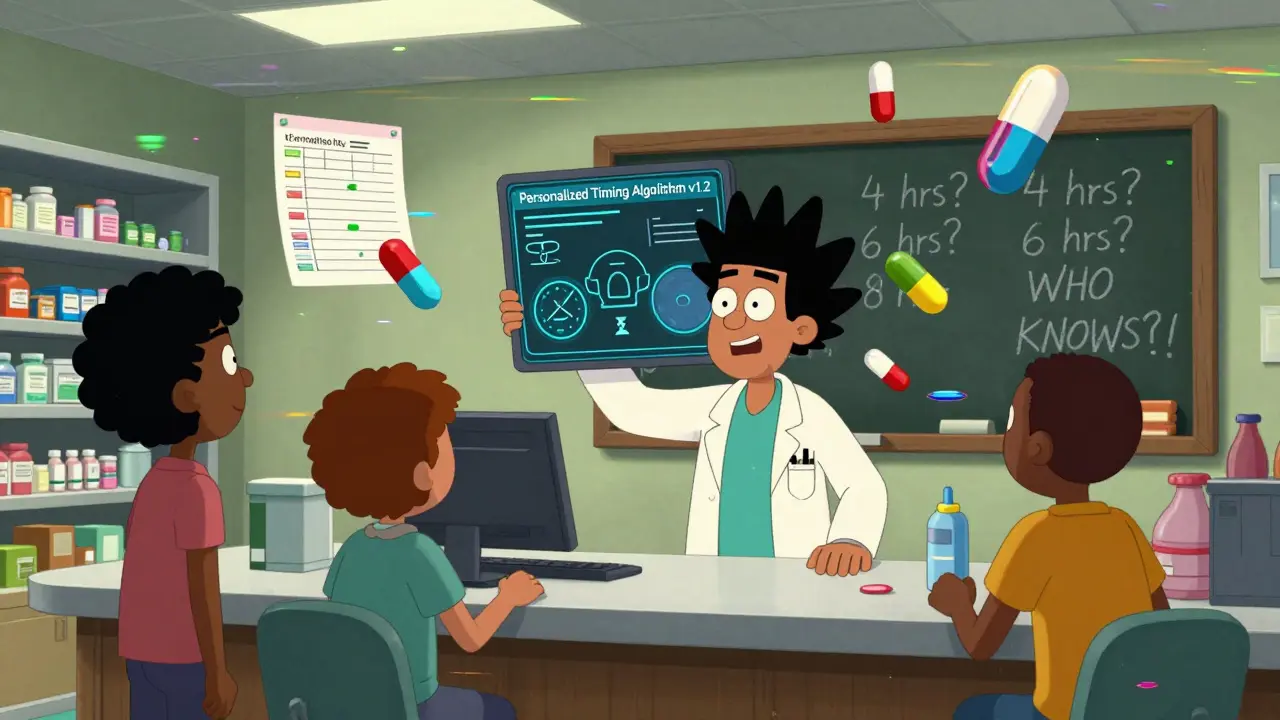
The field is evolving. In May 2023, the FDA approved a new formulation of colesevelam with 22% less binding capacity. Early data shows fewer interactions with warfarin and metformin. The American Heart Association (2024) now recommends "individualized timing schedules" instead of rigid 4-hour rules. That means your schedule should be built around your meds, not the other way around.
Research is also underway. The NIH trial NCT04876321 is testing AI-driven timing algorithms that adjust based on your diet, gut motility, and medication profile. It’s early, but the goal is clear: personalized timing, not guesswork.
Still, BAS remain one of the only non-systemic cholesterol-lowering options. Statins cause muscle pain in 5-10% of users. PCSK9 inhibitors cost over $5,000 a year and require shots. BAS cost $15-$50 a month. They’re not perfect. But for many, they’re the only choice.
What If You Can’t Manage the Timing?
If the schedule is too hard - if you’re forgetting pills, feeling constipated, or anxious about interactions - talk to your doctor. There are alternatives:
- Ezetimibe - Works in the gut too, but doesn’t bind other drugs. Lowers LDL by 15-20%.
- PCSK9 inhibitors - Injections, but no timing issues. Lower LDL by 50-60%.
- Inclisiran - A newer gene-silencing shot given twice a year. Still expensive, but no daily timing concerns.
Switching isn’t always easy. But if BAS is causing more stress than benefit, it’s worth exploring.
Can I take my BAS with food?
Yes - in fact, you should. Bile acid sequestrants work best when taken with meals. The food helps them bind bile acids more effectively. But don’t take other medications with food if you’re also taking BAS. Stick to the 4-8 hour gap. Food doesn’t protect your other pills from binding.
Is colesevelam safer than cholestyramine?
Yes, generally. Colesevelam (Welchol) has lower binding capacity than cholestyramine (Questran) - about 30-40% less. It’s also less likely to cause constipation. If you’re on multiple medications, especially warfarin, levothyroxine, or birth control, colesevelam is the preferred choice. It’s also approved for type 2 diabetes, which makes it useful for patients with both high cholesterol and high blood sugar.
What if I accidentally take my pill too close to my BAS?
Don’t panic. One mistake won’t ruin your treatment. But don’t assume it’s fine. If it’s a critical medication - like warfarin, levothyroxine, or birth control - contact your doctor or pharmacist. You may need a blood test (INR, TSH, or pregnancy test) to make sure the drug still worked. Going forward, use a reminder app and keep a log.
Do I need to take vitamin supplements with BAS?
Maybe. Long-term use of BAS can lower levels of vitamins A, D, E, and K. Your doctor should check your levels every 6-12 months. If they’re low, you’ll need supplements - but take them at least 4 hours apart from your BAS. Don’t just start popping vitamins on your own. Too much vitamin A or D can be toxic.
Can I switch from cholestyramine to colesevelam?
Yes, and many patients should. Cholestyramine is older, bulkier, and causes more GI side effects. Colesevelam is a tablet, easier to take, and has fewer interactions. Talk to your doctor about switching if you’re struggling with timing, constipation, or multiple medications. It’s not a cure-all, but it’s often a better fit.



Reviews
Also, why is my thyroid pill on a 8-hour no-contact order? I didn't know I was dating a resin.
And the FDA approves a new version with 22% less binding? Bro, just make it 50% less. I don’t want to be a human sponge. Also, why is no one talking about how gross cholestyramine tastes? Like, it’s like chalk mixed with regret.