
Esketamine Blood Pressure Estimator
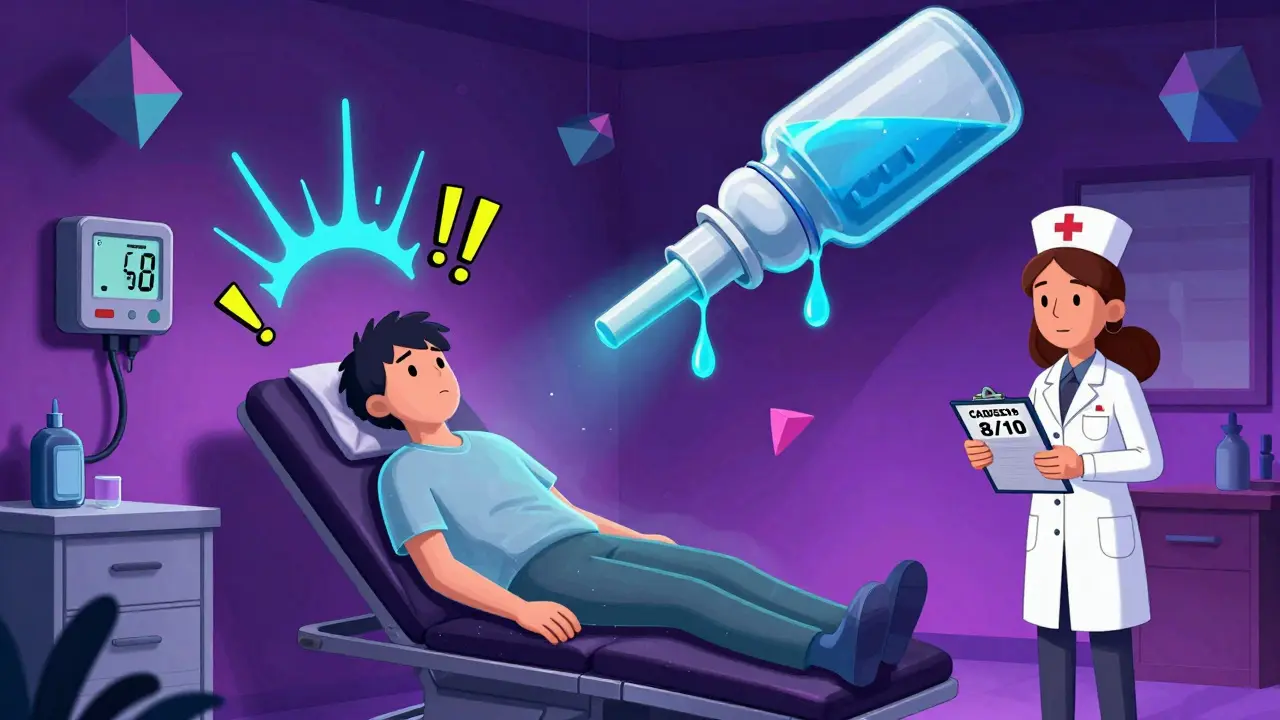
Esketamine nasal spray can cause blood pressure spikes. This calculator estimates how much your blood pressure might increase based on your current readings and treatment dose. According to clinical studies, systolic blood pressure typically rises by 14-23 mmHg and diastolic by 7-16 mmHg within 5 minutes.
Important Note: The FDA requires blood pressure to be below 160/100 mmHg at the time of treatment. If your estimated blood pressure exceeds this threshold, you may not be eligible for esketamine treatment. This calculator is for informational purposes only and does not replace professional medical advice.
When traditional antidepressants don’t work, esketamine nasal spray - brand name Spravato - offers a lifeline. Approved by the FDA in 2019, it’s the first antidepressant that works differently: instead of targeting serotonin or norepinephrine, it blocks NMDA receptors in the brain. That’s why it can lift severe depression in hours or days, not weeks. But this fast action comes with a price: intense side effects that require strict medical supervision. If you’re considering esketamine, you need to understand what happens in your body during treatment - especially the dissociation, the blood pressure spikes, and why you can’t just take it at home.
How Esketamine Works - And Why It Causes Dissociation
Most antidepressants take weeks to kick in because they slowly boost mood chemicals. Esketamine is different. It acts fast by blocking NMDA receptors, which are involved in how brain cells communicate. This isn’t just a simple on-off switch. When esketamine blocks these receptors on inhibitory neurons, it triggers a chain reaction: excitatory neurons fire more, leading to a surge in synaptic connections. That’s what helps repair damaged brain circuits in depression. But that same surge also causes dissociation - a feeling of being detached from your body or surroundings. In clinical trials, over half of patients (56%) reported dissociation after a dose. Symptoms range from mild dizziness and blurred vision to feeling like you’re floating, watching yourself from outside your body, or hearing sounds as if they’re underwater. These aren’t hallucinations in the psychotic sense - more like a dreamlike detachment. They peak around 40 minutes after spraying and usually fade within two hours. The higher the dose (84 mg vs. 56 mg), the more likely you are to feel this. One patient described it on Reddit: “My first time felt like I was trapped in a movie. I could hear people talking, but I couldn’t move or respond. It scared me - but then it just… ended.”Why Blood Pressure Rises - And Why It Matters
Esketamine doesn’t just affect your mind. It also triggers a stress-like response in your body. Within five minutes of spraying, your systolic blood pressure can jump 14 to 23 mmHg, and your diastolic by 7 to 16 mmHg. That’s enough to push someone with borderline hypertension into dangerous territory. In trials, 33% of users had treatment-emergent hypertension - compared to just 14% on placebo. These spikes are temporary, but they’re real. One patient with controlled high blood pressure had to stop treatment after her systolic reading hit 170 mmHg, even though she was already on medication. That’s why screening is non-negotiable. You can’t get esketamine if your blood pressure is over 160/100 at your first visit. People with recent heart attacks, brain aneurysms, or unstable heart disease are excluded. Even if you’re cleared, your blood pressure is checked before, during, and after every dose. Clinics use automated monitors that alert staff if numbers climb too high. Most of the time, pressure returns to normal on its own. But if it doesn’t, staff are trained to act - with medications or calming techniques - before it becomes a crisis.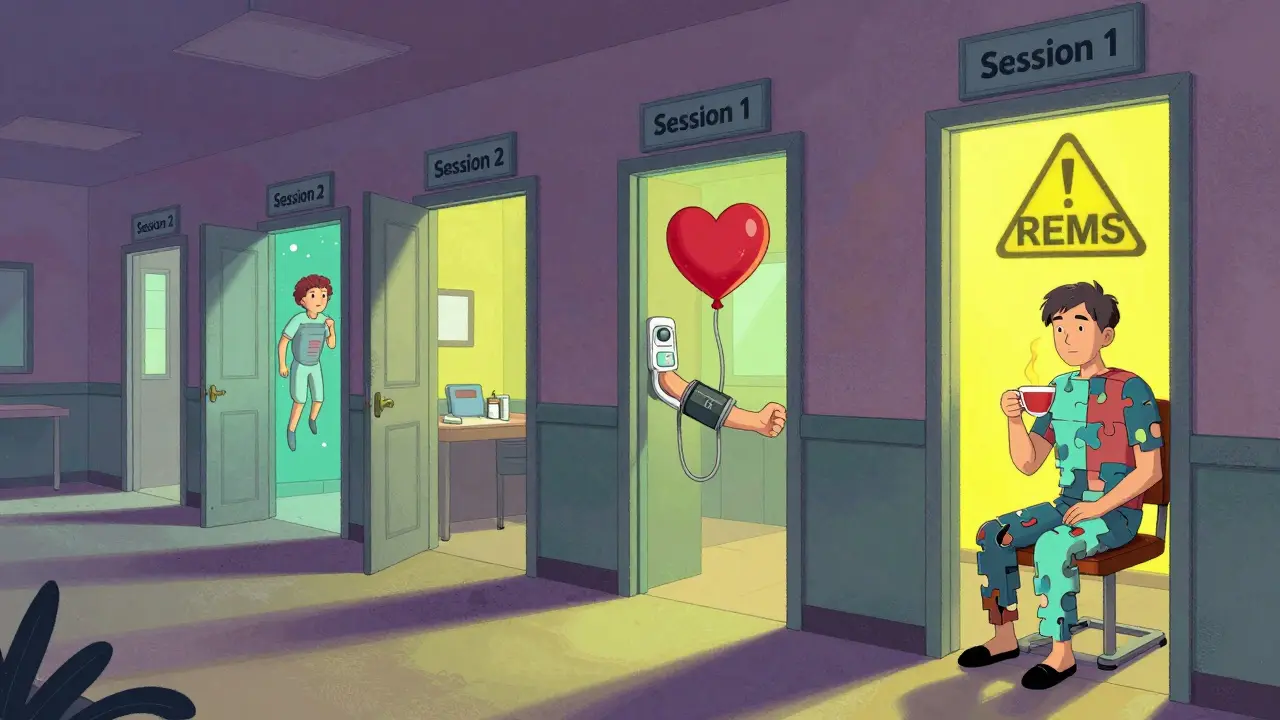
The REMS Program: Why You Can’t Take This at Home
Because of these risks, the FDA created the Risk Evaluation and Mitigation Strategy (REMS) - one of the strictest safety programs for any psychiatric drug. You can’t walk into a pharmacy and get a prescription filled. You must go to a certified clinic, sit in a monitored room, and be watched for at least two hours after each dose. No exceptions. During that time, staff check your blood pressure every 5-10 minutes for the first half-hour, then every 15-30 minutes after. They also use a tool called the CADSS (Clinician-Administered Dissociative States Scale) to rate how intense your dissociation is. If it’s severe, they may offer a calming environment - dim lights, quiet music, no screens - but rarely give rescue meds like benzodiazepines. Only about 1 in 80 treatments needs them. You also have to sign a Patient-Provider Agreement before every session. It’s not just paperwork - it’s a reminder that you’re entering a controlled medical environment, not self-medicating. The goal isn’t to scare you. It’s to make sure that if something goes wrong, help is right there.What Patients Really Experience - And How It Changes Over Time
The first dose is often the hardest. Many patients report feeling anxious before treatment, worried about losing control. But most find that the dissociation gets milder with repeated doses. In one study, 60% of users said their dissociation was “manageable” by the fourth session. One user wrote: “I thought I’d be out of it for hours. By session three, I just felt a little spaced out for 20 minutes. I could still hear the nurse talking.” Blood pressure spikes also tend to lessen. A survey of 347 patients found that 87% of those who had high readings during their first session saw their numbers return to normal within 90 minutes on later visits. That’s likely because the body adapts - or because patients are better prepared mentally. Still, some never adjust. People with existing heart conditions or severe anxiety often have to stop. For them, the risk outweighs the benefit. What keeps people going? The results. In trials, nearly 70% of patients with treatment-resistant depression saw at least a 50% drop in symptoms after four weeks. Some felt better within 24 hours. That’s life-changing for people who’ve tried five or six other meds without success.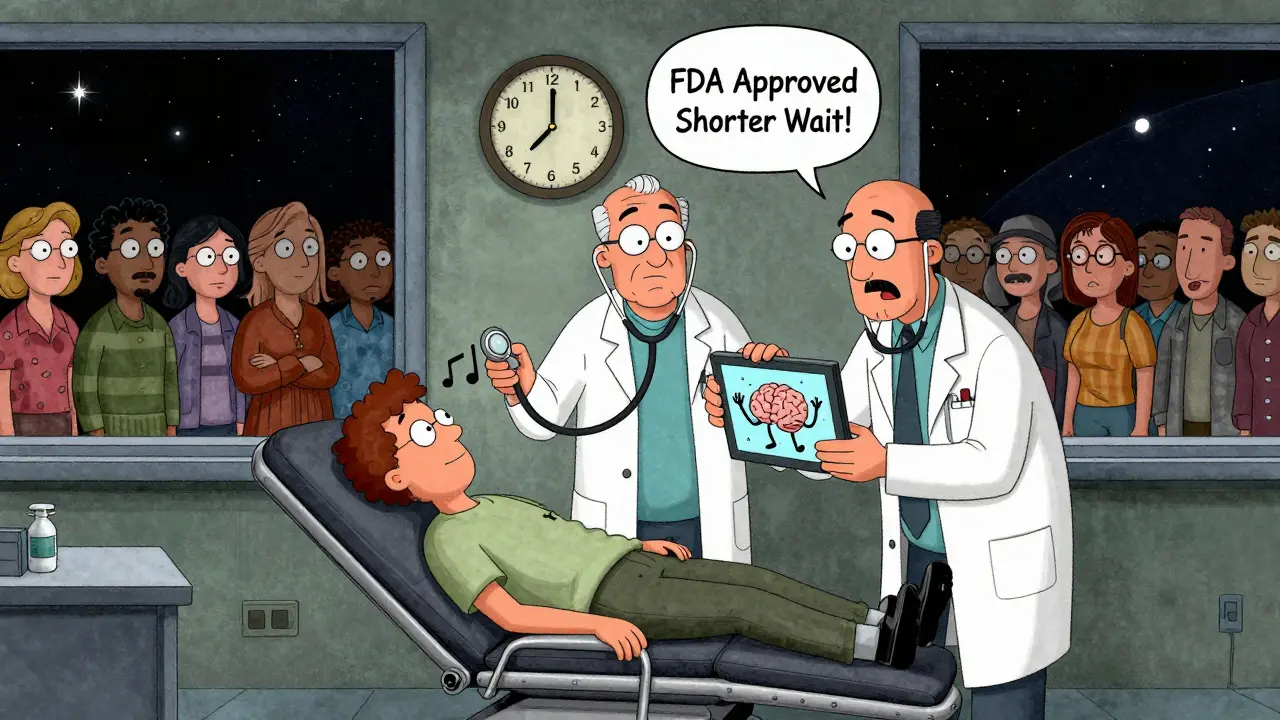
How Clinics Handle the Challenges - And What You Should Expect
Running a Spravato clinic isn’t simple. It costs an average of $18,500 to set up a dedicated room with proper monitoring gear, private space, and trained staff. Each session takes over two hours - 15 minutes to prep, 5 minutes to spray, and two full hours to monitor. That’s a lot of time and resources for one patient. Clinics that do it well focus on three things: education, environment, and emergency readiness. Before your first visit, you’ll get detailed info on what to expect. During treatment, staff keep the room calm - no loud noises, no bright lights. Afterward, they check your vital signs and ask how you’re feeling. If you’re stable, you can leave. If not, you stay until you’re safe. One big challenge? Access. As of 2023, there are over 2,800 certified centers in the U.S. - up from just 350 at launch. But rural areas still have only 0.8 centers per 100,000 people. Urban areas have over four times that. Insurance delays and prior authorizations also slow things down. Many patients wait weeks just to get approved.What’s Next for Esketamine?
The FDA is already testing ways to make this safer and more accessible. In late 2023, they approved a new rule: if you’ve had two treatments without major side effects, your monitoring time can be cut from two hours to one. That’s based on data showing 63% of patients were stable after 60 minutes. Companies are also working on alternatives - oral versions, IV infusions, or drugs that mimic esketamine’s benefits without the dissociation. But so far, nothing has matched its effectiveness in the toughest cases. Experts agree: the side effects are real, but they’re manageable. The bigger issue isn’t the drug - it’s the system. Making sure every patient who needs this treatment can actually get it, safely, is the next frontier.If you’ve tried everything else and still feel stuck, esketamine might be worth exploring. But don’t go in blind. Know what to expect. Ask your doctor about the monitoring process. Talk to others who’ve done it. And remember - the two-hour wait isn’t a barrier. It’s the safety net that makes this treatment possible.


Reviews
First time I tried Spravato, I felt like my soul had left my body and was watching from the ceiling. Not scary, just… weirdly peaceful. Like floating in zero-G while someone played whale songs through a water fountain. I cried the whole time. Not sad tears. Like my brain finally remembered how to feel without the filter. 🌊
It is imperative to note that the FDA’s approval of esketamine represents a profound departure from the established pharmacological paradigm of monoaminergic modulation. The neurophysiological mechanisms underlying NMDA receptor antagonism, while empirically demonstrated, remain insufficiently characterized in longitudinal cohorts. One must question whether the transient dissociative effects constitute a therapeutic mechanism or merely an iatrogenic artifact of excessive glutamatergic excitation.
They don’t want you to know this, but esketamine was originally developed by the CIA in the 70s as a mind-control drug. The dissociation? That’s not a side effect-it’s the feature. They only let it out for depression now because the public can’t handle the truth about what happens when you crack open the brain’s firewall. The BP spikes? That’s your autonomic nervous system screaming as it gets hacked. They monitor you for two hours because they’re waiting for the neural reprogramming to stabilize. Don’t trust the clinic. They’re just middlemen for the shadow pharma cartel. 🕵️♂️
So… you pay $1,000 to sit in a room for two hours and feel like you’re in a bad Trippy Tuesday movie? And this is the ‘lifeline’? My cousin did ketamine therapy in Mexico for $200 and didn’t need a nurse holding her hand. Also, why does everyone act like this is magic when we’ve had MDMA and psilocybin trials showing better results? I’m just saying… maybe the system’s broken, not my brain.
I’m so glad someone finally wrote this clearly. I was terrified before my first session-but the staff were so calm and gentle. They dimmed the lights, played lo-fi beats, and just sat with me. I didn’t feel alone. By session 4, I could laugh during the dissociation. It’s not perfect, but it gave me back my life. Thank you for explaining the BP stuff too-I didn’t realize how much it spiked until they showed me the numbers. 🙏
Just wanted to say I’ve been on Spravato for 6 months now. The first few times were rough-I thought I was gonna lose it. But now? I can actually make plans again. I took my dog to the park yesterday. Didn’t feel like crying the whole time. That’s huge. The monitoring is annoying, yeah, but honestly? It’s worth it. Just take it slow. And drink water. Lots of water.
I understand the need for safety protocols, but this feels like treating depression like a controlled substance. We’re not addicts. We’re sick people trying to survive. Why must we be infantilized? If I can drive a car, I should be able to take this under supervision at home. The real issue isn’t the drug-it’s our society’s fear of anything that doesn’t fit neatly into a pill bottle.
Ugh. Another ‘miracle cure’ pushed by Big Pharma while real solutions like therapy, nutrition, and sleep get ignored. They’ll sell you a $10k nasal spray but won’t pay for a therapist. And don’t get me started on the ‘REMS program’-it’s just a way to make clinics rich. You think they care about your mental health? They care about your insurance card.
As someone who’s worked in mental health for 20 years across 5 countries, I’ve seen this pattern before. When a new treatment emerges with rapid effects, the system rushes to regulate it-often too rigidly. The REMS program is necessary, yes, but it’s also exclusionary. In rural India, we don’t have clinics. We have community workers. We need scalable models, not just high-cost, high-security centers. This drug can help, but only if we make it accessible, not just ‘safe’.
I’m not a doctor, but I’ve sat with 12 people through their first Spravato sessions. The dissociation? It’s not scary when you’re prepared. The key is not fighting it. Let it happen. Breathe. The staff aren’t there to stop you-they’re there to hold space. And the BP spikes? They’re normal. Your body’s reacting like it’s in a fight-or-flight moment, but it’s not dangerous if monitored. What kills people is the silence around this. Talk about it. Ask questions. You’re not weak for needing this. You’re brave.
so like… esketamine is basically just ketamine but with a fancy name and a $1k price tag? and they make you sit there for 2 hrs like you’re in a spa? lol. also why is everyone acting like dissociation is ‘normal’? i mean, if you’re floating and can’t move, that’s not therapy, that’s a side effect they’re calling ‘clinical experience’. and the bp spikes? yeah, that’s just your heart going ‘wtf’
In India, we don’t have this. We have no access. No clinics. No insurance. People with depression just suffer silently. Why is this drug available in the US but not in places where people need it more? You talk about safety-but what about justice? This isn’t medicine. It’s a privilege.
My friend tried this last year. First time, he was scared. Second time, he smiled. Third time, he said, ‘I think I’m back.’ He didn’t say much after that. But he started cooking again. Called his mom. Walked the dog. That’s all I needed to see. No fancy words. Just life coming back. Simple things. That’s the real win.