
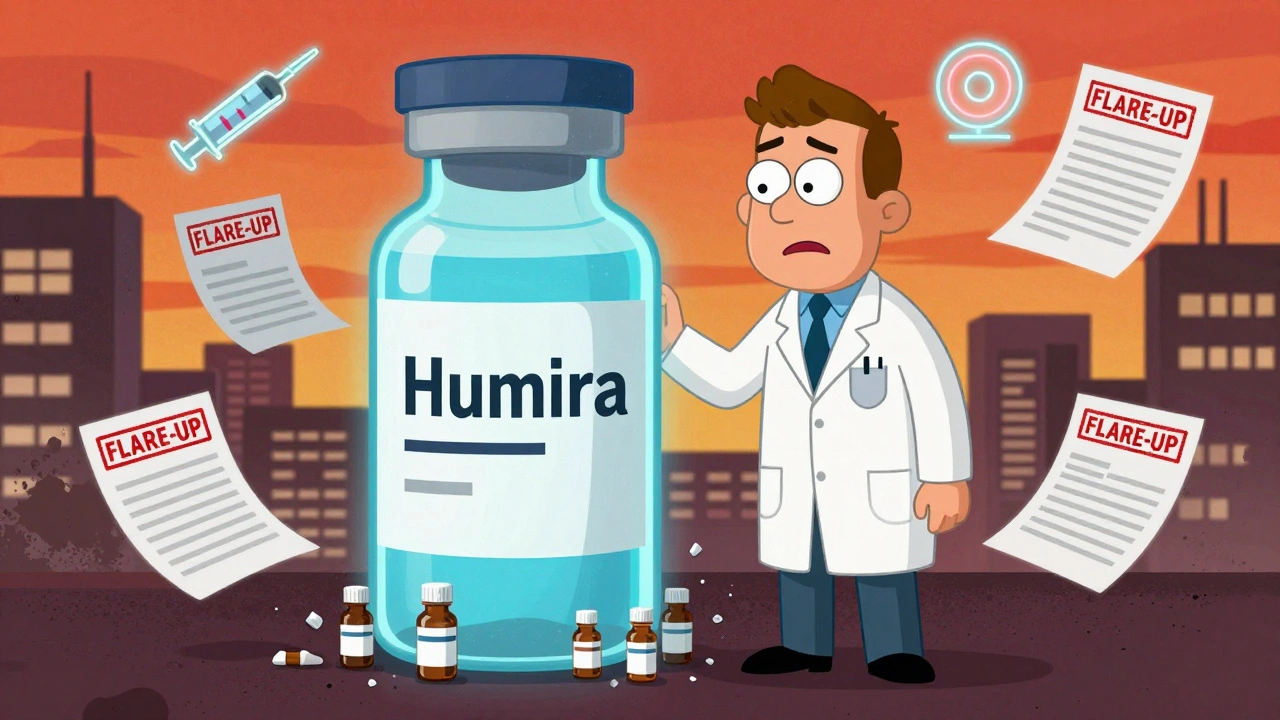
When a rheumatologist prescribes Humira instead of a biosimilar, or an oncologist insists on Ocrevus despite lower-cost alternatives, it’s not because they’re ignoring cost-it’s because they’ve seen what happens when patients switch. Specialty drugs aren’t just expensive; they’re complex, high-stakes treatments for conditions where failure isn’t an option. And for many specialists, brand-name drugs remain the gold standard-not because of profit, but because of patient outcomes.
What Makes a Drug "Specialty"?
A specialty drug isn’t defined by its brand name, but by its profile: it costs more than $670 per month, often exceeds $100,000 a year, and treats rare or chronic diseases like multiple sclerosis, rheumatoid arthritis, or cancer. These aren’t pills you pick up at a corner pharmacy. They’re injectables or infusions that need cold storage, special handling, and constant monitoring. Many require prior authorization, patient education, and follow-up labs just to start treatment. In 2021, these drugs made up just 6.2% of all prescriptions but accounted for 71.1% of total prescription drug spending in the U.S. That’s a staggering imbalance: less than 1 in 16 prescriptions, but more than 7 out of every 10 dollars spent.Why Do Specialists Stick With Brand Names?
The answer isn’t simple, and it’s not about kickbacks-though financial incentives do play a role. For many specialists, brand-name drugs are the only ones with enough real-world data to support their use. Take biosimilars for Humira: while they’re chemically similar, they’re not identical. In autoimmune diseases, even tiny differences in protein structure can affect how a patient responds. A 2023 Medscape survey found that 79% of rheumatologists say biosimilars aren’t always appropriate for their patients, especially those who’ve already stabilized on the original drug. Switching can mean flare-ups, hospitalizations, or lost work time. One patient on Reddit shared that after switching to a biosimilar, her joint pain returned within weeks. Her rheumatologist told her: "I won’t risk your quality of life for a $300 savings." Oncologists face even higher stakes. In cancer care, there’s often no second chance. A 2021 JAMA Network Open study showed that when prescribers or patients request brand-name drugs over generics, it adds $1.67 billion annually to Medicare costs-and $270 million to patient out-of-pocket bills. Yet specialists argue: if the brand has proven survival benefits, why gamble? In melanoma, for example, brand-name drugs like Keytruda have decades of clinical trial data. Biosimilars may be cheaper, but their long-term safety in aggressive cancers is still being tracked.The Role of PBMs and Hidden Markups
It’s easy to blame drug manufacturers for high prices, but the real financial distortion often happens downstream. Pharmacy Benefit Managers (PBMs)-the middlemen between insurers, pharmacies, and drugmakers-control the distribution of specialty drugs. The FTC’s January 2025 report revealed that the "Big 3" PBMs (Caremark, Express Scripts, OptumRx) made over $7.3 billion in revenue from specialty drugs between 2017 and 2022 by marking up prices far beyond what they paid to acquire them. Some specialty generics were marked up by thousands of percent. That’s not a pricing error-it’s a business model. These PBMs own specialty pharmacies, so they profit whether the drug is brand or generic. If a doctor prescribes a brand-name drug, the PBM still gets paid. If they prescribe a cheaper generic, the PBM still gets paid-just less. So why push for savings? They don’t have to.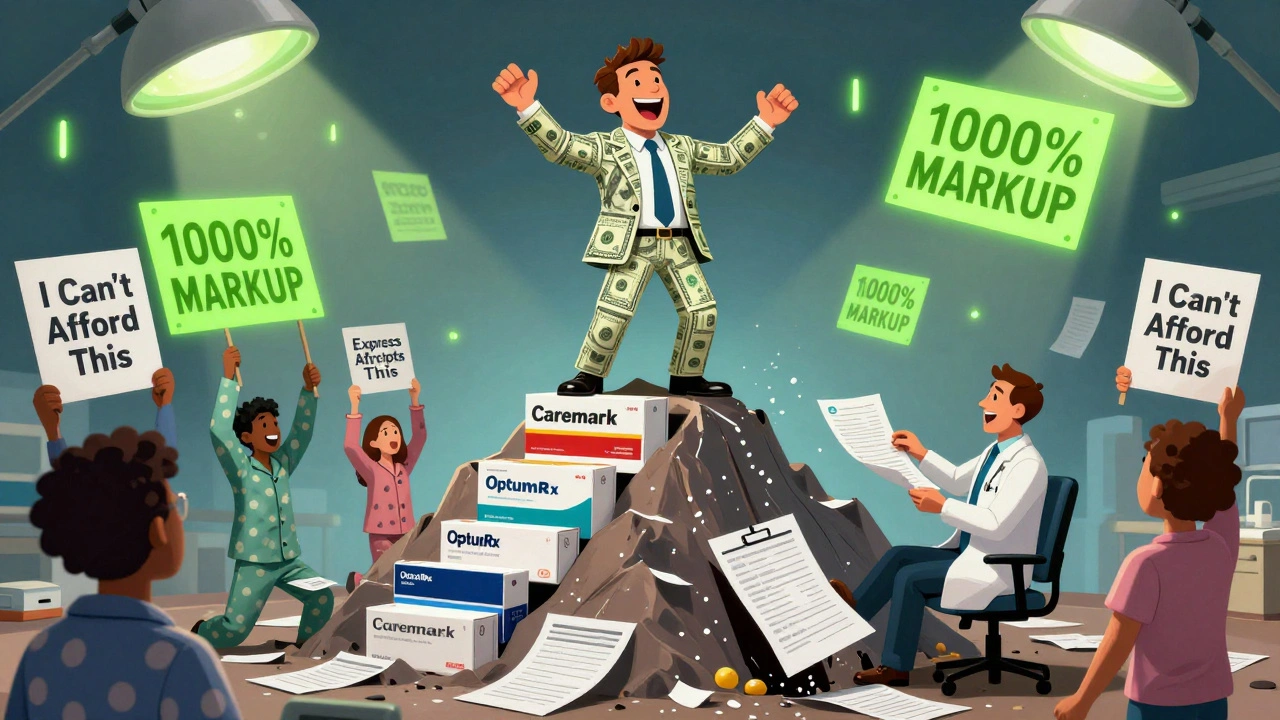
Patient Pressure and the "No Alternatives" Myth
Patients often ask for brand-name drugs because they’ve heard they’re "better." But specialists aren’t just giving in to demand-they’re responding to real failures. A 2024 Medicare Rights Center forum thread featured a patient whose Humira copay jumped from $50 to $850 after her plan changed formularies. She begged her rheumatologist to fight the denial. He did-and won, because his clinical notes showed she’d tried two biosimilars and both caused severe reactions. In these cases, the specialist isn’t choosing the brand because it’s profitable. They’re choosing it because the alternatives failed. The problem? Many patients don’t know they have options. Few are told about patient assistance programs, manufacturer coupons, or state-funded aid. The National Organization of Rare Disorders helped 45,000 patients access specialty drugs in 2023-but most patients never hear about them.Administrative Burdens That Shape Prescribing
Specialists aren’t just doctors-they’re part-time insurance negotiators. The American Medical Association found that physicians spend an average of 13.4 hours per week on prior authorizations, and 78% of that time is spent on specialty drugs. Imagine: a patient walks in with a new diagnosis of Crohn’s disease. The doctor writes a prescription. Then they spend 45 minutes on the phone with a PBM, filling out forms, faxing lab results, waiting for a callback. If the drug is denied, they restart the process. If they choose a drug that’s easier to get approved, they might be choosing convenience over clinical best practice. That’s not prescribing-it’s triage.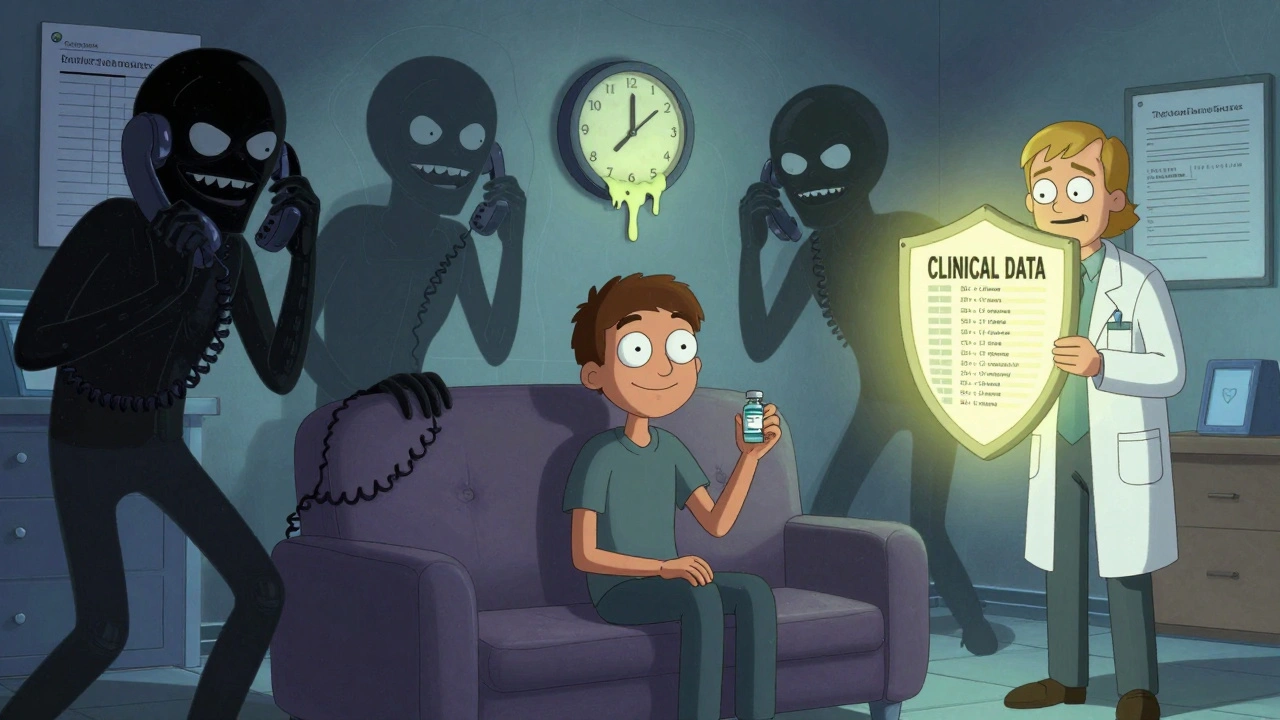
The Data Gap: Why Generics Aren’t Always Safe
One of the biggest reasons specialists avoid generics in specialty care is the lack of long-term data. While generic drugs must meet FDA bioequivalence standards, those standards were designed for oral medications like statins or antibiotics. For injectable biologics-complex proteins made from living cells-bioequivalence doesn’t guarantee clinical equivalence. The FDA doesn’t require new clinical trials for biosimilars. Instead, they rely on lab tests and small studies. But in autoimmune or neurological conditions, even a 5% difference in drug absorption can mean the difference between remission and relapse. A 2023 study in the Journal of Managed Care & Specialty Pharmacy found that 42% of specialty drug starts were delayed by more than a week due to administrative hurdles. By the time the patient gets the drug, their condition has worsened. That delay often pushes the doctor toward a brand-name drug that’s already approved and on file-just to avoid another week of waiting.What’s Changing?
The tide may be turning. The Inflation Reduction Act of 2022 gave Medicare the power to negotiate prices for high-cost drugs-and several specialty drugs like Jakafi and Ofev are already on the list for negotiation. In March 2025, CMS proposed new rules requiring PBMs to disclose their markups on specialty drugs. That could force transparency. And in February 2025, Senator Bernie Sanders introduced the Specialty Drug Price Transparency Act, aiming to cap PBM profits on specialty medications. But change moves slowly. Meanwhile, the pipeline is exploding: over 2,700 new specialty drugs are in development, 45% targeting rare diseases. Many will cost more than $200,000 a year.What Patients and Providers Can Do
If you’re a patient: ask your specialist if there’s a patient assistance program. Drug manufacturers often offer co-pay cards or free drug programs for low-income patients. Don’t assume you can’t afford it-ask. If you’re a provider: document every failed alternative. Every adverse reaction. Every delay. That paper trail is your best defense against insurance denials. And if you’re a policymaker or payer: stop assuming that lower price equals better care. In specialty medicine, the cost of a mistake is measured in hospital beds, lost mobility, and shortened lifespans.The truth is, specialists don’t choose brand-name drugs because they’re easy. They choose them because they’ve seen what happens when they don’t. The system is broken-but the doctors aren’t the ones breaking it. They’re just trying to keep patients alive in a landscape where every dollar spent is a calculated risk.
Why do specialists prefer brand-name drugs over generics?
Specialists often prefer brand-name drugs because they have more proven long-term safety and effectiveness data, especially for complex conditions like cancer or autoimmune diseases. Generic versions, particularly biosimilars, may be chemically similar but lack extensive real-world outcomes data. Switching can lead to flare-ups, adverse reactions, or treatment failure-risks specialists are unwilling to take with life-altering conditions.
Are brand-name specialty drugs always more effective than generics?
Not always-but for many patients, yes. For oral generics like statins, bioequivalence is reliable. But for injectable biologics used in rheumatoid arthritis or MS, small differences in protein structure can affect how the immune system responds. Clinical trials for biosimilars are smaller and shorter than for the original drugs. So while they’re approved as "similar," some patients simply don’t respond the same way. Specialists rely on years of patient outcomes, not just lab tests.
Do pharmacy benefit managers (PBMs) influence which drugs specialists prescribe?
Yes, indirectly. PBMs control which drugs are covered, how much patients pay, and which pharmacies dispense them. Many PBMs own specialty pharmacies and profit more from brand-name drugs because they can mark up prices higher. They also make it harder to switch to cheaper alternatives by creating complex prior authorization rules. This pushes specialists toward drugs that are easier to get approved-even if they’re more expensive.
How much do specialty drugs cost patients?
On average, specialty drug patients pay $38,000 per year out-of-pocket, compared to $492 for non-specialty drugs-a 75-fold difference. Even with insurance, many patients face monthly copays of $500 to $1,500. Some pay more than $1,000 just for one dose of Ocrevus or Humira. These costs often lead to skipped doses, delayed refills, or financial ruin.
Is there any help available for patients who can’t afford specialty drugs?
Yes. Drug manufacturers offer co-pay assistance programs, and nonprofits like the National Organization of Rare Disorders (NORD) help 45,000 patients annually access specialty medications. Some states have patient assistance funds, and Medicaid expansion in some areas covers more specialty drugs. But most patients don’t know these options exist-specialists need to proactively guide them.
Will Medicare drug price negotiation lower specialty drug costs?
Possibly. The Inflation Reduction Act allows Medicare to negotiate prices for the 10 most expensive drugs, and several specialty drugs like Jakafi, Ofev, and Xtandi are already on the list. If successful, this could lower prices for millions. But negotiation only applies to Medicare, not private insurers. And PBMs may raise prices on non-negotiated drugs to offset losses. Real savings will depend on how aggressively the program is enforced.



Reviews