
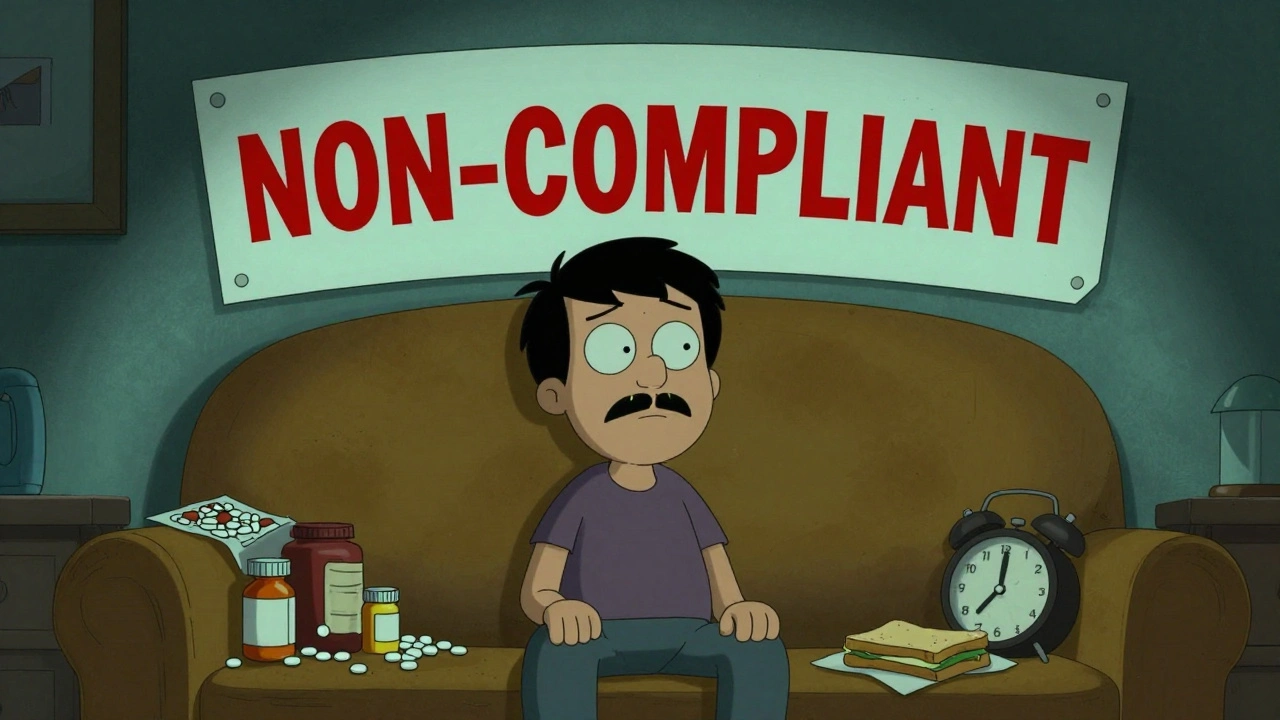
When your doctor prescribes a pill, it’s not enough to just get it filled. The real test comes when you actually take it-on time, every time, the way you’re supposed to. But here’s the thing: if you skip a dose because the side effects upset your stomach, or you stop because it’s too expensive, or you forget because your routine changed, are you failing? Or is the system failing you?
For decades, doctors and pharmacies used one word to describe this: compliance. It sounded simple-take your medicine like you’re told. But that word carried blame. It implied that if you didn’t follow orders, you were disobedient. That’s not just outdated-it’s harmful. Today, the medical world has moved to a better, more human term: medication adherence. And the difference between the two isn’t just semantics. It’s the difference between a patient being treated and a patient being heard.
What Does ‘Compliance’ Really Mean-and Why It’s Outdated
Compliance comes from the idea that the doctor knows best, and the patient’s job is to obey. If you don’t take your blood pressure pill every morning, you’re non-compliant. Simple. Blame the patient. But that’s not how real life works.
Think about it: you’re told to take four pills a day. You work two jobs. You’re caring for an aging parent. You don’t have a pill organizer. The pills cost $120 a month and your insurance only covers half. You start skipping doses-not because you don’t care, but because you’re stretched too thin. Under the old compliance model, you’re labeled as ‘non-compliant.’ The system doesn’t ask why. It just counts missed doses.
That’s not care. It’s control.
By the early 2000s, major medical journals like the Annals of Internal Medicine and the Journal of Clinical Pharmacy and Therapeutics started calling out this approach. They pointed out that compliance ignored the real reasons people don’t take their meds: cost, side effects, confusion, cultural beliefs, mental health, even transportation issues. The term stuck around in hospitals and clinics because it was easy to measure-just check refill records or do a quick pill count. But it didn’t help patients get better. It just made them feel guilty.
What Is Medication Adherence-and Why It’s Better
Adherence flips the script. It doesn’t ask, ‘Why didn’t you take your pills?’ It asks, ‘What’s getting in your way?’
The American Pharmacists Association defines adherence as ‘the extent to which a patient’s behavior corresponds with agreed-upon recommendations from a healthcare provider.’ Notice the word ‘agreed-upon.’ That’s the key. Adherence isn’t about obedience. It’s about partnership.
Adherence recognizes that patients are people with lives, fears, and limitations. It includes:
- Initiation: Did you start the medication at all?
- Implementation: Are you taking it the right way-right dose, right time?
- Discontinuation: Did you stop because it wasn’t working, or because you couldn’t afford it?
And here’s the hard truth: according to the World Health Organization, about half of all patients with chronic conditions stop taking their meds within the first year. That’s not rebellion. That’s a system that doesn’t adapt to real human needs.
Adherence doesn’t blame. It investigates. It says: ‘Tell me what’s hard. Let’s fix it together.’
The Numbers Don’t Lie: Adherence Saves Lives and Money
It’s not just about feeling better. It’s about survival.
Patients who are adherent to their treatment plans have 20-50% higher success rates in managing chronic conditions like diabetes, high blood pressure, and heart disease, according to the Agency for Healthcare Research and Quality. That’s not a small gain. That’s fewer heart attacks, fewer strokes, fewer hospital stays.
And the financial impact? Massive. McKinsey & Company found that adherence-focused care reduces avoidable hospitalizations by 22-34% and cuts overall treatment costs by 18-27%. That’s billions saved every year in the U.S. alone.
The Centers for Medicare & Medicaid Services (CMS) noticed this. Starting in January 2024, they tied 8% of hospital reimbursement payments directly to how well patients stick to their meds. Hospitals now have a financial reason to care about adherence-not just compliance.
And it’s not just in the U.S. The European Medicines Agency now requires adherence data in all new drug trials. The FDA’s 2024 guidance on digital health tools explicitly says compliance metrics are outdated. They want real-world data on how patients actually live with their meds.
How Providers Are Actually Improving Adherence
Changing a word isn’t enough. You need to change how care is delivered.
Here’s what’s working:
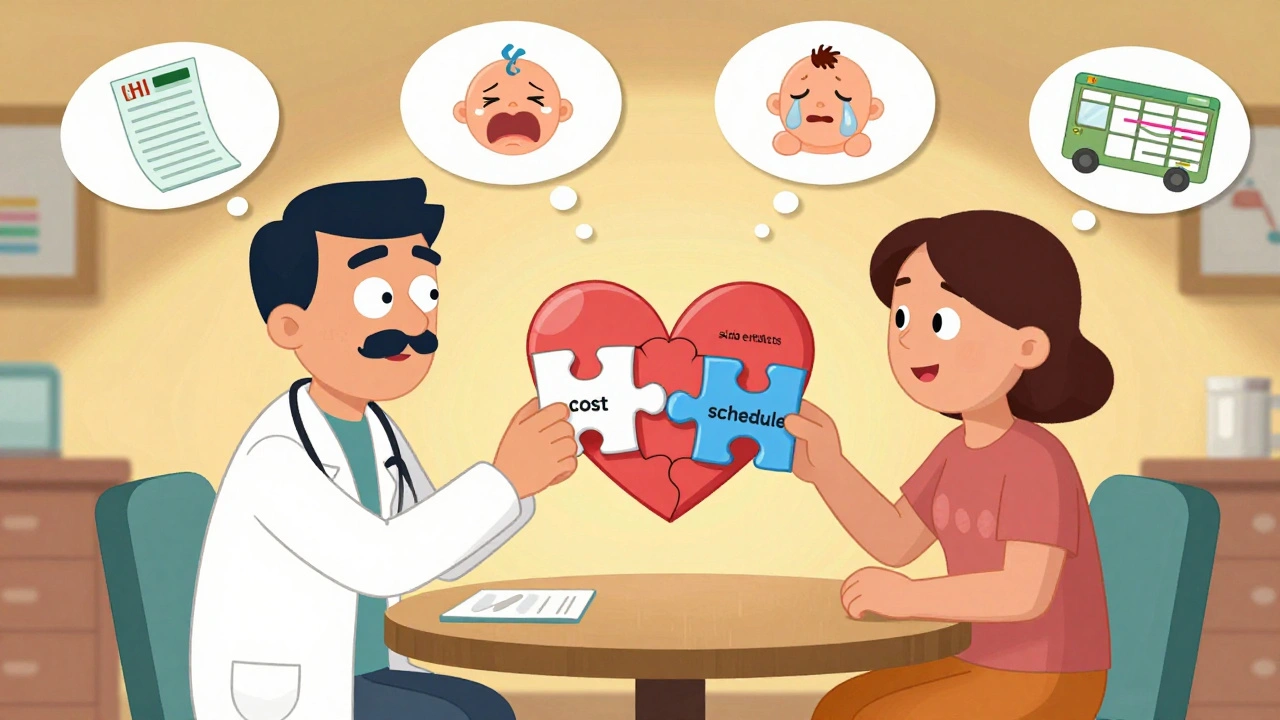
- Motivational interviewing: Instead of lecturing, providers ask open-ended questions: ‘What’s been the hardest part about taking your pills?’ This uncovers real barriers-like fear of side effects or confusion about timing.
- Shared decision-making: Patients help pick their treatment. If one pill makes you dizzy, maybe there’s another option. If the cost is too high, can we switch to a generic? This isn’t just nice-it works. The National Community Pharmacists Association found that patients in these programs are 2.57 times more likely to stay on their meds.
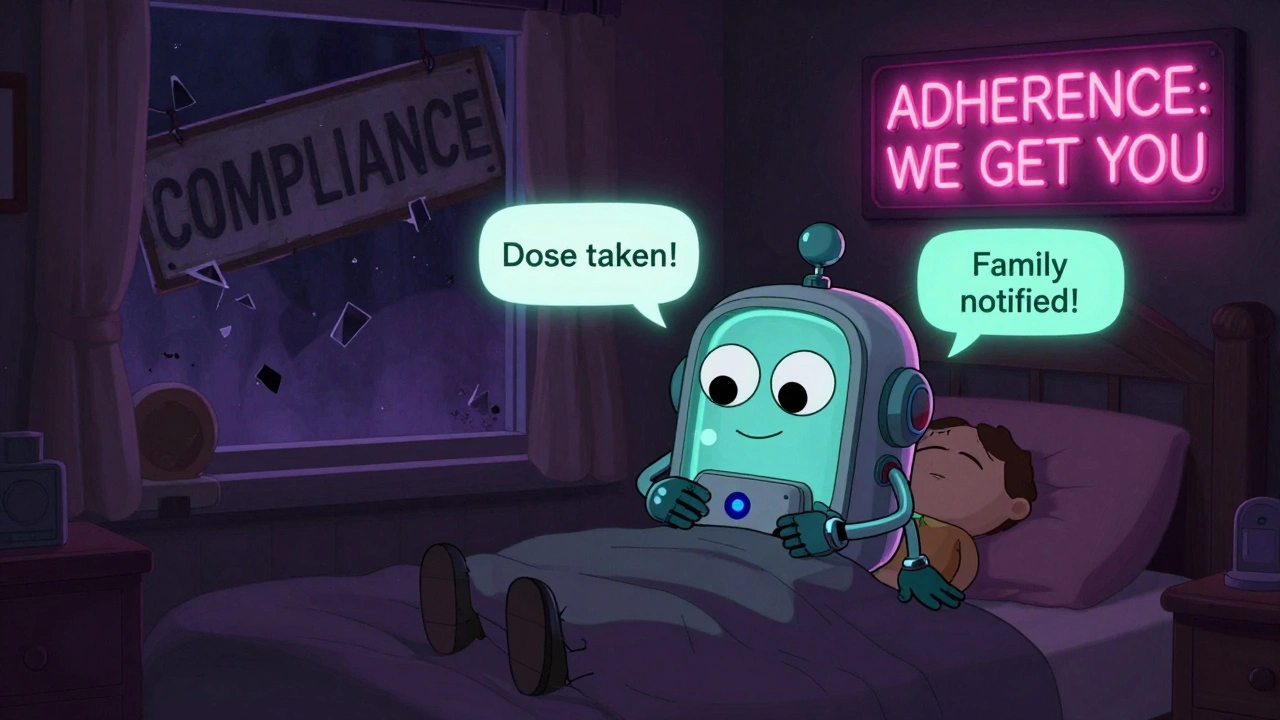
- Technology that helps, not just tracks: Devices like Hero Health’s smart pill dispenser don’t just alert you when to take a pill-they lock away doses until the right time, and notify family members if a dose is missed. In a 2023 Kaiser Permanente study, these devices cut missed doses by 42%. Dose Packer’s system improved medication possession ratios by nearly 30% across 12,000 patients.
- Training for providers: Doctors and nurses now get 8-12 hours of training on how to talk about adherence without judgment. It’s not about checking a box. It’s about building trust.
And it’s working. By Q2 2024, 87% of major U.S. health systems had fully switched to adherence-focused language and protocols, according to HIMSS. The shift is real. The old term ‘compliance’ is disappearing from policy documents, patient handouts, and even pharmacy labels.
When Compliance Still Has a Place
Is compliance ever useful? Yes-but only in very specific cases.
For example, in directly observed therapy (DOT) for tuberculosis, a nurse watches you swallow every pill. That’s not because patients are disobedient. It’s because TB is deadly, and missing even one dose can create drug-resistant strains. In those rare, high-risk situations, direct observation saves lives.
But for the other 99% of medications-diabetes, cholesterol, asthma, depression-compliance is the wrong tool. It’s like using a hammer to thread a needle. You might get it done, but you’ll break the thread.
What’s Next? AI, Data, and the Future of Adherence
The future of adherence isn’t just about better conversations. It’s about smarter systems.
Google Health’s 2024 study used machine learning to predict who’s likely to miss doses by analyzing 27 factors: income, transportation access, mental health history, even how often they change phone numbers. The algorithm got it right 83.7% of the time. That means clinics can now reach out to patients before they stop taking their meds-sending a text reminder, offering a coupon, connecting them with a social worker.
The American Medical Association even added new billing codes in 2025 (99487-99489) specifically for adherence counseling. That means doctors can now get paid for spending time talking to patients about their meds-not just writing prescriptions.
The World Health Organization projects that by 2030, adherence-focused care could prevent 850,000 premature deaths in low- and middle-income countries and 150,000 in high-income ones. That’s not a guess. That’s data.
By 2035, McKinsey predicts 95% of global healthcare systems will require adherence-focused models. It’s not a trend. It’s the new standard.
What This Means for You
If you’re taking meds for a chronic condition, this shift matters. You’re not a problem to be fixed. You’re a partner in your care.
Here’s what you can do:
- If you’re skipping doses, don’t hide it. Tell your doctor why. It’s not weakness-it’s information.
- Ask: ‘Is there a cheaper version?’ or ‘Can we adjust the timing?’
- Use a pill organizer. Set phone alarms. Ask a family member to help.
- Know that your provider is now trained to help you, not judge you.
And if you’re a caregiver, a nurse, or a doctor-stop saying ‘compliance.’ Start asking, ‘What’s getting in your way?’
Medication adherence isn’t about following rules. It’s about respecting people. And when we do that, people get better. Faster. Longer. And with more dignity.
What’s the difference between medication adherence and compliance?
Compliance means following orders without question-like a patient obeying a doctor’s instructions. Adherence means working together with your provider to find a treatment plan that fits your life. Adherence acknowledges that people have real barriers like cost, side effects, or busy schedules, and it focuses on solving those problems instead of blaming the patient.
How do doctors measure medication adherence?
Doctors use several methods: pill counts, pharmacy refill records, electronic caps that track when a bottle is opened, and patient self-reports. The standard for being considered adherent is taking at least 80% of prescribed doses over time, according to the American Medical Association. Unlike compliance, which just checks if pills were taken, adherence looks at why someone might miss doses and whether the treatment plan needs to change.
Why is medication adherence so important?
Poor adherence leads to worse health outcomes-more hospital visits, more complications, even early death. For conditions like high blood pressure or diabetes, up to half of patients stop taking their meds within a year. Adherence-focused care improves treatment success by 20-50%, reduces hospitalizations by over 20%, and saves billions in healthcare costs every year.
Is non-adherence the same as not following instructions?
No. Non-adherence can be intentional-like stopping because of side effects-or unintentional-like forgetting because your routine changed. The key difference is that adherence doesn’t label people as ‘non-compliant.’ Instead, it asks: ‘What’s making this hard?’ and then works with you to fix it. It’s about understanding, not punishment.
Can technology help with medication adherence?
Yes. Smart pill dispensers like Hero Health, apps that send reminders, and automated refill systems have been shown to reduce missed doses by 30-40%. Some even alert family members or providers if a dose is skipped. These tools don’t replace human connection-they support it. They help patients stay on track while giving providers better data to adjust care.
Is adherence only for chronic conditions?
It’s most critical for chronic conditions like diabetes, heart disease, or depression, where taking meds long-term makes the biggest difference. But adherence principles apply to any medication-even antibiotics or short-term prescriptions. If you don’t finish your course because you felt better, that’s still non-adherence-and it can lead to drug resistance. The goal is always to take meds as agreed, not just as convenient.
Medication adherence isn’t about perfect obedience. It’s about practical partnership. And that’s how real healing happens.


Reviews