
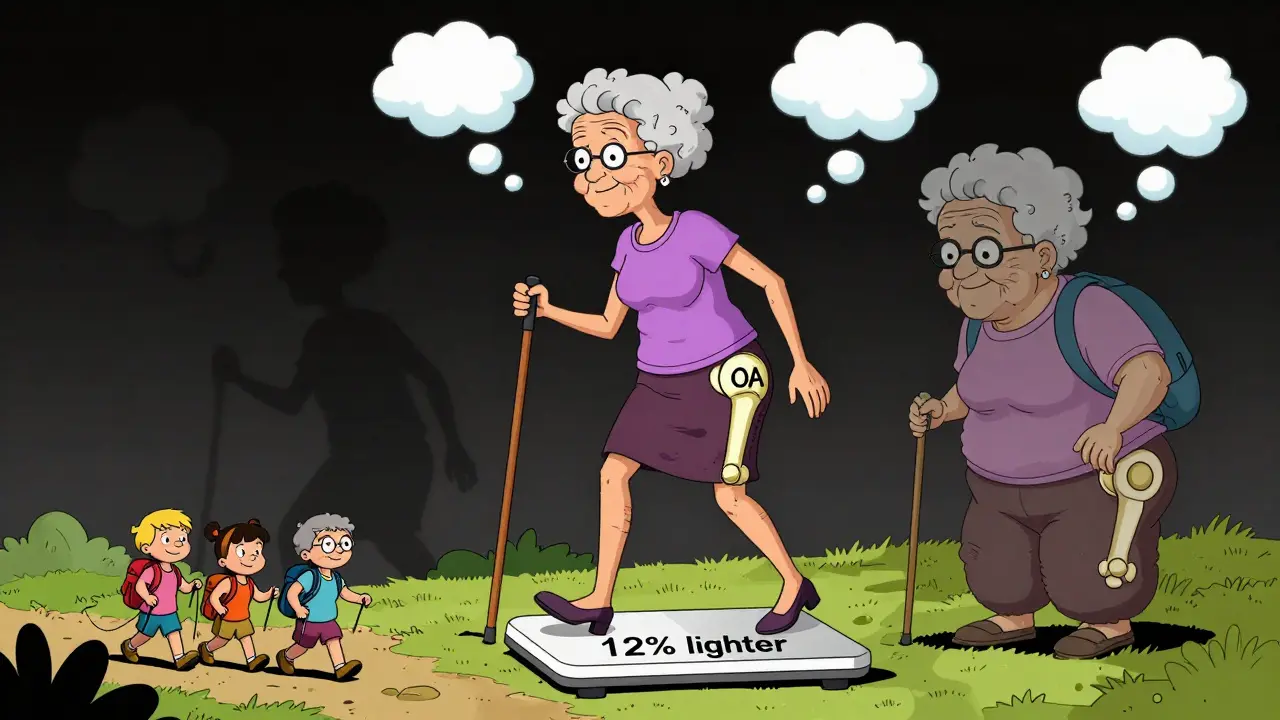
When your hip starts to ache with every step, it’s not just old age talking-it’s your joint screaming for relief. Osteoarthritis of the hip is one of the most common causes of chronic pain and mobility loss in adults over 50. Unlike the knee, where weight loss is widely accepted as a game-changer, the role of shedding pounds for hip OA has been hotly debated. But new research is changing the conversation. Losing weight doesn’t just reduce pressure on your hip-it can actually slow down joint damage and help you move better, longer.
Why Weight Matters for Your Hip Joint
Your hip is a ball-and-socket joint built to handle your full body weight. Every step you take puts three to six times your body weight through that joint. When you carry extra weight, that stress multiplies. Over time, the cartilage that cushions the bones wears down, bones start to rub, and inflammation kicks in. The result? Pain, stiffness, and difficulty walking, climbing stairs, or even getting out of a chair.
It’s not just about mechanics. Fat tissue isn’t just storage-it’s active. It releases chemicals that trigger inflammation throughout the body, including inside your joints. That means even if your hip isn’t bearing all the extra load, the inflammation from excess fat is still attacking the joint from the inside.
A 2024 study in Nature followed 65-year-old adults with hip osteoarthritis and obesity. Those who lost more than 10% of their body weight saw the biggest improvements-not just in pain, but in quality of life. One key measure, the Hip-related Quality of Life subscale, jumped by 31% in this group. That’s not a minor tweak. That’s going from struggling to get dressed to doing it without help.
The Controversy: Does Weight Loss Really Help the Hip?
Here’s where things get messy. While knee osteoarthritis clearly improves with weight loss, some experts have argued the hip doesn’t respond the same way. In August 2023, NEJM Journal Watch bluntly stated, “Osteoarthritis of the Hips Is Unaffected by Weight Loss.” That headline stuck. But it missed the full picture.
A 2023 clinical trial compared a very-low-calorie diet plus exercise to exercise alone in 101 people with hip OA. At six months, there was no big difference in pain scores between the two groups. That’s the study critics pointed to. But here’s what they ignored: at 12 months, the group that lost weight showed clear, lasting improvements in pain, function, and overall hip condition. The benefits took time to show up.
Why the delay? The hip joint is deeper and more stable than the knee. It doesn’t get the same immediate mechanical relief from weight loss. But over time, reduced inflammation, better muscle support, and less joint stress add up. The effect is slower-but real.
How Much Weight Do You Actually Need to Lose?
For knee OA, doctors often say lose 5% of your body weight and you’ll feel better. For the hip? That’s not enough.
The Nature study found that people who lost 5-7% saw modest improvements. But those who hit 10% or more had dramatic changes across all measures: pain, stiffness, walking ability, and daily function. The improvement wasn’t just statistically significant-it was meaningful in real life.
One participant, a 68-year-old woman who lost 12% of her weight over 18 weeks, went from needing a cane to walk to hiking short trails with her grandchildren. She didn’t have surgery. She didn’t take new meds. She changed how she ate and moved.
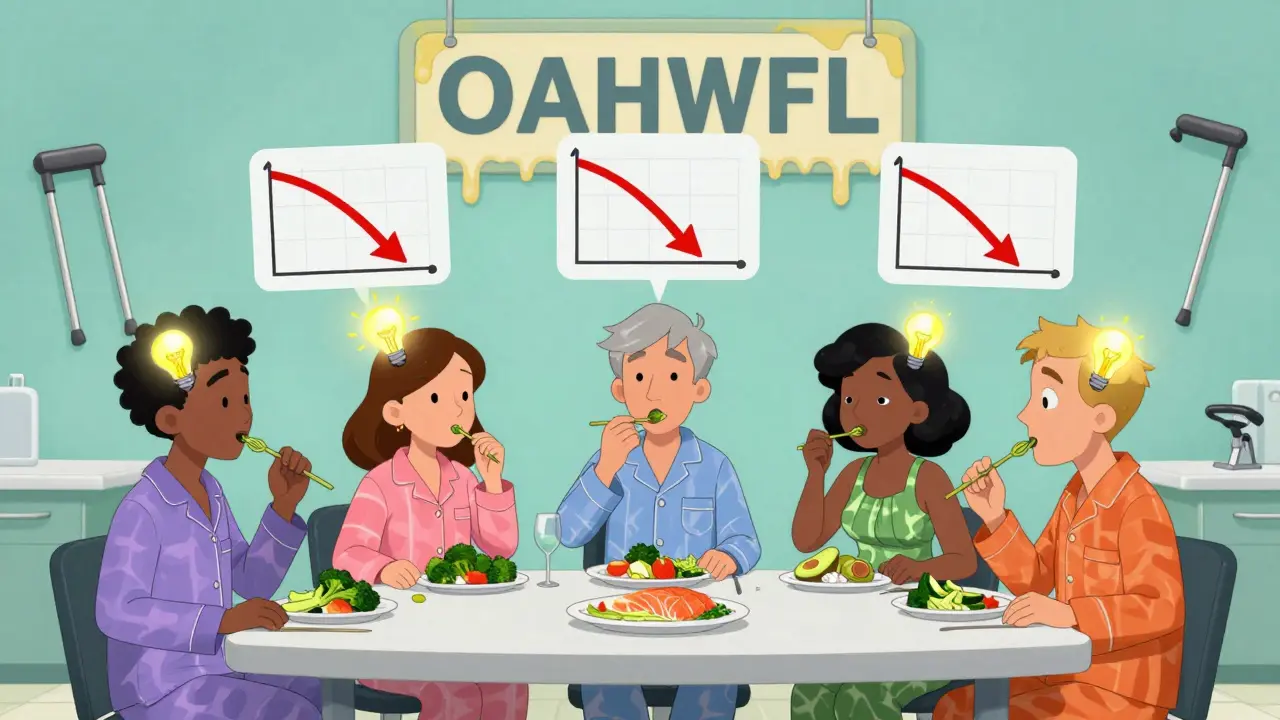
There’s no magic number for everyone. But if you’re overweight and have hip OA, aiming for 10% weight loss isn’t a luxury-it’s a treatment plan. The Osteoarthritis Healthy Weight For Life (OAHWFL) program, originally designed for knee OA, has been adapted for hip OA with success. It’s a structured 18-week plan combining diet, exercise, and weekly coaching. People who finished it lost an average of 8-10% and kept it off.

What Works: Diet, Exercise, and Support
Weight loss for hip OA isn’t about crash diets or punishing workouts. It’s about sustainable change.
Diet: Low-carbohydrate and Mediterranean-style eating patterns have shown strong results. Cutting back on sugar, refined grains, and processed foods reduces inflammation and makes weight loss easier. A 2023 review in the Journal of Metabolic Health found that combining these diets with movement led to better outcomes than either alone.
Exercise: You don’t need to run marathons. Strength training for the glutes, quads, and core is critical-it stabilizes the hip joint. Low-impact cardio like swimming, cycling, or walking on flat ground helps burn calories without pounding the joint. A 2012 study of 35 people with hip OA showed a 32.6% improvement in physical function after eight months of combined diet and exercise.
Support: People who succeed with weight loss for hip OA don’t do it alone. They have coaching, group support, or telehealth check-ins. The same Nature study found that those who dropped out early had worse baseline symptoms. That’s not weakness-it’s a sign they needed more help from the start.
When Weight Loss Isn’t Enough
Not everyone can lose 10% of their body weight. Some have mobility limits. Others have health conditions that make dieting risky. That doesn’t mean you’re out of options.
Even modest weight loss-3-5%-can still reduce pain and slow progression. And if you can’t lose weight, you can still preserve your joint. Strengthening the muscles around the hip, using assistive devices like a cane, and avoiding high-impact activities all help. The American College of Rheumatology recommends weight loss for people with hip OA who are overweight or obese-but it also says physical therapy and activity modification are essential, no matter your weight.
Medications like GLP-1 agonists (semaglutide, tirzepatide) are now approved for weight loss in people with BMI over 30. But they’re not first-line. Lifestyle changes should come first. The Johns Hopkins Arthritis Center recommends trying six months of non-drug treatment before considering medication.
Joint Preservation: More Than Just Pain Relief
Weight loss isn’t just about feeling better today. It’s about keeping your hip intact for years to come.
Every pound you lose reduces the load on your hip joint. Less stress means slower cartilage breakdown. Less inflammation means less damage to the joint lining. Over time, that can delay or even prevent the need for hip replacement surgery.
Studies show that people who lose weight and stay active are significantly less likely to need joint replacement. One analysis estimated that if obese adults lost enough weight to drop into the overweight range, hip OA cases could fall by 20-30%. That’s not just personal gain-it’s a public health win.
And here’s the best part: you don’t need to be thin to see results. You just need to be lighter than you were. Even small, steady progress adds up.
What to Do Next
If you have hip osteoarthritis and carry extra weight, here’s your action plan:
- Set a realistic goal: Aim for 10% weight loss over 6-9 months. That’s about 1-2 pounds per week.
- Focus on food quality: Eat more vegetables, lean protein, whole grains, and healthy fats. Cut out sugary drinks and snacks.
- Move daily: Do strength exercises 3 times a week. Walk 20-30 minutes most days. Water aerobics is great if your hip is stiff.
- Get support: Talk to a physical therapist, dietitian, or join a program like OAHWFL. You don’t have to do this alone.
- Track progress: Measure how you feel, not just the scale. Can you climb stairs without pain? Walk to the store? Sleep through the night?
Weight loss won’t cure hip osteoarthritis. But it’s one of the most powerful tools you have to take back control. It’s not about looking a certain way. It’s about moving without pain, living without limits, and keeping your hip for the long haul.
Can losing weight reverse hip osteoarthritis?
No, weight loss can’t reverse cartilage damage that’s already happened. But it can significantly slow further breakdown, reduce inflammation, and improve how your hip functions. Many people experience less pain and better mobility after losing weight-even if the joint damage remains.
Is 5% weight loss enough for hip OA?
For knee OA, 5% can help. For hip OA, research shows better results start at 7-10%. A 2024 study found that people who lost over 10% saw the biggest improvements in pain, function, and quality of life. If you can hit 10%, you’re more likely to notice real, lasting changes.
What’s the best diet for hip osteoarthritis?
There’s no single “best” diet, but low-carb and Mediterranean diets have strong evidence. Focus on whole foods: vegetables, fruits, lean proteins (fish, chicken, beans), nuts, olive oil, and whole grains. Avoid processed foods, added sugars, and refined carbs-they fuel inflammation.
Can I still exercise with hip pain?
Yes-but choose wisely. Avoid high-impact activities like running or jumping. Focus on low-impact options: swimming, cycling, elliptical, walking on flat ground. Strength training for your glutes, quads, and core is essential to stabilize the joint. A physical therapist can design a safe, effective routine.
Do I need surgery if I can’t lose weight?
Not necessarily. Even without weight loss, you can manage hip OA with physical therapy, activity modification, assistive devices, and pain management. Surgery is typically considered only when pain severely limits daily life and other treatments have failed. Many people delay or avoid surgery by staying active and managing inflammation.
Final Thoughts: Progress Over Perfection
Weight loss for hip osteoarthritis isn’t a quick fix. It’s a long-term investment in your mobility, independence, and quality of life. You don’t need to lose 50 pounds. You just need to lose enough to make a difference.
The science is clear: losing 10% of your body weight can cut pain, improve function, and protect your joint for years. It’s not the only tool-but it’s one of the most powerful. And it’s within reach for almost everyone.
Start small. Stay consistent. Celebrate every step-literally and figuratively. Your hip will thank you.




Reviews
10% weight loss isn't a suggestion-it's a medical intervention. I've seen it in my PT clinic: people who hit that mark stop wincing just to stand up. No magic, just physics and biology.
Y’all need to stop treating this like a diet challenge and start treating it like rehab. You wouldn’t tell someone with a broken leg to ‘just walk it off’-so why treat your hip like it’s broken? Losing weight isn’t about looking good. It’s about keeping your body working. Start with one walk a day. One less soda. One vegetable at dinner. That’s how you win.
My grandma lost 14% after her hip started screaming. Now she’s gardening, dancing at weddings, and side-eyeing her doctor for ever telling her ‘it’s just aging.’ 🌸💃 #WeightLossIsMedicine
Wait-so you’re telling me that fat tissue is an endocrine organ that secretes inflammatory cytokines? And that this directly contributes to cartilage degradation? And that this has been peer-reviewed in Nature? I’m sorry, but this is not new information-it’s been known since 2012! Why is this being presented as some revelation?!
Also, you mention GLP-1 agonists but don’t mention the cost, the insurance hurdles, or the fact that 70% of patients regain weight after stopping. You’re oversimplifying a complex, systemic problem. And you didn’t even mention the role of insulin resistance!
Of course weight loss helps. But let’s be real-most people who need to lose weight are also dealing with depression, chronic stress, and food addiction. Telling them to ‘just eat less and move more’ is like telling someone with a broken leg to ‘just stop limping.’ You’re not helping. You’re judging. And you’re wrong.
They left out the real reason: Big Pharma doesn’t want you to know that a $200/month drug isn’t as profitable as a $1,200/month drug. The real solution? Stop eating processed food. Start walking. Stop taking painkillers that mask the problem. But who profits from that? Not the FDA. Not the hospitals. Not the pill-pushers. That’s why they keep pushing surgery and drugs instead of diet.
And don’t even get me started on the OAHWFL program-it’s funded by the same corporations that sell processed carbs. It’s a trap.
Actually, the 2023 NEJM Journal Watch article wasn’t wrong-it was precise. The study you cited? It had a 40% dropout rate. And the 12-month results? Only 37% of the weight-loss group maintained the loss. The rest gained it back. So yes-weight loss *can* help-but only if you’re one of the 30% who can sustain it. That’s not a solution. That’s a lottery.
Also, ‘low-carb’ isn’t a diet. It’s a label. You mean keto? Atkins? Carnivore? Each has wildly different outcomes. Stop pretending they’re interchangeable.
Wait… so if I’m overweight and have hip OA, and I can’t lose weight because I’m on disability, or I have PTSD from dieting, or I’m 75 and can’t walk far… am I just screwed? Is the whole article just for people who can afford personal trainers and organic kale? Because I’m not that person. And I still need to live.
Why don’t you talk about assistive devices? Or aquatic therapy? Or how 5% weight loss still reduces pain by 30%? You made it sound like you have to hit 10% or you’re a failure. That’s cruel.
While the data presented is compelling and methodologically sound, I would respectfully submit that the framing of this article may inadvertently alienate those for whom weight loss is not a viable or sustainable option. The emphasis on 10% loss, while statistically significant, may unintentionally convey a binary outcome: success or failure. In clinical practice, we have found that even incremental progress-measured in improved mobility, reduced reliance on analgesics, or increased participation in social activities-represents meaningful therapeutic achievement. A more inclusive narrative, acknowledging the heterogeneity of patient circumstances, would enhance both the ethical and practical utility of this message.
I lost 8% last year. Didn’t hit 10%. Still, I can now put on my socks without stopping. I can sit on the floor with my grandkids. I don’t need a cane to the mailbox. The scale doesn’t tell the whole story. I’m not ‘fixed’-but I’m not broken anymore either. 🌿💛