
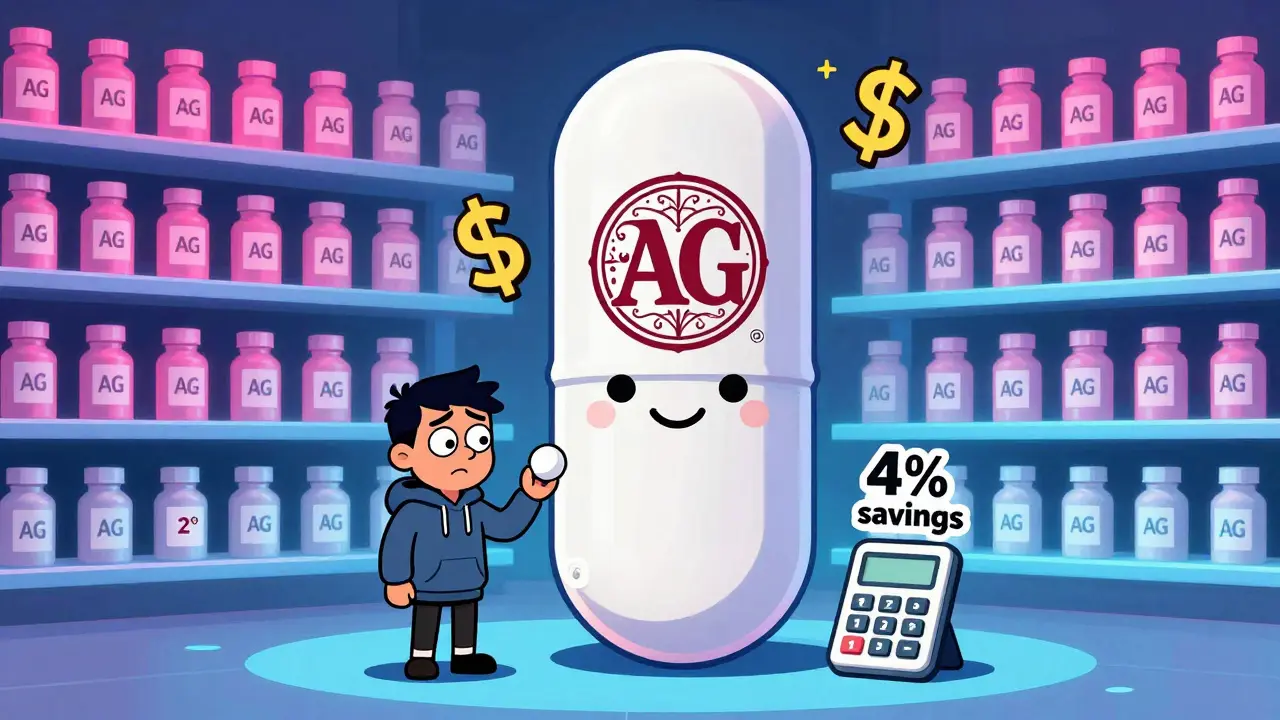
When you pick up a prescription, you might assume the generic version is just as good as the brand - and usually, it is. But here’s something most people don’t know: not all drugs have authorized generics. Even when a brand-name drug loses patent protection, there’s no guarantee you’ll get a cheaper version that’s made by the same company under a different label. And that gap in availability can mean the difference between saving $50 a month or paying full price for years.
What Exactly Is an Authorized Generic?
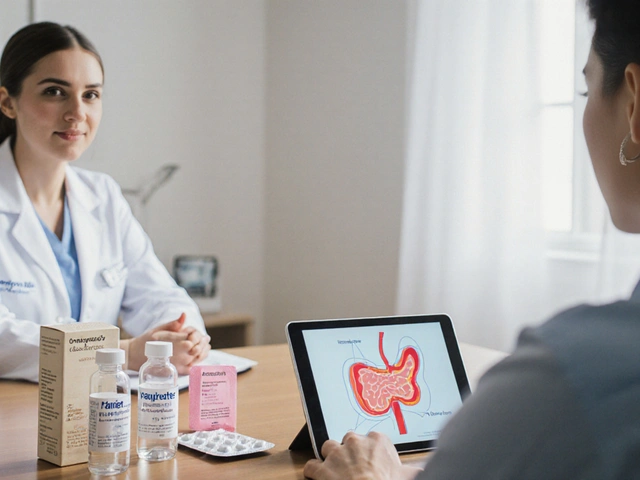
An authorized generic (AG) is a drug that’s identical to the brand-name version - same active ingredients, same factory, same quality controls - but sold under a generic label at a lower price. It’s not a copycat. It’s the exact same pill, just without the brand name on the box. The manufacturer of the original drug produces it, then sells it to a distributor who puts it on the shelf as a generic. This isn’t the same as traditional generics. Those are made by other companies after the patent expires. They have to prove they work the same through testing. Authorized generics skip that step because they’re made under the original drug’s approval. That means they hit the market faster - sometimes within weeks of the brand’s patent expiring.Why Do Some Drugs Have Them and Others Don’t?
The short answer: it’s not about science. It’s about business. Brand-name drugmakers decide whether to launch an authorized generic based on what protects their profits best. If they think a traditional generic competitor will come in and slash prices, they might launch their own AG to steal market share before the other company even gets started. That’s exactly what Mylan did with the EpiPen in 2016. Even though the patent hadn’t expired yet, they released an AG version at a lower price to keep control of the market. But if a drug doesn’t make enough money - say, it’s a $50-a-month medication with low sales volume - the brand company won’t bother. Setting up an AG requires planning, labeling changes, and distribution logistics. For a drug with $20 million in annual sales, the cost of launching an AG often outweighs the benefit. According to FDA data from 2019, only 1,215 authorized generics were available in the U.S. That’s out of over 20,000 prescription drugs. And 68% of those AGs were for drugs that brought in more than $500 million a year. If your medication isn’t a blockbuster, you’re unlikely to see an authorized generic version.How AGs Affect Your Out-of-Pocket Costs
If an authorized generic is available, you’ll usually pay less - but not always as much as you’d hope. The Federal Trade Commission found that when an AG enters the market during the first 180 days after a generic challenger files, retail prices drop by 4% to 8%, and wholesale prices fall by 7% to 14%. That might not sound like much, but for a $300 monthly drug, that’s $12 to $42 saved per month. But here’s the catch: once that 180-day window closes and traditional generics flood in, prices often drop further. So if your drug has an AG but no other generics, you’re stuck paying a slightly lower price - not the rock-bottom price you’d get from multiple competitors. Some AGs are priced aggressively. When Teva launched its AG version of Protonix in 2010, it sold for 35% less than the brand. But that was a strategic move. In many cases, the AG price is just 10% to 20% below the brand - enough to look like a discount, but not enough to trigger a full price war.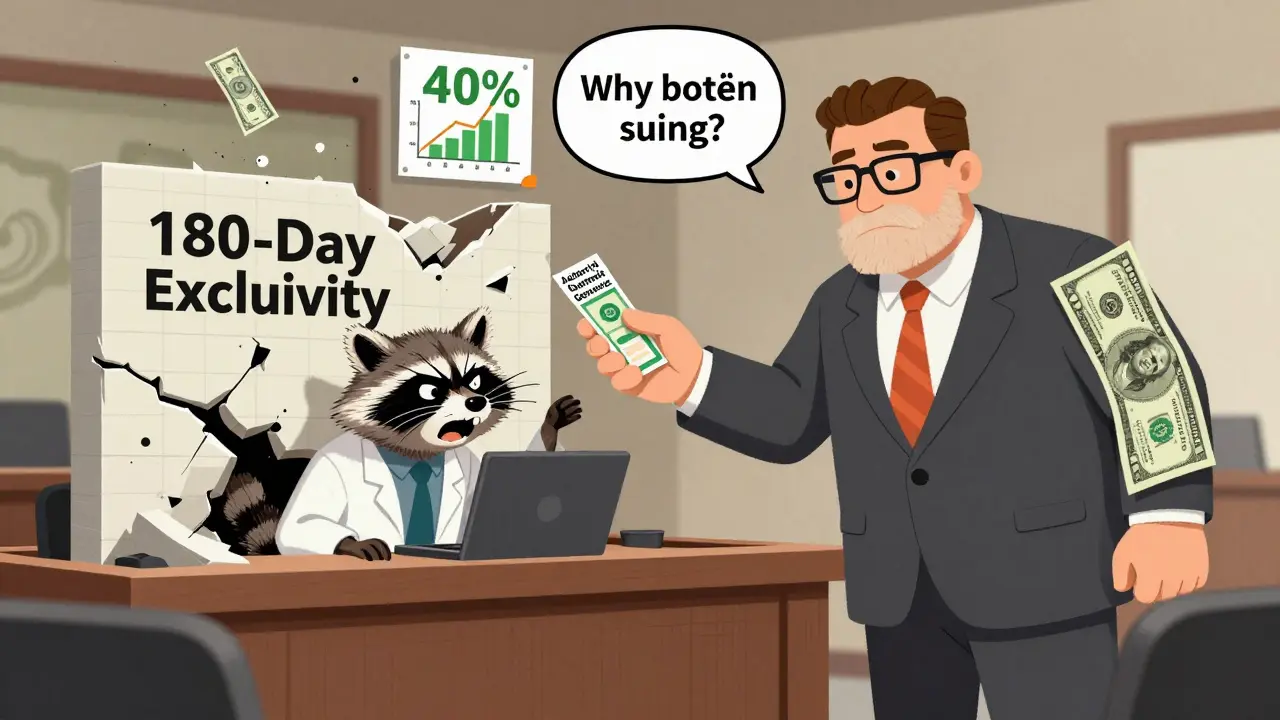
The Hidden Downside: AGs Can Block Real Generic Competition
Authorized generics aren’t always the hero they seem. The Hatch-Waxman Act was designed to encourage generic drug companies to challenge patents by giving the first one to file 180 days of exclusive market rights. But if the brand company launches an AG during that window, it wipes out that exclusivity. The first generic company doesn’t get to be the only low-price option - now there are two identical drugs on the shelf. The FTC found that when an AG enters during the 180-day window, the first generic’s revenue drops by 40% to 52%. That makes it far less likely that any company will risk the $10 million+ it costs to challenge a patent. Why spend millions on legal battles if the brand company can just drop its own version and steal your profit? Harvard Medical School’s Aaron Kesselheim put it bluntly: AGs may help patients in the short term, but they discourage the kind of competition that drives prices down long-term.Confusion at the Pharmacy Counter
Even when AGs are available, they create problems for patients and pharmacists. Because the AG is chemically identical to the brand, many people don’t realize they’re getting the same drug. But the packaging is different. The pill might look slightly different. The label says something else. That leads to confusion. A 2015 study in U.S. Pharmacist found that pharmacists at Walgreens saw a 27% increase in prescription errors when both brand and AG versions were available. Patients got the wrong version. They complained. Some thought their medication had changed. A 2018 survey of 1,200 doctors showed 63% found AGs made it harder to switch patients between brands and generics. And a Medicare Part D survey in 2019 found that 72% of patients were confused when their "generic" suddenly looked different. It’s not a safety issue - the drug is the same. But the psychological effect is real. People trust what they’re used to. When that changes, even for no medical reason, it causes anxiety.
Who Controls This System - and Why It Won’t Change Soon
The FDA doesn’t require brand manufacturers to launch AGs. They don’t even track them in real time. Until 2022, the FDA updated its AG list only once a year. Now it’s quarterly - but still, it’s a passive system. The agency doesn’t push for more AGs. It just records what companies choose to report. Generic drugmakers have fought back. The Association for Accessible Medicines has pushed for legislation like the Preserve Access to Affordable Generics Act, which would ban AGs during the 180-day exclusivity period. But those bills keep stalling in Congress. Brand companies argue they’re helping consumers. Pfizer says its AG version of Lyrica cut prices by 12% within three months. But critics point out that Pfizer also used "reverse payment" settlements - paying generic companies not to enter the market - in 78% of patent deals between 2018 and 2022. That’s the same companies now claiming they’re lowering prices. The truth? The system is designed to protect profits, not to maximize competition.What You Can Do
You can’t force a drugmaker to launch an AG. But you can work smarter.- Check if your drug has an authorized generic. Use the FDA’s Approved Drug Products with Therapeutic Equivalence Evaluations (Orange Book) and look for the "AG" designation next to the brand name.
- Ask your pharmacist: "Is there an authorized generic for this?" They can often tell you if the brand company makes one.
- If you’re paying full price for a brand drug, ask your doctor if a traditional generic is an option - even if it’s not an AG.
- If you’re on Medicare Part D, check your plan’s formulary. Some plans list AGs separately and may have lower copays for them.
Bottom Line
Authorized generics sound like a win: same drug, lower price. But they’re not a universal solution. They’re a tool used by big pharmaceutical companies to control competition, not to open the floodgates for true market-driven pricing. If your drug has an AG, great - you might save a few bucks. But if it doesn’t, don’t assume you’re out of luck. Traditional generics, mail-order pharmacies, and patient assistance programs can still offer savings. The key is asking the right questions - and knowing that the system isn’t designed to help you. You have to help yourself.Are authorized generics the same as regular generics?
Yes and no. Authorized generics are made by the original brand-name manufacturer using the exact same formula, equipment, and quality control. Regular generics are made by other companies and must prove they work the same through testing. So while both are chemically identical to the brand, authorized generics are literally the same pill with a different label.
Why don’t all brand-name drugs have authorized generics?
Because launching an authorized generic costs time and money, and only makes financial sense for high-revenue drugs. If a drug earns less than $100 million a year, most manufacturers won’t bother. Only about 22% of companies with low-sales drugs use AGs, compared to 89% of those with blockbuster drugs earning over $1 billion annually.
Can I ask my doctor to prescribe an authorized generic?
You can ask, but doctors usually don’t know which versions are authorized generics. Pharmacists are better equipped to identify them. Ask your pharmacist: "Is there an authorized generic for this drug?" If there is, they can often fill it unless your prescription specifically says "dispense as written."
Do authorized generics lower prices long-term?
Not always. While they can reduce prices during the first 180 days after a patent expires, they often prevent traditional generic companies from entering the market. That means fewer competitors, less price pressure, and higher prices over time. Studies show AGs can reduce the incentive to challenge patents by up to 60%.
How do I find out if my drug has an authorized generic?
Check the FDA’s Orange Book online - it lists all approved drugs and marks authorized generics. You can also ask your pharmacist directly. Many pharmacies have internal tools that flag AGs. If you’re on Medicare, your plan’s formulary might list them separately with lower copays.

Reviews
So basically, Big Pharma plays chess while we’re stuck playing checkers? 😅 I just found out my blood pressure med has an AG-saved me $38 a month. But now I’m paranoid every time my pill looks slightly different.
It is truly concerning that access to affordable medication is contingent upon corporate profit motives rather than public health necessity. Patients deserve transparency and equitable access without navigating a labyrinth of pharmaceutical strategy.
Bro. This whole system is a SCAM. They make a drug for $0.02, slap a $300 price tag on it, then say ‘oh here’s a ‘discount’ version’-but it’s the SAME PILLS. 😤 And then they PAY OTHER COMPANIES to NOT make generics? That’s not capitalism, that’s organized crime with a lab coat. FDA’s just taking notes like a bored librarian.
Hey, if you're paying full price for a brand drug, don't give up. Talk to your pharmacist-they know way more than your doctor about what’s actually available. I used to think generics were ‘weaker’ until I switched to an AG for my thyroid med. Same pill, half the cost. No side effects, no drama. You got this.
I didn’t even know AGs existed until my pharmacist mentioned it last month. I thought all generics were the same. Now I check every script. Feels good to know I’m not getting ripped off. Still weird how the packaging changes but the pill doesn’t.
So let me get this straight… the same company that made my $400/month drug now sells me the exact same thing for $250… and we’re supposed to be grateful? 🙄 I’m just waiting for them to charge me extra for the ‘premium’ generic label. Like, ‘this one has glitter’.
It is a grotesque irony that the mechanism designed to promote affordability-authorized generics-functions as a strategic barrier to true market competition. The regulatory apparatus, complicit in its passivity, enables rent-seeking behavior under the guise of consumer benefit. A system in which pharmaceutical monopolies self-regulate is not a market-it is a feudal estate.
People are so naive. You think these companies care about your wallet? They care about control. If you’re lucky enough to get an AG, count your blessings-but don’t mistake it for justice. This isn’t healthcare. It’s a casino where the house always prints the cards.
It’s fascinating how a pill-something so simple, so biological-becomes this tangled knot of law, profit, and psychology. We treat medicine like a commodity, but it’s a human need. The real tragedy isn’t the price tag. It’s that we’ve stopped asking why the system exists to make us feel like we’re fighting for basic care just to survive.
i had no idea ags existed… my dr just prescribes and i take it. i just thought my new generic looked weird. now im gonna ask my pharmacist next time. ty for the info. 🙏
Check the Orange Book. Ask your pharmacist. Don’t assume. This stuff matters.
Wow. So the solution to high drug prices is… more of the same company selling the same drug under a different name? Genius. Next they’ll sell us the same insulin in a ‘deluxe’ package with a QR code that plays a lullaby.