
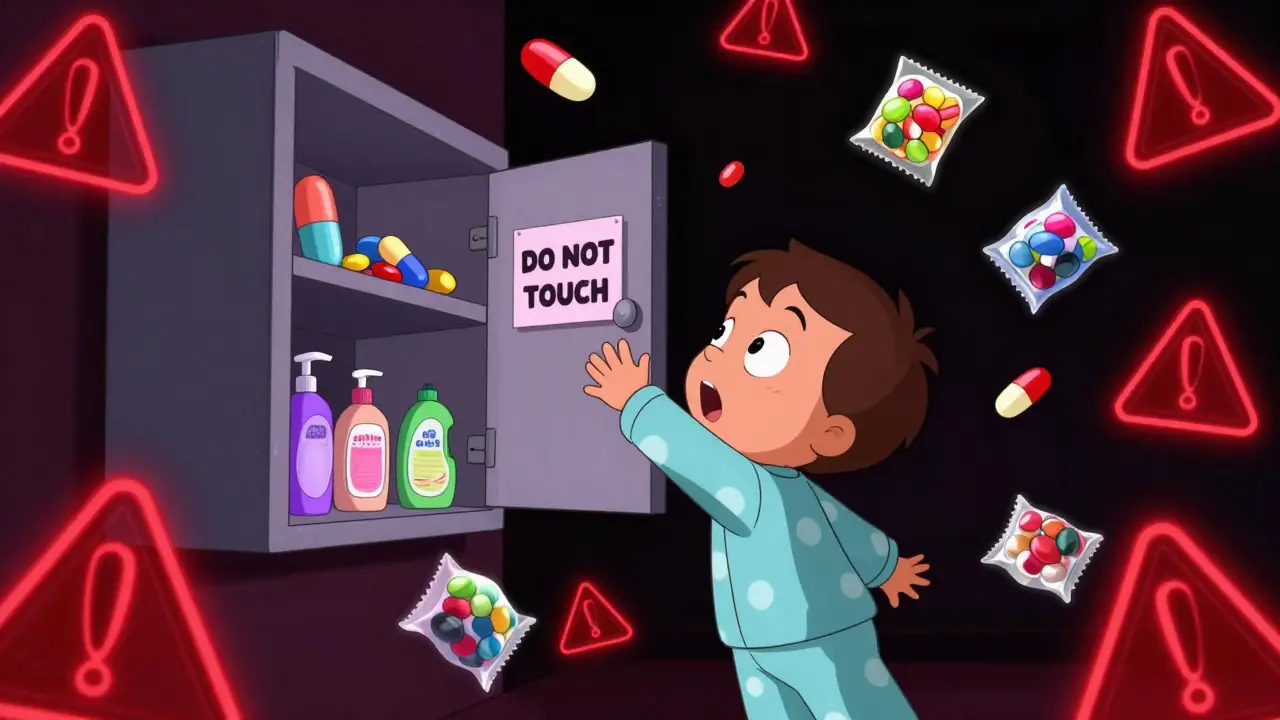
Every year, over 50,000 children under six in the U.S. end up in emergency rooms because they swallowed something they shouldn’t have. Most of these aren’t accidents in the traditional sense-they’re exploratory ingestions. That means a toddler, curious and mobile, finds a bottle of medicine, a cleaning product, or a colorful pill and puts it in their mouth. No malice. No rebellion. Just normal development gone wrong.
Why Kids Under Five Are at Highest Risk
Children between one and four years old are the most vulnerable. This is when they start crawling, pulling up, walking, and exploring everything with their hands and mouths. Their curiosity isn’t dangerous-it’s essential for learning. But their judgment isn’t developed yet. They don’t know that a blue liquid in a bottle isn’t juice. They don’t understand that a pill shaped like a dinosaur isn’t candy. Research shows that 75% of poisonings in this age group happen because of this kind of natural exploration. Boys are slightly more likely to be affected, and kids with hyperactive temperaments face higher risks. The biggest danger? Liquid medications. They’re easier to swallow than powders, and they often taste sweet. A 2021 study found that liquid drugs cause 69% more injuries than solid ones.What You Can Do: The Four Layers of Prevention
There’s no single fix. Preventing these incidents requires a layered approach-like a safety net with multiple strands. If one fails, the others still catch the child.1. Store Everything Out of Reach and Locked
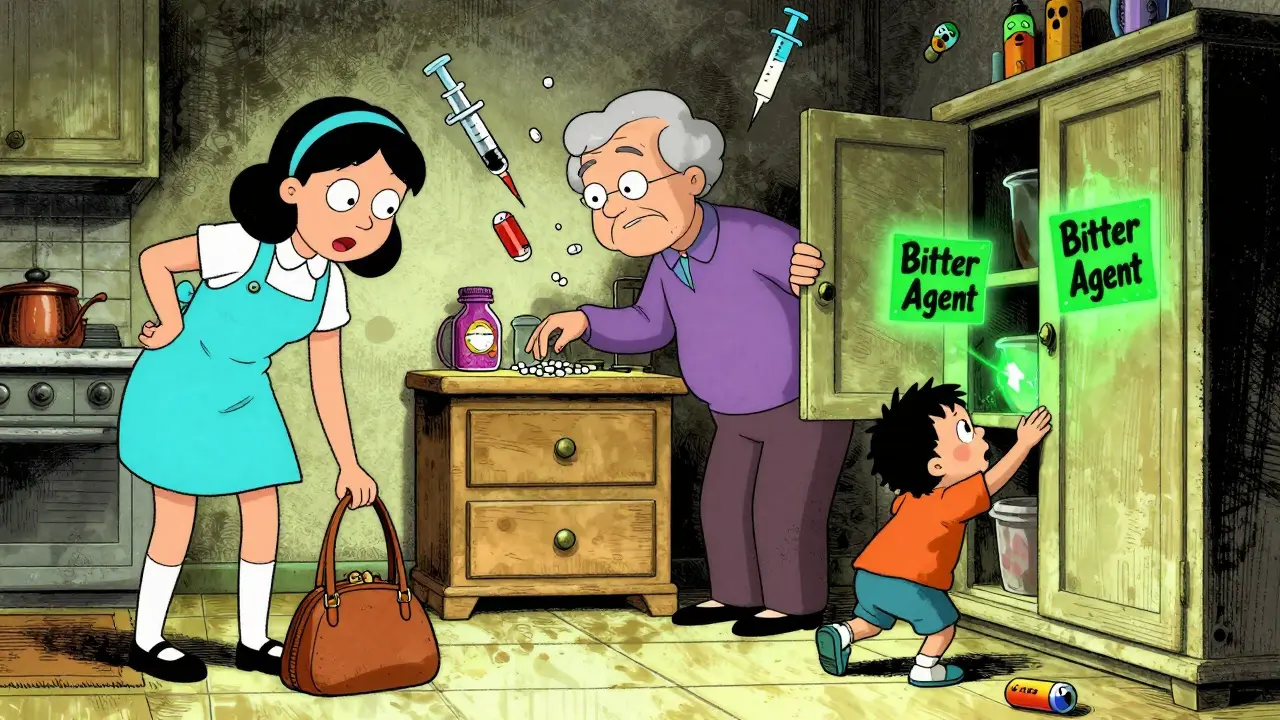
The most effective step is simple: keep all medicines, cleaners, vitamins, and chemicals in a locked cabinet. Not just any cabinet. One that’s at least 1.5 meters (5 feet) off the ground. Studies show this blocks 82% of access attempts by children under four. Don’t rely on child-resistant caps alone. They’re designed to slow kids down-not stop them. A 2022 survey found that while 92% of parents own bottles with these caps, only 54% actually snap them back after use. That number drops to 39% for parents of 18- to 24-month-olds-the peak risk age. Also, never leave bags, purses, or backpacks on the floor. A 2021 review from UCSF Benioff Children’s Hospital found that 22% of poisonings happen when kids grab pills from a visitor’s bag. Grandparents, babysitters, even relatives visiting for a few hours can accidentally leave medications within reach.2. Keep Products in Original Containers
Never transfer medicine or cleaning products into food containers. A soda bottle with bleach inside? A peanut butter jar with cough syrup? That’s how kids get confused. One study showed that keeping items in their original packaging prevents 29% of ingestions. Same goes for food and cleaners. Store them in separate cabinets. Mixing them increases confusion-related incidents by 37%. A child might grab what looks like juice but is actually window cleaner. That’s not a mistake-it’s a preventable tragedy.3. Use the Right Tools for Medication
Stop using kitchen spoons to measure medicine. A 2021 study in Pediatrics found that 76% of parents made dosage errors using spoons. Only 12% made errors when using the syringe or cup that came with the medicine. Calibrated dosing tools aren’t optional. They’re essential. If your child’s prescription doesn’t come with one, ask your pharmacist for one. Or buy a simple plastic syringe from the pharmacy. It costs less than a coffee. It could save a trip to the ER.4. Add Bittering Agents Where Possible
Some household products now include denatonium benzoate-a bitter chemical so strong that even a tiny taste makes you spit it out. It’s added to antifreeze, cleaning sprays, and even some e-liquids. Research shows this reduces the chance of multiple swallows by 68%. That’s huge. But remember: it doesn’t stop a single fatal dose. Still, it’s one more layer. The FDA is considering making it mandatory in all liquid nicotine products by 2025, based on Australian data showing an 82% drop in ingestions after implementation.High-Risk Products You Can’t Ignore
Some items are more dangerous than others. Know the top threats:- Button-cell batteries: These tiny round batteries can cause severe internal burns in as little as 15 minutes. Eighty-five percent of serious injuries happen in kids under four. Keep them locked up. If your remote control or toy uses them, tape the battery compartment shut.
- Laundry detergent pods: They look like candy. Even after manufacturers changed packaging to be less colorful and added double latches, they still caused 11% of pediatric poisonings in 2018. Keep them high and locked.
- Liquid nicotine (e-cigarette refills): Poison control calls for this have jumped 1,500% since 2012. These liquids are highly concentrated. A teaspoon can kill a toddler. The 2022 Child Nicotine Poisoning Prevention Act now requires unit-dose packaging and warning labels-but don’t wait for the law. Lock them up now.
- Cannabis edibles: In states where marijuana is legal, these have become a growing problem. A 2022 report showed they account for 7% of pediatric ingestions, with hospitalization rates 3.2 times higher than other poisonings. They’re often shaped like gummies or cookies. Store them like you would alcohol-locked away, out of sight.
- Buprenorphine: Used for opioid addiction treatment, this drug has seen a 156% increase in child exposures since 2010. It’s not like regular opioids. Standard treatments don’t always work. Keep it locked, and tell caregivers it’s especially dangerous.
When It Happens: What to Do Immediately
If you suspect your child swallowed something harmful, don’t wait. Don’t try to make them throw up. Don’t give them milk or charcoal unless a professional tells you to. Call Poison Control right away: 1-800-222-1222. This number works anywhere in the U.S. and connects you to trained specialists 24/7. Studies show that 78% of the best outcomes happen when help is called within 30 minutes. Download the Poison Control app. It’s free, available on iOS and Android, and has a 4.7-star rating. Parents report they can find guidance in under 90 seconds. That’s faster than calling. If your child is unconscious, having trouble breathing, or seizing, call 911 immediately. But for everything else-swallowed pills, spilled cleaners, unknown substances-Poison Control is your first and best step.Prevention Starts Early
You don’t have to wait until your child is crawling to start. The American Academy of Pediatrics recommends beginning safety checks at the 9-month well-child visit. That’s 3 to 4 months before most babies start crawling. Why? Because by the time they’re mobile, it’s already too late to react-you need to be ready. Set up your home safety system before your child reaches the milestone. Install cabinet locks, move cleaners up, lock up meds. It takes about 4.7 hours total to do it right, according to Consumer Reports. That’s less than one evening of TV. Check your home every three months. Kids grow fast. One day they’re just sitting up. The next, they’re pulling themselves onto the counter. What was safe last month might not be today.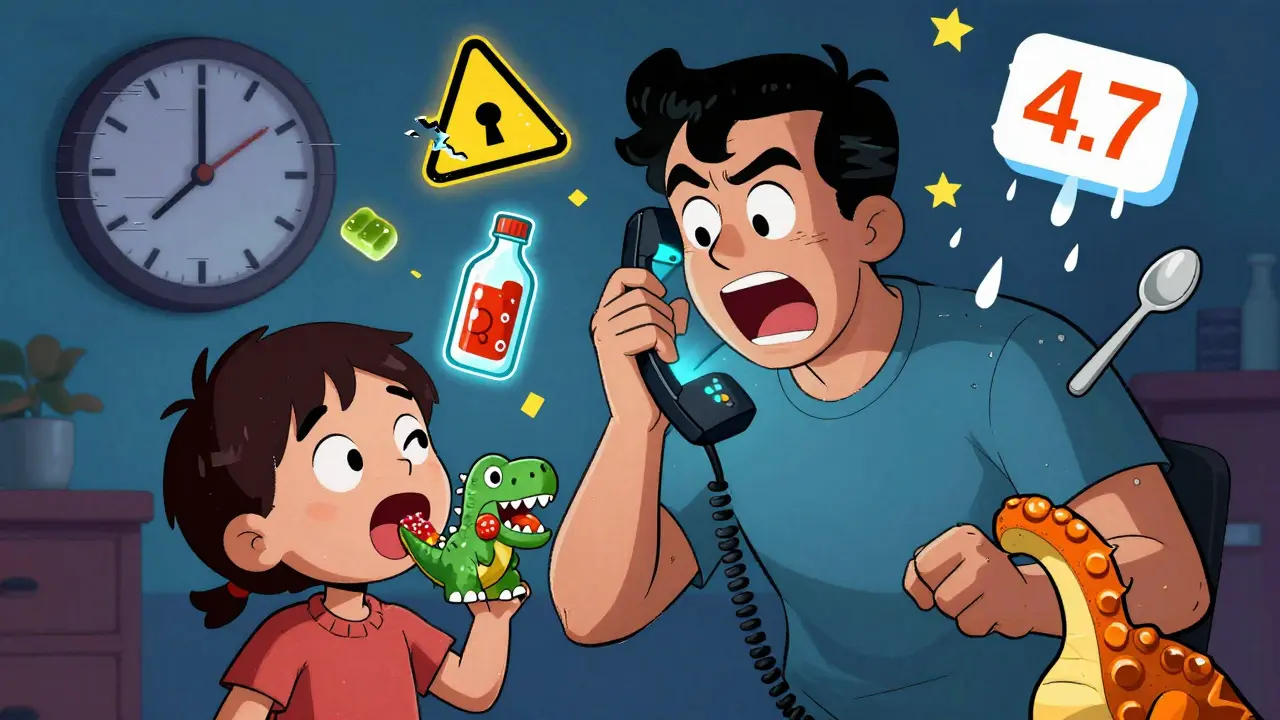
The Biggest Challenge: Consistency Across Caregivers
The hardest part isn’t knowing what to do. It’s making sure everyone else does it too. A 2021 multi-center study found that 63% of households had safety lapses when care switched between parents, grandparents, or babysitters. Grandparents might leave pills on the nightstand. A babysitter might forget to lock the cabinet after giving medicine. Talk to them. Show them. Don’t assume they know. Print out a simple list: “Medicines go in the locked cabinet. Never leave bags on the floor. Call 1-800-222-1222 if you’re unsure.” Leave it on the fridge. Use teach-back methods: Ask them to show you where the medicine is stored. Have them demonstrate how to use the dosing syringe. Studies show this boosts retention to 82%-compared to just 47% if you just tell them.It’s Not Perfect, But It Works
Child-resistant packaging cut aspirin deaths by 45% between 1974 and 1992. Bittering agents reduced antifreeze deaths by 58% in Europe. Unit-dose packaging for liquid meds could prevent 15,000 ER visits a year in the U.S. alone. The tools exist. The data is clear. The problem isn’t lack of knowledge-it’s consistency. It’s remembering to lock the cabinet after midnight when you’re tired. It’s not letting your sister borrow your house keys without reminding her about the meds on the counter. You can’t control every moment. But you can control the environment. And that’s enough.Every child deserves to explore safely. You don’t need to be perfect. You just need to be prepared.



Reviews
I never realized how many everyday things are basically toddler poison bombs until I read this. My niece grabbed a laundry pod last year-scared the life out of us. Now everything’s locked up, even the hand sanitizer. Worth the extra effort.
Also, bittering agents? Genius. Why isn’t this on everything? I’d pay extra if it meant my kid wouldn’t spit out a cleaning spray like it was a gummy bear.
Parents are lazy. That’s the real problem. You think locking up meds is hard? Try raising a kid without a TV. You want safety? Be responsible. Stop blaming the product. Blame the parent who left their purse on the floor like a dumbass.
Love this guide so much. Seriously. The part about teach-back methods? Game changer. I showed my mom how to use the dosing syringe and she actually remembered it. She even asked me to print the list for her fridge. 😊
Also button batteries. Holy hell. We taped ours shut after reading this. No more risks. Ever.
PS: Poison Control app is legit. Saved us last month when my toddler licked a spilled drop of ibuprofen. Called them. They told us to watch and wait. No ER needed.
While the intent of this article is commendable, the underlying assumption that parental behavior can be systematically corrected through environmental controls is statistically oversimplified. The variability in caregiver compliance across socioeconomic strata renders the proposed interventions non-universal in efficacy.
Oh wow, so we’re blaming parents now? What’s next? ‘How to stop your kid from breathing too loudly’? You know what’s worse than a kid swallowing something? A parent who thinks a locked cabinet is the solution. Kids are curious. You can’t lock up curiosity. You just need to raise them right.
Wait wait wait-so you’re saying I can’t leave my painkillers on the bathroom counter? Like, ever? What if I’m in pain and need them at 3 a.m.? What if I’m tired and forget? What if my kid is asleep and I just need one pill? This feels like overkill. Like, are we turning homes into bomb shelters now? I mean seriously.
Also-why is everyone so scared of a little exposure? My cousin swallowed a whole bottle of gummy vitamins once. He’s fine. He’s 28 now. Still eats candy like a maniac.
Oh great. Another ‘parenting guilt trip’ disguised as public health advice. Let me guess-you also think we should lock up the stairs because kids might fall? Or hide the water because they might drown in the tub? This isn’t prevention. This is paranoia dressed up as science. And let’s be real-90% of these cases are just bad luck. Not bad parenting.
Actually, in Ireland, we just let kids be kids. No locks, no bittering agents, no apps. We have lower pediatric poisoning rates than the U.S. because we don’t treat toddlers like they’re walking time bombs. Your system is over-engineered. Kids learn by touching things. You’re raising a generation of afraid kids, not safe ones.
so like… i just leave my meds in the kitchen drawer. my kid is 2 and he cant reach it. also he dont even open drawers. why u make this sound like we all need to build a vault? its not that hard. just dont be dumb. also why do u think we all have 5 hours to lock up everything? some of us work 2 jobs.
It is, of course, axiomatic that the implementation of multi-layered preventive measures must be predicated upon a priori recognition of the heterogeneity of household dynamics, including but not limited to intergenerational caregiving structures, socioeconomic constraints, and cognitive load associated with chronic stress. The assertion that a 4.7-hour home safety audit is universally feasible is empirically unsupported by longitudinal data on working-parent time allocation, as demonstrated by the U.S. Bureau of Labor Statistics’ 2023 Time Use Survey, wherein 68% of primary caregivers reported less than 30 minutes of daily discretionary time for household reorganization. Therefore, while the recommendations herein are theoretically sound, their practical applicability is severely constrained by structural realities that render the proposed interventions functionally inaccessible to a significant proportion of the target demographic. One must question whether the burden of prevention is being inappropriately externalized onto caregivers already operating under systemic duress.