
TTP Symptom & Risk Assessment Tool
What is TTP?
Thrombotic thrombocytopenic purpura (TTP) is a rare but life-threatening blood disorder that can develop from taking certain medications. It causes tiny blood clots throughout the body, leading to low platelets, anemia, and organ damage. Early recognition is critical because untreated TTP can be fatal within hours or days.
1. Medications Taken
Check all medications you've taken in the past 2 weeks that may increase TTP risk:
2. Symptoms Experienced
Check all symptoms you've noticed in the past 2-14 days:
3. Blood Test Results (If Available)
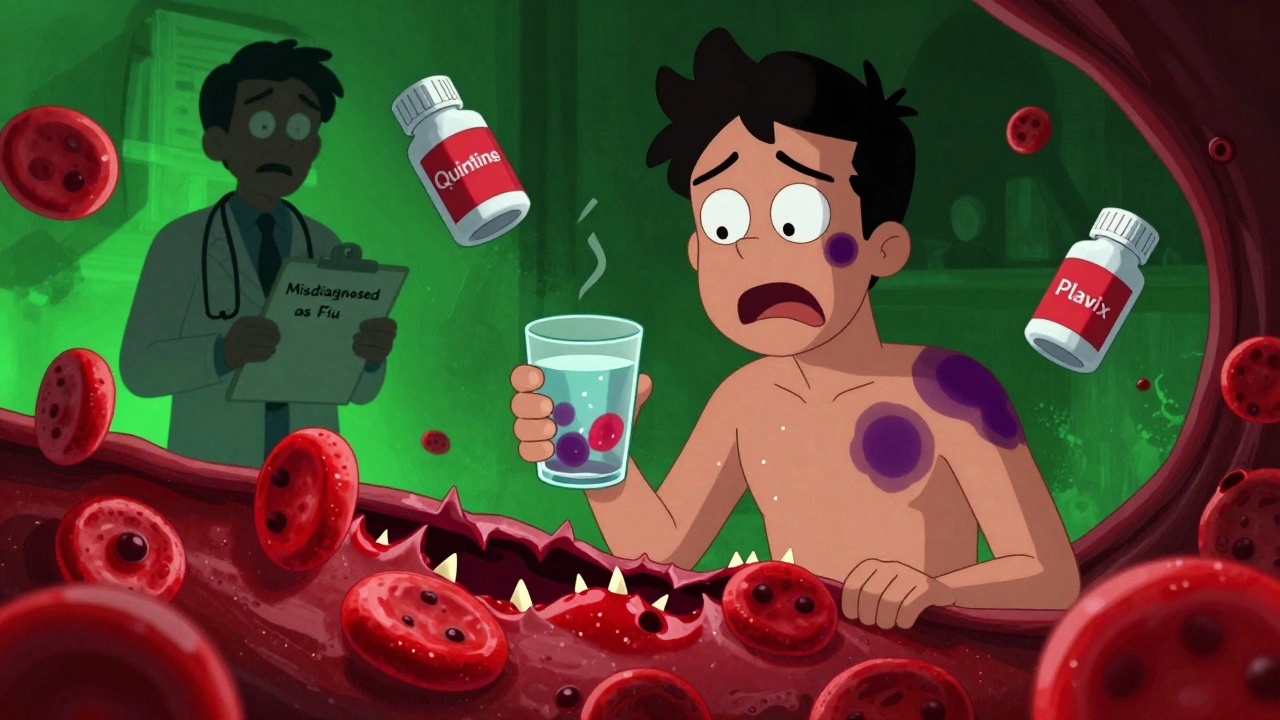
When you take a new medication, you expect relief - not a sudden, life-threatening crisis. But for some people, common drugs can trigger thrombotic thrombocytopenic purpura (TTP), a rare but deadly condition that attacks the blood and organs within days. It doesn’t show up on routine blood tests. It’s often mistaken for the flu, an infection, or even a simple low platelet count. By the time it’s correctly diagnosed, it’s already too late for many. Between 10% and 20% of people who develop drug-induced TTP die, even with treatment. And the worst part? It can happen after just a few doses - or even from something as ordinary as tonic water.
What Is Drug-Induced TTP?
Thrombotic thrombocytopenic purpura is a blood disorder where tiny clots form throughout the body’s smallest blood vessels. These clots chew up platelets - the cells that help your blood clot normally - leaving you at risk of uncontrolled bleeding. At the same time, red blood cells get torn apart as they squeeze through these blocked vessels, causing severe anemia. The result? A deadly mix of low platelets, broken red blood cells, and organ damage.
Normally, your body has a protein called ADAMTS13 that acts like a pair of scissors, cutting large clotting proteins into safe sizes. In drug-induced TTP, this system breaks down. In about 60% of cases, your immune system mistakenly makes antibodies that block ADAMTS13 - but only when the drug is present. In the other 40%, the drug itself directly damages the lining of your blood vessels, triggering clots without immune involvement.
Unlike regular blood clots, these aren’t caused by sitting too long or injury. They’re silent, internal disasters. They can block blood flow to your brain, kidneys, heart, or gut. That’s why symptoms include confusion, seizures, kidney failure, chest pain, and purple bruises that appear out of nowhere.
Which Medications Cause TTP?
More than 300 drugs have been linked to TTP, but only a handful are proven to cause it reliably. The most dangerous are:
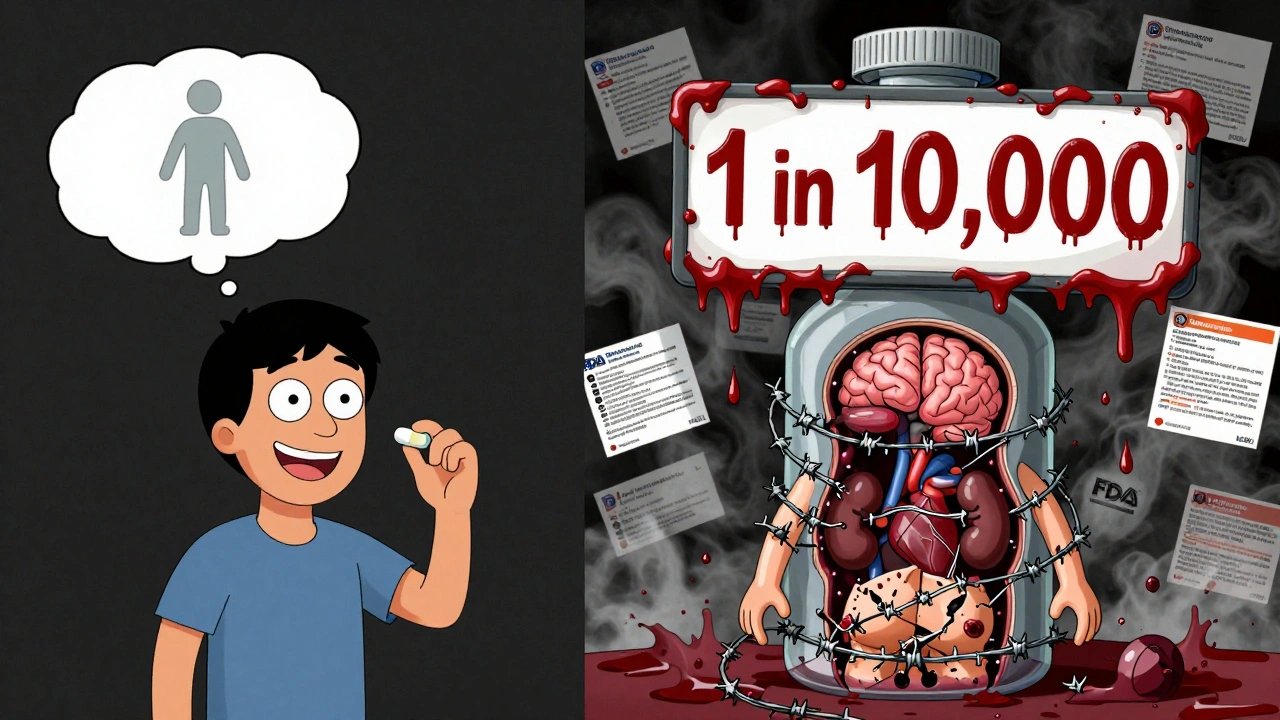
- Quinine - found in tonic water, malaria pills, and some leg cramp remedies. One case of TTP occurs for every 10,000 prescriptions. But people who drink 2-3 glasses of tonic water daily for weeks have also developed it.
- Clopidogrel (Plavix) - a common antiplatelet drug for heart attack and stroke prevention. Symptoms usually appear within 1-14 days of starting it.
- Ticlopidine - an older drug, mostly replaced by clopidogrel, but still used in some cases. It carries a 1 in 1,600 risk of TTP, which led to its near-total withdrawal from the market.
- Cyclosporine - used after organ transplants. Risk increases with higher doses and long-term use (6-12 months).
- Mitomycin C - a chemotherapy drug. TTP here is tied to cumulative dose, not immune response.
- TNF-alpha inhibitors - drugs like adalimumab (Humira) and infliximab (Remicade) used for rheumatoid arthritis and Crohn’s disease. These have become more common causes in recent years.
- Checkpoint inhibitors - cancer immunotherapies like pembrolizumab (Keytruda) and nivolumab (Opdivo). TTP is rare but deadly when it happens.
What’s alarming is that some of these drugs are taken daily without warning. People don’t realize that drinking tonic water for leg cramps or taking Plavix after a stent could trigger this. The FDA added black box warnings to quinine products in 2022 after confirming 1 in 10,000 users developed TTP. And in Australia, where tonic water is popular in cocktails and home remedies, cases have been rising.
How Is It Diagnosed?
There’s no single test. Diagnosis relies on spotting the pattern:
- Platelet count below 50,000 per microliter (normal is 150,000-450,000)
- Schistocytes - fragmented red blood cells seen under a microscope
- High LDH (lactate dehydrogenase) - above 500 U/L, indicating red cell destruction
- Low or undetectable haptoglobin - a protein that binds to free hemoglobin from broken red cells
- No other explanation - like infection, autoimmune disease, or pregnancy
Doctors often mistake TTP for ITP (immune thrombocytopenia) or sepsis. In one study, 72% of patients were misdiagnosed at first. That delay costs lives. The key is timing: if TTP is suspected, treatment must start within hours - not days.
Testing for ADAMTS13 activity (below 10% confirms immune-mediated TTP) is ideal, but it takes 24-72 hours. Waiting for results is dangerous. If the clinical picture matches, treatment begins immediately.

What Happens If It’s Not Treated?
Untreated drug-induced TTP is almost always fatal. Clots block blood flow to vital organs. Brain clots cause strokes or seizures. Kidney clots lead to sudden failure. Heart clots trigger heart attacks. Bleeding from low platelets can cause internal hemorrhages - even in the brain.
One documented case from New Zealand involved a 62-year-old woman who started quinine for leg cramps. Within 72 hours, her platelets dropped to 8,000 per microliter. She developed a brain bleed and died before treatment could begin. Her death was preventable - but only if someone had recognized the signs.
Even with treatment, survivors often face long-term issues: chronic fatigue, memory problems, depression, or kidney damage. A Reddit thread with 47 patient accounts showed 31% still felt exhausted six months later.
How Is It Treated?
There are two paths, depending on the cause:
Immune-Mediated TTP (e.g., from quinine, clopidogrel)
Plasma exchange is the gold standard. It removes the harmful antibodies and replaces them with healthy plasma. Treatment starts within 4-8 hours of suspicion. Patients get 1.5 times their plasma volume replaced daily until platelets recover and stay above 150,000 for two days. This works in over 80% of cases.
Newer drugs like caplacizumab - a nanobody that blocks clot formation - are now used alongside plasma exchange. In trials, it cut the time to recovery by nearly half. But it costs around $18,500 per course and isn’t widely available outside major hospitals.
Dose-Dependent TTP (e.g., from cyclosporine, mitomycin C)
Here, stopping the drug is the only real treatment. Plasma exchange doesn’t help much because the problem isn’t antibodies - it’s direct damage to blood vessel walls. Recovery can take weeks or months. Some patients need dialysis for kidney failure. Supportive care - fluids, blood transfusions, blood pressure control - is critical.
In both cases, the first step is always the same: stop the drug immediately.
How to Prevent It
Prevention starts with awareness. If you’re prescribed any of the high-risk drugs listed above, ask your doctor: “Could this cause TTP?”
- Never take quinine unless absolutely necessary. Avoid tonic water if you’ve had unexplained bruising, fatigue, or dark urine.
- Know the warning signs: sudden bruising, confusion, headaches, fever, or dark urine.
- Don’t ignore low platelets. If your doctor says “it’s just low platelets” and doesn’t check for schistocytes or LDH, ask for a second opinion.
- Keep a full list of all medications - including OTC, supplements, and herbal products. Some cases have been linked to unregulated supplements.
- If you’ve had TTP from a drug before, you’re at high risk if you take it again. Even years later, re-exposure can trigger a deadly recurrence.
Pharmaceutical companies now screen new drugs for TTP risk during development. But for older drugs already on the market, vigilance falls to doctors and patients. The FDA’s Adverse Event Reporting System shows TTP cases rose 37% between 2015 and 2022. Many of those cases were preventable.
What You Should Do Now
If you’re taking any of these medications - especially clopidogrel, quinine, or cyclosporine - monitor yourself closely for the first two weeks. Watch for:
- Unexplained bruising or tiny red dots on the skin
- Yellowing of the skin or eyes
- Dark, tea-colored urine
- Severe headache, confusion, or slurred speech
- Fatigue that doesn’t go away
If any of these appear, go to the emergency room and say: “I’m concerned about drug-induced TTP.” Don’t wait for your GP appointment. Time is everything.
And if you’ve had TTP before, make sure every doctor you see knows your history. Even a single dose of the triggering drug can be fatal.
Drug-induced TTP is rare - but when it strikes, it strikes fast. Most people survive only because someone recognized the signs early. You can’t control every medication you’re given. But you can learn the warning signs. And that knowledge might save your life.
Can tonic water really cause TTP?
Yes. Quinine, the bitter compound in tonic water, has caused TTP in people who drank 2-3 glasses daily for several weeks. At least 12 documented cases exist in medical literature, including one in the BMJ Case Reports where a healthy woman developed TTP after regular tonic water use. The FDA and Australian Therapeutic Goods Administration now warn against using tonic water as a remedy for leg cramps.
Is TTP the same as ITP?
No. ITP (immune thrombocytopenia) only causes low platelets and bleeding. TTP causes low platelets, broken red blood cells, organ damage, and neurological symptoms. Treating TTP like ITP with steroids or IVIG can be deadly. The key difference is the presence of schistocytes and high LDH - signs of microangiopathic hemolytic anemia, which ITP doesn’t have.
Can I get tested for TTP risk before taking a drug?
Not yet. There’s no routine genetic or blood test to predict who will develop drug-induced TTP. However, preliminary research shows people with the HLA-DRB1*11:01 gene variant have a 4.3 times higher risk of quinine-induced TTP. This test isn’t available clinically, but if you’ve had a prior episode, you should avoid the drug forever.
How long does it take to recover from drug-induced TTP?
Recovery varies. For immune-mediated cases (like from clopidogrel), platelets often normalize within 5-10 days of plasma exchange. For dose-dependent cases (like from cyclosporine), recovery can take weeks to months, especially if kidneys are damaged. Many survivors report fatigue, brain fog, or anxiety lasting 6-12 months. Full recovery is possible, but it’s not guaranteed.
Are newer drugs safer than older ones?
Not necessarily. While older drugs like ticlopidine have been pulled from the market due to TTP risk, newer drugs like checkpoint inhibitors (used in cancer therapy) are now emerging as causes. In 2023, 47 cases of TTP were linked to drugs like Keytruda and Opdivo. Drug safety isn’t about age - it’s about awareness. Every drug carries risk, and TTP can appear with any medication, even ones prescribed for years.


Reviews
So let me get this straight - drinking tonic water is now a death sentence? Next they’ll ban coffee because someone once got a headache from it. I mean, sure, TTP sounds scary, but we’re talking about 1 in 10,000. I’d rather have leg cramps than live in a world where every pill, drink, or breath is a potential apocalypse.
While the tone of this post is alarming, the medical facts are accurate and critically important. Drug-induced TTP is underdiagnosed because it mimics common conditions like viral illness or ITP. The presence of schistocytes and elevated LDH are non-negotiable diagnostic markers. Delaying plasma exchange beyond 8 hours increases mortality by 30%. This is not fearmongering - it’s clinical urgency. If you’re on clopidogrel or taking quinine-containing products, know the signs. Your life depends on it.
okay so i just read this and my heart dropped 😭 i’ve been drinking tonic water for my leg cramps since last summer… i thought it was harmless. i’m gonna stop right now and tell my mom to stop too. she’s 71 and drinks it like it’s soda. please, if you’re reading this and you drink tonic water for cramps - just stop. there are safer ways. you don’t need to risk your life for a little relief.
THIS IS A GAME CHANGER. I can’t believe how many people are walking around with their eyes closed to this. I’ve seen two patients die from this in the last year - both were told ‘it’s just low platelets.’ One was a 34-year-old yoga teacher who drank tonic water nightly. She didn’t even know what quinine was. If you’re on any of these meds - especially Plavix or Humira - get your blood work checked early. Don’t wait for bruises. Check for schistocytes. Demand LDH and haptoglobin. Your doctor might not know - but YOU can save your own life by asking the right questions. This isn’t just info - it’s armor.
The epidemiological framing here is statistically incoherent. While the case fatality rate is indeed 10–20%, the incidence of drug-induced TTP remains below 0.001% in the general population. The conflation of association with causation is rampant - tonic water consumption is not equivalent to pharmaceutical exposure. The FDA’s black box warning, while prudent, is disproportionate to the actual risk profile. Moreover, the omission of confounding variables - such as underlying autoimmune predisposition or concomitant medication use - renders the preventive advice overly simplistic and alarmist. This is not medical education; it is digital panic engineering.
Thank you for writing this. In India, people use quinine for leg cramps too, but no one talks about the risks. My uncle took it for months and ended up in ICU. No one knew why. I wish this was more widely known. Doctors here don’t always check for schistocytes. Please share this with your family. Even if it’s rare, it’s deadly - and preventable if you’re aware.
YOOOOO I JUST STOPPED DRINKING TONIC WATER TODAY 😱 THANK YOU FOR THIS POST. I’VE BEEN HAVING WEIRD FATIGUE AND DARK URINE FOR WEEKS. I’M GOING TO THE ER TOMORROW. YOU JUST MIGHT HAVE SAVED MY LIFE 🙏🩺
ok but what if this is all a pharma scam? like… what if the real reason they’re warning about tonic water is so they can sell you expensive plasma exchanges and caplacizumab? i mean, why is quinine still sold if it’s so dangerous? why not just ban it? and who profits from all these ‘rare disease’ diagnoses? i’m not saying it’s fake… but i’m saying maybe we’re being manipulated to fear the simple stuff so we’ll trust the expensive stuff.
People are dying because they’re too lazy to read the label. If you’re drinking tonic water like it’s soda, you deserve what you get. And if your doctor didn’t warn you, fire them. This isn’t complicated. Don’t take drugs you don’t understand. Simple.
This raises a deeper philosophical question: when medicine becomes a series of unintended consequences, how do we reconcile progress with precaution? We’ve built a system that optimizes for efficacy without adequately modeling for rare, systemic toxicity. TTP is not an anomaly - it’s a mirror. It reflects our collective blind spot: the assumption that if something is approved, it is safe. But safety is not binary. It’s probabilistic, contextual, and often invisible until it’s too late. The real tragedy isn’t the drug - it’s the illusion of control.
So basically if you drink a soda you’re a walking corpse? Cool. I’m just gonna take my Plavix and go about my day. I mean, if I die from TTP, at least I died living - not in fear of every little thing. Also, why is everyone acting like this is news? I’ve known about this since med school. Chill out.
i just got back from the er bc i had a headache and dark pee and i asked about ttp and they did the tests and i’m fine but oh my gosh i’m so glad i read this. i’ve been drinking tonic water for months and i didn’t know. thank you so much for sharing this. i’m gonna print it out and give it to my grandma. she’s the one who drinks it every night 😭
There’s a quiet dignity in taking responsibility for your own health. This post doesn’t scare - it empowers. You don’t need to be a doctor to recognize the red flags. Low platelets + fragmented RBCs + organ dysfunction = stop the drug and go to the ER. That’s it. Knowledge is the only real prophylaxis. And if you’re reading this, you already have more awareness than most. Don’t let that go to waste.