

When a pharmacist pulls a prescription off the system, they don’t just see "lisinopril." They see dozens of versions-some labeled as brand-name, others as generic, some with confusing brand names like Errin or Jolivette, and a few that are identical to the original drug but sold under a different label. Getting this right isn’t about saving money-it’s about keeping patients safe. Misidentifying a generic drug can lead to dangerous errors, especially with medications where tiny differences in absorption can cause serious harm.
Why Generic and Brand Identification Matters
Every pill in a pharmacy has a story. The brand-name version went through years of clinical trials and cost millions to develop. The generic version? It’s chemically identical, approved by the FDA, and costs a fraction. But pharmacy systems don’t always treat them the same way. The difference isn’t in the active ingredient-it’s in how the system recognizes it.
The U.S. Food and Drug Administration (FDA) defines a generic drug as one that matches the brand in dosage, safety, strength, quality, and performance. But the system behind the counter has to know which is which. That’s where the National Drug Code (NDC) comes in. Every version of every drug-brand or generic-gets its own unique 10- or 11-digit NDC. Think of it like a barcode for medicine. If the system misreads the NDC, it might dispense the wrong version, or worse, fail to block a substitution when it’s unsafe.
Then there’s the Therapeutic Equivalence (TE) code, a two-letter rating from the FDA’s Orange Book. If a drug has an "AB" code, it’s considered interchangeable with the brand. "AO" or "AN"? Those are special cases-sometimes authorized generics or drugs with complex delivery systems. Systems that ignore TE codes are playing Russian roulette with patient safety.
How Pharmacy Systems Tell Them Apart
Modern pharmacy systems like Epic, Cerner, and Rx30 pull data from three main sources: the FDA’s Orange Book, DailyMed from the National Library of Medicine, and state-specific substitution laws. But not all systems are built the same.
Computerized Physician Order Entry (CPOE) systems usually default to generic names-92% do, according to a 2022 HIMSS report. That’s good for cost control. But when a doctor writes "Lipitor," the pharmacy system has to know whether to fill it with atorvastatin (generic) or the brand. If the system doesn’t auto-convert or flag the difference, the patient might get the more expensive version by accident-or worse, get a generic that’s not approved as interchangeable.
Authorized generics are a sneaky one. These are brand-name drugs made by the same company but sold under a generic label. They’re chemically identical, but pharmacy systems often can’t tell them apart from regular generics because they share the same NDC format. That’s a problem if a patient has had a reaction to a specific manufacturer’s inactive ingredients. The system doesn’t know the difference.
Branded generics are another headache. Drugs like Sprintec, Tri-Sprintec, and Cryselle are generics-approved under the ANDA pathway-but they carry catchy names to stand out on shelves. Pharmacists have to memorize which ones are which. A 2022 Pharmacy Times survey found 78% of pharmacists struggled with identifying these in retail settings, especially when different chains used different labeling.
Where Systems Fail: Narrow Therapeutic Index Drugs
Not all drugs are created equal. Some, like warfarin, phenytoin, levothyroxine, and cyclosporine, have a narrow therapeutic index. That means the difference between a safe dose and a toxic one is tiny. Even a 5% change in absorption can lead to a stroke, seizure, or transplant rejection.
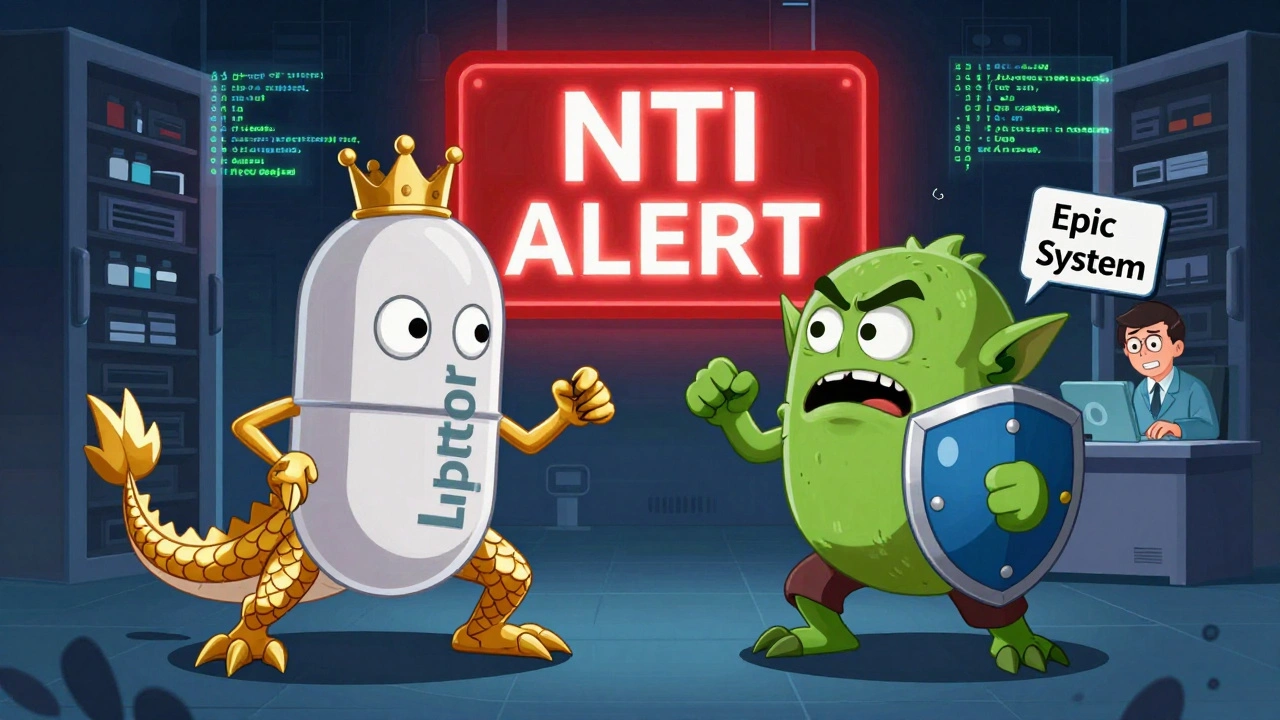
Systems that automatically substitute generics for these drugs are dangerous. Leading pharmacy platforms like Epic’s Beacon Oncology now include built-in alerts that block substitution for NTI drugs unless a prescriber overrides it. But many independent pharmacies still use outdated systems that don’t have these safeguards.
A 2021 ISMP report documented 147 adverse events over 18 months tied to inappropriate generic substitution of warfarin. Most happened because the system didn’t flag the drug as high-risk. The fix? Systems need to auto-identify NTI drugs using FDA data and lock substitution unless manually approved.
What Patients Don’t Know (And Why It Matters)
Patients think "generic" means "cheap substitute." They don’t know that 90% of prescriptions in the U.S. are filled with generics-and that they’re just as safe.
A 2022 Consumer Reports survey found 89% of patients were satisfied with generic substitutions when they understood why it was happening. But only 63% were satisfied when substitution happened without explanation. That gap is huge.
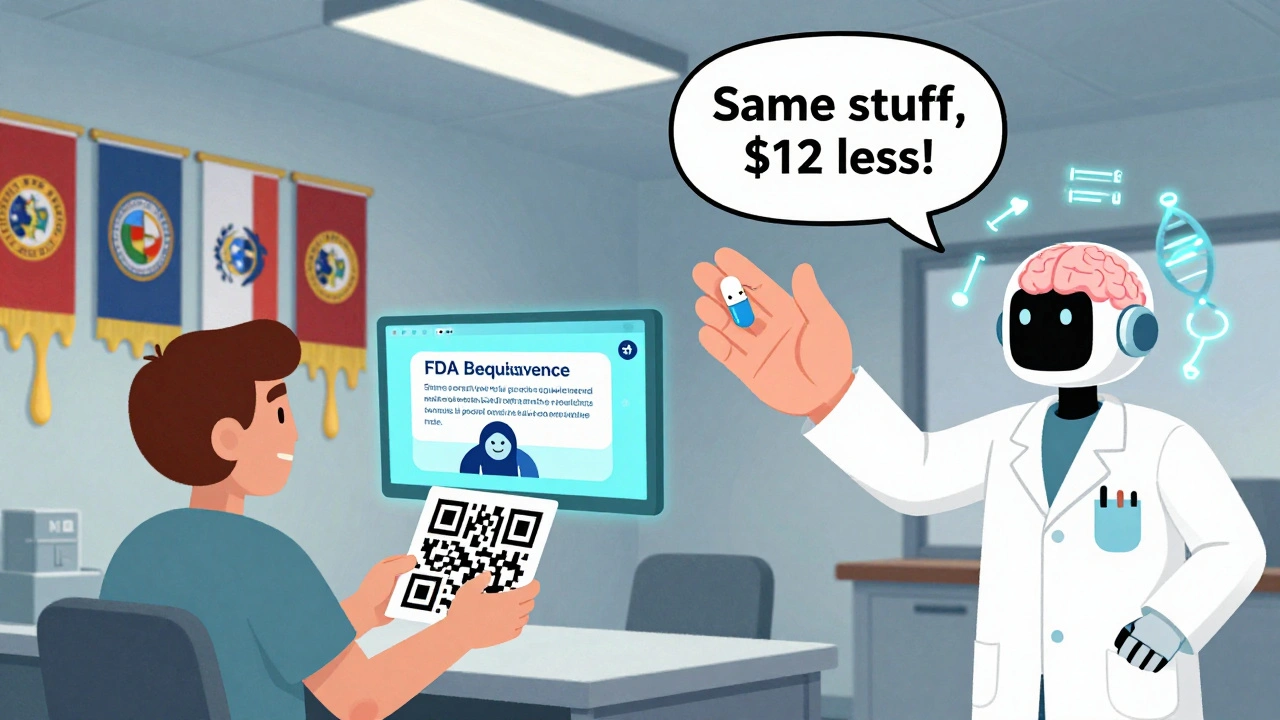
Pharmacists are the bridge. A simple handout saying, "This generic has the same active ingredient as your brand, but costs $12 less," cuts down on complaints and refusals. Kaiser Permanente’s patient portal includes a visual comparison tool that shows side-by-side brand and generic options. Result? A 37% drop in patients asking to switch back to brand-name drugs.
But here’s the catch: 68% of patients still don’t know generics contain the same active ingredients. That’s not a patient problem-it’s a system problem. If the pharmacy’s website, app, or dispensing screen doesn’t explain it, the message never gets through.
Best Practices for Pharmacy Systems
Getting this right takes more than software-it takes process.
- Default to generics-but only when safe. Configure your system to suggest generic alternatives by default, except for NTI drugs or when the prescriber has marked "Dispense as Written."
- Integrate the FDA Orange Book API-monthly updates aren’t enough. Real-time feeds are critical. The FDA’s 2023 modernization initiative is moving toward live API updates, and systems that don’t adopt this will fall behind.
- Flag authorized and branded generics-add custom fields in your database to distinguish them. Authorized generics should be labeled as such. Branded generics need clear aliases in the system so pharmacists don’t confuse them with brand-name drugs.
- Train staff on TE codes and NDC mapping-a 2022 ASHP report recommends 8-10 hours of annual training per staff member. Technicians should know how to read TE codes and recognize when a drug is "AB" versus "BN" (not therapeutically equivalent).
- Build patient education into the workflow-print a simple note with every generic fill. Use QR codes that link to FDA videos explaining bioequivalence. Make it visual, not technical.
Humana’s pharmacy system takes this further. When a prescriber orders a brand-name drug, the system automatically suggests a therapeutically equivalent generic and notifies the doctor. If the doctor approves, it’s filled. If not, the system logs the reason. Result? A 22% increase in generic use without a single safety incident.
Challenges Still Left Unresolved
Even the best systems have blind spots.
One big one? Inactive ingredients. The FDA requires generics to match the brand in active ingredients and bioequivalence-but not excipients. A 2019 study in U.S. Pharmacist found 0.8% of patients had issues after switching from brand to generic antiepileptic drugs, likely due to differences in fillers or coatings. Pharmacy systems don’t track this. No one does.
Another issue? State laws. Forty-nine states allow pharmacists to substitute generics without prescriber approval. But California requires documentation of why a brand was kept. Texas doesn’t. Systems have to adapt to 50 different rules. That’s why centralized platforms like LexID and Medi-Span are so valuable-they update state rules automatically.
And then there’s the NDC directory. It changes 3,500 times a month. If your system doesn’t sync daily, you’re working with outdated data. That’s how a patient ends up with the wrong version of a drug they’ve been on for years.
The Future: AI, Genomics, and Real-Time Tracking
The next wave of pharmacy systems won’t just identify drugs-they’ll predict problems.
AI models are already being tested to analyze prescription patterns and flag potential therapeutic mismatches. One 2023 study in the Journal of the American Medical Informatics Association showed an AI system predicting NTI drug issues with 87.3% accuracy.
Longer term, the FDA’s Precision Medicine Initiative is exploring whether genetic markers could determine if a patient responds better to a specific brand. Imagine a system that says: "Patient has CYP2C9 variant-levotyroxine from manufacturer X has shown better stability in this group." That’s not science fiction-it’s coming.
By 2028, the market for pharmacy identification software is projected to hit $2.8 billion. That’s because the pressure to cut costs won’t go away. But patient safety must lead the way.
What You Can Do Today
If you’re a pharmacist, check your system:
- Does it block substitutions for warfarin, phenytoin, or levothyroxine?
- Does it show TE codes for every drug?
- Can you tell if a generic is authorized or branded?
- Do you have patient handouts ready?
If you’re a pharmacy owner, demand real-time Orange Book integration. Don’t settle for monthly updates. Ask your vendor how they handle NDC changes and state law variations.
And if you’re a patient-ask. If you get a different-looking pill, ask: "Is this the same as my old one?" Most pharmacists will walk you through it. You deserve to know.
Are generic drugs really as effective as brand-name drugs?
Yes. The FDA requires generic drugs to have the same active ingredient, strength, dosage form, and bioequivalence as the brand-name version. Studies show they work the same way in the body. The only differences are in inactive ingredients, packaging, or price-none of which affect how well the drug works for most people.
Can pharmacists substitute brand-name drugs with generics without a doctor’s permission?
In 49 U.S. states, yes-unless the prescriber writes "Dispense as Written" or the drug has a narrow therapeutic index. Pharmacists must follow state laws and system alerts. Some states, like California, require documentation if a brand is kept. Always check your local regulations.
What’s the difference between an authorized generic and a regular generic?
An authorized generic is made by the same company that makes the brand-name drug, just sold under a generic label. It’s identical in every way-same ingredients, same factory, same packaging. A regular generic is made by a different company but meets FDA bioequivalence standards. Pharmacy systems often can’t tell them apart, which can be a problem for patients sensitive to manufacturing differences.
Why do some generic pills look different from the brand?
By law, generic drugs can’t look exactly like the brand because of trademark rules. That means different colors, shapes, or markings. But the active ingredient is the same. If you’re confused, ask your pharmacist to check the NDC code or TE code to confirm it’s the right medication.
Are there drugs that should never be switched to generics?
Yes. Drugs with a narrow therapeutic index-like warfarin, phenytoin, levothyroxine, and cyclosporine-require extra caution. Even small differences in absorption can be dangerous. Most modern pharmacy systems block automatic substitution for these. Always confirm with your prescriber if you’re unsure.
How can I tell if my pharmacy system is up to date?
Ask if your system connects to the FDA’s Orange Book via real-time API, not just monthly updates. Check if it displays TE codes for every drug and flags NTI medications. If it doesn’t, your system may be outdated. Talk to your vendor about upgrading to one that complies with the 21st Century Cures Act and FDA’s 2023 guidance.


Reviews
Man, I’ve seen so many patients panic when their pill changes color. One guy thought his blood pressure med was fake because it was now white instead of blue. Took me 20 minutes to explain bioequivalence and show him the NDC. We printed a little card for him - now he keeps it in his wallet. Simple stuff, but it works.
Let’s be brutally honest: 78% of pharmacists struggling with branded generics? That’s not a training gap - it’s a systemic failure. The FDA’s Orange Book API should be mandatory, real-time, and embedded at the point of sale. If your system still relies on monthly CSV downloads in 2025, you’re not just outdated - you’re negligent. And yes, I’m citing the 2023 Cures Act. Again.
i just wanted to say… i’ve been a tech for 12 years and i’ve seen so many little things go wrong with generics. not because we’re dumb, but because the systems are messy. like, one time a patient got the wrong levothyroxine because the system mixed up two NDCs that looked almost identical. we caught it, but… it scared me. maybe we need color-coded flags or something? just a thought 😅
The real win here isn’t the tech - it’s the culture. Systems can flag NTI drugs, but if the pharmacist doesn’t feel empowered to explain it to the patient, nothing changes. I’ve worked in three states, and the ones with the best outcomes? They had handouts, QR codes, and a 30-second script ready. No jargon. Just: "This works the same, costs less, and your doctor approved it." It’s not rocket science. It’s respect.
Wait - so you’re saying we should trust generics… but then you admit authorized generics are indistinguishable? That’s a contradiction! And you mention inactive ingredients causing issues - yet you dismiss it as "0.8%"? That’s 800 people a year! Why aren’t you screaming about this? The system is a lie! We’re being lied to by Big Pharma and lazy regulators! 😡
92% of CPOE systems default to generics? That’s not efficiency - it’s coercion. Patients aren’t commodities. You don’t optimize safety by reducing choices. This entire post reads like a vendor sales pitch. Where’s the data on long-term outcomes? Where’s the patient autonomy? You’re trading informed consent for cost savings - and calling it "best practice."
bro. i just want my pills to work. why does this have to be so complicated? i don’t care about TE codes or NDCs. i just know my old pill was blue and now it’s yellow and my head hurts. fix the system. not my brain.
As a pharmacist from India, I find this discussion deeply relevant. In our country, generics dominate - yet we lack even basic NDC tracking. Your FDA Orange Book is a gold standard. We need real-time APIs, not monthly updates. Thank you for highlighting this. 🙏