
Opioid Rotation Calculator
Safe Opioid Rotation Calculator
Opioid conversion is complex due to incomplete cross-tolerance. This calculator uses established guidelines to help determine safe starting doses when switching opioids, accounting for the recommended 25-50% dose reduction.
When pain meds stop working or start making you feel worse, it’s not just frustrating-it’s dangerous. You might be taking more and more of the same opioid, hoping for relief, but instead you’re dealing with dizziness, nausea, or even confusion. This isn’t failure. It’s a sign that your body needs a different approach. That’s where opioid rotation comes in.
Why Switch Opioids at All?
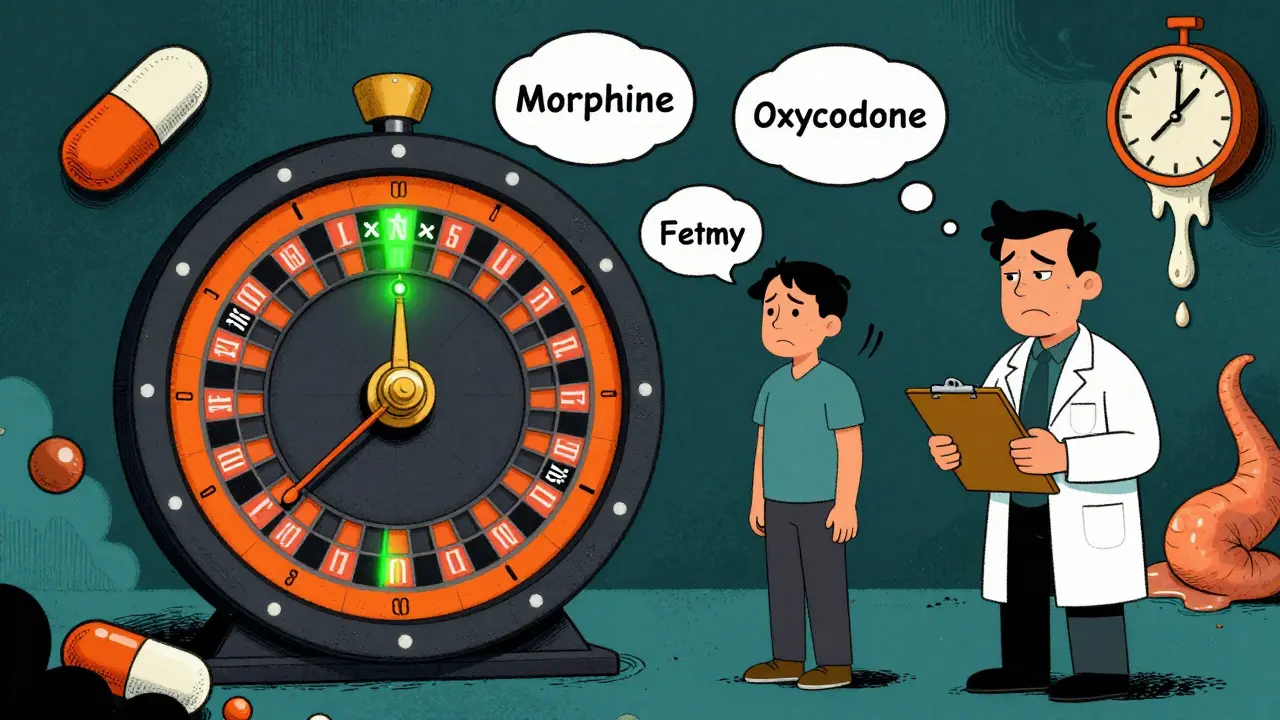
Not all opioids work the same way in every person. One person might handle morphine fine but get sick as a dog on oxycodone. Another might find that fentanyl controls their pain without the brain fog that comes with hydromorphone. The reason? Genetics, metabolism, and how each drug interacts with your nervous system vary widely. Opioid rotation isn’t about giving up on pain control. It’s about finding a better fit. The 2009 expert guidelines from the Journal of Pain and Symptom Management laid out clear reasons to consider switching: intolerable side effects, lack of pain relief despite high doses, drug interactions, or changes in kidney or liver function. If you’ve increased your dose by more than 100% and still can’t function, rotation is often the next logical step-not another bump in dosage.When Opioid Rotation Makes Sense
Here are the most common situations where rotation helps:- You’re nauseated all the time, even after anti-nausea meds
- You’re drowsy or confused during the day
- You’ve developed myoclonus-sudden, involuntary muscle jerks
- Your constipation is unmanageable despite laxatives
- Your pain isn’t improving, even with higher doses
- You’ve developed opioid-induced hyperalgesia-where the drug makes your pain worse
Which Opioids Work Best for Reducing Side Effects?
Not all swaps are equal. Some opioids are better than others at easing specific side effects.- Oxycodone: Often reduces nausea and constipation compared to morphine. Many patients report clearer thinking after switching.
- Fentanyl (patch or lozenge): Works well for people who can’t swallow pills or have gut issues. Less likely to cause nausea or clouded vision.
- Methadone: This one’s different. It doesn’t just swap side effects-it often lowers your total daily dose. Studies show methadone can reduce Morphine Equivalent Daily Dose (MEDD) by 20-40% while maintaining pain control. Why? It blocks NMDA receptors, which helps with nerve pain and may reduce tolerance buildup.
- Hydromorphone: Good for patients with kidney problems, since it doesn’t rely on kidney clearance like morphine.
The Hidden Risk: Getting the Dose Wrong
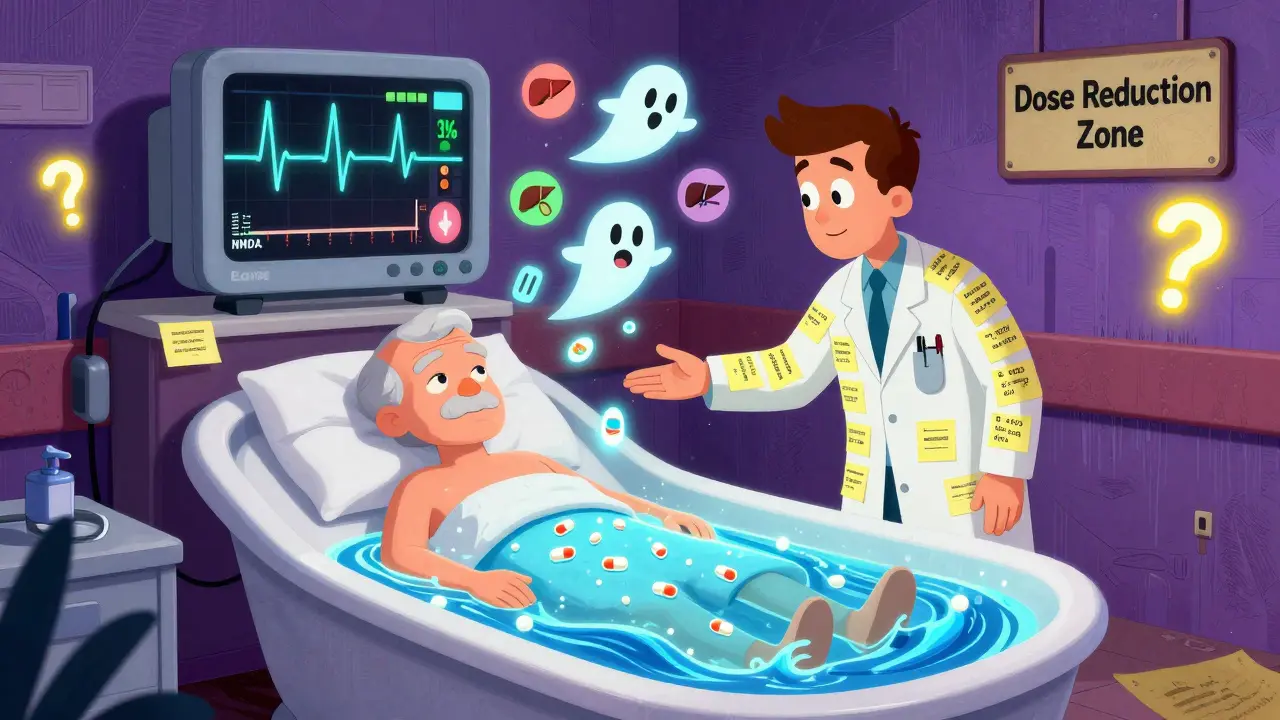
Switching opioids isn’t like swapping brands of ibuprofen. You can’t just say, “I was on 60 mg of morphine, so now I’ll take 60 mg of oxycodone.” That’s how overdoses happen. The conversion ratios between opioids are messy. They’re not linear. A 3:1 ratio (morphine to oxycodone) might work for low doses, but at higher doses, it’s closer to 2:1. And methadone? Forget the old 10:1 rule. New data shows it’s more like 9:1 when switching for side effects, and even lower-maybe 6:1-when switching for pain control. That’s why experts now recommend reducing the new dose by 25-50% to account for incomplete cross-tolerance. Example: If you’re on 120 mg of morphine daily, you might start with only 30-40 mg of oxycodone-not 40 mg, not 60 mg. You start low, watch closely, and titrate up slowly over days or weeks.Methadone: The Wild Card
Methadone is the outlier. It’s not just another opioid. It’s a long-acting drug with unique properties. It blocks NMDA receptors, which helps with neuropathic pain. It also doesn’t build tolerance the same way as other opioids. That’s why it often lowers your total daily dose. In outpatient palliative care studies, patients who switched to methadone saw a consistent drop in MEDD-sometimes by 30%. Others didn’t. Why? Because methadone’s metabolism is affected by liver enzymes, and it interacts with many other drugs. It’s powerful, but it needs careful monitoring. ECG checks for QT prolongation are often required. It’s not for everyone, but for the right patient, it’s a game-changer.What Doctors Need to Document
Rotation isn’t a one-time fix. It’s a process. Good documentation saves lives. Every rotation should include:- Why you’re switching (side effects? poor control? drug interaction?)
- The exact dose you were on
- The conversion ratio used
- How much you reduced the new dose (e.g., 30% reduction for incomplete cross-tolerance)
- How you plan to titrate up
- What side effects you’re watching for
What Doesn’t Work
Some myths need to die:- “I’m addicted to this opioid, so I need to switch.” Addiction and physical dependence are not the same. Rotation is for side effects and pain control-not withdrawal.
- “All opioids are the same.” They’re not. Their chemical structures, half-lives, and receptor bindings differ. What works for one person can fail for another.
- “Just increase the dose one more time.” That’s how you end up in the ER. If you’ve doubled the dose and still feel awful, it’s time to change tactics.
What’s Next for Opioid Rotation?
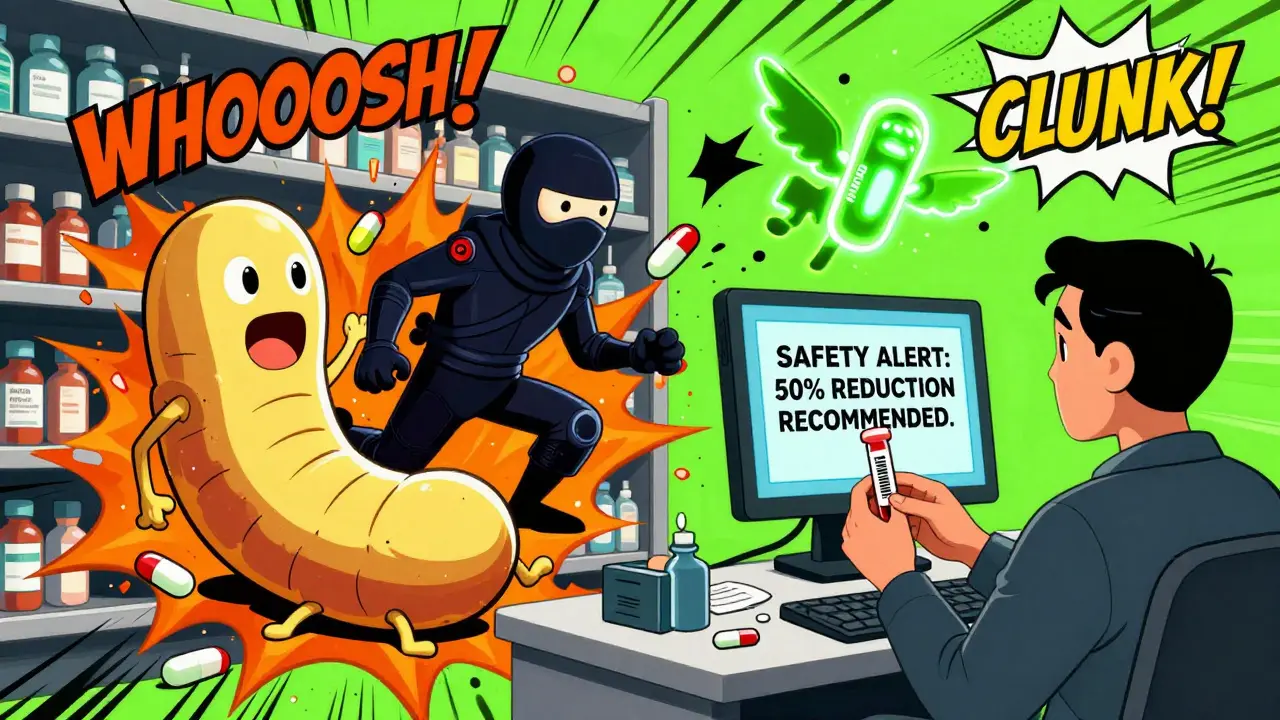
Right now, rotation is guided by decades-old guidelines and clinical experience-not hard science. There are no large randomized trials proving which swap works best for which patient. But the future is changing. Researchers are exploring pharmacogenetic testing to predict how you’ll respond to specific opioids. Some people have gene variants that make them ultra-sensitive to codeine. Others metabolize oxycodone too fast. In five years, a simple blood test might tell your doctor which opioid to start with-and which to avoid. Electronic health records are also getting smarter. Some systems now flag unsafe conversions or suggest dose reductions automatically. That’s a big step toward safer care.Bottom Line
Opioid rotation isn’t a last resort. It’s a smart tool. If you’re stuck with side effects that ruin your quality of life-or if your pain won’t budge despite high doses-it’s worth talking about. Don’t assume you’re out of options. There’s another opioid out there that might work better for you. The key is to switch safely, with a plan, and under close supervision.It’s not about giving up on opioids. It’s about finding the right one.
Can opioid rotation help with constipation?
Yes. Constipation is one of the most common side effects of opioids, but not all opioids cause it equally. Studies show that switching from morphine to oxycodone or fentanyl often reduces constipation significantly. Methadone can also help, though it still causes some bowel issues. The key is to switch early-don’t wait until you’re on laxatives every day.
Is opioid rotation safe for elderly patients?
It can be, but extra caution is needed. Older adults are more sensitive to opioids and metabolize them slower. Dose reductions of 50% or more are common when rotating. Fentanyl patches or low-dose methadone are often preferred. Always monitor for sedation, confusion, and falls. A geriatric pain specialist should be involved if possible.
How long does it take to see results after switching?
Side effects like nausea and drowsiness often improve within 2-5 days. Pain control may take longer-up to 1-2 weeks-as the new opioid builds up in your system. Don’t rush to increase the dose too soon. Wait at least 3-5 days before adjusting, unless you’re in severe pain or having dangerous side effects.
Can I rotate from methadone to another opioid?
Yes, but it’s complex. Methadone has a long half-life and unpredictable conversion ratios. Switching off methadone requires extreme caution and usually involves a very slow taper. Many experts recommend staying on methadone if it’s working, because switching away from it often leads to worse pain or withdrawal. Only rotate if side effects are severe or there’s a drug interaction.
Will opioid rotation make me addicted?
No. Opioid rotation doesn’t cause addiction. Addiction is a behavioral disorder involving compulsive use despite harm. Physical dependence-your body adapting to the drug-is normal with long-term use. Rotation addresses dependence and side effects, not addiction. If you’re worried about addiction, talk to your doctor about a pain management plan that includes non-opioid therapies.
What if the new opioid doesn’t work?
It’s not uncommon for the first rotation to fail. If pain isn’t better or side effects persist, another switch may be needed. Some patients try 2-3 different opioids before finding the right one. Keep a pain diary: note timing, intensity, and side effects. This helps your doctor make better decisions next time. Don’t give up-rotation is often successful after multiple attempts.




Reviews
It’s wild how one pill can feel like a godsend and the next like a curse. I used to think all opioids were just stronger versions of each other-turns out, my body just hated morphine. Switched to oxycodone and suddenly I could breathe again. No more brain fog at breakfast. Who knew?
I’m so glad this exists. My mom was on morphine for years and nobody ever mentioned rotation. She was just told to ‘take more.’ By the time we figured out she had hyperalgesia, she couldn’t walk without help. After switching to fentanyl patches? She started gardening again. 🌸 This isn’t just medical-it’s life-changing.
Doctors are still treating pain like it’s 1998. You think I’m gonna sit here and let some guy in a white coat guess which poison works for my nerves? I’ve been on five different opioids. Five. And none of them told me about methadone’s NMDA thing until I read this. Wake up, medical system. This isn’t magic. It’s science.
So if you’re on 120mg morphine you start with 30-40mg oxycodone but the ratio changes at higher doses and methadone is weird and you need to reduce by 25-50 percent but also watch for QT prolongation and kidney function and genetic metabolism and oh god I’m overwhelmed
OMG I just read this and cried 😭 my dad switched from hydromorphone to methadone and he’s been able to eat again. No more constipation. No more vomiting. He hugged me for the first time in months. This isn’t just medicine-it’s love in pill form 💙
Let’s be real-this article reads like a pharmaceutical marketing pamphlet. You mention ‘incomplete cross-tolerance’ but don’t address how often rotation leads to withdrawal or worse pain. And you gloss over the fact that most patients end up cycling through opioids like a carousel until they’re addicted to the process. This isn’t a solution-it’s a Band-Aid on a hemorrhage.
While the clinical rationale presented is not without merit, one must consider the broader societal implications of normalizing opioid rotation as a routine intervention. In the United Kingdom, we approach opioid management with far greater caution, prioritizing non-pharmacological interventions and multidisciplinary pain clinics. The casual tone of this article risks undermining the gravity of long-term opioid use.
I’ve been a palliative nurse for 18 years. I’ve seen patients who thought they had no options until someone suggested rotation. It’s not magic. It’s not a cure. But it’s one of the few things that gives people back their dignity-sleeping through the night, eating with their family, laughing without fear. If this helps even one person feel human again, it’s worth writing.