
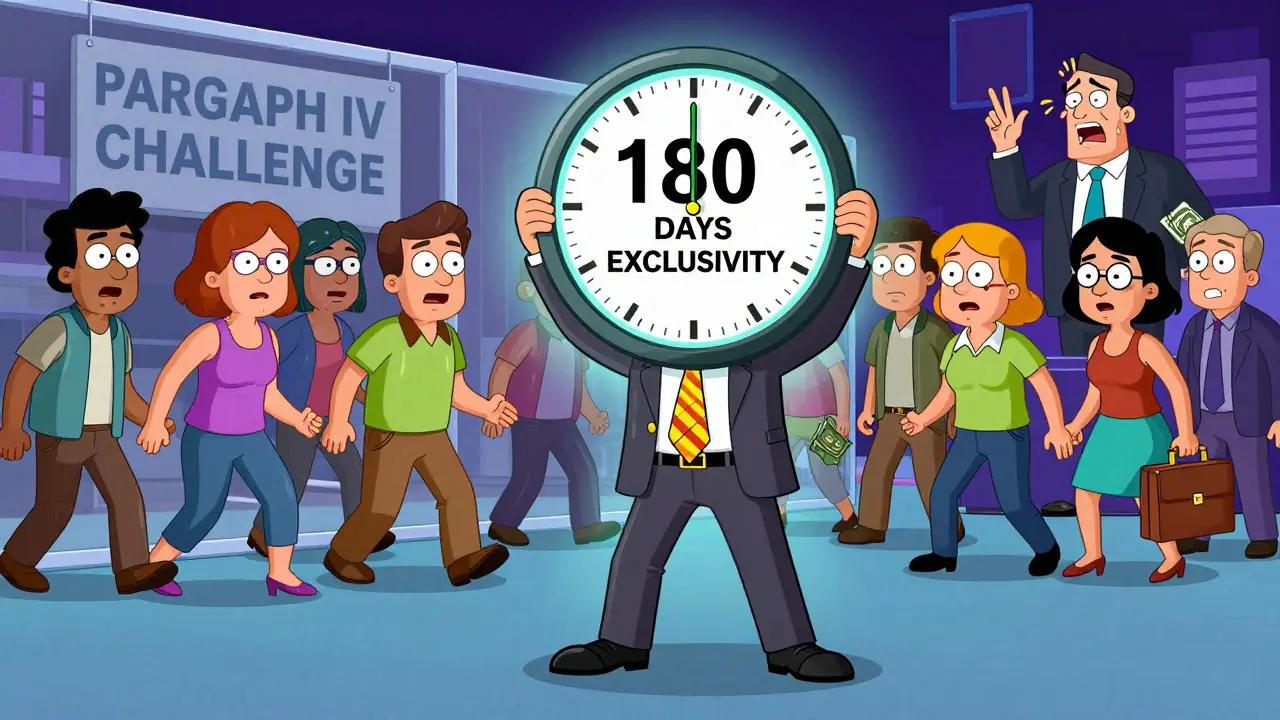
The first company to file a generic drug application with a patent challenge doesn’t just get a head start - it gets a 180-day exclusivity window where no other generic can enter the market. This isn’t a favor. It’s a legal tool designed to shake up drug prices and get cheaper medicines to patients faster. But how does it actually work? And why does it matter so much?
What the 180-Day Exclusivity Really Means
In 1984, Congress passed the Hatch-Waxman Act to fix a broken system. Brand-name drug companies held patents that kept generics off the market for years, even after the drugs’ active ingredients were well understood. Generic makers couldn’t even start the approval process until the patent expired. That meant patients waited longer - and paid more.
The fix? Let generic companies file for approval before the patent ran out. But to make that worth the risk, the law gave the first one to file a special reward: 180 days of exclusive sales. During that time, the FDA can’t approve any other generic version of the same drug, even if it’s ready to go.
This isn’t about being first to market. It’s about being first to file a specific kind of application - an Abbreviated New Drug Application (ANDA) with a Paragraph IV certification. That certification is a legal notice: “We believe your patent is invalid, unenforceable, or we won’t infringe it.” That’s a direct challenge. And if you’re the first to send it in, you get the clock.
When Does the Clock Start?
Here’s where it gets complicated. The 180 days don’t always start when the drug hits pharmacy shelves. They can start earlier - if a court rules in the generic company’s favor.
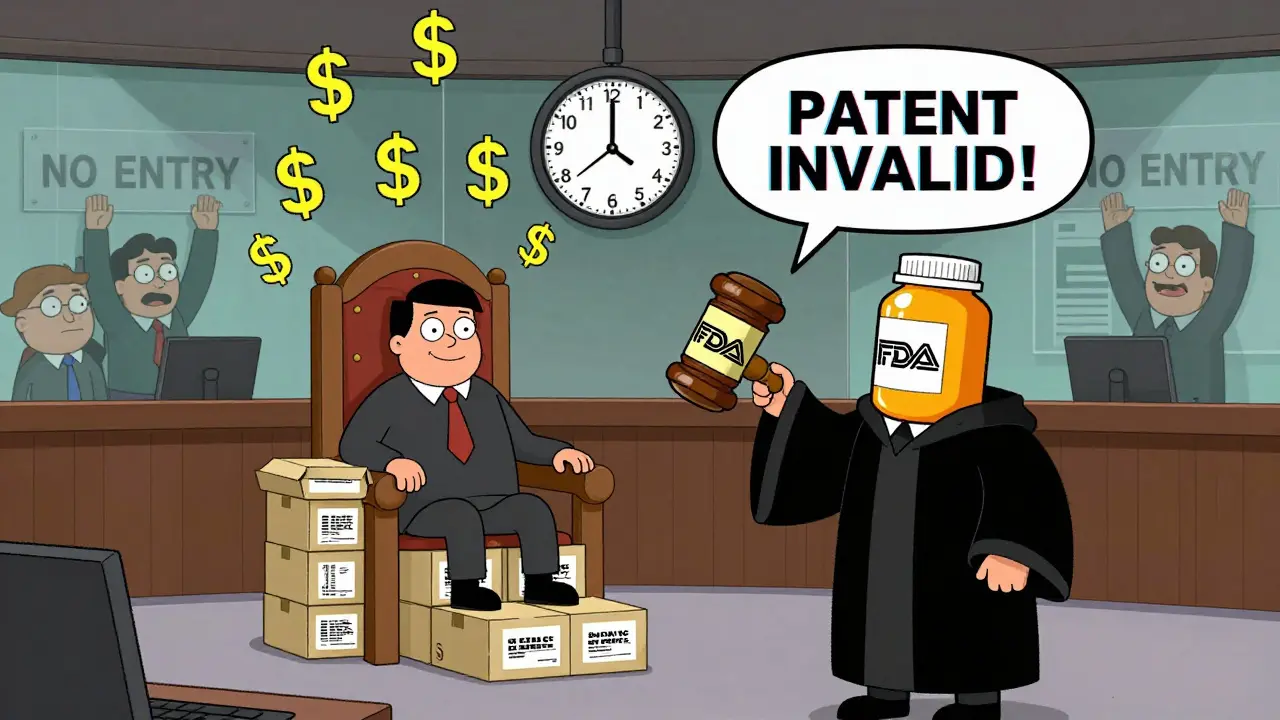
Let’s say a generic maker files its ANDA with a Paragraph IV challenge. The brand company sues, triggering a 30-month legal stay. But if, say, 18 months in, a federal judge says the patent is invalid, the clock for exclusivity starts that day. Even if the FDA hasn’t approved the drug yet. The generic company can still sit on it. Wait. Delay. And the clock keeps ticking.
That’s the loophole. While the first filer waits, no one else can enter. The brand drug stays the only option. Patients pay full price. And the generic company? It’s sitting on a golden ticket - even if it never sells a single pill.
In fact, from 2010 to 2023, about 45% of first filers didn’t launch their drug right away. Some waited over two years. The FDA estimates this delayed competition for an average of 27 months beyond the intended 180 days. That’s not competition. That’s control.
Why This Is So Profitable
When a first filer finally launches, they don’t just get a slice of the market - they take almost all of it.
Studies show they capture 70-80% of generic sales during their exclusivity period. For a popular drug, that’s hundreds of millions - sometimes billions - in revenue. Teva made $1.2 billion in 180 days selling a generic version of Copaxone. That’s not luck. That’s the system working exactly as designed - for them.
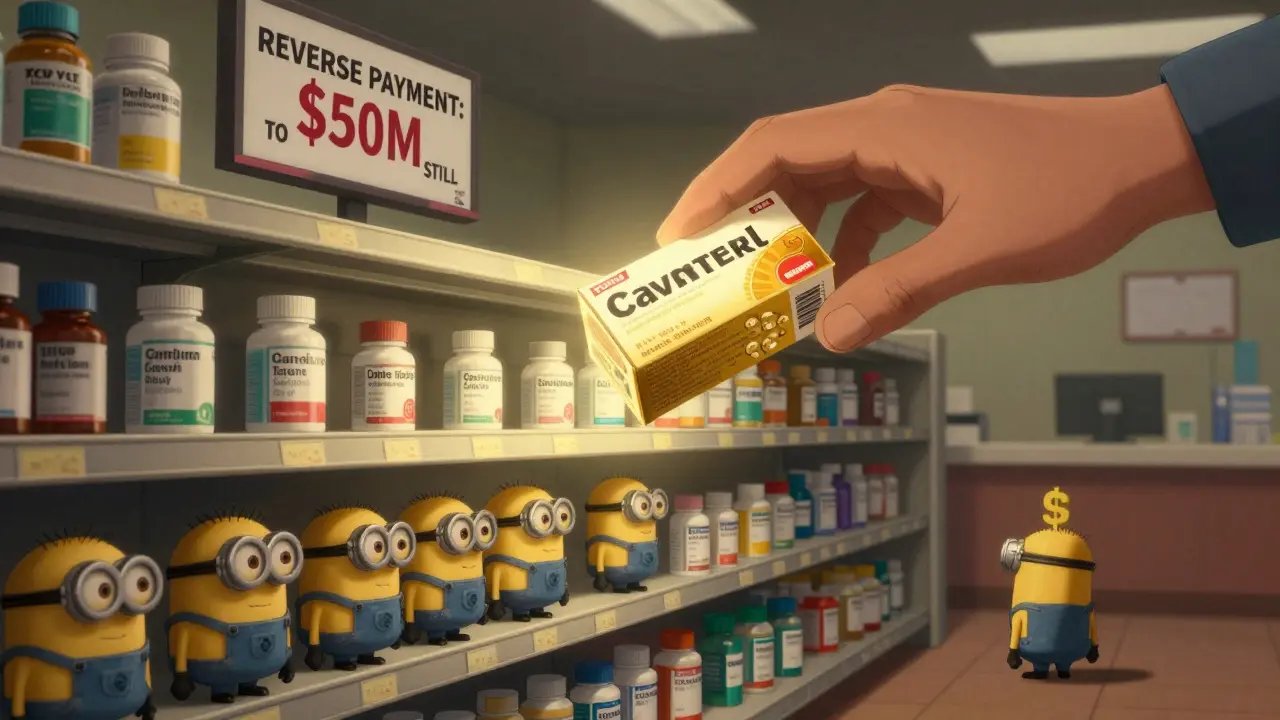
And it’s not just about the exclusivity. It’s about the threat. The moment a Paragraph IV challenge is filed, the brand company’s stock often drops. Why? Because investors know: if the patent falls, the drug’s revenue will collapse. That’s why brand companies sometimes pay the first filer to delay. These “reverse payments” can hit $50 million or more - cheaper than losing 100% of sales overnight.
That’s the dark side. The system was meant to lower prices. But when the first filer gets paid to sit still, patients pay more. The FTC estimates these deals cost consumers $3.5 billion a year.
Who Can Actually Use This?
Not everyone can play.
First, you need a team that understands patent law, FDA rules, and litigation strategy. The average cost to prepare a Paragraph IV challenge? $5-10 million. Most small generic companies can’t afford it. That’s why just three big players - Teva, Viatris, and Sandoz - file 65% of all these challenges, even though they only hold 35% of the generic market.
Second, you need to get the filing right. The FDA rejects 37% of Paragraph IV certifications on technical grounds. Miss a form. Use the wrong language. File a day late. You lose the exclusivity. No second chances.
And then there’s the “505(b)(2)” workaround. Some companies file a different kind of application - not an ANDA - to avoid triggering the exclusivity. The FDA has tried to close this gap, but loopholes remain.
Is the System Broken?
Yes - and it’s being fixed.
The FDA has proposed a major change: the exclusivity clock should only start when the first filer actually starts selling the drug. Not when a judge says the patent is invalid. Not when they get approval. When they put it on the shelf.
This would stop the “paper generics” - companies that win the legal battle but never launch. It would force real competition. The FDA says this reform could speed up generic entry for 40-50 drugs a year, saving consumers $1.2-1.8 billion annually.
But the brand-name drug industry is fighting back. They argue that if you weaken the incentive, fewer companies will challenge patents. Fewer challenges mean fewer generics. Higher prices.
The truth? The current system is a gamble. It’s high risk, high reward. And sometimes, the reward goes to the wrong person.
What’s Next?
The 180-day exclusivity rule is still in effect. But the writing is on the wall. The FDA’s 2023 Strategic Plan for Competitive Generic Therapies is pushing hard for reform. New rules under the Competitive Generic Therapy (CGT) program already exist for drugs with little or no competition - and they work differently. CGT exclusivity only starts when the drug is actually sold. No court rulings. No delays.
That’s the future. Real competition. Real savings.
Until then, the first filer still holds the keys. But the game is changing. And patients - not corporations - should be the ones who win.



Reviews