
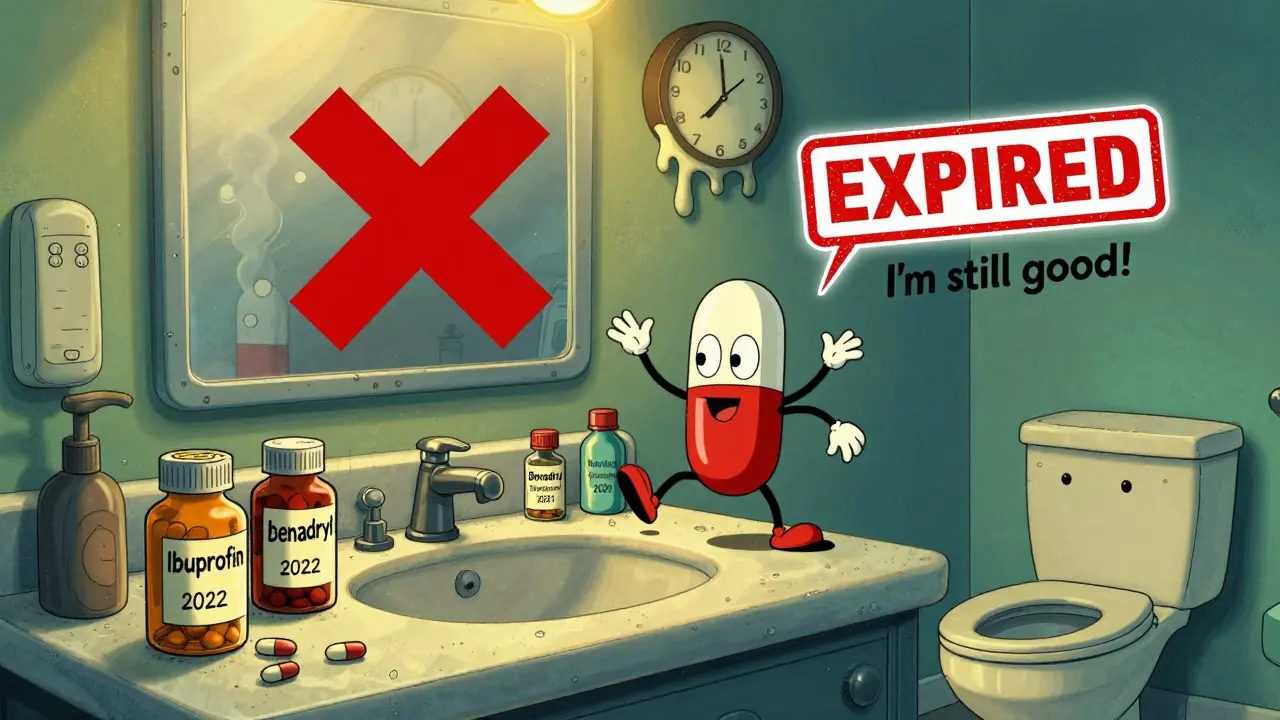
Every year, Americans throw away billions of dollars worth of over-the-counter (OTC) medications-just because the date on the bottle has passed. You’ve probably done it too. That bottle of ibuprofen from last winter? Tossed. The antihistamine from your last cold? Gone. But here’s the truth: most of those pills are still perfectly fine to use.
What Expiration Dates Actually Mean
Expiration dates on OTC meds aren’t "use-by" dates like milk. They’re not magic cutoffs where the medicine suddenly turns toxic. They’re the last day the manufacturer guarantees the drug will work exactly as labeled-100% potency, full safety, perfect stability. That’s it.
The FDA requires all drug makers to test their products under heat, humidity, and light to figure out how long they stay stable. Most OTC pills get expiration dates between 1 and 5 years after production. But here’s the catch: those tests are conservative. Manufacturers often set dates way before the drug actually breaks down, just to be safe and avoid liability.
Back in 1979, the FDA made expiration dating mandatory after the Drug Quality Assurance Act. Since then, the government has run its own long-term testing program-the Shelf Life Extension Program (SLEP)-to check what happens to stockpiled military drugs. The results? Over 90% of the 122 drugs tested, including common OTC painkillers and allergy meds, were still effective 5 to 15 years past their printed dates. Some lasted longer.
What’s Safe to Use After the Date
Not all medications age the same. Formulation matters more than the date on the label.
Tablets and capsules like acetaminophen, ibuprofen, diphenhydramine (Benadryl), and aspirin are the most stable. Studies show they often retain 70-90% of their potency even 5-10 years after expiration-if stored properly. One 2012 study found aspirin still 91% potent after 30 years. A 2023 FDA analysis confirmed that 88% of solid oral meds kept therapeutic levels over a decade.
Why? Solid forms don’t react easily with air or moisture. As long as they’re dry, cool, and sealed, they hold up.
Topical creams and ointments like hydrocortisone or antibiotic creams also tend to last. The active ingredients don’t break down fast, and unless they smell weird, change color, or separate into layers, they’re usually fine.
Even vitamins and supplements don’t suddenly become dangerous. They lose potency slowly-maybe 10-20% over a few years-but they won’t harm you. You just might not get the full benefit.
What You Should Never Use After the Date
Some meds are dangerous past their expiration. These aren’t just "less effective"-they can be life-threatening.
Nitroglycerin (for chest pain): Loses up to 50% of its potency within months after expiration. If you’re having a heart attack and your nitro doesn’t work, you could die. Never risk it.
Epinephrine auto-injectors (EpiPens): A 2023 study showed they can lose 25-50% effectiveness just months after expiration. In a severe allergic reaction, that drop could mean the difference between life and death.
Insulin: Even if it looks fine, insulin degrades fast after expiration-up to 10-15% per month after opening. Expired insulin is a leading cause of diabetic ketoacidosis emergencies. Always use fresh.
Liquid antibiotics: These are breeding grounds for bacteria once expired. The CDC says they become unsafe within 30 days past expiration. Using them can lead to infections that don’t clear up-or worse, antibiotic-resistant bugs.
Eye drops: Once opened, they’re exposed to air and germs. A 2019 study found 67% of expired eye drops were contaminated. Using them could cause serious eye infections.
Birth control pills: Even a 5-10% drop in hormone levels can lead to unintended pregnancy. A 2020 study showed a 12.7% failure rate with pills used 6 months past expiration. That’s not a gamble worth taking.
Storage Is Everything
Where you keep your meds matters more than the date. Most people store them in the bathroom-hot, steamy, humid. That’s the worst place.
Heat and moisture speed up chemical breakdown. The FDA recommends storing medications in a cool, dry place between 59°F and 77°F (15-25°C). A bedroom drawer, kitchen cabinet away from the stove, or a closet shelf works best.
Keep pills in their original bottles with the desiccant packet inside. That little sponge-like thing? It’s not trash-it’s there to soak up moisture and keep your pills dry. Don’t throw it out.
Never store meds in the car. Summer temps inside a parked car can hit 140°F. Even a few hours of that can ruin your medicine.
How to Tell If a Pill Is Still Good
Before you take anything past its expiration, do a quick visual and smell check.
- Is it discolored? (Yellow, brown, or gray spots? Toss it.)
- Does it crumble easily? (Tablets should be hard. If they break apart in your fingers, they’ve absorbed moisture.)
- Does it smell weird? (Rancid, sour, or chemical odors mean degradation.)
- Is it sticky or melted? (Especially true for capsules or suppositories.)
- Are liquids cloudy or have particles? (Never use.)
If any of these signs are present, throw it away. No exceptions.
Most pharmacists (94%, according to a 2023 Medscape survey) say visual inspection is the best way to judge safety beyond the date.
What People Are Actually Doing
Real life doesn’t match the warnings.
A 2023 Reddit survey of 1,243 people found 78% had used expired OTC meds. Most used acetaminophen, antihistamines, or pain creams. 89% said they felt no side effects. Only 11% noticed reduced effectiveness.
On Amazon, reviews for liquid meds like cough syrup show 68% of complaints about expiration-"didn’t work after the date." For pills, only 29% of negative reviews mention expiration.
And yet, 43% of Walgreens customers admit they check expiration dates "only sometimes." Many toss perfectly good pills because they’re afraid.
There’s a disconnect. The FDA says don’t use expired meds. But science says most are fine. And people are acting on what works-not what’s printed.
What’s Changing in the Industry
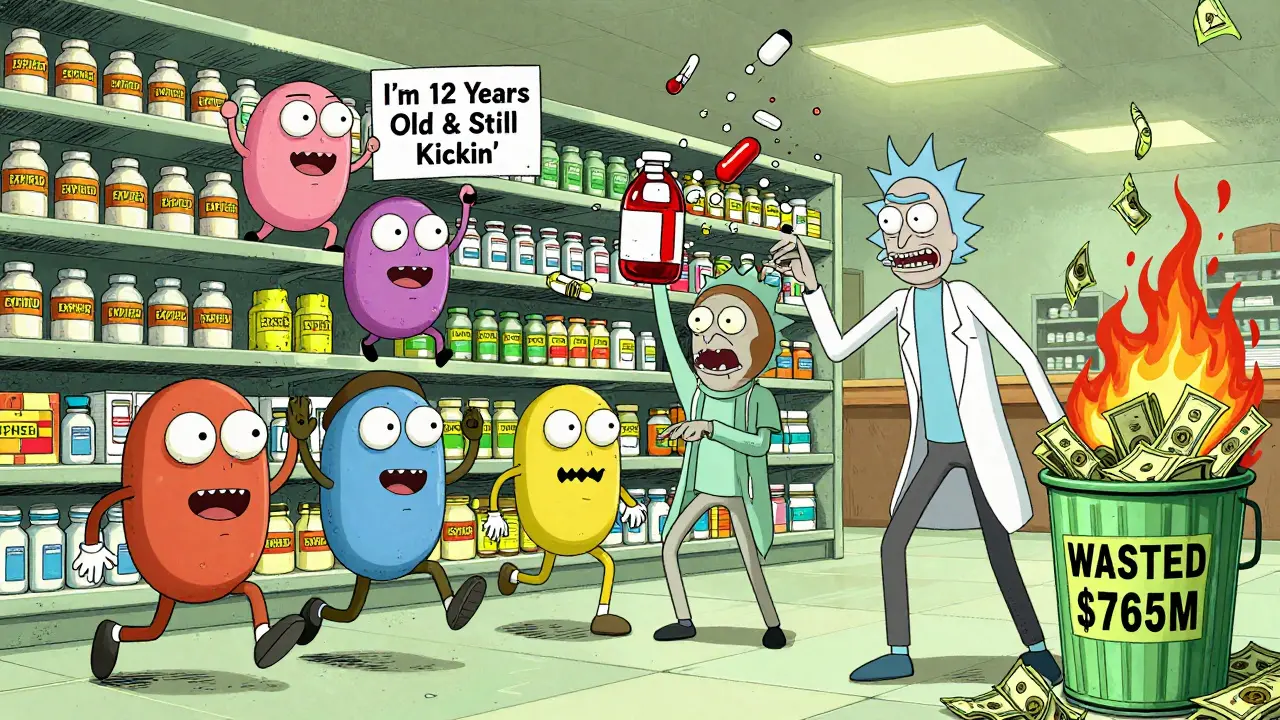
The system is outdated. The U.S. OTC market is worth $110 billion a year. But an estimated $765 million gets thrown away annually just because of expiration dates.
Manufacturers often set dates at 2-3 years-even if testing shows the drug lasts 10. It’s a legal safeguard, not a scientific one.
But change is coming. The FDA released draft guidance in 2023 proposing "risk-based expiration dating." That means different rules for different meds. Stable pills could get longer dates. Risky liquids get stricter ones.
The American Pharmacists Association launched "Smart Expiry" in early 2023-a QR code on packaging that gives users science-based advice on how long their specific drug lasts. Some European countries already allow certain solid meds to be used up to 12 months past expiration under controlled conditions.
There’s even a bill in Congress-the Safe Medication Extension Act-that could give the FDA power to update expiration rules based on real data, not just caution.
What to Do Right Now
Here’s your simple, practical guide:
- Don’t panic. Most pills are fine past their date if stored well.
- Know the risky ones. Never use expired nitroglycerin, EpiPens, insulin, eye drops, or liquid antibiotics.
- Check your storage. Move meds out of the bathroom. Keep them cool and dry.
- Inspect before use. Look for color changes, crumbling, weird smells. If anything looks off, toss it.
- Dispose safely. Don’t flush or throw in the trash. Use a pharmacy take-back kiosk (Walgreens and CVS have them at 9,000+ locations) or follow FDA disposal guidelines.
You don’t need to hoard medicine. But you also don’t need to waste money on new bottles of ibuprofen every year. Use your head. Use your eyes. Use the science.
Frequently Asked Questions
Is it dangerous to take expired ibuprofen or acetaminophen?
No, it’s not dangerous. Studies show these solid pills retain most of their potency for years past expiration-sometimes over a decade-if stored in a cool, dry place. You might get slightly less pain relief, but you won’t get sick. Just check for discoloration or crumbling before taking.
Why do pharmacies tell me to throw away expired medicine?
Pharmacists follow FDA guidelines that say expired meds shouldn’t be used. It’s a legal and safety-first policy. They’re not trying to sell you more pills-they’re protecting you from rare but serious risks. But many now privately admit that most solid OTC meds are safe for 1-2 years past the date if stored properly.
Can I use expired allergy medicine during an emergency?
If it’s a tablet like diphenhydramine (Benadryl) and it’s only a year or two past expiration, it’s likely still effective. But if you’re having a severe reaction and your EpiPen is expired, don’t rely on it. Use it if it’s your only option, but call 911 immediately. For non-life-threatening allergies, expired antihistamines are usually fine.
Do vitamins expire like regular medicine?
They don’t go bad the same way. Vitamins slowly lose potency over time-maybe 10-20% after a few years-but they don’t become toxic. If your multivitamin is 3 years past its date and looks normal, it’s still safe to take. You just won’t get the full labeled dose.
What’s the best way to dispose of expired meds?
Never flush them or toss them in the trash. Use a drug take-back kiosk at pharmacies like CVS or Walgreens-over 9,000 locations offer them. If that’s not available, mix pills with coffee grounds or cat litter in a sealed bag before throwing them out. This prevents accidental ingestion by kids or pets.

Reviews
So let me get this straight-I’m supposed to trust some 30-year-old aspirin that’s been living in my sock drawer next to my mismatched socks and expired coupons? Yeah, no. I’ll take my $5 ibuprofen over becoming a human lab rat for the FDA’s ‘maybe it’s still good’ experiment. My stomach remembers the last time I did this. It’s not a fan.
Let’s be clear: expiration dates aren’t suggestions. They’re legal, scientific, and pharmacologically binding thresholds. If you’re rolling the dice on your meds because you’re ‘too lazy’ to replace them, you’re not being frugal-you’re being reckless. The FDA doesn’t cap these dates because they want you to buy more pills. They do it because people die when their EpiPens fail. And no, your ‘it still looks fine’ argument doesn’t hold up in an ER.
Thank you for this thoughtful, science-backed breakdown. As someone who’s cared for elderly parents, I’ve seen both the fear and the waste. It’s heartbreaking to watch someone throw out $200 worth of pills because the date passed, while they skip meals to afford new ones. Your guidance on storage and visual inspection is practical, compassionate, and desperately needed.
Of course the FDA says it’s safe they’re in bed with Big Pharma who profits from you buying new bottles every year. They don’t want you to know that pills last 15 years because that kills the profit model. The military study? Classified for a reason. They don’t want you knowing how long the drugs really last. And why are they pushing QR codes now? To track you. To know what you’re taking. To control you. Always question the narrative
Here’s the existential truth no one wants to admit: expiration dates are a modern myth designed to make us feel powerless. We’ve been conditioned to worship labels like they’re sacred texts. But what if the real danger isn’t the expired pill? What if it’s the cultural surrender to corporate authority? The fact that we’d rather toss a perfectly good tablet than question why it was labeled that way in the first place-that’s the real tragedy. We’re not just discarding medicine. We’re discarding autonomy.
From Nigeria, I can confirm: people here use expired meds daily because they have no choice. In rural areas, pharmacies are 50km away. If your headache pill is 2 years past expiry and still looks solid, you take it. You don’t have the luxury of panic. Science supports your point. The problem isn’t the medicine-it’s the inequality in access. Stop lecturing Americans about responsibility when global realities are different.
I’ve kept my ibuprofen for 8 years. Stored in a sealed glass jar in a cool closet. No discoloration, no smell, still hard as a rock. Took one last month for a migraine. Worked fine. I’m not reckless-I’m observant. The key is not the date. It’s the condition. And honestly? If you’re worried about your meds, just get a cheap humidity monitor for your cabinet. $12 solves 90% of the problem.
Let’s not forget the real elephant in the room: the pharmaceutical industry’s entire business model is built on planned obsolescence. They don’t test drugs for 15-year stability because they don’t want you to know they can last that long. Why? Because if you knew your 10-year-old aspirin was still 90% effective, you’d never buy another bottle. They set the expiration date at 2-3 years because it’s the sweet spot between legal safety and maximum profit. And the FDA? They’re just the polite face of the machine. They don’t want to upset the apple cart. The SLEP study? Buried under layers of bureaucracy. The QR code initiative? A PR stunt to make it seem like they’re listening. Meanwhile, people are still dying from expired insulin because the system refuses to adapt. We’re not just talking about pills here. We’re talking about a system designed to keep you dependent, afraid, and spending. Wake up. The expiration date isn’t science. It’s a sales tactic dressed in lab coats.