
Antidepressant Side Effect Comparison Tool
Compare how new antidepressants differ from traditional SSRIs based on your most important concerns. Select your priority side effects to see which medications have the best profiles for your needs.
Your Priority Concerns
Select your concerns to see which antidepressants best match your needs.
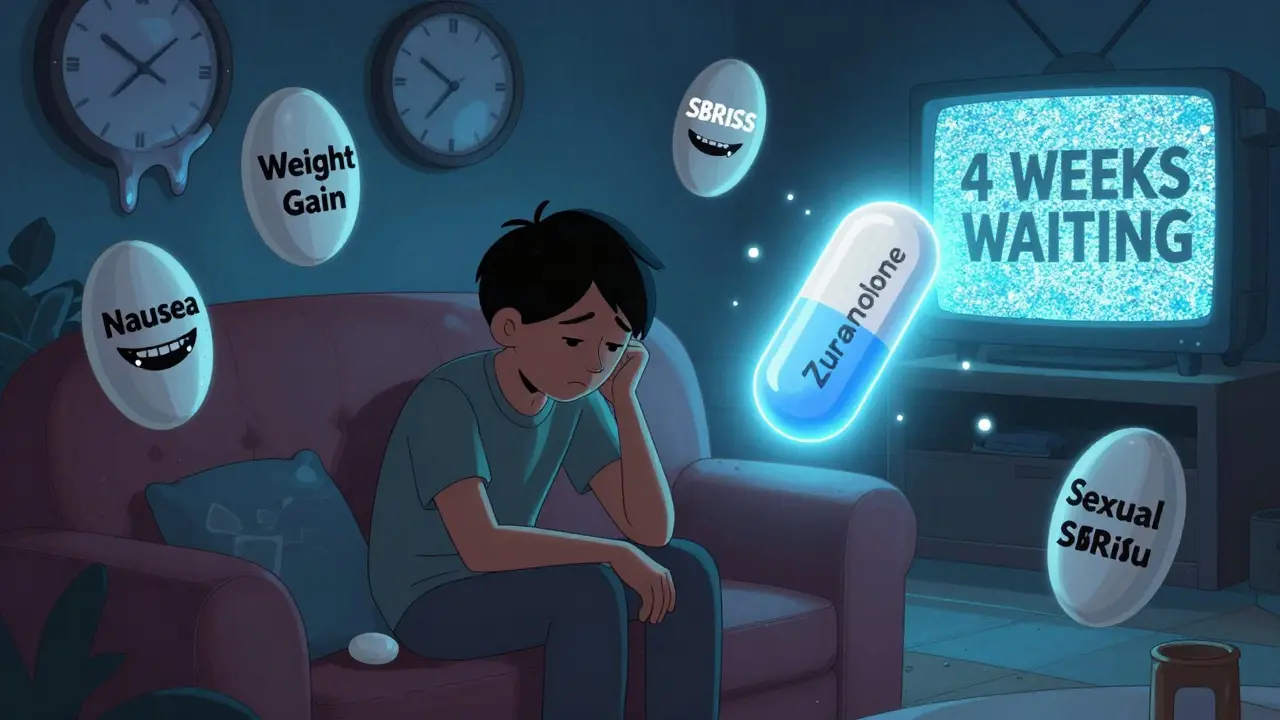
Depression treatment has changed dramatically in the last few years. For decades, the go-to options were SSRIs like sertraline, escitalopram, and fluoxetine. They worked-for some. But for many, the trade-off was too steep: sexual dysfunction, weight gain, nausea, and fatigue that lasted for weeks or months before any real improvement. Now, a new wave of antidepressants is emerging that doesn’t just treat depression-it treats it differently. These aren’t just tweaks of old drugs. They work through entirely new pathways in the brain, and they come with side effect profiles that make them viable for people who couldn’t tolerate the old ones.
Why the Old Options Fall Short
Traditional antidepressants like Prozac or Zoloft take 4 to 8 weeks to show results. That’s a long time to wait when you’re struggling to get out of bed. And even when they work, they often bring unwanted changes. Studies show 30% to 70% of people on SSRIs experience sexual side effects-loss of libido, difficulty achieving orgasm, or erectile dysfunction. Weight gain is common too, with an average increase of 10 to 15 pounds over six months. Gastrointestinal issues like nausea and diarrhea affect nearly half of users. For many, these side effects are worse than the depression itself. That’s why nearly 40% of people stop taking their antidepressants within the first three months.
The New Players: Mechanisms That Matter
The latest antidepressants don’t just boost serotonin. They target other systems in the brain that play a role in mood regulation. Three key classes have emerged since 2022:
- Glutamate modulators like SPRAVATO (esketamine) work by blocking NMDA receptors, which are involved in how brain cells communicate. This leads to rapid changes in neural connections.
- Neurosteroid modulators like Zuranolone (zurzuvae) enhance GABA-A receptor activity, calming overactive brain circuits linked to anxiety and depression.
- Multi-receptor agents like Auvelity combine dextromethorphan (an NMDA blocker) with bupropion (which slows the breakdown of dextromethorphan), creating a synergistic effect that works faster than either drug alone.
These aren’t experimental. All three have FDA approval. SPRAVATO was approved in 2019, Auvelity in 2022, and Zuranolone in 2023. And they’re already changing how depression is treated.
Side Effect Comparisons: What’s Actually Better?
Here’s how the newer drugs stack up against traditional SSRIs based on real-world data from 151 clinical trials reviewed in The Lancet (October 2025):
| Side Effect | SSRIs (e.g., sertraline, escitalopram) | SPRAVATO (esketamine) | Zuranolone (zurzuvae) | Auvelity (dextromethorphan/bupropion) | Exxua (gepirone) |
|---|---|---|---|---|---|
| Sexual dysfunction | 30-50% | 8-12% | 5-10% | 10-15% | 2-3% |
| Weight gain (6 months) | 10-15 lbs | 0-2 lbs | 0-1 lb | 2-4 lbs | 0-1 lb |
| Onset of action | 4-8 weeks | 24-48 hours | 3-7 days | 1-2 weeks | 7-10 days |
| Common adverse effects | Nausea, insomnia, fatigue | Dissociation (45-55%), dizziness | Dizziness (25%), somnolence (20%) | Headache, dry mouth | Mild headache, nausea (10%) |
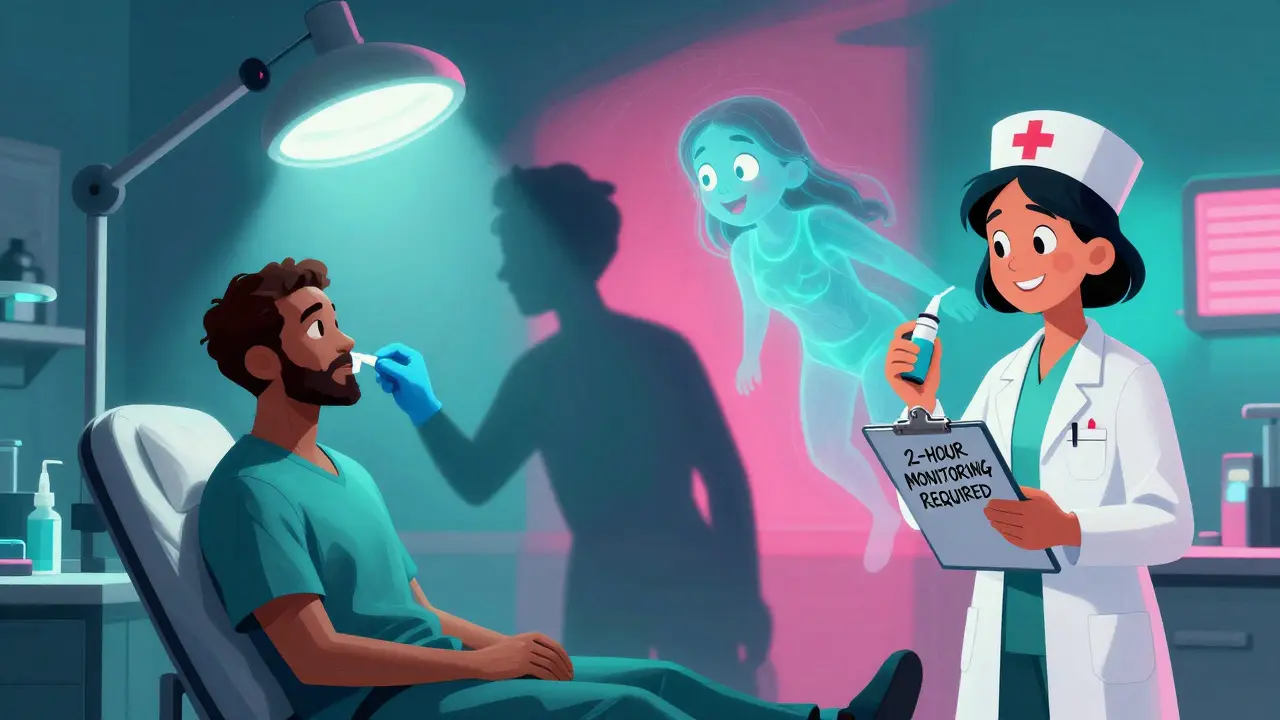
Exxua (gepirone) stands out as the most tolerable option for sexual side effects. In clinical trials, only 2-3% of users reported sexual dysfunction-compared to over 40% on SSRIs. Zuranolone, approved for postpartum depression in 2023 and expanded to major depression in late 2025, shows minimal weight gain and no sexual side effects in over 1,200 patients. SPRAVATO, while fast-acting, comes with a trade-off: nearly half of users experience dissociation-a feeling of detachment from reality-during or right after dosing. That’s why it’s only given in certified clinics with mandatory 2-hour monitoring.
Real-World Experiences: What Patients Are Saying
Online forums and review sites are full of stories that mirror clinical data. On Reddit, users like u/AnxietyWarrior2023 describe switching from years of SSRIs to Exxua: “No ED issues. Mood lifted in 10 days. I feel like myself again.” Others, like u/DepressedEngineer, had a very different experience with SPRAVATO: “The depression lifted fast-but the dissociation was terrifying. I had to stop after three doses.”
Healthgrades data for Zuranolone shows 3.8 out of 5 stars from over 1,200 reviews. Sixty-eight percent say it worked, but 42% mention dizziness. GoodRx ratings for Celexa remain high at 4.2/5, but users still report heart palpitations at higher doses. The pattern is clear: newer drugs deliver better tolerability for many, but they’re not magic bullets. Each has its own risks.
Cost and Access: The Hidden Barriers
These drugs aren’t cheap. A single 56mg dose of SPRAVATO costs around $880. A full 14-day course of Zuranolone runs about $9,450. That’s a steep jump from generic fluoxetine, which costs as little as $4 for 30 tablets. Insurance coverage varies wildly. SPRAVATO requires prior authorization in 92% of commercial plans. Zuranolone is often not covered at all unless you’ve tried at least two other antidepressants first.
Access is another issue. SPRAVATO must be administered under supervision in a certified clinic. As of October 2025, there are only 1,243 such clinics nationwide. That means rural patients often can’t access it. Zuranolone is taken at home, but only if you can afford it and remember to take it with food-missing a dose can cut effectiveness by half.
Who Benefits Most?
These newer options aren’t for everyone. But they’re game-changers for specific groups:
- People with treatment-resistant depression: Response rates jump from 30-40% with SSRIs to 50-65% with SPRAVATO or Zuranolone.
- Postpartum patients: Zuranolone is the first FDA-approved treatment specifically for postpartum depression, with a 70% response rate in trials.
- Those with sexual side effect intolerance: Exxua and Zuranolone have side effect rates as low as 2-3% for sexual dysfunction.
- People needing fast relief: If you’re in crisis and can’t wait six weeks, SPRAVATO and Zuranolone offer hope within days.
On the flip side, they’re not ideal for long-term maintenance. SPRAVATO and Zuranolone are approved for short-term use-weeks, not years. You still need a maintenance medication after the acute phase. That’s why many psychiatrists now use them as a bridge, not a replacement.
What’s Next? The Pipeline
The research doesn’t stop here. Aticaprant, a kappa opioid receptor antagonist, is in Phase 3 trials and expected to file for FDA approval in early 2026. Early data shows a 60% response rate in treatment-resistant depression with almost no weight gain. Other candidates include psilocybin, which showed 6-month durability after just one or two doses in a New England Journal of Medicine study from 2024. Still investigational, it’s being tested in controlled therapeutic settings with trained therapists.
Even more promising is the rise of personalized medicine. The NIH recently funded a $2.4 million project to develop a genetic test that predicts which antidepressant side effects a person is most likely to experience-with 85% accuracy. Imagine knowing before you start treatment that you’re at high risk for weight gain on SSRIs, or that your metabolism breaks down certain drugs too fast. That’s the future.
Expert Voices: Caution and Hope
Dr. Dervla Kelly, a consultant psychiatrist, puts it plainly: “The glutamate-targeted medications reduce cumulative side effect burden. That’s a game-changer.” But Dr. Prasad Nishtala warns: “All these studies are short-term. We don’t know what happens after a year.” And Dr. Alison Cave reminds us: “The most important thing isn’t the drug-it’s matching the drug to the patient.”
For example, someone with high blood pressure should avoid amitriptyline and venlafaxine, which raise BP. Someone with heart rhythm issues should avoid citalopram at high doses. The newer drugs give doctors more tools to avoid these pitfalls.
Bottom Line: It’s Not One Size Fits All Anymore
Depression treatment is no longer about trial and error. We’re moving into a time where the right medication can be chosen based on your biology, your symptoms, and your tolerance for side effects. The old SSRIs aren’t going away-they’re still effective for many. But now, if you’ve tried them and couldn’t handle the side effects, there are real alternatives. Fast-acting, better-tolerated, and targeted. They’re not perfect. But they’re better. And for people who’ve been stuck for years, that’s everything.

Reviews
Exxua is the only one worth considering. 2-3% sexual side effects? That’s not a drug-that’s a miracle. SSRIs were just serotonin sledgehammers. We needed precision tools, not brute force.
Also, Zuranolone for postpartum? Finally. Took long enough.
They’re not new drugs. They’re controlled substances repackaged. Esketamine was a club drug. Zuranolone? Just a fancy benzo. And Auvelity? Dextromethorphan is cough syrup with a side of bupropion. They’re just slapping pharma labels on old party chemicals.
Wait till the FDA admits they’re just profit-driven rebranding. You’ll see.
bro i switched to exxua and like… i’m actually smiling again?? 🥹
no more ED drama, no weight gain, just vibes
my therapist cried when i told her it worked
10/10 would dissociate again (jk lol)
While the data presented is statistically compelling, one must critically evaluate the underlying clinical trial methodologies. The majority of these studies are sponsored by pharmaceutical entities with vested financial interests, introducing potential confirmation bias. Furthermore, the sample sizes, while seemingly adequate, lack longitudinal tracking beyond six months. The absence of comparative head-to-head trials against established SSRIs under double-blind, placebo-controlled conditions undermines the validity of claims regarding superiority. Additionally, the cost-benefit analysis presented ignores macroeconomic factors such as systemic healthcare disparities, rendering the accessibility argument theoretically unsound without structural reform. The notion that these agents represent a paradigm shift is premature without peer-reviewed replication across diverse demographic cohorts.
Appreciate the breakdown. I’ve been on SSRIs for 8 years. The weight gain and low libido were killing me. Exxua’s been a game-changer. No dissociation, no dizziness. Just… better. Not perfect, but finally something that doesn’t make me feel worse just to treat the depression.
Another example of American pharmaceutical overreach. In Ireland, we treat depression with therapy, exercise, and sunlight-not $9,000 pills that make you feel like you’re floating in space. This isn’t progress. It’s corporate exploitation of human suffering.
As someone who has worked in global mental health policy for over a decade, I find this shift profoundly significant. The traditional SSRI model, rooted in 1980s neurochemistry, was never designed for long-term, patient-centered care. These new agents-particularly Exxua and Zuranolone-represent a paradigmatic pivot toward pharmacogenomic alignment and functional restoration rather than mere symptom suppression. What’s remarkable is not just the reduced side effect burden, but the redefinition of therapeutic timelines: from months to days. This isn’t just innovation; it’s a rehumanization of psychiatric care. The challenge now lies not in efficacy, but in equitable access. We must ensure these treatments don’t become luxury goods for the privileged. The NIH’s genetic screening initiative may be the next critical step in democratizing precision psychiatry.
SPRAVATO is being pushed because the FDA is owned by big pharma. They want you addicted to clinic visits. Dissociation? That’s not a side effect-that’s a control mechanism. They’re testing mind-altering substances on depressed people because it’s profitable. And don’t get me started on Zuranolone-it’s just a chemical sedative with a fancy name. They’re not curing depression. They’re drugging people into silence.
Remember Ketamine? Now it’s SPRAVATO. Same drug. Different price tag. Wake up.