
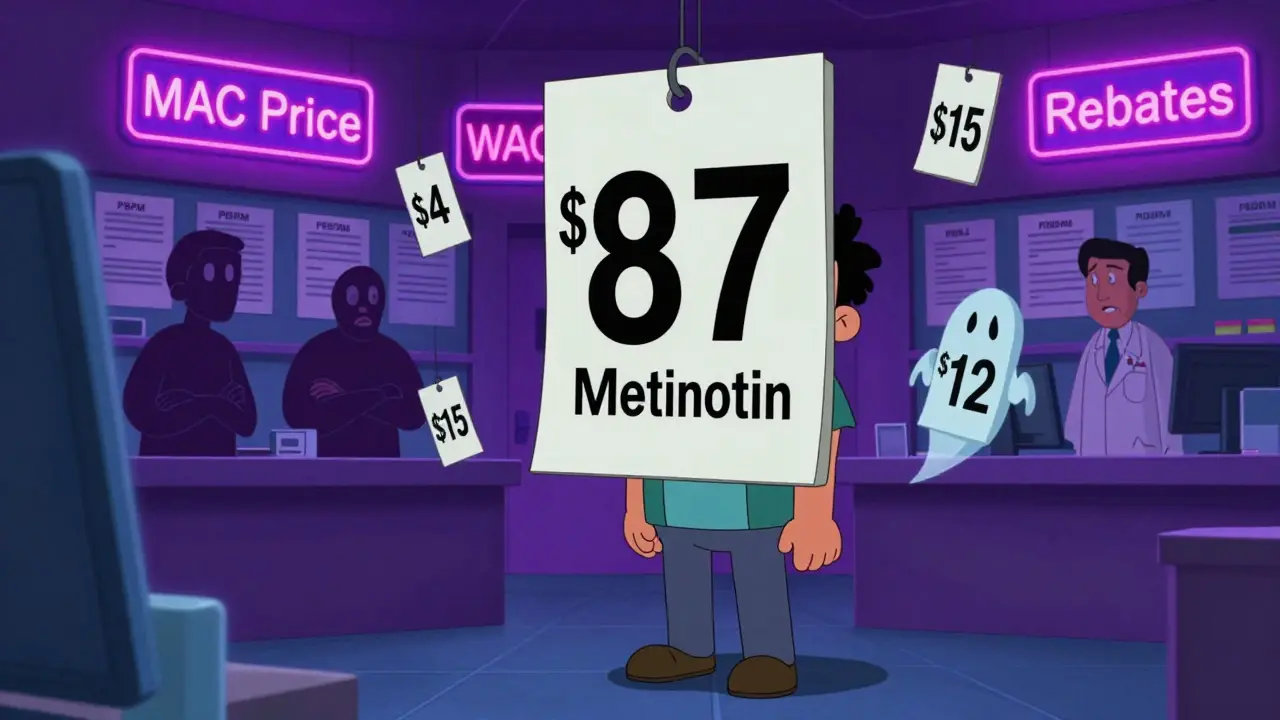
Imagine you need a common generic medication-metformin for diabetes, lisinopril for blood pressure, or levothyroxine for thyroid issues. You walk into your local pharmacy expecting a low, predictable price. But when the pharmacist rings it up, the cost is $85. You swear you saw it for $12 online last week. What happened? You’re not crazy. You’re caught in the middle of a broken system where the same pill can cost $4 at one pharmacy and $90 at another, with no clear reason why.
Why Generic Drug Prices Are So Confusing
Generic drugs are supposed to be cheaper. They’re the same as brand-name drugs in active ingredients, strength, and safety. But their prices? They’re a mess. The reason isn’t one single villain. It’s a chain of middlemen: manufacturers, pharmacy benefit managers (PBMs), insurers, and pharmacies-all negotiating behind closed doors. What you see on the shelf isn’t the real price. The real price is hidden in rebates, discounts, and contracts you’ll never get to see.Here’s how it works: A drug manufacturer sets a list price-called the Wholesale Acquisition Cost (WAC). That’s the sticker price. But PBMs negotiate secret discounts off that price. Then, pharmacies get paid based on a different number called the Maximum Allowable Cost (MAC), which changes weekly. Your insurance plan pays one amount. The pharmacy gets another. And you? You pay whatever your copay says-no matter what the real cost was.
That’s why a 30-day supply of generic metformin can cost $4 at Walmart, $15 at CVS, and $87 at a small independent pharmacy. None of these prices are wrong. They’re just different pieces of the same puzzle-and you’re the one trying to fit them together.
Tools That Actually Show You Real Prices
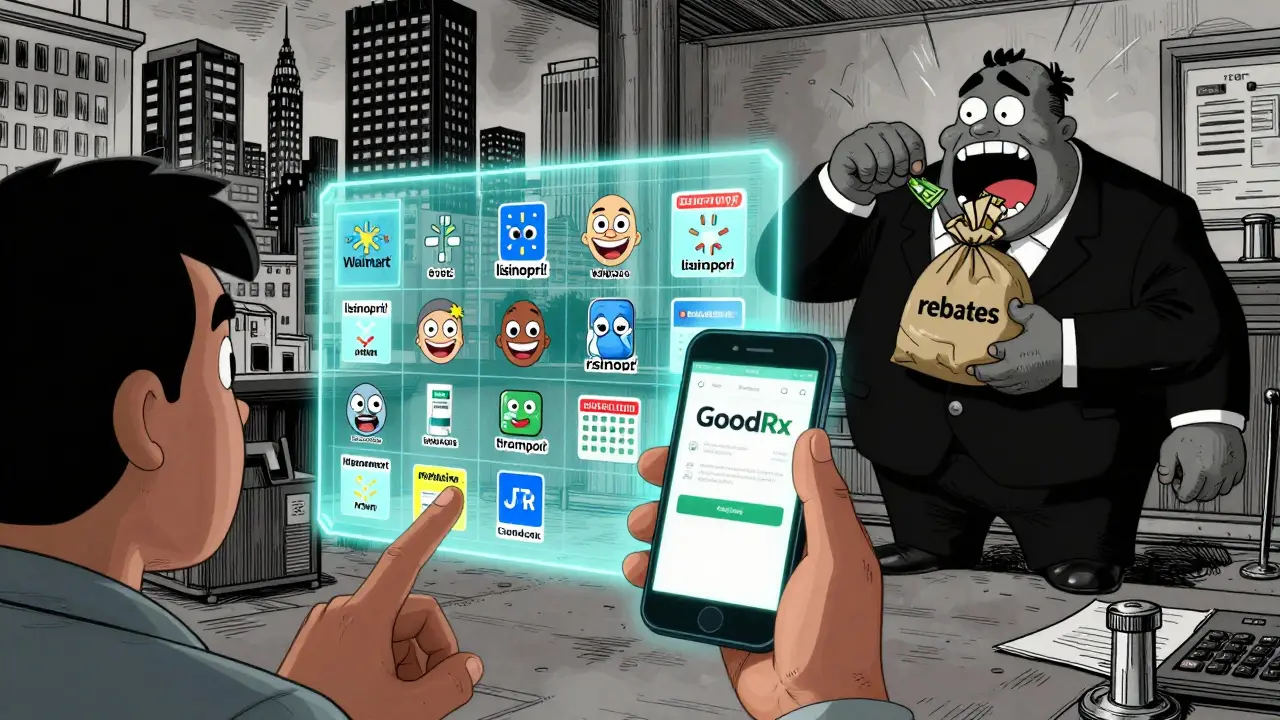
Thankfully, tools exist to cut through the noise. These aren’t just price comparison apps. They’re systems built into clinical workflows or designed for patients to use before they pay. Here are the most reliable ones right now.GoodRx is the most popular app for consumers. It scans prices across thousands of U.S. pharmacies and shows you the lowest cash price for your generic drug-no insurance needed. In 2024, J.D. Power found 43% of U.S. pharmacies use GoodRx’s discount program. It’s simple: enter your drug name, zip code, and dosage. It lists nearby pharmacies with prices. You print or show the coupon at the counter. But here’s the catch: the price you see isn’t always the price you pay. Some pharmacies don’t update their systems in real time. One Reddit user reported seeing a $4 price for levothyroxine, only to be charged $15 when they arrived. It’s not fraud-it’s outdated data.
GoodRx Care and SingleCare work similarly but offer telehealth options too. If you need a new prescription, you can get one online and have the discount applied right away.
For people with insurance, Real-Time Benefit Tools (RTBTs) are game-changers. These are built into electronic health record systems like Epic and Cerner. When your doctor types in a prescription, the system instantly pulls up your specific plan’s cost-sharing amount-copay, coinsurance, deductible status-and suggests cheaper alternatives. CoverMyMeds, the leading RTBT platform, integrates with 98% of major EHRs and serves over 1.2 million providers. A 2025 study found doctors using RTBTs reduced patient out-of-pocket costs by 37% on average by switching to lower-cost generics.
But RTBTs aren’t perfect. They only work if your insurer’s data is up to date. If your plan changed its formulary last week and the PBM hasn’t synced it yet, you’ll see outdated prices. And they don’t show you the full net price-just what you pay. The real savings are still hidden in the rebates that PBMs pocket.
State Laws Are Changing the Game
Federal rules have been slow. But states? They’re moving fast. As of April 2025, 23 states have passed laws requiring drug manufacturers or pharmacies to disclose pricing information. Minnesota’s law is one of the strongest. It created a Prescription Drug Affordability Board that can cap prices on high-cost drugs. In 2025, a patient in Minneapolis used the state’s transparency portal to find a 92% price difference for the same generic lisinopril between two pharmacies just five miles apart. She saved $287 a year.California requires manufacturers to report any price increase over 16% in two years. New York mandates that pharmacies post cash prices for common generics on their websites. These laws don’t fix everything-but they force more visibility. And visibility is the first step to change.
What You Can Do Right Now
You don’t need to wait for lawmakers or tech companies to fix this. Here’s what works today:- Always ask for the cash price-even if you have insurance. Sometimes the cash price is lower than your copay, especially for generics.
- Use GoodRx or SingleCare before you fill your prescription. Compare prices at 3-4 nearby pharmacies.
- Ask your doctor for alternatives. A $4 generic might be just as effective as a $60 one. Doctors often don’t know the price unless they’re using an RTBT.
- Check for patient assistance programs. RxAssist.org lists free or low-cost programs from drug manufacturers. In 2024, 78% of users successfully got their meds through these programs-but 63% said the application process was overwhelming.
- Call your pharmacy directly. Don’t trust the website. Ask: “What’s the cash price for this drug today?” Write it down.
The Big Limitation: No One Shows the Real Price
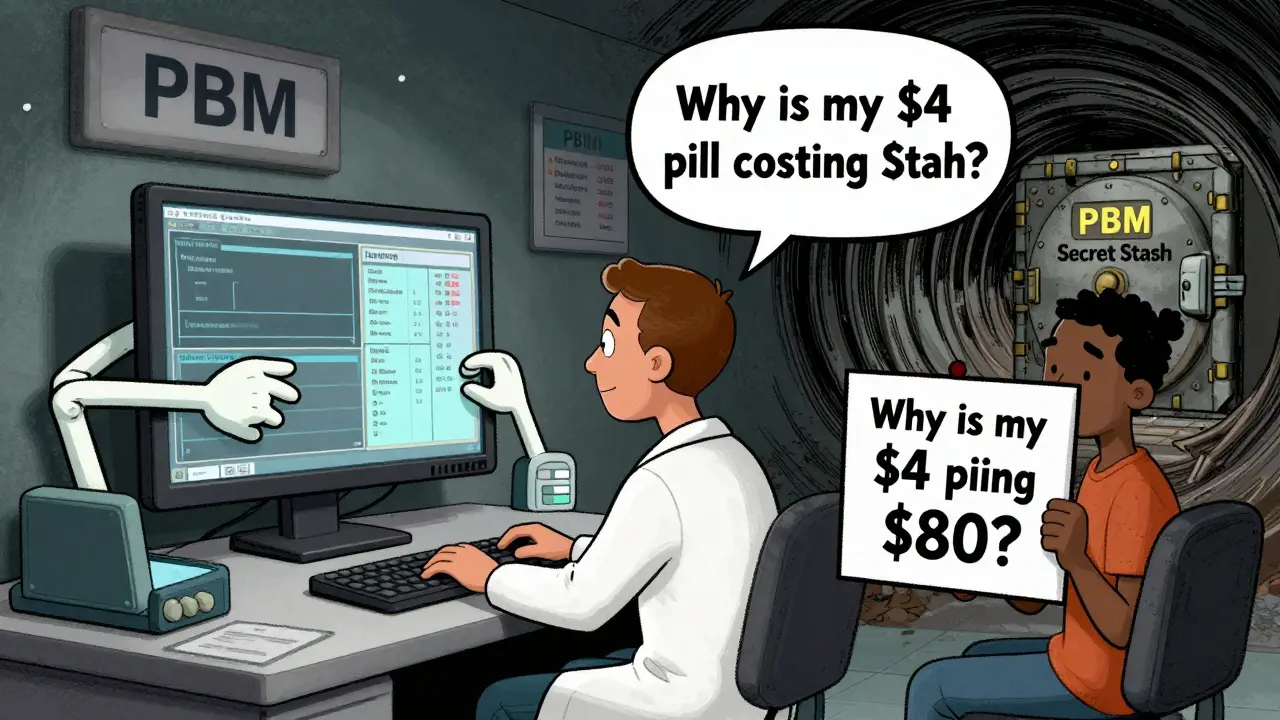
Here’s the hard truth: none of these tools show you the actual price the pharmacy paid. That’s the net price after rebates. PBMs keep that secret. Why? Because if you knew the real cost, you’d question why your $4 pill costs your insurance $80. And if you questioned that, the whole rebate system might collapse.That’s why experts like Dr. Karen Van Nuys say price transparency alone won’t fix the problem. “List prices have almost nothing to do with what’s really paid,” she says. “You’re seeing shadows on the wall, not the fire behind them.”
But shadows are better than darkness. Even partial transparency helps. A 2025 study in Health Affairs found that when patients saw price differences, brand-name prescriptions dropped by 8.2%. People chose generics more often-not because they were forced to, but because they finally understood their options.
What’s Coming Next
In January 2025, the U.S. Senate introduced the Drug-price Transparency for Consumers Act (S.229). If passed, it would require drug companies to show the Wholesale Acquisition Cost in every TV or online ad. That means if you see an ad for a generic blood pressure pill, it would say: “$12 for a 30-day supply.” No more vague claims like “affordable care.”Meanwhile, CMS is expected to release new technical rules for the Prescription Drug File before the end of 2025. These rules could force insurers to report total drug spending after rebates-finally revealing the real cost of care.
It’s not a revolution. But it’s progress.
Bottom Line: You Have More Power Than You Think
Generic drug pricing is broken. But you’re not powerless. You don’t need to be a policy expert or a healthcare professional to save money. You just need to ask the right questions, use the right tools, and refuse to accept the first price you’re given.Next time you get a prescription, don’t just walk to the counter. Check GoodRx. Call a few pharmacies. Ask your doctor: “Is there a cheaper option?” You might save $50, $100, or even $300 a year. That’s not just a discount. That’s a win.
Why is the same generic drug so expensive at some pharmacies?
The price difference comes from how pharmacies are paid. Pharmacies get paid based on a system called Maximum Allowable Cost (MAC), which is set by your pharmacy benefit manager (PBM) and changes weekly. Some pharmacies get better contracts or buy in bulk, lowering their cost. Others may charge more to cover overhead or because they’re not part of a discount network. Cash prices are often lower than insurance copays because they bypass the PBM middleman entirely.
Can I use GoodRx with my insurance?
You can’t stack GoodRx with insurance, but you can choose which one gives you the lower price. Always ask the pharmacist to check both your insurance copay and the GoodRx cash price. Sometimes, GoodRx is cheaper-even if you have coverage. Many pharmacies accept GoodRx as a discount program, not a replacement for insurance.
Do price transparency tools work for specialty drugs?
They’re less reliable for specialty drugs. Most tools like GoodRx focus on common generics. Specialty drugs (like those for rheumatoid arthritis or hepatitis C) often require prior authorization, have complex coverage rules, and are sold through limited pharmacy networks. Real-Time Benefit Tools (RTBTs) used by doctors are better for these, but even they may not show full pricing due to rebates and complex tiers.
Why don’t my insurance statements show the real cost of my drugs?
Your insurance statement only shows what you paid (copay) and what your plan paid. It doesn’t show the total cost of the drug or the rebates your pharmacy benefit manager (PBM) received. That’s because rebates are confidential business agreements between PBMs and drug manufacturers. You’re not meant to see them. But new federal rules in 2025 may require insurers to disclose total spending net of rebates-finally bringing more clarity.
Are patient assistance programs worth the effort?
Yes-if you qualify. Programs like RxAssist.org connect you with free or low-cost drugs from manufacturers. In 2024, 78% of applicants succeeded in getting their medication. But the process can be confusing: you need income proof, doctor signatures, and sometimes monthly renewals. If you’re on a fixed income or uninsured, it’s worth spending the time. Many pharmacies now offer to help you apply right at the counter.
Can I get the same price at every pharmacy if I use a discount app?
No. Discount apps like GoodRx give you a coupon, but pharmacies can still set their own final prices. Some honor the coupon exactly. Others adjust based on their inventory, location, or internal pricing rules. Always call ahead. The price shown online is an estimate-not a guarantee. The best practice is to compare 3-4 pharmacies and pick the lowest verified price.
Next Steps: What to Do Today
1. Find one generic drug you take regularly. It could be your blood pressure pill, cholesterol med, or thyroid hormone. 2. Go to GoodRx.com or download the app. Enter the drug name and your zip code. Note the lowest cash price. 3. Call your local pharmacy. Ask: “What’s the cash price for this drug today?” Write it down. 4. Ask your doctor at your next visit: “Is there a cheaper generic alternative?” 5. Check RxAssist.org to see if you qualify for free or discounted medication.You don’t need to fix the system. Just use the tools that already exist. Your wallet will thank you.


Reviews