
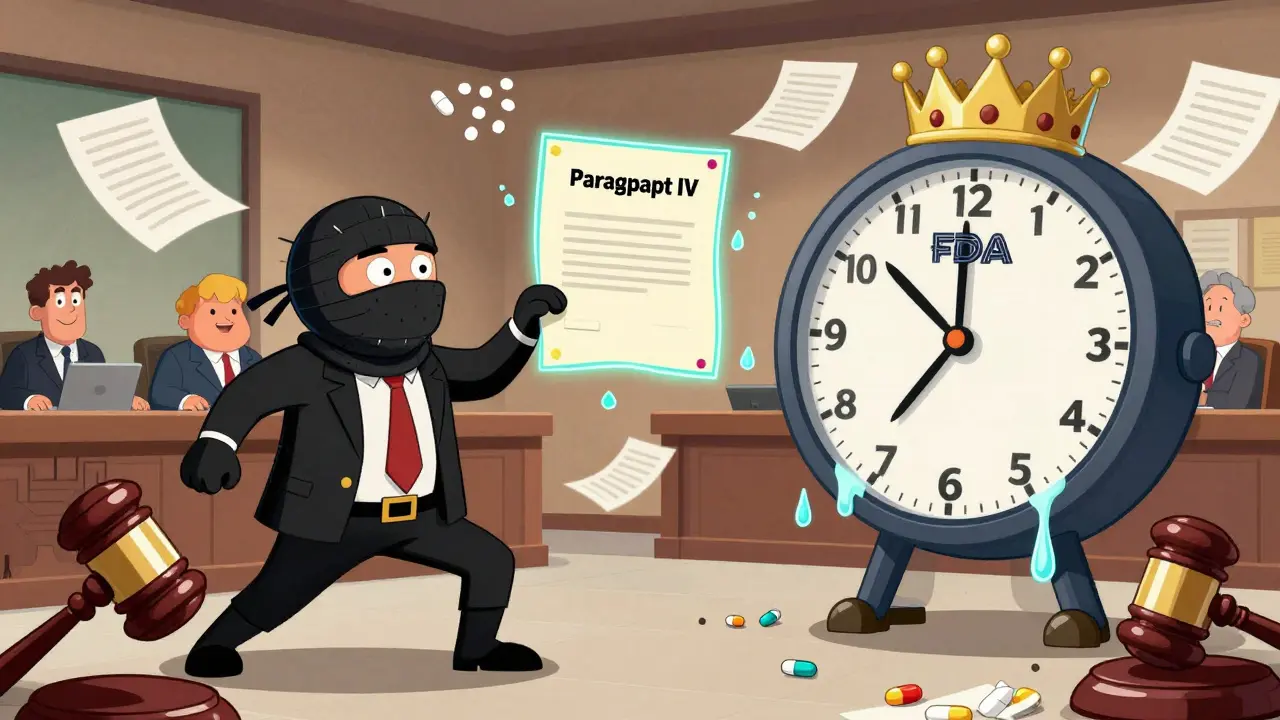
When a brand-name drug’s patent is about to expire, the race to bring out a cheaper generic version begins - but it’s not as simple as just copying the pill. There’s a legal battleground called Paragraph IV that decides who gets in first and when. This isn’t just legal jargon. It’s the key mechanism that lets generic drug makers challenge patents and get life-saving medications to patients at a fraction of the cost.
What Is Paragraph IV and Why Does It Matter?
Paragraph IV is part of the Hatch-Waxman Act, a 1984 law designed to balance two goals: protecting innovation by giving brand-name drug companies patent rights, and making sure generics can enter the market quickly once those patents expire. Without this system, generic drugs might wait years after patent expiration because brand companies could delay approval through lawsuits or regulatory tricks. Here’s how it works: when a generic company wants to sell a copy of a brand drug, they file an Abbreviated New Drug Application (ANDA) with the FDA. As part of that application, they must check off one of four certifications about the drug’s patents listed in the FDA’s Orange Book. Paragraph IV is the one that says: “We believe this patent is invalid, unenforceable, or our product won’t infringe it.” That statement isn’t just a claim - it’s a legal trigger. Under U.S. patent law, filing a Paragraph IV certification counts as an “artificial act of infringement,” even if the generic drug hasn’t been made yet. This gives the brand company the right to sue - and that’s where the real battle begins.The 45-Day Clock and the 30-Month Stay
Once the brand company gets the Paragraph IV notice, they have exactly 45 days to file a patent infringement lawsuit. If they do, the FDA is automatically blocked from approving the generic for up to 30 months. That’s not a suggestion - it’s a hard stop built into the law. The 30-month clock starts when the notice is received, not when the lawsuit is filed. That timing matters. Some generic companies wait until the last possible moment to file their ANDA, hoping to catch the brand company off guard. Others file early to lock in first-to-file status - which comes with a huge prize: 180 days of exclusive market access. During those 30 months, both sides dig into the science and law. The generic company must prove either that the patent is invalid (because the invention wasn’t new or was obvious) or that their drug doesn’t infringe the patent’s claims. Courts hold special hearings called Markman hearings to define the exact meaning of the patent’s technical language. The outcome of those hearings often decides the whole case.Who Wins? The Numbers Don’t Lie
Generic companies win about 65% of the time in Paragraph IV cases, according to a 2021 study of over 1,700 cases. But winning isn’t just about the verdict. It’s about timing, strategy, and money. The average cost of a Paragraph IV lawsuit? Around $7.8 million. That’s more than three times what it costs to challenge a patent through the USPTO’s Inter Partes Review (IPR) process. But here’s the catch: IPR has a higher burden of proof. In court, you only need to show invalidity by a “preponderance of the evidence” - meaning more likely than not. At the USPTO, you need “clear and convincing evidence,” which is much harder to meet. Some cases end in settlement. In fact, 76% of Paragraph IV cases settle before trial. But many of those settlements involve “pay-for-delay” deals - where the brand company pays the generic maker to hold off on launching. The Supreme Court ruled these deals illegal in 2013 (FTC v. Actavis), but they still happen in disguised forms, like licensing deals or supply agreements. When generics win, prices drop fast. A 2019 study found that after a successful Paragraph IV challenge, drug prices fell by an average of 79% within six months. For example, when Teva challenged Pfizer’s Lyrica® patent in 2019, the generic version hit the market at 90% lower cost - saving patients and insurers billions.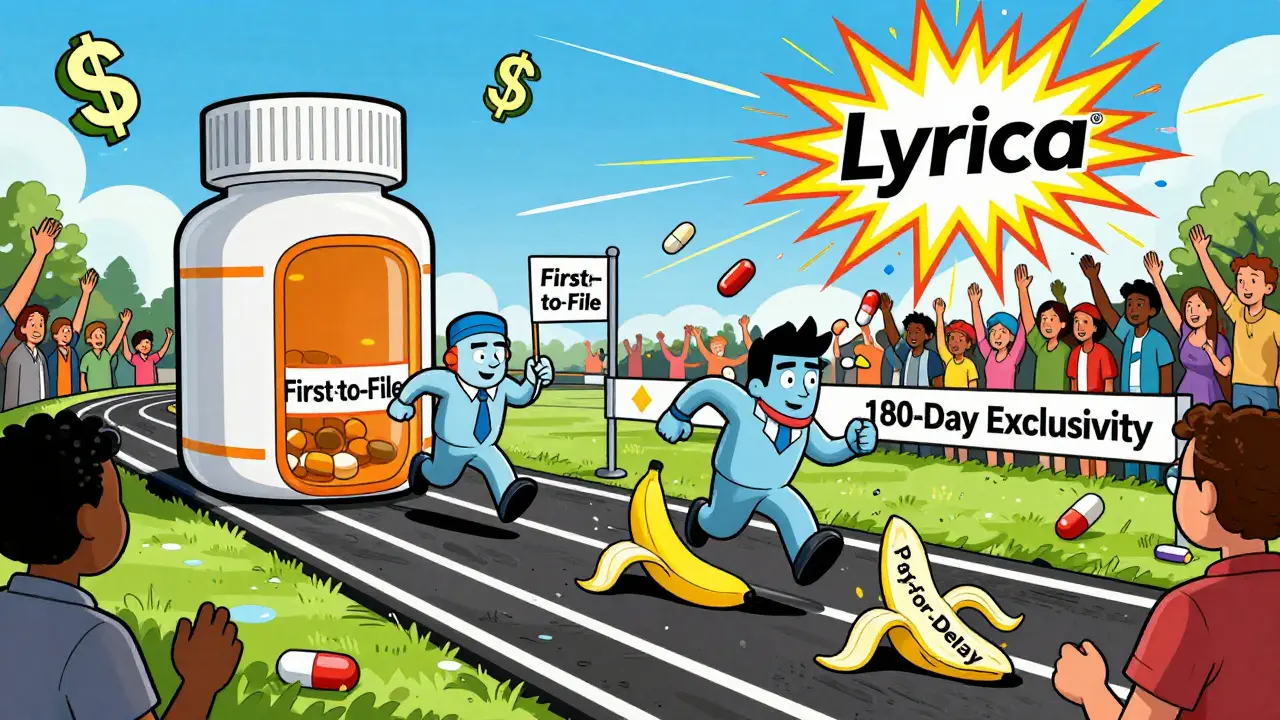
The Game of Patent Thickets
Brand companies aren’t sitting still. In 1984, the average drug had just 1.2 patents listed in the Orange Book. By 2020, that number had jumped to 4.8. Many of these are “secondary patents” - covering things like pill coatings, dosing schedules, or methods of use - not the original chemical compound. These are harder to challenge because they’re not always obvious or weak. Take Humira®. AbbVie filed over 100 patents on the drug, many of them near the end of its main patent life. Generic makers tried to knock them down with Paragraph IV filings, but most failed. The courts ruled the formulations were too specific, and the patents held. As a result, Humira stayed protected for over 15 years - far beyond what Congress originally intended. This tactic, called “patent thickets,” is now standard. The Congressional Budget Office found that effective market exclusivity for new drugs has stretched from 12.1 years in 1995 to 14.7 years in 2022. That’s not innovation - it’s delay.First-to-File: The $1 Billion Prize
The real incentive for generic companies isn’t just to win - it’s to be the first to file a successful Paragraph IV certification. The first one gets 180 days of exclusive rights to sell their version. During that time, no other generic can enter the market. That’s why companies like Barr Labs (which challenged Prozac®) and Mylan (which challenged Gleevec®) risked hundreds of millions in legal fees. The payoff? The first filer captures 70-80% of the generic market during those 180 days. That’s not just profit - it’s market dominance. One successful Paragraph IV challenge can turn a small generic company into a major player overnight. But if you lose? The cost can be catastrophic. Mylan was ordered to pay $1.1 billion in damages after a court found their Gleevec® challenge was willful infringement. That’s why companies spend an average of $2.3 million just on pre-filing analysis - reviewing every patent, every claim, every prior art reference - before they even submit their application.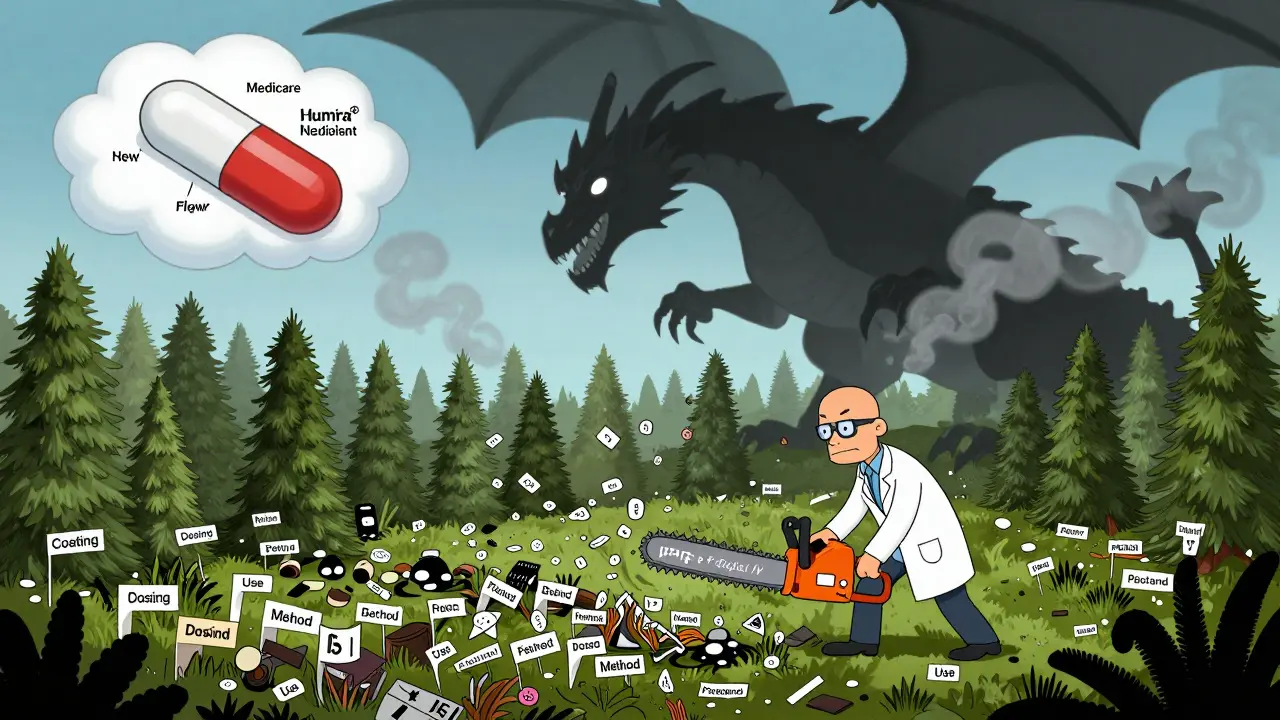
What’s Changing in 2026?
The system is under pressure. The FDA now requires generic companies to address every Orange Book patent - not just the main one. That makes filings more complex and expensive. The 2023 CREATES Act helps generics get the brand drug samples they need for testing, closing a loophole where brand companies would refuse to sell them. The Inflation Reduction Act of 2022 lets Medicare negotiate drug prices, which changes how brand companies think about pricing during the generic transition. And the FTC is pushing for reforms to stop patent thickets and evergreening. Meanwhile, more generic companies are combining Paragraph IV litigation with USPTO post-grant reviews. In 2022, there was a 47% jump in cases where companies used both tools together - attacking patents on multiple fronts.Why This Matters for Patients
Between 2009 and 2019, Paragraph IV challenges saved U.S. consumers $1.68 trillion in drug costs. That’s not a statistic - it’s thousands of people who could afford insulin, heart medication, or antidepressants because a generic version arrived sooner. In Europe, there’s no Paragraph IV equivalent. Generic drugs take longer to enter the market. In the U.S., the system isn’t perfect - it’s expensive, complex, and sometimes manipulated. But it works. It’s the reason why 90% of prescriptions in the U.S. are filled with generics today. The next time you pick up a $5 generic prescription, remember: someone fought a multi-million-dollar lawsuit to make that possible. Paragraph IV isn’t just law. It’s access.What is a Paragraph IV certification?
A Paragraph IV certification is a legal statement filed by a generic drug company with its ANDA, claiming that a patent listed for the brand drug in the FDA’s Orange Book is either invalid, unenforceable, or won’t be infringed by the generic product. This triggers a 45-day window for the brand company to sue and a 30-month regulatory stay on FDA approval.
How long does Paragraph IV litigation usually take?
On average, Paragraph IV litigation lasts about 28.7 months, according to Federal Judicial Center data from 2015-2022. This is slightly shorter than the 30-month regulatory stay, which often pushes both sides toward settlement before trial.
Why is the first-to-file generic company so important?
The first company to successfully file a Paragraph IV certification gets 180 days of market exclusivity, during which no other generic can enter. This allows them to capture 70-80% of the generic market, making it a high-reward, high-risk strategy that drives competition.
Can brand companies delay generic entry without going to court?
Yes. Brand companies have used tactics like refusing to supply samples for testing, filing citizen petitions with the FDA to delay approval, or entering into pay-for-delay settlements. The 2023 CREATES Act and new FDA rules on citizen petitions aim to curb these practices.
What’s the difference between Paragraph IV and biosimilar patent disputes?
Biosimilars, which are copies of biologic drugs, follow the BPCIA process, not Paragraph IV. BPCIA has a complex “patent dance” with no fixed stay period and offers only 12 months of exclusivity, compared to 180 days for small-molecule generics under Paragraph IV.
Do Paragraph IV challenges work for all types of drugs?
They’re most effective for small-molecule drugs with clear, challengeable patents - like those covering active ingredients. They’re less successful against complex formulations, delivery systems, or method-of-use patents, which brand companies use to build patent thickets around drugs like Humira®.


Reviews
Paragraph IV is the unsung hero of affordable medicine - a legal loophole that somehow turned into a lifeline for millions. I love how it forces innovation to compete with access, not bury it under layers of corporate patents. The 180-day exclusivity window? Genius. It turns generics from afterthoughts into power players. And yet, nobody talks about it outside pharma circles. Maybe because it’s too messy, too legal, too human.
Really well explained. I work in regulatory affairs and can confirm - the 30-month stay is a double-edged sword. It gives brand companies breathing room, but it also lets generics plan their litigation like a chess match. The real winners? Patients who get insulin at $25 instead of $300. The system’s flawed, but it’s the best we’ve got.
Let’s be real - this isn’t about access, it’s about control. The ‘first-to-file’ prize isn’t innovation, it’s a lottery ticket bought with millions in legal fees. And those ‘pay-for-delay’ deals? They’re not disguised - they’re brazen. The FTC’s toothless, courts are slow, and Congress is bought. You think Teva won because they were smart? No. They had more cash than Pfizer. This isn’t capitalism. It’s legalized extortion dressed up as competition.
And don’t get me started on Humira. A drug with 100+ patents? That’s not innovation - that’s a legal cage. Congress wrote Hatch-Waxman to fix monopolies, but pharma turned it into a monopoly factory. You call this a system? It’s a rigged game where the house always wins - unless you’re a billionaire generic company.
And yes, 65% win rate sounds good until you realize half those wins are just settlements where the brand company walks away with a licensing deal and the generic gets a tiny slice of the pie. The real cost? The patients who died waiting for their meds while lawyers argued over coating thickness.
And now you want to combine IPR with Paragraph IV? Great. More lawyers. More delays. More bills. The FDA’s new rules? Just more paperwork for the same broken system. We need to burn it down and start over. Not tweak it.
Stop calling this a ‘balance.’ It’s a bloodsport with insulin on the line.
That 79% price drop after a successful challenge? That’s not just data - that’s someone’s life. I’ve seen people skip doses because they can’t afford the brand. Then the generic hits - and suddenly they’re taking it daily. No drama. No fanfare. Just a $5 script at CVS. That’s the quiet victory here. The lawsuits? The courtrooms? The millions spent? All noise. The real win is the person who didn’t have to choose between medicine and rent.
And yeah, patent thickets are disgusting. But the fact that we even have this system? It’s still better than Europe’s five-year waiting game. We’re messy. We’re loud. But we’re fast.
so like… if i take a generic is it really the same? like i’m not getting some fake version right? like how do i know?
In India, we see this every day - the cost difference between branded and generic drugs is life-changing. But here’s the twist: in the U.S., the system is so complex that even doctors don’t fully understand it. In my family, we’ve had relatives on insulin for years. When the generic came, we cried. Not because of savings - because we could finally breathe. Paragraph IV isn’t just law. It’s dignity.
Wow, this is actually really interesting. I thought generics were just rip-offs, but turns out it’s like a legal warzone out there. I had no idea about the 180-day thing - that’s wild. So the first company to file gets to be the only one selling for half a year? That’s like winning the patent lottery. And all that money just to prove a pill isn’t infringing? Madness. But hey, at least it works. My mum’s blood pressure med’s down to £3 now. Cheers, Paragraph IV.
i never thought about how much goes into a generic pill… like the patents and the lawsuits and everything… but it makes sense i guess? like if no one challenged them we’d all be paying $500 for everything
and the first to file gets 180 days? that’s so cool in a weird way
thank you for explaining this so clearly
65% win rate? That’s not a win - that’s a failure rate of 35%. And the average cost is $7.8 million? That’s not innovation. That’s corporate warfare. And you call this a system? It’s a tax on patients. The real problem isn’t the patents - it’s that we let pharma turn healthcare into a courtroom sport. The FDA’s just a spectator. The patients? The ones footing the bill.