
Rhabdomyolysis Symptoms: What to Watch For and When to Act
When your muscles start breaking down faster than your body can handle, you’re looking at rhabdomyolysis, a serious condition where damaged muscle tissue releases harmful proteins into the bloodstream. Also known as muscle breakdown syndrome, it can happen after extreme exertion, trauma, or even certain medications—and it can quietly lead to kidney failure if ignored.
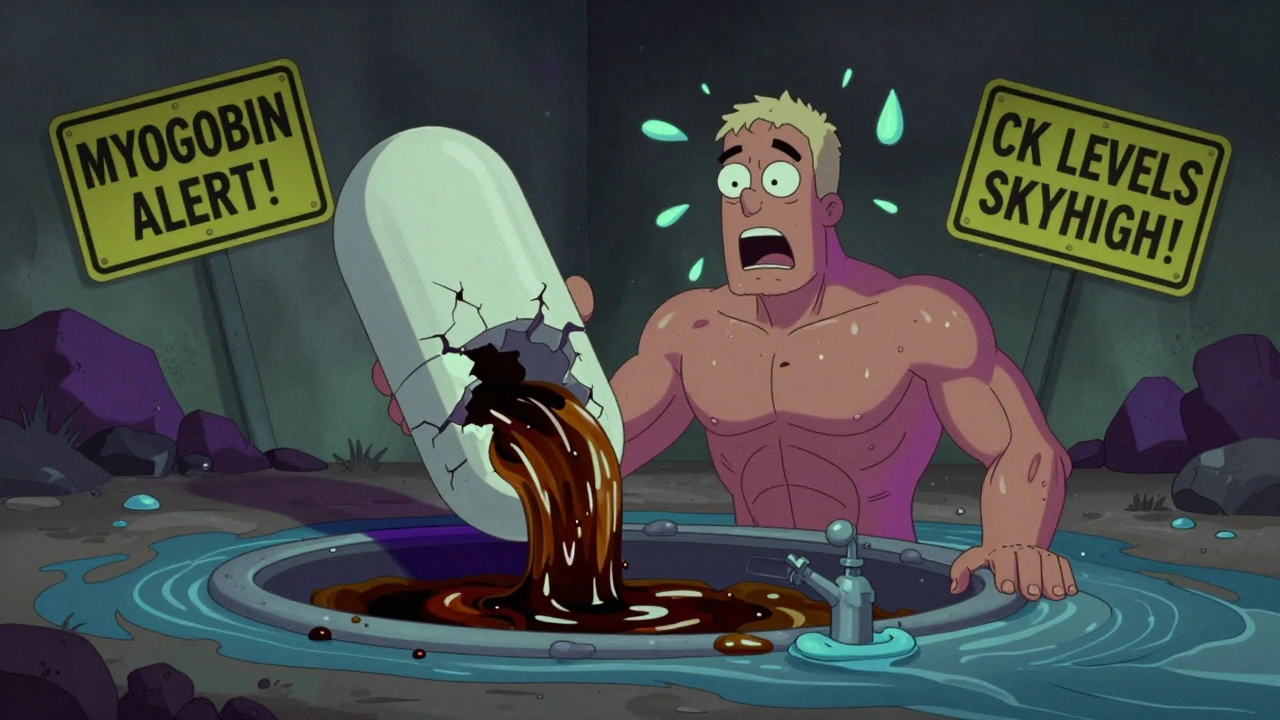
The most common signs are intense muscle pain, especially in the shoulders, thighs, or lower back, along with weakness so bad you can’t stand up or lift your arms. You might notice your urine turning dark—brown, red, or tea-colored. That’s not just dehydration; it’s myoglobin, a protein from damaged muscle cells leaking into your kidneys. If you’ve recently pushed yourself hard at the gym, taken a new medication, or had a serious injury and now feel this way, don’t wait. Kidney damage, a life-threatening complication of rhabdomyolysis can develop within hours.
Rhabdomyolysis doesn’t always come from overtraining. It can be triggered by statins, alcohol abuse, seizures, infections, or even genetic conditions. Some people get it after a heat stroke or a car crash. Others notice it after a long hike or a CrossFit session they weren’t ready for. The key is recognizing the pattern: pain that doesn’t fade, urine that looks wrong, and feeling worse instead of better after rest. It’s not normal soreness. It’s your body screaming for help.
What you’ll find here are real cases and clear explanations—not guesswork. You’ll learn how doctors test for it, what blood and urine markers mean, and which drugs or activities raise your risk. You’ll also see how people recovered, what mistakes to avoid, and why timing matters more than intensity. Whether you’re an athlete, a caregiver, or just someone who woke up too sore to move, this collection gives you the facts you need before it’s too late.
Rhabdomyolysis from Statins: What You Need to Know About This Rare but Dangerous Side Effect
