
Thrombotic Thrombocytopenic Purpura: What You Need to Know
When your blood starts forming clots where it shouldn’t—like in small vessels across your brain, kidneys, or heart—you could be facing thrombotic thrombocytopenic purpura, a rare, life-threatening blood disorder that causes widespread clotting and low platelet counts. Also known as TTP, it’s not just about bruising or bleeding; it’s a system-wide emergency that needs immediate care. This isn’t something that shows up slowly. Symptoms can hit hard: unexplained bruising, fatigue, confusion, shortness of breath, or even seizures. The root cause? Often, your body stops making enough of a protein called ADAMTS13, an enzyme that breaks down large blood-clotting proteins to prevent dangerous clots. Without it, these proteins stick together, trapping platelets and clogging tiny blood vessels.
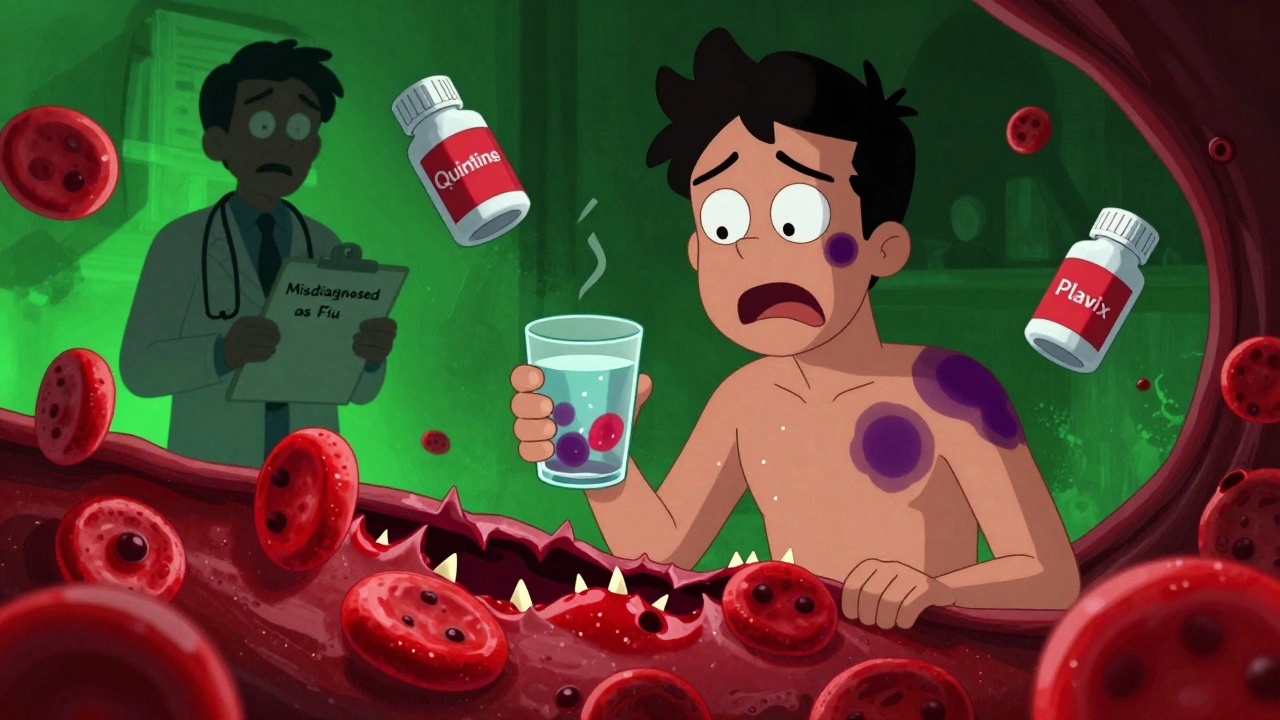
TTP isn’t caused by injury or poor diet. It’s either inherited (a rare genetic form) or triggered by autoimmune reactions, infections, pregnancy, or certain drugs. Some medications—like chemotherapy agents or immunosuppressants—can flip the switch. And because it’s so rare, many doctors don’t see it often. That’s why misdiagnosis is common. People are told they have the flu, or anemia, or even stress-related fatigue. But if your platelet count is low and you have signs of organ damage, TTP must be ruled out. The gold-standard treatment? plasma exchange, a procedure that removes harmful antibodies and replaces them with healthy plasma. It’s not a cure, but it’s the fastest way to stop the clotting cascade and save your organs. In some cases, doctors add immunosuppressants or newer drugs like caplacizumab to calm the immune system’s attack.
What you’ll find in these posts isn’t just textbook definitions. You’ll see real-world connections: how TTP relates to drug reactions, why certain medications can trigger it, and how treatments like plasma exchange tie into broader blood disorder management. You’ll also find insights into how lab results like platelet counts and LDH levels help doctors spot it early. This isn’t about theory—it’s about recognizing warning signs, understanding treatment options, and knowing when to push for more answers. Whether you’re a patient, caregiver, or just trying to understand what’s happening, these articles give you the facts you need without the fluff.
Medication-Induced Thrombotic Thrombocytopenic Purpura: A Life-Threatening Reaction You Need to Know
