
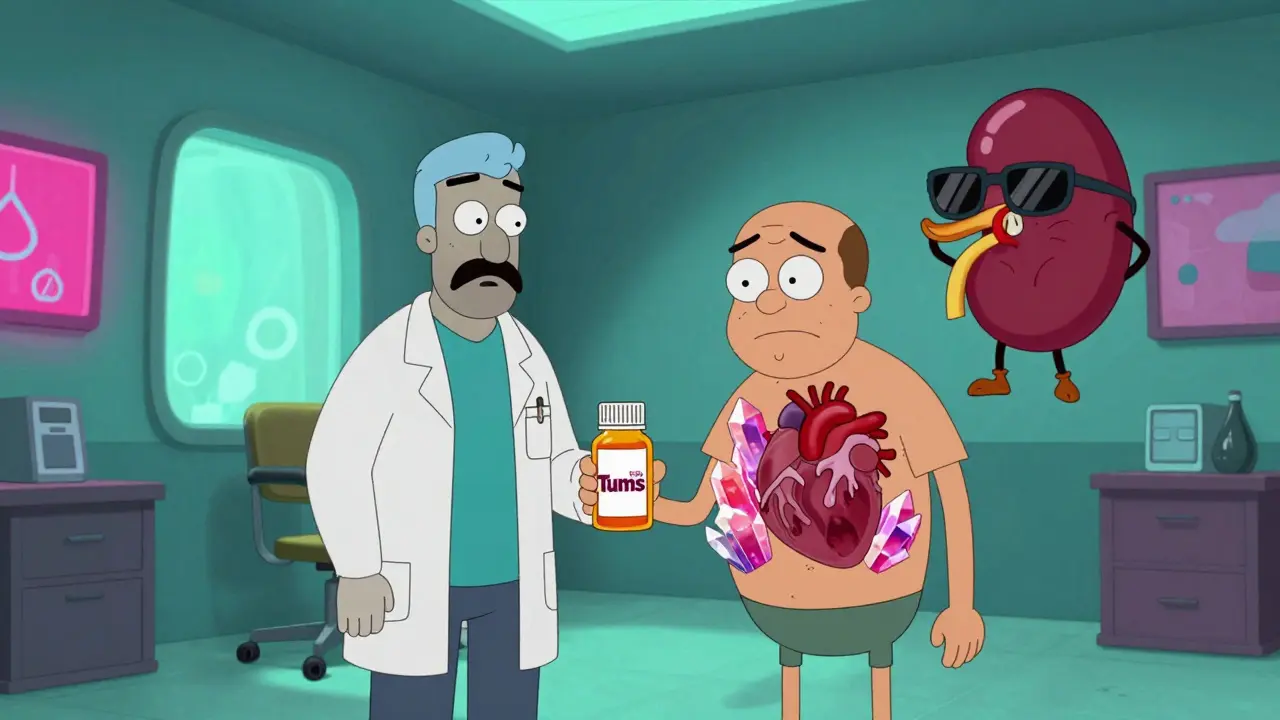
Antacid Safety Checker for Kidney Disease
Check Your Antacid Safety
Select your kidney disease stage and antacid type to see if it's safe for you.
Select your kidney stage and antacid type to see safety assessment.
Many people reach for antacids like Tums or Milk of Magnesia when they feel heartburn. But if you have kidney disease, what seems like a harmless fix could be dangerous. Antacids aren’t just for upset stomachs anymore-they’re often used as phosphate binders in chronic kidney disease (CKD). But not all antacids are safe. Some can cause life-threatening imbalances in calcium, magnesium, or aluminum levels, especially when kidney function is already failing.
How Antacids Work in Kidney Disease
Antacids like calcium carbonate and aluminum hydroxide were originally designed to neutralize stomach acid. But in people with CKD, they’re repurposed to bind phosphate in the gut. When kidneys can’t filter phosphate properly, it builds up in the blood. High phosphate levels lead to weak bones, heart problems, and calcification of blood vessels. That’s where antacids come in-they form insoluble complexes with phosphate, stopping it from being absorbed.
Calcium carbonate (Tums) and aluminum hydroxide (Amphojel) are the most common OTC antacids used this way. But here’s the catch: these same ingredients are the ones that can poison you if your kidneys aren’t working right. The body relies on kidneys to remove excess calcium, magnesium, and aluminum. When kidney function drops below 30% (GFR under 30 mL/min), those minerals start piling up.
The Three Dangerous Types of Antacids
Not all antacids are created equal. Three types are commonly used-but only one is relatively safe in early kidney disease.
- Calcium-based antacids (like Tums, Caltrate): These are the most widely used phosphate binders. They’re cheap and effective, lowering phosphate by 15-25% per meal. But they carry a big risk: hypercalcemia. When calcium builds up in the blood above 10.2 mg/dL, it can cause nausea, confusion, frequent urination, and worse-calcium deposits in arteries and heart valves. Studies show CKD patients on calcium-based binders have a 30-50% higher risk of cardiovascular events.
- Aluminum-based antacids (like Alu-Cap, Maalox): These are powerful phosphate binders, but they’re also toxic. Aluminum doesn’t get cleared by failing kidneys. Over time, it accumulates in the brain, bones, and blood. Levels above 40 mcg/L can cause bone pain and fractures. Above 60 mcg/L, it leads to dialysis dementia-memory loss, speech problems, seizures. The FDA banned long-term use in 1990. Today, aluminum antacids should only be used for a few days in emergencies, never as a daily binder.
- Magnesium-based antacids (like Milk of Magnesia): These work as laxatives and acid neutralizers. But in CKD, magnesium builds up fast. Normal levels are 1.7-2.6 mg/dL. Above 4 mg/dL, you get muscle weakness. Above 10 mg/dL, your breathing slows. Above 15 mg/dL, your heart can stop. Emergency room visits from magnesium toxicity are common in dialysis patients who take OTC magnesium for constipation, thinking it’s harmless.
Prescription Phosphate Binders: Safer Alternatives
If you have advanced kidney disease (stage 4 or 5), you shouldn’t rely on OTC antacids. Prescription phosphate binders are designed to be safer and more precise.
- Sevelamer (Renagel): A non-calcium, non-aluminum binder. It doesn’t raise calcium or aluminum levels. It reduces phosphate by 25-35% per meal. But it’s expensive-$1,800 to $2,500 a month.
- Lanthanum carbonate (Fosrenol): Also non-calcium, non-aluminum. Works as well as sevelamer but costs $2,500-$3,500 monthly.
- Sucroferric oxyhydroxide (Velphoro): Iron-based. Fewer pills per dose-just 1-2 tablets per meal. Costs about $4,000 a month.
These drugs cost more than Tums, but they’re far safer for long-term use. They don’t add extra calcium or aluminum to your body. That’s why KDIGO guidelines recommend them as first-line for stage 4-5 CKD.

Who Can Still Use Antacids-and How
It’s not all or nothing. Some people with early kidney disease can use antacids safely-if they follow strict rules.
CKD Stage 3 (GFR 30-59): Calcium carbonate may be used as a phosphate binder, but only under doctor supervision. Take it with meals-600-1,200 mg elemental calcium per meal. Get your blood calcium checked every month. Keep it below 10.2 mg/dL. Avoid magnesium and aluminum completely.
CKD Stage 4-5 (GFR under 30): Do not use aluminum or magnesium antacids. Calcium carbonate should only be used occasionally for heartburn-not as a phosphate binder. Take it at least two hours before or after your prescription binder. Never mix them.
Also, antacids interfere with other meds. They can reduce absorption of antibiotics, thyroid meds, and seizure drugs like phenytoin by up to 40%. Always take other medications one hour before or four hours after an antacid.
Real Stories: What Happens When People Don’t Know
People don’t realize antacids and phosphate binders are different. On patient forums, stories keep popping up:
- A woman in her 60s with CKD stage 4 took Tums daily for heartburn for six months. Her calcium level hit 11.2 mg/dL. A CT scan showed new calcium deposits in her heart arteries.
- A man on dialysis used Milk of Magnesia for constipation. His magnesium level jumped to 8.7 mg/dL. He lost feeling in his legs and ended up in the ER.
A 2022 survey by the American Association of Kidney Patients found that 68% of CKD patients couldn’t tell the difference between OTC antacids and prescription binders. 42% had used antacids without telling their nephrologist.
What You Should Do
If you have kidney disease:
- Ask your nephrologist: “Is my current antacid safe for my kidney stage?”
- Never use aluminum-containing antacids unless it’s a short-term emergency.
- Never use magnesium antacids if your GFR is under 30.
- If you use calcium carbonate, get your blood calcium, phosphate, and magnesium checked monthly.
- Keep a list of all meds and supplements you take-including OTC ones-and show it to every doctor.
- Learn the warning signs: nausea, confusion, muscle weakness, slow breathing, bone pain.
Most people with kidney disease can manage phosphate levels safely-but only if they know which antacids to avoid and which binders to use. The difference between a harmless pill and a life-threatening one isn’t always obvious. But it’s one you can’t afford to get wrong.
What’s Changing in 2026
New treatments are coming. Tenapanor (Xphozah), approved in 2023, blocks phosphate absorption without binding it-so it doesn’t raise calcium or aluminum. It’s a game-changer for patients tired of swallowing 6 pills a day.
The NIH is funding a 5,000-patient study (ASK-D) to create clear guidelines on antacid use in CKD. And the FDA is pushing for clearer labeling on OTC antacids-warning labels about kidney disease are now required.
For now, the rule is simple: if you have kidney disease, don’t guess. Ask your nephrologist before taking any antacid-even if it’s on the shelf next to the aspirin.
Can I take Tums if I have kidney disease?
Tums (calcium carbonate) can be used by people with early-stage kidney disease (CKD stage 3) as a phosphate binder, but only under medical supervision. It should be taken with meals, and your blood calcium must be checked monthly. Avoid Tums entirely if you have advanced kidney disease (stage 4 or 5) unless your nephrologist says it’s okay for occasional heartburn. Never use it as a phosphate binder without professional guidance.
Is Milk of Magnesia safe for kidney patients?
No. Milk of Magnesia (magnesium hydroxide) is not safe for people with CKD stage 4 or 5, or anyone on dialysis. Magnesium builds up in the blood when kidneys can’t remove it. Levels above 4 mg/dL can cause muscle weakness. Above 10 mg/dL, it can lead to breathing problems or cardiac arrest. Many emergency cases in kidney patients come from using this OTC laxative thinking it’s harmless.
Why are aluminum antacids dangerous with kidney disease?
Aluminum is not filtered by failing kidneys. It builds up in the body and causes irreversible damage. Levels above 40 mcg/L can lead to bone disease and fractures. Above 60 mcg/L, it causes dialysis dementia-memory loss, speech issues, and seizures. The FDA restricts aluminum antacids to no more than two weeks of use in people with normal kidneys. For those with CKD, they’re considered a last-resort option only in emergencies.
What’s the difference between antacids and phosphate binders?
Antacids neutralize stomach acid to relieve heartburn. Phosphate binders are designed to attach to phosphate in food so your body doesn’t absorb it. Some antacids (like calcium carbonate) can double as phosphate binders, but not all phosphate binders are antacids. Prescription binders like sevelamer or lanthanum carbonate don’t neutralize acid-they only bind phosphate. They’re safer for long-term use in kidney disease because they don’t add extra calcium or aluminum.
How do I know if my antacid is causing problems?
Watch for symptoms: nausea, confusion, frequent urination (signs of high calcium); muscle weakness, dizziness, slow breathing (signs of high magnesium); bone pain, memory loss, or trouble speaking (signs of aluminum toxicity). If you have kidney disease and notice any of these, stop the antacid and call your nephrologist immediately. Regular blood tests for calcium, phosphate, magnesium, and aluminum are essential.
Can I take antacids with my other medications?
No-not without timing them correctly. Antacids can block absorption of many drugs, including antibiotics, thyroid meds, and seizure medications like phenytoin. Take other medications at least one hour before or four hours after an antacid. Always check with your pharmacist or nephrologist before combining any new OTC product with your prescription meds.
What to Do Next
If you’re managing kidney disease and use antacids regularly, schedule a review with your nephrologist. Bring a list of every OTC product you take-even if you think it’s harmless. Ask: “Is this safe for my kidney stage?” and “Should I switch to a prescription phosphate binder?”
Don’t wait for symptoms to appear. By the time you feel weak or confused, damage may already be done. The best defense is knowledge-and a conversation with your care team.



Reviews
Just took Tums for heartburn last week. Didn’t even think about kidneys. Thanks for the wake-up call.
This is the kind of post that should be mandatory reading for every CKD patient. I work in nephrology and see people ruin their health because they think ‘OTC’ means ‘safe.’ Aluminum? No. Magnesium? Absolutely not past stage 3. Calcium? Only with monthly labs. The fact that pharmacies don’t have warning labels on these shelves is criminal. We need better public health messaging-this isn’t just medical advice, it’s survival.
Everyone’s scared of aluminum but nobody talks about how sevelamer causes GI hell. I’ve seen patients vomit for days after starting Renagel. And don’t get me started on the cost-$2500/month? That’s a luxury drug for people who can afford to miss work. Meanwhile, Tums costs $5. The system is broken. Stop preaching safety and start fixing access.
It’s fascinating how we’ve turned pharmacology into a metaphysical dilemma. Antacids as phosphate binders aren’t just chemical interventions-they’re symbolic of our society’s refusal to accept biological limits. We want a pill for everything, even when the body says ‘no.’ The real crisis isn’t hyperphosphatemia-it’s the illusion that medicine can outsmart nature. Aluminum isn’t the villain. Our hubris is.
As a nurse who’s worked in dialysis for 18 years, I’ve seen too many patients end up in the ER because they thought ‘Milk of Magnesia’ was just a laxative. One guy had a magnesium level of 14.2-he stopped breathing on the way in. We had to intubate him. These aren’t theoretical risks. They’re daily realities. If you have CKD and you’re using OTC meds without telling your team, you’re playing Russian roulette with your heart.
Did you know the FDA approved aluminum antacids in 1972 with no kidney warnings? The pharmaceutical lobby blocked labeling for decades. Now they’re pushing ‘new’ binders while ignoring the fact that dietary phosphate restriction works better than any pill. This whole system is rigged. You’re being sold a $4000/month solution while the real fix-eating less processed food-isn’t profitable.
Okay but what if you’re on Medicare and your nephrologist refuses to prescribe sevelamer because it’s ‘too expensive’? What if you’re 72, on dialysis three times a week, and your only option is Tums because your insurance denies everything? You’re supposed to just… die quietly? This isn’t medicine, it’s rationing disguised as caution. The real danger isn’t aluminum-it’s the healthcare system that makes you choose between heart failure and bankruptcy.
Wow, so now we’re blaming patients for not knowing? Did anyone ever teach you this? Or did your doctor just hand you a script and say ‘take this’? I had stage 3 CKD and used Tums for years because my doctor never said ‘don’t.’ Now I’m stage 4 and I feel like a criminal for being uninformed. Who’s really at fault here?
I’m from India and we use antacids like candy here. My aunt took aluminum-based ones for 10 years because she thought ‘it’s just for stomach.’ She got bone pain, then confusion-doctors called it ‘old age.’ Turns out it was aluminum toxicity. I showed her this post to her nephrologist and they finally switched her to sevelamer. Thank you for writing this. People need to know.
Let’s not conflate pharmacokinetics with clinical pragmatism. Calcium carbonate remains a first-line binder in CKD stage 3 per KDIGO 2023 guidelines due to its efficacy-to-cost ratio. The risk of hypercalcemia is mitigated by monitoring, not elimination. Sevelamer and lanthanum are superior for advanced disease, but their cost-effectiveness is questionable in resource-limited settings. The real issue isn’t OTC misuse-it’s systemic under-resourcing of nephrology care.
why do doctors never tell you this?? i took milk of magnesia for 2 years and now my legs feel like jelly. i thought it was just getting old. now i feel so stupid. i hate that i didn’t ask. i hate that no one warned me. i hate that this is normal.
As someone with CKD stage 3, I’ve been using calcium carbonate since diagnosis-600mg with meals, monthly labs, no magnesium, no aluminum. It’s worked. But I’ve also seen friends die because they didn’t know. This isn’t just about pills. It’s about education. We need community health workers, not just specialists. In India, 90% of CKD patients never see a nephrologist. If this post reaches even one person who’s about to take Tums without knowing, it’s worth it.