
Naloxone: What It Is, How It Saves Lives, and Where to Find It
When someone overdoses on opioids, time isn’t just tight—it’s the difference between life and death. That’s where naloxone, a fast-acting medication that reverses opioid overdose by blocking opioid receptors in the brain. Also known as Narcan, it’s not a cure, but it’s the most reliable tool we have to bring someone back from the edge. Naloxone doesn’t work on alcohol, benzodiazepines, or stimulants. It only flips the switch on opioids like heroin, fentanyl, oxycodone, or even prescription painkillers taken too high. And it works fast—often within 2 to 5 minutes.
Naloxone isn’t just for hospitals. It’s in the hands of first responders, pharmacists, teachers, parents, and even strangers who’ve learned to act. Over 70% of opioid overdose deaths happen at home, not in clinics. That’s why carrying naloxone is no longer just a medical decision—it’s a community one. You don’t need a prescription in most states. Many pharmacies hand it out over the counter, and some community centers give it away for free. It comes in nasal spray or injectable forms, both simple enough for anyone to use after a quick tutorial.
Some people worry that having naloxone around encourages drug use. But the data says otherwise. Cities with widespread naloxone distribution saw no rise in opioid use—only fewer deaths. It’s not about enabling. It’s about giving someone a second chance to get help. And that second chance matters. Every time naloxone is used, it’s not just reversing a physical reaction—it’s interrupting a cycle of loss. Families stay together. Friends survive. People get to walk into treatment centers instead of morgues.
But naloxone isn’t a one-and-done fix. Its effects wear off in 30 to 90 minutes, and many opioids last longer. That means someone can slip back into overdose after naloxone wears off. That’s why calling 911 is always the next step—even if the person seems fine. Emergency care is still needed. Also, naloxone doesn’t help with non-opioid overdoses. If someone’s passed out from a mix of drugs, naloxone might help if opioids are part of the mix—but you still need to get them to a hospital.
What you’ll find in the articles below isn’t just about naloxone itself. It’s about the bigger picture: how medications interact, why some drugs become dangerous when mixed, and how simple knowledge can prevent tragedy. You’ll see how generic versions of naloxone are now widely available, how insurance covers it, and how community clinics are making it accessible to people who need it most. You’ll also learn about other life-saving tools—like how to recognize the signs of overdose before it’s too late, and why keeping naloxone in your car, backpack, or medicine cabinet might save someone you love.
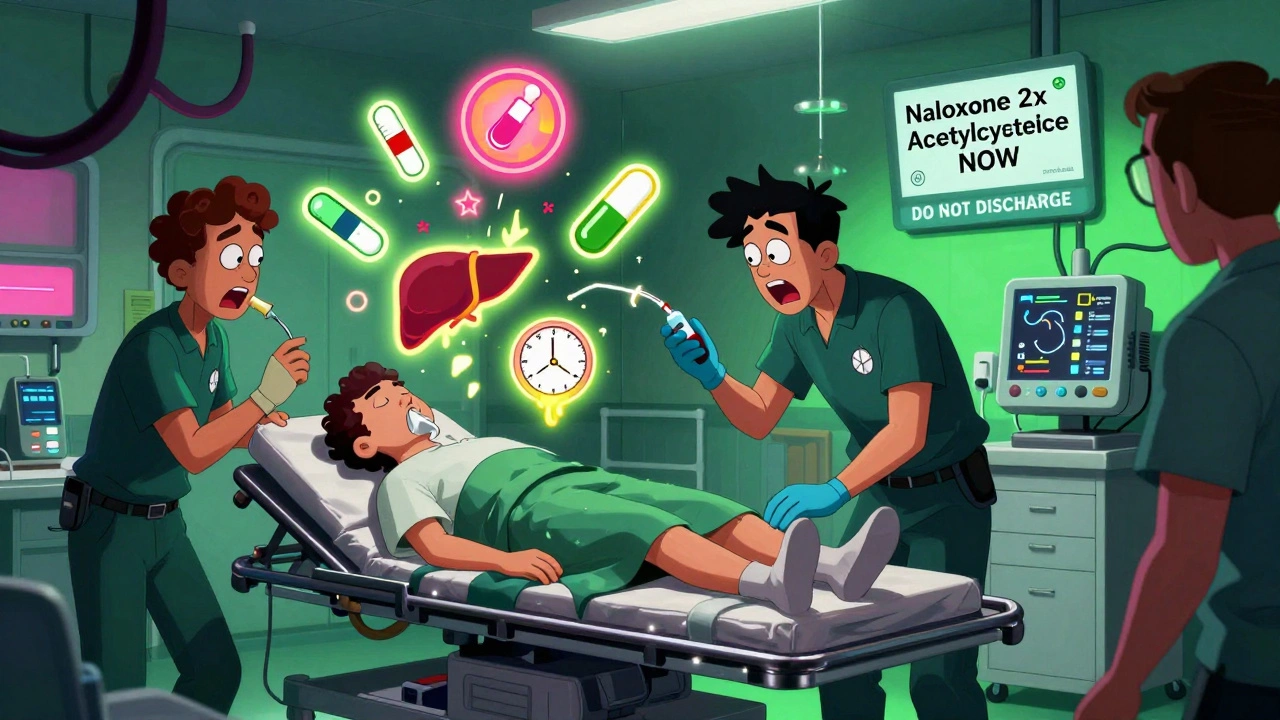
Multiple Drug Overdose: How to Manage Complex Medication Overdoses in Emergency Settings
