
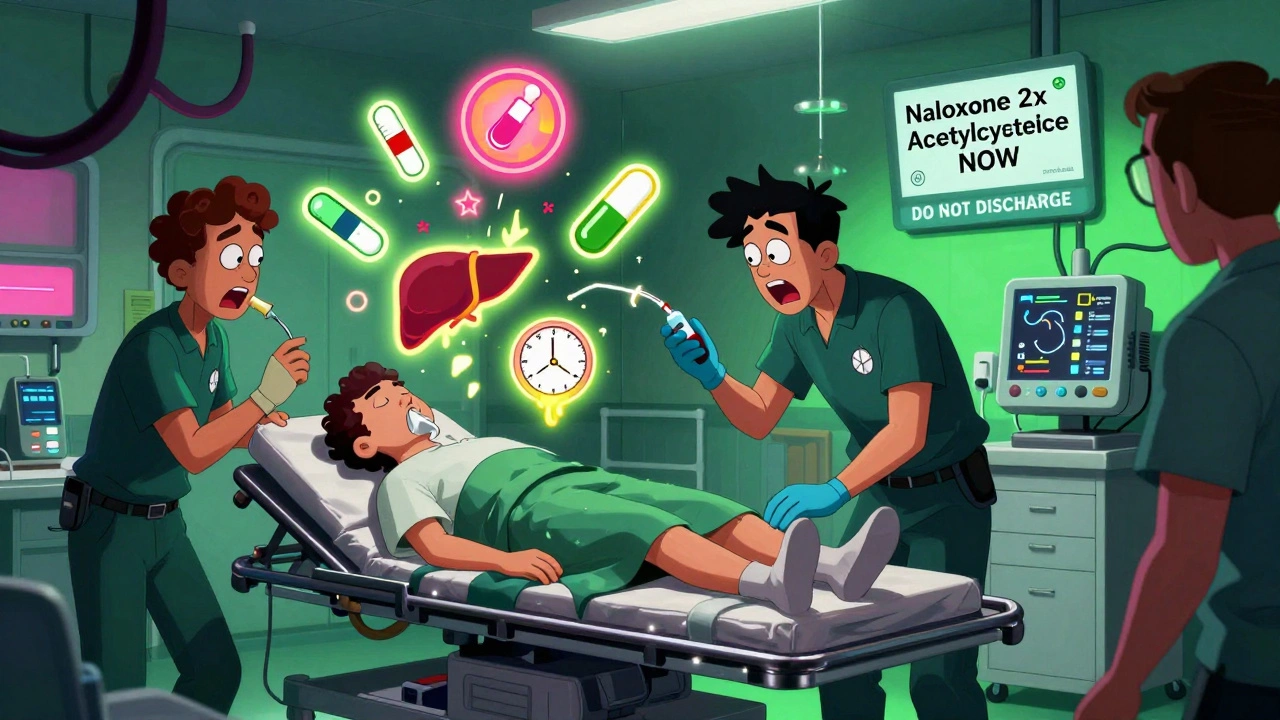
When someone overdoses on just one drug, it’s serious. But when they’ve taken multiple drugs at once-like opioids, acetaminophen, and benzodiazepines-it becomes a medical puzzle with life-or-death stakes. This isn’t rare. In 2023, over 70% of fatal overdoses in Australia and the U.S. involved more than one substance. The mix of drugs doesn’t just add up-it multiplies the danger. One drug can mask the symptoms of another. One antidote can make a different toxicity worse. And if you treat it like a single-drug case, you could miss the real killer.
Why Multiple Drug Overdoses Are So Dangerous
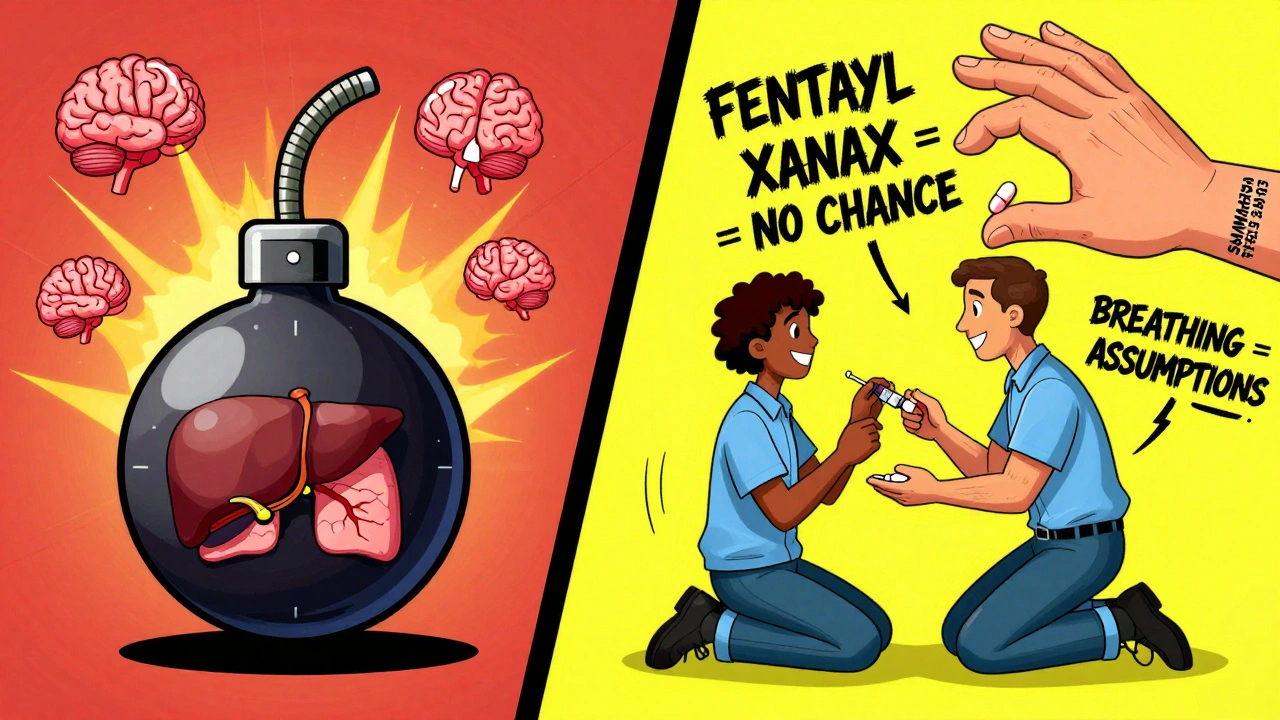
Think of your body as a network of systems. Each drug hits a different part. Opioids slow your breathing. Acetaminophen burns your liver. Benzodiazepines calm your brain too much. When they’re taken together, they don’t just add their effects-they team up. A person might look sleepy from the benzos, but their real problem is opioid-induced respiratory failure. Or their liver enzymes are skyrocketing from acetaminophen, but they’re being treated only for sedation. The worst combinations? Opioid-acetaminophen pills like Vicodin or Percocet. People take them for pain, not realizing they’re ingesting two toxins at once. Or someone takes heroin, then adds Xanax to calm the anxiety-only to end up unconscious with both respiratory arrest and liver damage brewing. Fentanyl, now common in street drugs, makes it worse. It’s 50 to 100 times stronger than heroin. One hit can kill. And if it’s mixed with benzodiazepines or cocaine, the body has no chance without fast, smart intervention.The First Response: What First Responders Must Do
If you’re the first on scene, follow the SAMHSA Five Essential Steps. Don’t guess. Don’t wait. Act.- Assess the situation. Is the person breathing? Are their lips blue? Are they unresponsive? These are red flags.
- Call emergency services immediately. Even if you give naloxone, they still need a hospital.
- Administer naloxone. If you suspect opioids-even if you’re not sure-give naloxone. One dose via nasal spray. If there’s no response in 2-3 minutes, give a second dose. Fentanyl overdoses often need two or three doses. Don’t stop until they’re breathing again.
- Support breathing. If they’re not breathing, start rescue breaths. Naloxone takes time. Your breaths keep oxygen flowing. Don’t wait for the drug to kick in.
- Monitor closely. Naloxone wears off in 30-90 minutes. Opioids can stay in the body for hours. If they wake up and then crash again, they need urgent transport. Don’t let them go home after a “recovery.”
Acetaminophen Overdose: The Silent Liver Killer
Acetaminophen doesn’t knock someone out. It doesn’t cause vomiting or sedation right away. That’s why it’s so dangerous in mixed overdoses. People think they’re fine because they’re breathing. But in 24-48 hours, their liver starts failing. Without treatment, they can die from internal bleeding, brain swelling, or organ collapse. The key is timing and the Rumack-Matthew nomogram. If someone took acetaminophen within the last 4 hours, activated charcoal can help bind the drug before it’s absorbed. After 4 hours, the window for charcoal closes. But that’s not the end. Acetylcysteine is the antidote-and it must be given within 8 hours for best results. After 15 hours, liver damage becomes harder to reverse. Here’s what hospitals do differently now:- For people over 100 kg, dosing is capped at 100 kg. Giving more doesn’t help-it just increases side effects.
- For repeated overdoses (taking too much over days), check liver enzymes. If AST or ALT are high, start acetylcysteine even if the acetaminophen level looks normal.
- If the acetaminophen level hits 900 μg/mL or higher, and the person is confused or has acidosis, hemodialysis is needed. Acetylcysteine must continue during dialysis at 12.5 mg/kg/hour.
When Benzodiazepines Are in the Mix
Benzodiazepines like Xanax, Valium, or Klonopin are often taken with opioids. They’re prescribed for anxiety or insomnia, but people use them to “take the edge off” drugs like heroin or fentanyl. The problem? Flumazenil, the antidote for benzos, is risky here. If someone is physically dependent on benzodiazepines, giving flumazenil can trigger violent seizures. That’s why most ERs avoid it in mixed overdoses. Instead, they focus on supportive care: breathing support, IV fluids, and monitoring. Let the benzo wear off naturally. Pushing reversal can kill more than the overdose itself. The same goes for tramadol. It’s not a classic opioid, but it acts like one. Naloxone works on tramadol, but because it lasts 5-6 hours, you’ll often need a continuous IV drip-not just one or two doses.What Hospitals Do Differently
Emergency departments don’t just treat one toxin. They treat the whole cocktail.- Full blood panel: Liver enzymes, kidney function, blood pH, lactate, acetaminophen level, salicylate level, drug screen.
- Continuous monitoring: Oxygen levels, heart rhythm, breathing rate. No one is discharged until they’ve been stable for at least 4-6 hours.
- Activated charcoal: Only if ingestion was under 4 hours and the patient can protect their airway. It’s not a magic bullet-it won’t help if the drug is already absorbed.
- Psychological assessment: Was this accidental? A suicide attempt? A relapse? The treatment doesn’t end with the antidotes. A social worker or psychiatrist needs to step in.
Long-Term Risks and Recovery
Surviving a multiple drug overdose doesn’t mean you’re out of the woods. Liver damage from acetaminophen can take months to heal. Brain damage from low oxygen can cause memory loss or motor problems. And if the overdose was tied to addiction, the risk of another one is high-especially in the first four weeks after leaving prison or detox. The WHO recommends that after resuscitation, patients be connected to long-term treatment: methadone, buprenorphine, counseling, peer support. Naloxone saves lives. But treatment saves futures. Doctors now tell patients: “You survived this time. But if you use again, you might not wake up. Let’s get you help.”
What Families and Friends Should Know
If you know someone who uses drugs, keep naloxone on hand. It’s free in many pharmacies in Australia and the U.S. Learn how to use it. Practice with a trainer kit. Don’t wait for an emergency to figure it out. Also, know the signs: slow or shallow breathing, blue lips, unresponsiveness, gurgling sounds. Don’t assume they’re just asleep. Don’t leave them alone. Call for help. Give naloxone. Keep breathing for them. And after they’re stable? Don’t shame them. Don’t lecture. Say: “I’m here. Let’s get you checked out.”What’s Changing in Overdose Care
The 2023 JAMA Network Open guidelines changed how we see acetaminophen overdose. No longer do we just look at the time since ingestion. We look at liver enzymes, repeated dosing, and body weight. And SAMHSA now trains first responders to expect multiple naloxone doses-not just one. Community programs are expanding. In Perth, naloxone kits are now available at pharmacies without a prescription. Schools and community centers run free training. These aren’t just tools-they’re lifelines. The future isn’t just better antidotes. It’s better systems: linking emergency care to addiction treatment, making mental health support part of overdose response, and treating overdose not as a moral failure, but as a medical emergency.Can you reverse a multiple drug overdose with just naloxone?
No. Naloxone only reverses opioids. If the overdose includes acetaminophen, benzodiazepines, or other drugs, naloxone won’t help those parts. You still need acetylcysteine for liver protection, supportive breathing, and hospital care. Giving naloxone is critical-but it’s only the first step.
Is activated charcoal useful in all overdoses?
Only if the drugs were taken within the last 4 hours and the person is awake and able to protect their airway. Charcoal doesn’t work on alcohol, opioids, or benzodiazepines once they’ve been absorbed. It’s mainly used for acetaminophen, aspirin, or certain antidepressants. It also can’t be given if someone is unconscious or vomiting.
Why is acetylcysteine given for so long after an acetaminophen overdose?
Acetaminophen damages the liver over 24-72 hours. Acetylcysteine works by replenishing glutathione, the liver’s natural detoxifier. If you stop too early, the liver can still fail. Treatment typically lasts 20-21 hours, or longer if liver enzymes are rising. Stopping early is one of the most common reasons for preventable liver failure.
Can you give naloxone to someone who didn’t take opioids?
Yes, and you should. Naloxone has no effect on non-opioid drugs, but it’s harmless if given to someone without opioids in their system. If they’re unresponsive and you suspect an overdose, give it. It could save their life. The risk of giving it is near zero. The risk of not giving it? Death.
What should you do if someone wakes up after naloxone but seems confused?
Keep them under observation. Naloxone wears off faster than most opioids. Confusion, dizziness, or worsening breathing could mean the opioids are still active and the naloxone has worn off. Call emergency services immediately. Don’t assume they’re fine just because they woke up.
Are there any home remedies for multiple drug overdoses?
No. Inducing vomiting, giving coffee, or putting someone in a cold shower won’t help-and can make things worse. The only proven actions are calling emergency services, giving naloxone if opioids are involved, and supporting breathing until help arrives. There are no shortcuts.

Reviews
Just read this cover to cover. The way they broke down the interaction between opioids, acetaminophen, and benzos is terrifyingly accurate. I work in ER nursing and seen too many patients come in looking 'just sleepy'-then crash 3 hours later because no one checked liver enzymes. The Rumack-Matthew nomogram isn’t just a chart-it’s a lifeline. And the part about dosing acetaminophen based on 100kg max? That’s gold. So many hospitals still over-dose acetylcysteine in obese patients. This should be mandatory reading for every med student.
While the clinical guidelines presented here are undeniably meticulous, I must express profound reservations regarding the underlying philosophical framework. The normalization of substance use under the rubric of 'harm reduction' constitutes, in my view, a systemic abdication of societal responsibility. One cannot simultaneously advocate for medical intervention while dismissing the moral dimension of self-destructive behavior. The article’s emphasis on 'non-judgmental' language, while ostensibly empathetic, inadvertently sanitizes the catastrophic consequences of pharmacological self-sabotage. The invocation of 'lifelines' and 'community programs' obscures the fact that addiction, in its most severe manifestations, is a pathology of will, not merely a biochemical imbalance. One is reminded of the ancient Hippocratic oath: 'First, do no harm.' But what of the harm inflicted upon the social fabric when enabling becomes the default paradigm? I implore the medical community to reconsider whether compassion, untethered from accountability, constitutes true healing-or merely the postponement of consequence.