
CPAP Pressure: How to Find the Right Setting for Better Sleep
When you’re using a CPAP pressure, the level of air pressure delivered by a continuous positive airway pressure machine to keep your airway open during sleep. It’s not a one-size-fits-all number—too low and your breathing stops; too high and you feel like you’re breathing through a straw. Many people start with a default setting, but that’s just the beginning. Your ideal pressure depends on your anatomy, sleep position, weight, and how severe your sleep apnea is. A sleep study usually sets the starting point, but real-life use often reveals what truly works for you.
CPAP machine settings, the adjustable parameters on your device that control airflow, ramp time, and pressure relief features aren’t just numbers on a screen. They’re tools to make therapy bearable. Machines today offer features like C-Flex or A-Flex that lower pressure during exhalation, making it easier to breathe out. If you’re still struggling after weeks, it’s not you—it’s likely the pressure hasn’t been fine-tuned. Many patients never go back for a follow-up, but pressure needs can change with weight loss, alcohol use, or even seasonal allergies.
Sleep apnea treatment, the medical approach to managing breathing interruptions during sleep isn’t just about the machine. It’s about consistency, comfort, and communication with your provider. If your mask leaks, your pressure might be too high—or too low. If you wake up dry-mouthed or with a sore throat, your humidifier might need adjusting. And if you’re avoiding your CPAP because it feels uncomfortable, you’re not alone. Most people give up within the first month. But the right pressure, paired with the right mask and mindset, turns CPAP from a chore into a quiet, life-changing habit.
What you’ll find below are real stories and practical tips from people who’ve been there. From how to talk to your doctor about pressure changes, to why your CPAP might feel different after a cold, to what to do when your machine says ‘pressure too high’—these posts cut through the noise. No fluff. Just what works.
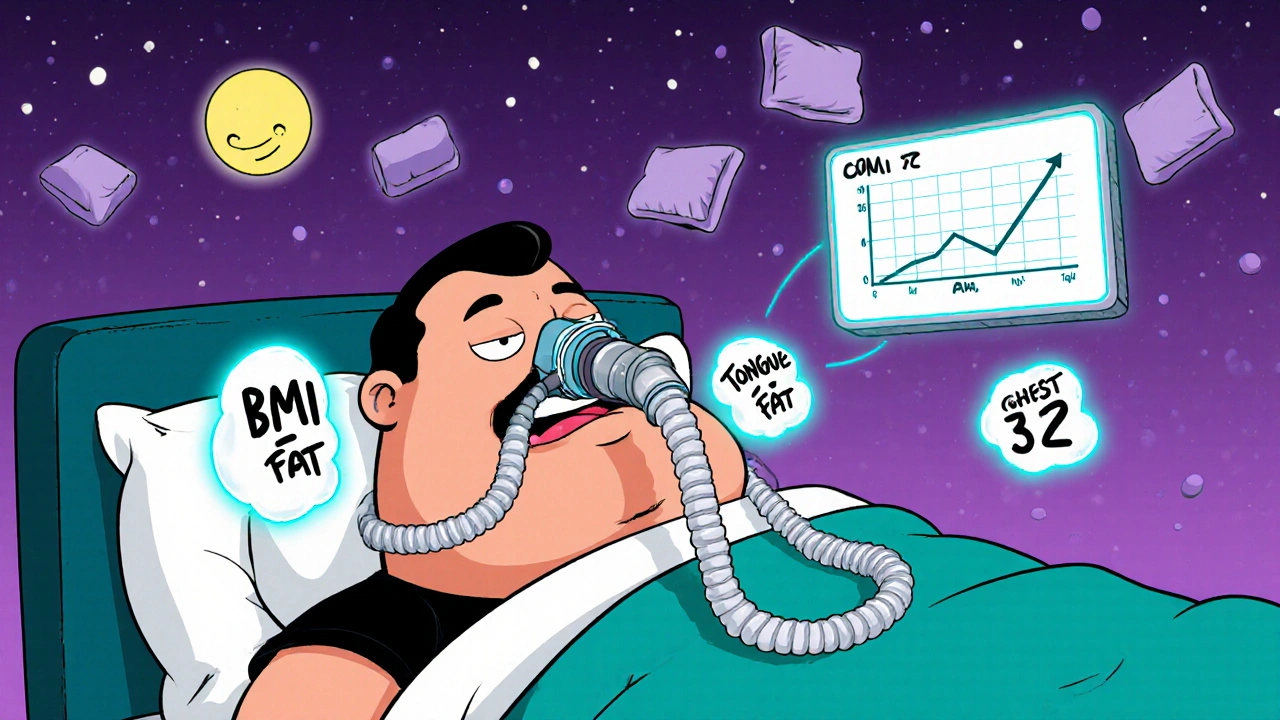
Weight Loss and Sleep Apnea: How BMI Directly Impacts CPAP Pressure Needs
