
Serotonin Syndrome Risk Checker
Check Your Medication Combination
Based on evidence from over 61,000 patients in real-world studies, this tool shows whether your specific medication combination carries actual risk.
For over a decade, millions of people with migraine and depression have been told they can’t take triptans if they’re on an SSRI. The warning was clear: combining these medications could trigger serotonin syndrome - a dangerous, even deadly, condition. But here’s the truth: that fear is largely based on a misunderstanding.
What Actually Causes Serotonin Syndrome?
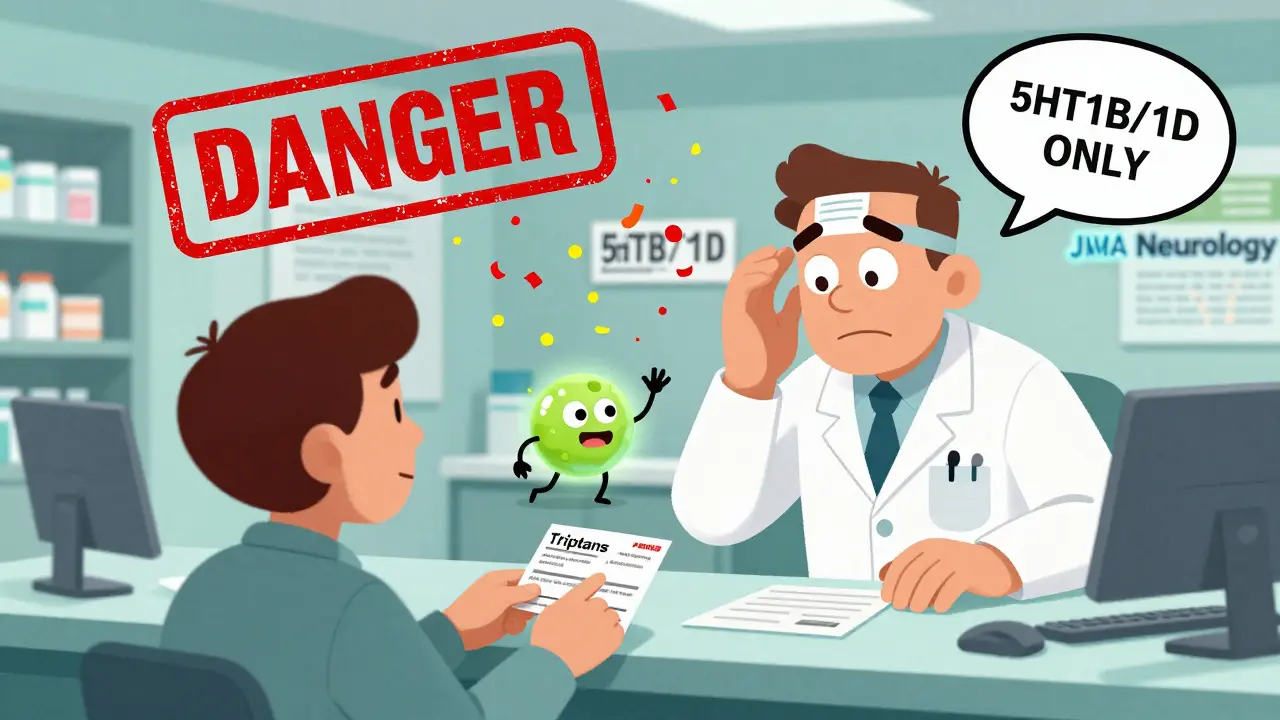
Serotonin syndrome isn’t just about having too much serotonin in your body. It’s about which receptors that serotonin activates. The condition happens when there’s overstimulation of specific serotonin receptors - mainly 5-HT2A and, to a lesser extent, 5-HT1A. Symptoms include rapid heart rate, high blood pressure, muscle rigidity, tremors, confusion, and in severe cases, seizures or loss of consciousness. SSRIs and SNRIs can cause this because they flood the brain with serotonin by blocking its reabsorption. That’s why overdose or combining SSRIs with MAOIs (another class of antidepressants) carries real risk. But triptans? They work differently. Triptans like sumatriptan, rizatriptan, and eletriptan are designed to target only 5-HT1B and 5-HT1D receptors. These are the receptors that help calm overactive nerves in the brain during a migraine. They don’t significantly touch 5-HT2A - the main receptor linked to serotonin syndrome. In fact, studies show triptans have almost no binding activity at 5-HT2A. That’s not a coincidence. It’s by design.The FDA Warning That Wasn’t Based on Evidence
In 2006, the U.S. Food and Drug Administration issued a safety alert warning about combining triptans with SSRIs. The alert caused panic. Pharmacists started refusing to fill prescriptions. Doctors began avoiding triptans for patients on antidepressants. Patients were left with fewer options for migraine relief - even though their depression was well-controlled. Here’s the problem: the FDA didn’t have any real-world data to back this up. The warning was based on theoretical pharmacology - a guess about what might happen, not what did happen. A 2019 study published in JAMA Neurology looked at over 61,000 patients treated at the University of Washington Medical Center between 1990 and 2018. Nearly half of them were taking both a triptan and an SSRI or SNRI. Zero cases of serotonin syndrome met the strict diagnostic criteria. Not one. Dr. P. Ken Gillman, a leading expert in migraine pharmacology, summed it up in a 2010 review: “There is neither significant clinical evidence, nor theoretical reason, to entertain speculation about serious serotonin syndrome from triptans and SSRIs.”Why the Myth Persists
Even with solid evidence, the myth won’t die. Why? First, pharmacy software still flags the combination as high-risk. Many pharmacists see an alert and assume it’s a hard rule. One patient in New Zealand told a reporter she was denied a triptan refill because her pharmacist said, “It’s too dangerous.” She’d been taking both for seven years without issue. Second, outdated guidelines linger. UpToDate, a widely used clinical reference, updated its entry in 2023 to say the risk is “negligible.” But some older textbooks and hospital protocols still carry the 2006 warning. Third, people remember fear more than facts. A 2022 survey by the American Migraine Foundation found that 42% of patients reported being denied triptans because they took an SSRI. Yet not a single one had ever experienced serotonin syndrome from the combo.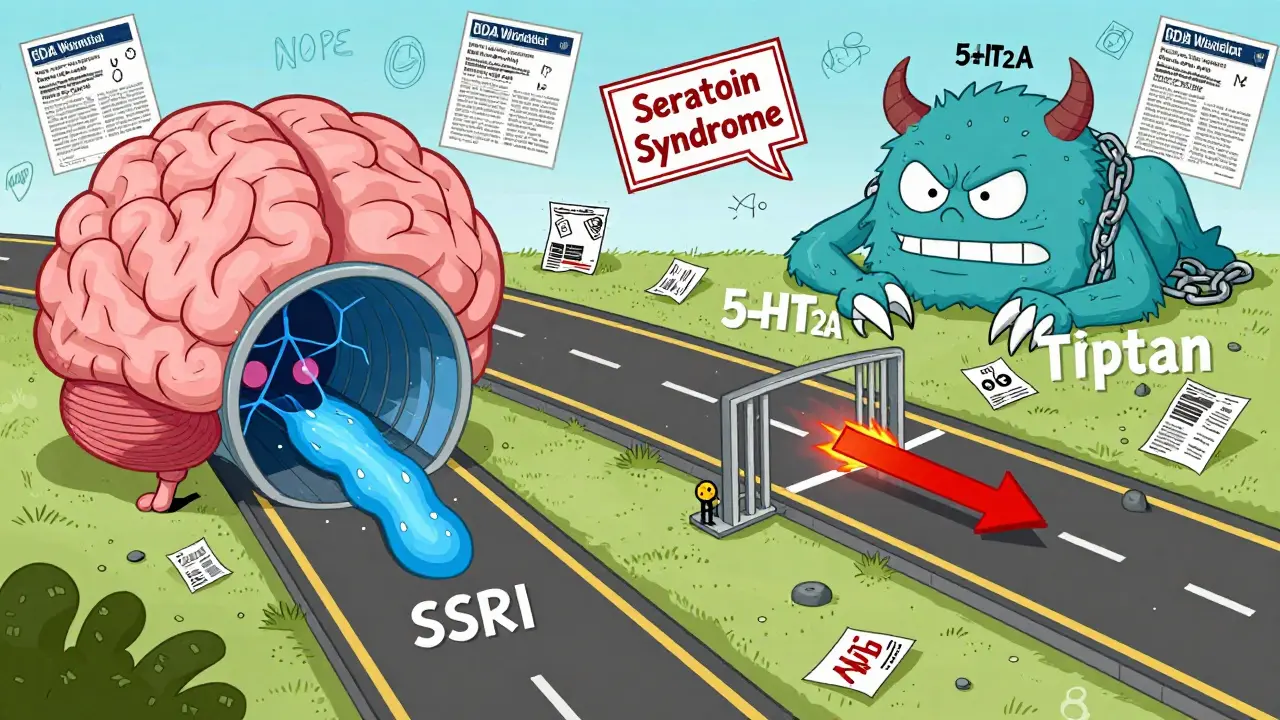
What the Experts Really Think
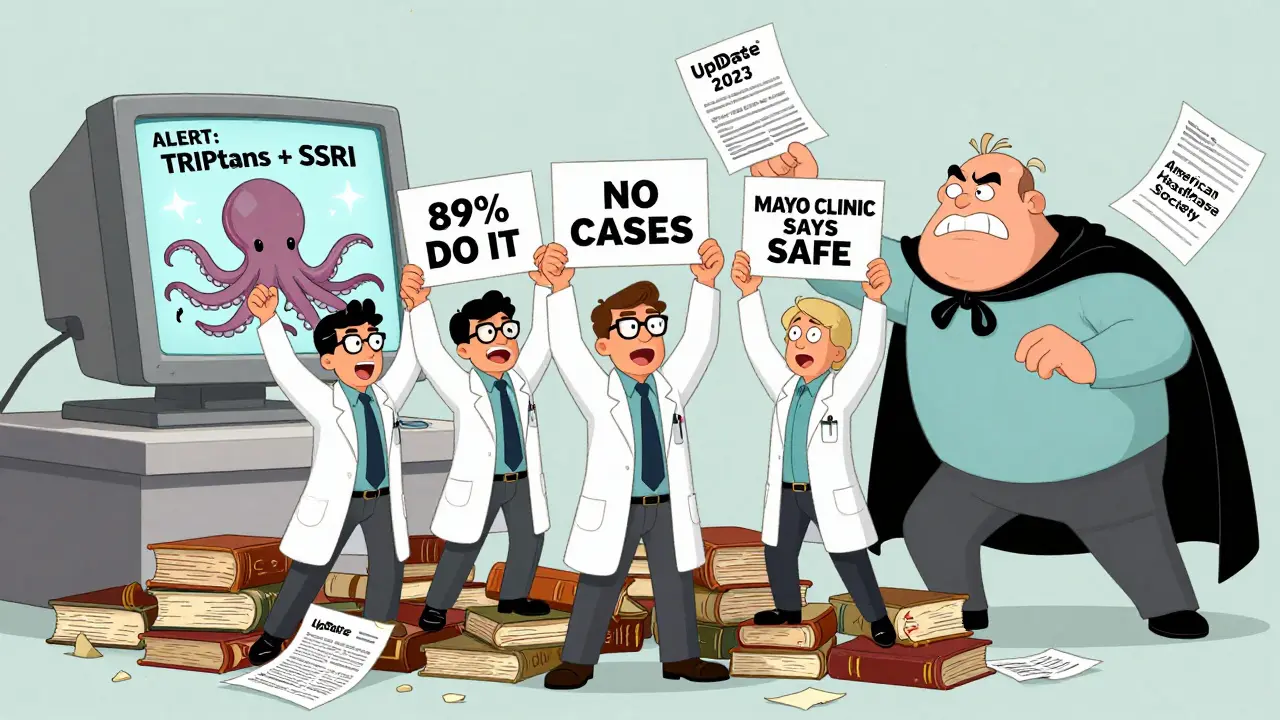
The headache specialists who treat these patients every day know the truth. A 2021 survey of 250 neurologists and headache specialists found that 89% routinely prescribe triptans alongside SSRIs or SNRIs - no extra monitoring, no special precautions. The American Headache Society’s 2022 consensus statement says clearly: “Clinicians should not avoid prescribing triptans to patients taking SSRIs or SNRIs due to theoretical concerns.” The Mayo Clinic’s 2023 position is even clearer: “The theoretical risk has not materialized in clinical practice.” Even the European Medicines Agency never issued a similar warning. They looked at the data and decided it wasn’t worth the alarm.What This Means for Patients
If you’re on an SSRI or SNRI and your migraines are getting worse, don’t let an outdated warning stop you from asking for triptans. You’re not alone. Around 30% to 50% of people with chronic migraine also have depression or anxiety. That means millions of people have been stuck choosing between treating their brain pain or their brain mood - when they shouldn’t have to. Triptans don’t raise your overall serotonin levels. They just activate a specific set of receptors to stop a migraine attack. SSRIs raise serotonin, but they don’t trigger the receptors that cause serotonin syndrome. Together, they don’t create a dangerous storm - they just work in different lanes.What to Do If You’re Being Denied
If your pharmacist refuses to fill your triptan prescription because you’re on an SSRI, ask them to check the latest guidelines. Show them:- The 2019 JAMA Neurology study (PMID: 30694619)
- The American Headache Society’s 2022 statement
- UpToDate’s 2023 update: “The risk is negligible”
What About Other Medications?
This doesn’t mean all drug combinations are safe. Serotonin syndrome is real - but it’s mostly tied to:- MAOIs (like phenelzine or tranylcypromine) + SSRIs
- SSRIs + dextromethorphan (found in some cough syrups)
- SSRIs + tramadol or meperidine
- Overdose of SSRIs themselves
Is There Any Risk at All?
Science doesn’t deal in absolutes. There’s always a tiny chance something unexpected happens. But the risk of serotonin syndrome from triptans + SSRIs is lower than the risk of being struck by lightning while sitting indoors. The FDA’s own adverse event database from 2006 to 2022 recorded only 18 possible cases. None were confirmed. That’s less than one case per year across the entire U.S. population - while millions take both drugs. A large ongoing study by Albert Einstein College of Medicine, tracking 10,000 patients since 2020, has seen zero confirmed cases so far.The Real Cost of the Misunderstanding
This isn’t just about convenience. It’s about money and health. When patients can’t get triptans, they often end up on more expensive, less effective treatments - like nerve blocks, Botox, or even opioids. A 2020 analysis in Health Affairs estimated the U.S. healthcare system wastes $450 million a year because of this outdated warning. Patients suffer longer. Migraines go untreated. Productivity drops. Mental health worsens when pain isn’t controlled. The truth? Triptans and SSRIs can be taken together safely. The science says so. The doctors who treat these conditions every day say so. The data says so. It’s time to stop letting a 17-year-old warning stand in the way of better care.Can you get serotonin syndrome from taking triptans and SSRIs together?
No, there is no credible evidence that combining triptans with SSRIs or SNRIs causes serotonin syndrome. Large studies involving tens of thousands of patients have found zero confirmed cases. Triptans target specific serotonin receptors (5-HT1B/1D) that are not involved in serotonin syndrome, which is primarily caused by overstimulation of 5-HT2A receptors. The FDA’s 2006 warning was based on theory, not real-world data.
Why do pharmacists still warn against this combination?
Many pharmacy systems still trigger alerts based on the outdated 2006 FDA warning. Pharmacists may not be aware of recent evidence, or they may follow protocol out of caution. However, major medical societies now say this combination is safe. If you’re denied a prescription, ask for the latest guidelines or ask your doctor to provide a note explaining the evidence.
Are there any migraine medications I should avoid with SSRIs?
Yes - but triptans aren’t one of them. Avoid combining SSRIs with MAOIs, dextromethorphan (in some cough syrups), tramadol, or meperidine. These drugs directly increase serotonin levels or act on the 5-HT2A receptor, which can trigger serotonin syndrome. Triptans, CGRP inhibitors, and ergotamines (used cautiously) are generally safe with SSRIs.
How common is serotonin syndrome with SSRIs alone?
Serotonin syndrome from SSRIs alone is rare but possible, especially in overdose. Studies estimate the incidence at 0.5 to 0.9 cases per 1,000 patient-months for certain SSRIs like nefazodone. The risk increases with higher doses or combinations with other serotonergic drugs. However, when taken as prescribed, SSRIs are generally safe, and serotonin syndrome is extremely uncommon.
Should I stop my SSRI if I want to try a triptan?
No. There’s no medical reason to stop your SSRI to use a triptan. In fact, stopping an antidepressant can worsen your mood and make migraines harder to manage. The combination is safe and often necessary - especially since 30-50% of migraine patients also have depression or anxiety. Talk to your doctor before making any changes.



Reviews
Finally someone says it loud and clear. I've been on sertraline for 8 years and sumatriptan for 6. Never had an issue. My neurologist laughs when I tell him pharmacists still flag this combo. The system is broken when theory overrides real-world outcomes.
Let me break this down simply. Triptans bind to 5-HT1B/D receptors to constrict dilated blood vessels in the brain during migraines. SSRIs increase serotonin availability by blocking reuptake. The receptor responsible for serotonin syndrome is 5-HT2A which triptans barely touch. The pharmacology is clear. The fear is outdated. The data confirms it. End of story.
Oh here we go. Another ‘science says’ post. Let me guess - you’re the guy who also thinks vaccines cause autism because ‘the data is suppressed’. This is textbook confirmation bias. The FDA didn’t just wake up one day and issue a warning because they were bored. There’s a reason these alerts exist - precaution. You’re ignoring the 18 possible cases in the FAERS database because they don’t fit your narrative. That’s not science, that’s ideology dressed in a lab coat.
It’s fascinating how the medical establishment continues to perpetuate myths rooted in pharmacological ignorance. The 2006 FDA alert was not based on evidence - it was based on liability aversion. The fact that UpToDate updated their stance in 2023 proves the paradigm shift. The real tragedy? Patients are still being denied effective treatment because pharmacy software hasn’t been updated since the Bush administration. This isn’t just bad medicine - it’s institutional negligence.
YESSSS. This is why I scream into the void every time my pharmacist gives me that side-eye. I’m on fluoxetine and rizatriptan. I’ve had 12 migraines this year. I’ve taken triptans for 9 of them. No serotonin syndrome. No tremors. No confusion. Just relief. Why are we still treating patients like lab rats instead of humans? The science is here. The data is here. The people are here. The system? Still stuck in 2006.
My doctor prescribed both when I started on escitalopram. I was terrified at first. But after two years, zero issues. I think the real problem is that doctors don’t educate patients enough. We’re scared because we’re told to be scared. Not because we’ve seen evidence. Knowledge is power - and right now, too many of us are flying blind.
Thank you for this. I’ve been advocating for this for years. My sister was denied triptans for 4 years because she takes sertraline. She ended up in the ER three times with status migrainosus. The system failed her. Not the meds. Not the science. The bureaucracy. Please share this with anyone who’s been told they can’t have relief.
Look, I get the appeal of this narrative - it’s satisfying to feel like you’ve uncovered a conspiracy. But let’s not pretend the absence of evidence is evidence of absence. There are millions of people on SSRIs and triptans. If this combo were truly harmless, we’d see hundreds of confirmed cases of serotonin syndrome - because even rare events become common at scale. The fact that we don’t? That’s not proof of safety. It’s proof that the event is either nonexistent or so vanishingly rare that it’s drowned out by noise. Either way, you’re still gambling with your neurochemistry. And I’m not comfortable with that.
OMG I CRIED WHEN I READ THIS. I’ve been on citalopram and sumatriptan for 7 years. My mom thought I was gonna die. My aunt sent me articles about ‘serotonin poisoning’. My pharmacist refused my script THREE TIMES. I had to go to my neurologist and get a handwritten letter on official letterhead. He wrote ‘This is medically appropriate and safe per current guidelines’ and signed it. I framed it. I keep it next to my pill organizer. I’m alive. I’m functional. I have a job. I have a life. And it’s because someone finally listened to the science, not the fear.
Same here. I take fluoxetine and eletriptan. No issues. I used to worry. Now I just laugh. People still scare each other with 2006 warnings like it’s gospel. The real danger? Not taking the meds you need. That’s what kills you. Not the combo.
Wait so you’re saying I can just take triptans with my Lexapro? No monitoring? No blood tests? No follow-up? That’s insane. What if I have a genetic mutation? What if I’m on another med you forgot to mention? What if I’m 72 and have a history of hypertension? You can’t just say ‘it’s safe’ and walk away. That’s not medicine - that’s reckless.
You’re not alone. I had to fight for years too. I printed the JAMA study, showed it to my pharmacist, and said ‘I’m not asking for permission - I’m asking for help.’ He apologized and filled it. That’s the power of knowing your facts. You deserve relief. Don’t let outdated systems steal that from you.