
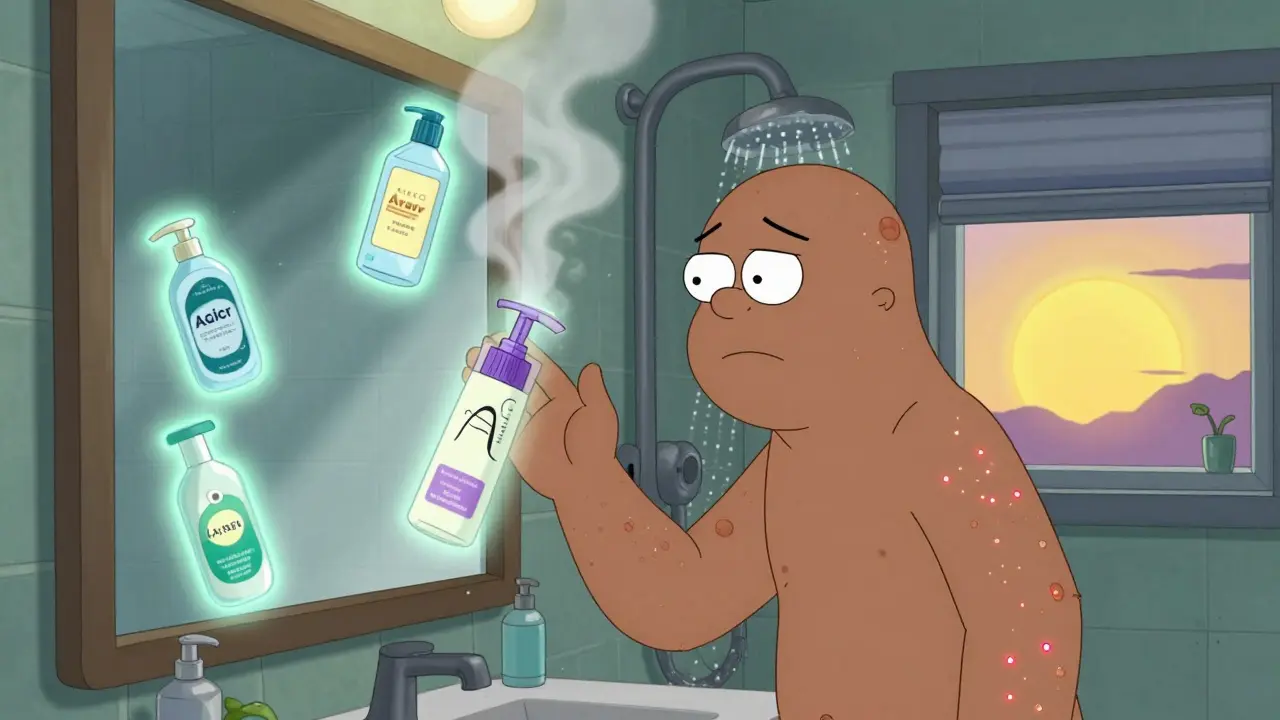
Have you ever looked at your arms and felt like your skin has tiny bumps that won’t go away? It’s not acne. It’s not an allergy. It’s keratosis pilaris-commonly called "chicken skin." You’re not alone. About 50 to 70% of teens and 40% of adults have it. It shows up as rough, sandpaper-like bumps on the upper arms, thighs, or buttocks. They’re usually skin-colored, red, or brown, and they don’t hurt. But they can make you self-conscious, especially in summer when you want to wear shorts or sleeveless tops.
What Causes Keratosis Pilaris?
Keratosis pilaris happens when your skin makes too much keratin-the protein that protects your skin. Instead of shedding normally, this keratin builds up and clogs hair follicles. Each bump is a tiny plug of keratin trapped around a hair. It’s not an infection. It’s not contagious. And it’s not dangerous. But it’s stubborn. It often runs in families. If one of your parents had it, you’re 50 to 70% more likely to get it. Researchers found that mutations in the filaggrin gene play a big role. This gene helps keep your skin barrier strong. When it’s faulty, your skin dries out faster and keratin builds up more easily. You’re also more likely to have it if you have eczema. About half of people with eczema also have keratosis pilaris. Cold, dry weather makes it worse. That’s why most people notice it’s worse in winter. Low humidity-below 40%-dries out your skin and makes the bumps more noticeable.Where Does It Show Up?
The most common spots are the backs of your upper arms-92% of people see bumps there. Your thighs come next, with 70% affected. You might also see them on your buttocks, chest, or sometimes your face. But they rarely appear on your palms, soles, or inside your mouth. The bumps are small-usually 1 to 2 millimeters wide. They feel like sandpaper. Some are red because of mild inflammation around the follicle. Others are darker, especially on brown or black skin, due to post-inflammatory pigmentation. That’s not a scar. It’s just skin darkening after irritation, and it fades over time.Can You Cure It?
No. There’s no permanent cure. But that doesn’t mean you can’t make it better. Most people see noticeable improvement with the right routine. The goal isn’t to make your skin perfectly smooth-it’s to make it feel softer and look less rough. The good news? Keratosis pilaris often gets better on its own. Around 28% of people clear it completely by age 30. Another 41% see major improvement. Only 31% still struggle with it into adulthood. So patience matters.What Treatments Actually Work?
Dermatologists agree: two things matter most-exfoliation and hydration. You need to remove the keratin plugs and keep the skin moist. Lactic acid is one of the most effective ingredients. Creams or lotions with 10-12% lactic acid (like AmLactin) reduce bumpiness by 40-60% after 4 to 6 weeks of daily use. Many users on Reddit report seeing results after 8 to 12 weeks. Some feel a slight sting at first, but it fades. Urea works similarly. Creams with 10-20% urea soften and dissolve the keratin plugs. Studies show 65% of users see less scaling after 8 weeks. CeraVe SA Lotion contains 10% urea and 2% salicylic acid, and 79% of users say it works best when applied right after showering. Glycolic acid (an alpha-hydroxy acid) helps too. Products with 8-12% glycolic acid improve skin texture by 30-50% after 12 weeks. Paula’s Choice 8% AHA Lotion has a 4.2/5 rating with 68% of reviewers seeing visible smoothing in 4 weeks. Retinoids like tretinoin (0.025-0.1%) help skin cells turn over faster. They’re effective-70% of users see improvement-but they’re harsh. About 40% of people quit because of redness, peeling, or burning. If you try them, start slow: use every other night, and always follow with moisturizer. Laser therapy isn’t a cure, but it can help with redness. Pulsed-dye lasers reduce redness by 50-75% after 3-4 sessions. But it’s expensive-$300 to $500 per session-and not covered by insurance. Most dermatologists only recommend it if the redness is causing real distress.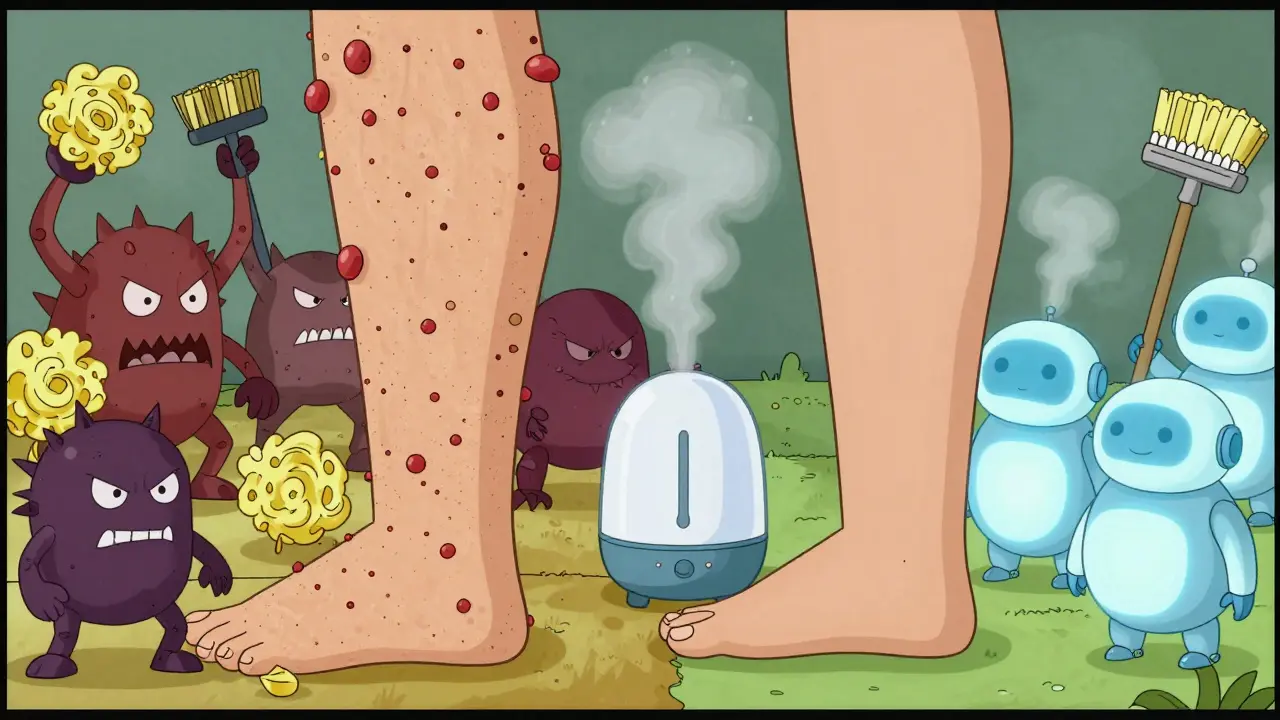
What Doesn’t Work (and Makes It Worse)
Don’t scrub. Harsh loofahs, body brushes, or sugar scrubs may feel satisfying, but they irritate the skin. A 2022 study found that 68% of people who used aggressive exfoliation ended up with more redness and darker spots. Avoid hot showers. Hot water strips natural oils and dries your skin. Lukewarm water is better. Keep showers under 10 minutes. Skip alcohol-based toners and astringents. They dry out your skin and make KP worse. And don’t believe claims that say “cure” or “permanent removal.” The FDA has issued 17 warning letters to companies making those false promises.The Right Routine (Step-by-Step)
You don’t need 10 products. Just a few smart steps:- Shower with lukewarm water. No hot water. No long soaks.
- Pat skin dry-not rub. Leave it slightly damp.
- Apply exfoliant. Use lactic acid, urea, or glycolic acid on affected areas. Do this once a day, preferably at night.
- Moisturize within 3 minutes. Use a cream with ceramides, hyaluronic acid, or cholesterol. These repair your skin barrier. CeraVe Moisturizing Cream or Vanicream are good options.
- Repeat daily. Consistency beats intensity. Skip a day? You’ll notice the bumps coming back.
Extra Tips for Better Results
- Use a humidifier. Keep indoor humidity between 40-50%. This cuts winter flare-ups by 60%.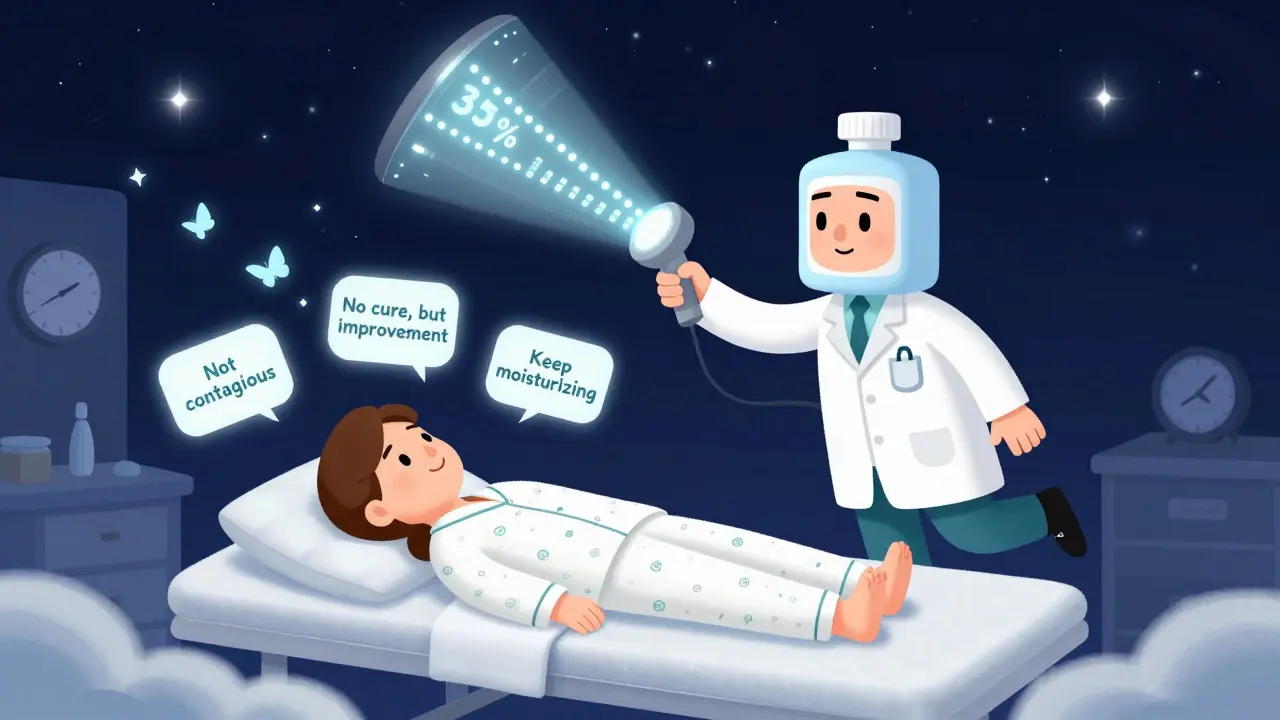
What About Natural Remedies?
Coconut oil? Oatmeal baths? Apple cider vinegar? Some people swear by them. But there’s no solid science backing them up for keratosis pilaris. Coconut oil can clog pores. Vinegar is too acidic and may burn. If you want to try natural options, stick to gentle moisturizers with shea butter or jojoba oil. They won’t hurt-but they won’t fix it either.When to See a Dermatologist
You don’t need to see a doctor just because you have bumps. But if:- Your skin is painful, oozing, or infected
- You’ve tried treatments for 3 months with no change
- The bumps are spreading to new areas
- You’re feeling anxious or depressed because of how your skin looks
What’s on the Horizon?
Science is moving forward. In early 2024, a new study showed that liposomal lactic acid (encapsulated to reduce irritation) improved results by 25%. FDA-cleared LED devices for home use are now available-they reduce follicle clogging by 35% after 8 weeks. And companies like 23andMe are working on genetic tests to see if you carry filaggrin mutations. That could one day help personalize treatment. But for now, the best approach is still simple: exfoliate gently, hydrate deeply, and stick with it.Realistic Expectations
Dr. Caroline Robinson, a dermatologist in Chicago, puts it best: "The goal isn’t perfection. It’s comfortable, smoother skin." Most people don’t get flawless skin. But 80% of those who stick with a routine say they feel more confident. That’s the win. Keratosis pilaris isn’t a disease. It’s a quirk of your skin. It doesn’t define you. But with the right care, you can take back how your skin feels-and how you feel in it.Is keratosis pilaris contagious?
No, keratosis pilaris is not contagious. You can’t catch it from someone else or spread it to others through touch, towels, or shared spaces. It’s caused by your skin’s natural keratin buildup, not by bacteria, viruses, or fungi.
Does keratosis pilaris go away on its own?
Yes, for many people. Around 28% clear up completely by age 30. Another 41% see major improvement. Only about 31% still have noticeable symptoms as adults. But even if it fades, it can return during dry seasons or stress, so ongoing care helps keep it under control.
Can I use body scrubs to get rid of KP bumps?
Avoid physical scrubs. Harsh exfoliation with loofahs, brushes, or sugar scrubs irritates the skin and can make bumps redder and darker. Instead, use chemical exfoliants like lactic acid or urea, which dissolve keratin without rubbing. Gentle is better than aggressive.
Why does KP get worse in winter?
Cold, dry air lowers humidity, which dries out your skin. When your skin barrier weakens, keratin builds up more easily in hair follicles. Humidity below 40% makes symptoms worse. Using a humidifier and applying moisturizer right after bathing helps counteract this.
Are prescription treatments better than over-the-counter ones?
Not necessarily. Most people see good results with OTC products like AmLactin or CeraVe SA Lotion. Prescription retinoids work faster but cause more irritation. Many people quit because of redness and peeling. Start with OTC options. Only move to prescriptions if you’ve tried them for 3 months and still aren’t happy.
Can diet or supplements help with keratosis pilaris?
There’s no strong evidence that diet changes or supplements like vitamin A or omega-3s fix KP. But staying well-hydrated and eating a balanced diet supports overall skin health. If you have eczema or other skin conditions, your doctor might recommend specific nutrients-but for KP alone, topical care matters far more than what you eat.
How long do I need to keep treating KP?
You’ll need to treat it long-term. If you stop, bumps usually return within 2 to 4 weeks. Think of it like brushing your teeth-you don’t stop once your mouth feels clean. Consistent daily care keeps skin smoother and prevents flare-ups. Even if it improves, keep using moisturizer and occasional exfoliation.


Reviews