
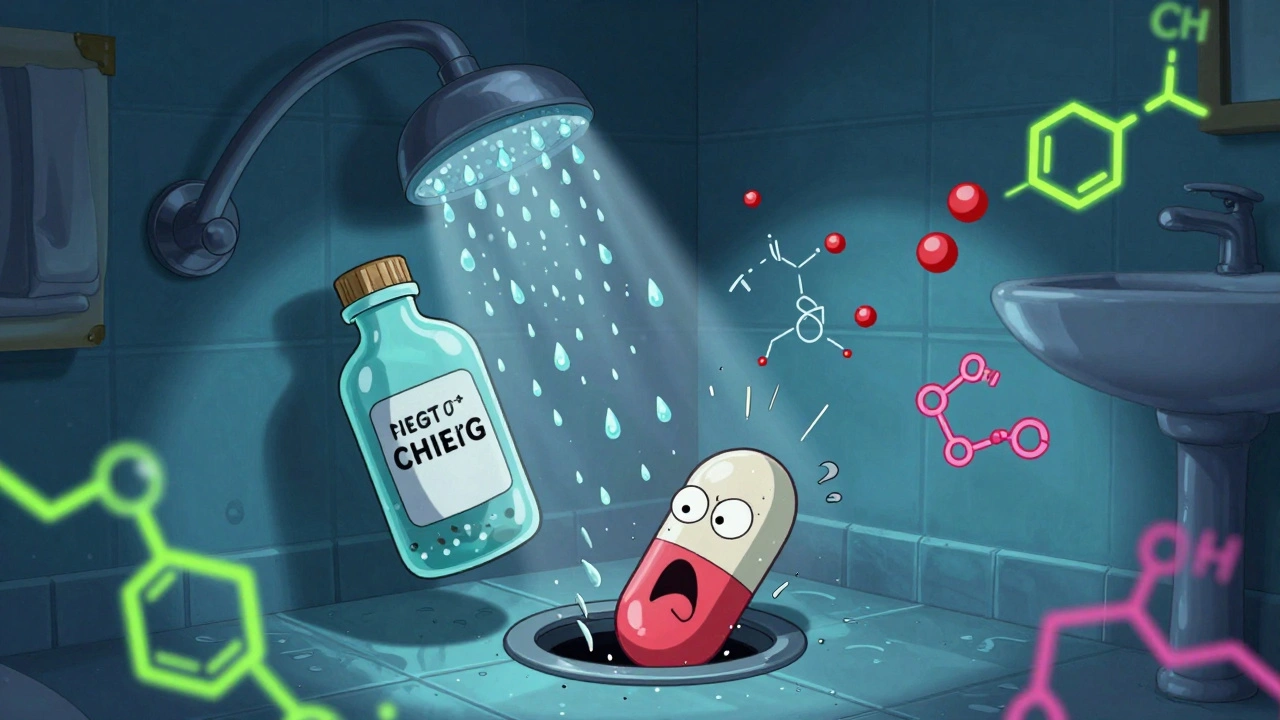
Most people think expiration dates on medicine are like best-by labels on milk - a gentle suggestion that the product might not taste as fresh. But that’s not how it works. Medications don’t suddenly go bad on the date printed on the bottle. They start losing strength the moment they’re made. The expiration date isn’t a cliff edge - it’s a safety buffer. It’s the last day the manufacturer guarantees the drug still has at least 90% of its original potency under proper storage conditions. After that? It’s a gamble.
How Medications Break Down Over Time
Every pill, capsule, or liquid contains active ingredients that are designed to interact with your body in a very specific way. But those molecules aren’t stable. Over time, they react with air, moisture, heat, and even light. This isn’t magic. It’s chemistry.The most common breakdown pathways are:
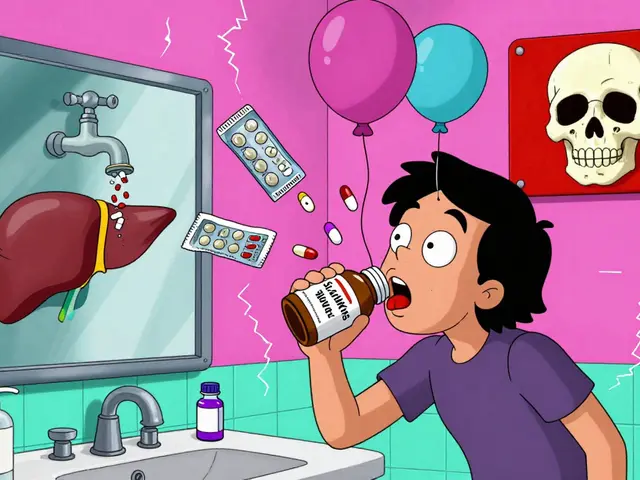
- Hydrolysis: Water breaks chemical bonds. This is why pills stored in a humid bathroom cabinet degrade faster than those in a dry drawer.
- Oxidation: Oxygen in the air reacts with the drug. This is why some medications come in dark bottles or sealed foil packs.
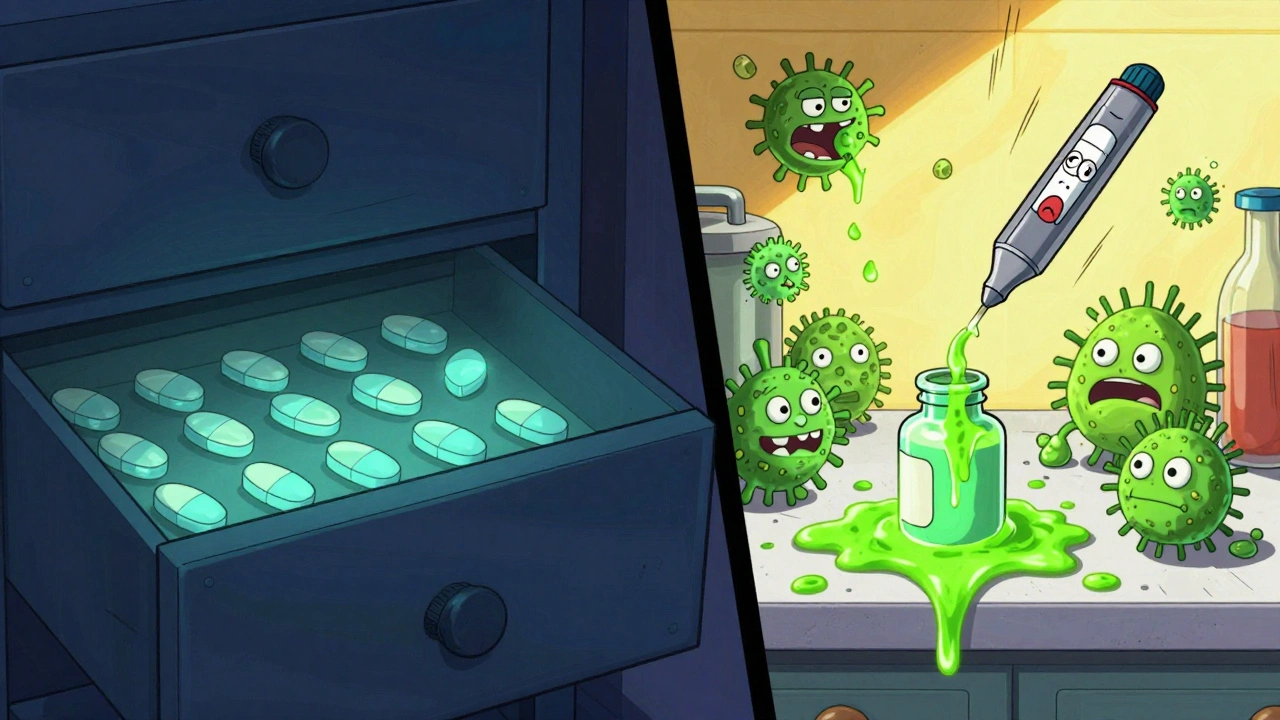
- Photolysis: Light, especially UV, alters molecular structure. Tetracycline antibiotics turn brown when exposed to sunlight - that’s not just discoloration, it’s chemical change.
These reactions turn the active ingredient into different compounds - some harmless, some dangerous. The FDA has recalled over 400 batches of drugs between 2007 and 2012 because of degradation products, crystals, or foreign particles. That’s not rare. It’s predictable.
Why Some Drugs Last Longer Than Others
Not all medications are created equal in terms of stability. Solid forms - tablets and capsules - are the most durable. They have less surface area exposed to moisture and air. Studies show many solid drugs retain 90% potency for years after their expiration date, even up to a decade, if kept cool and dry.Liquids? Not so much. Amoxicillin suspension, for example, is meant to be refrigerated and used within 14 days after mixing. After that, bacteria can grow, and the active ingredient breaks down quickly. Same goes for insulin, epinephrine auto-injectors (EpiPens), and other injectables. A 2017 study found EpiPens lost measurable potency between 1 and 90 months past expiration. That’s not a small drop - it’s life-or-death.
Some drugs are just inherently unstable. Research from the International Space Station showed that amoxicillin/clavulanate, levofloxacin, trimethoprim/sulfamethoxazole, furosemide, and levothyroxine all failed potency tests before their expiration dates. These aren’t outliers - they’re red flags. If you’re relying on one of these, don’t stretch the date.
On the flip side, ibuprofen is shockingly stable. Even after being stored in space for months, samples passed potency tests. Why? It’s not just the active ingredient. The inactive ingredients - the fillers, binders, and coatings - matter too. A 2017 study found that certain additives like hypromellose and polysorbate accelerated ibuprofen breakdown. That’s why two brands of 200 mg ibuprofen can have different shelf lives. Same drug. Different chemistry.
Storage Is Everything
Your medicine cabinet is probably the worst place in your house to store pills. Bathrooms are hot, damp, and full of steam. Every shower sends moisture into the air. That’s the perfect storm for hydrolysis.Pharmaceutical companies test stability by forcing degradation. They put drugs in ovens at 40°C and 75% humidity - conditions that simulate two years of real-time aging in just six months. If the drug still meets standards after that, they set the expiration date. But that’s under perfect lab conditions. Your bathroom? Not even close.
Where should you store meds? A cool, dry place. A bedroom drawer. A closet shelf. Avoid direct sunlight. Keep them away from the stove, the sink, and the shower. If your medicine says “refrigerate,” keep it in the fridge - but not in the door, where temperatures bounce around.
What Happens When Potency Drops?
You might think, “If it’s still 80% strong, isn’t that okay?” Not always.For antibiotics, even a small drop in potency can mean the difference between killing an infection and letting it grow stronger. That’s how antibiotic resistance starts - when drugs are too weak to fully wipe out bacteria. The FDA warns that using expired antibiotics could lead to serious illness or even death.
For drugs with a narrow therapeutic index - where the dose must be exact - small changes matter. Think blood thinners like warfarin, seizure meds like phenytoin, or thyroid hormones like levothyroxine. If the dose drops by 10%, you might not feel symptoms right away. But over time, it can cause heart rhythm problems, seizures, or thyroid dysfunction.
And then there’s epinephrine. If your EpiPen is expired and you have a severe allergic reaction, you might not get enough of the drug to stop your airway from closing. There’s no second chance.
The Military’s Secret: Drugs That Last Decades
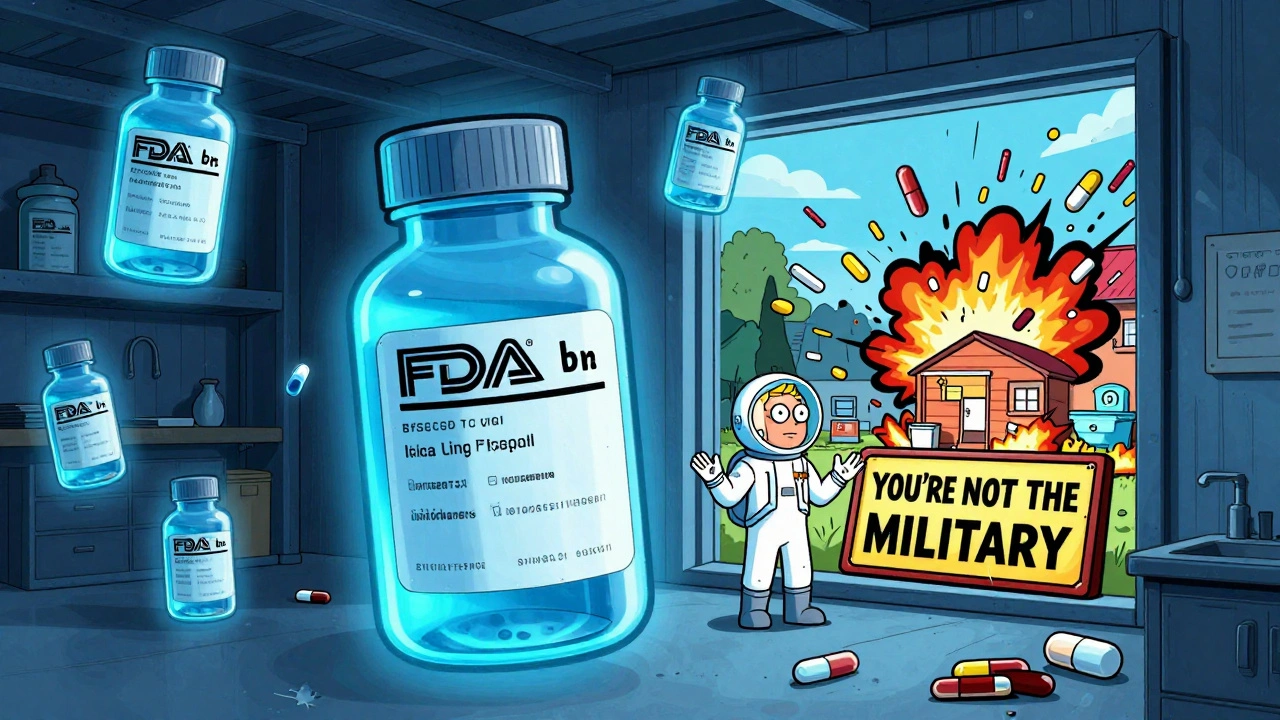
The U.S. government runs a program called the Shelf Life Extension Program (SLEP). Since 1986, they’ve tested over 100 different drugs from military stockpiles. The results? About 88% of them were still safe and effective - sometimes 10 to 15 years past their labeled expiration date.That sounds great, right? But here’s the catch: these drugs were stored in climate-controlled warehouses. No humidity spikes. No heat waves. No kids opening the bottle and leaving it on the counter. That’s not your life. That’s a military bunker.
The FDA says consumers shouldn’t use expired meds - not because they’re all dangerous, but because you can’t know. Without a lab, you can’t test your pills. You can’t see if the active ingredient broke down. You can’t tell if bacteria grew in the liquid. You’re flying blind.
What Should You Do?
Here’s the practical guide:- Don’t take expired emergency meds. Epinephrine, nitroglycerin, insulin - if it’s expired, replace it. No exceptions.
- Check your antibiotics. If you’re about to start a course and the pills are past their date, get a new prescription. A weak antibiotic can make things worse.
- Keep solid meds in a cool, dry place. A drawer in your bedroom is better than any bathroom cabinet.
- Don’t stockpile. Buy only what you need. Expired meds aren’t a savings - they’re a risk.
- Dispose of old meds properly. Don’t flush them. Don’t toss them in the trash. Take them to a pharmacy drop-off or a community take-back event.
The bottom line? Expiration dates aren’t arbitrary. They’re based on real science, real testing, and real risks. Some drugs might still work after they expire. But you won’t know which ones - and you can’t afford to guess when your health is on the line.


Reviews
I used to keep my ibuprofen in the bathroom until I read this. Now it’s in a drawer with my socks. Simple change, huge difference. I didn’t realize humidity was eating away at my meds like a tiny chemical vampire.
My grandma used to say, 'If it still looks the same, it’s probably fine.' She lived to 94. But she also kept her insulin in the kitchen cabinet. I don’t think we should trust intuition here. Science says otherwise.
Wow, I had no idea that ibuprofen was basically a superhero of stability. I thought all pills were the same. Now I’m curious-why do some brands last longer than others? Is it just the filler stuff? That’s wild. I’ll start checking the labels now.
omg i just checked my medicine cabinet and like 3 things are expired… including my epi pen?? i’m so scared right now. going to the pharmacy tomorrow. no more excuses.
My dad’s a retired pharmacist-he always said the military’s SLEP program proves expiration dates are overly cautious. But he also kept his meds in a sealed container in the basement. Point is: storage matters more than the date. Still, I wouldn’t risk it with anything life-critical.
Let’s be real-this whole post is fearmongering wrapped in science. Most people who take expired meds are fine. The FDA doesn’t want you to save money. They want you buying new bottles every year. You’re being manipulated by pharmaceutical marketing. My 5-year-old amoxicillin? Still worked fine.
…I’ve been storing my levothyroxine in the bedroom drawer for years. I didn’t know it was the right thing to do. I just didn’t trust the bathroom. Thank you for validating my weird habits. Also, please don’t flush meds. I once saw someone dump a whole bottle down the toilet. It made me cry.
Look, I get the science. I really do. But let’s not pretend this is some urgent crisis. I’ve got a 12-year-old bottle of aspirin that still tastes like aspirin. The molecules aren’t just vanishing into thin air. And the FDA? They’re not your mom. They’re a bureaucracy that makes money off fear. I’ve taken expired antibiotics three times. I didn’t die. I didn’t get resistant. I got better. Maybe we’re over-medicalizing common sense.
And don’t even get me started on the ‘dispose properly’ nonsense. You think the environment is better because you drive to a pharmacy drop-off? The carbon footprint of that trip is probably more harmful than the pill sitting in your drawer. Just burn it. Or bury it. I’m not saying be reckless-but stop acting like every expired pill is a ticking bomb.
Also, the military has climate-controlled vaults. You live in a house with kids, dogs, and a thermostat that goes from 60 to 85 in a day. Stop pretending your situation is the same. The rules for the Pentagon don’t apply to your bathroom cabinet. Use your brain. Not a pamphlet.
Wow. So you’re telling me that after 15 years of med school, I’m supposed to trust some FDA-approved label over real-world data? The military’s SLEP program has been running for 38 years. Over 100 drugs. 88% still effective. And you want people to throw out perfectly good medicine because of a date stamped by a corporation? This isn’t science-it’s capitalism with a lab coat.
And let’s not ignore the fact that people in developing countries can’t afford new prescriptions every year. Should they die because the FDA says so? Or should they use what works? You’re not protecting public health-you’re protecting profits.
Also, ‘don’t stockpile’? That’s rich. The entire pharmaceutical supply chain is built on planned obsolescence. You’re just repeating their PR. Wake up.
Oh, so now we’re supposed to trust the military’s storage conditions over our own lives? That’s rich. My uncle took expired insulin because he couldn’t afford a new one. He went into a diabetic coma. He didn’t die-because he got to the hospital. But he lost his kidney. And you think the expiration date is just a suggestion? This isn’t theoretical. People get hurt. People die. And you’re downplaying it because you don’t want to spend $40 on a new EpiPen?
Let me guess-you also think seatbelts are unnecessary and vaccines cause autism. You’re not skeptical-you’re dangerous.