

A drug formulary is a list of prescription medications that your health insurance plan agrees to cover. It’s not just a catalog-it’s a tool that decides which drugs you can get at a low cost, which ones will cost you more, and which ones might not be covered at all. If you’ve ever been surprised by a high pharmacy bill, or been told your doctor’s prescribed medicine isn’t covered, you’ve run into the real-world impact of a formulary.
How a Drug Formulary Works
Think of a drug formulary like a menu at a restaurant. Not every dish is available, and the ones that are come with different prices. The same goes for medications. Your insurance plan works with pharmacists, doctors, and drug companies to pick which drugs make the list. They don’t just pick the cheapest ones-they pick the ones that work well, are safe, and offer the best value for money. These lists are updated regularly, sometimes even mid-year. That means a drug that was covered last month might now require prior authorization, or its price could jump. You can’t assume your medication will stay the same year after year.The Tier System: What You Pay Depends on the Level
Most formularies use a tier system to show how much you’ll pay out of pocket. The higher the tier, the more you pay. Here’s how it usually breaks down:- Tier 1: Generic drugs - These are copies of brand-name medications that work the same way. They’re the cheapest. You’ll often pay $0 to $10 for a 30-day supply. The FDA requires them to match brand-name drugs in strength, safety, and effectiveness.
- Tier 2: Preferred brand-name drugs - These are brand-name medications your plan favors because they’ve proven effective and cost-efficient. Your cost might be $25 to $50 per prescription, or 15-25% of the total price.
- Tier 3: Non-preferred brand-name drugs - These are brand-name drugs your plan doesn’t recommend as much. They’re more expensive, and you might pay $50 to $100 per fill, or 25-35% coinsurance.
- Tier 4: Specialty drugs - These treat serious conditions like cancer, rheumatoid arthritis, or multiple sclerosis. They’re often injectables or infusions. You could pay $100 or more per month, or 30-50% of the cost. Some plans split this into Tier 4 and Tier 5 for the most expensive treatments.
It’s not just about the tier-it’s about whether the drug is on the list at all. If your doctor prescribes a drug that’s not on your plan’s formulary, you might have to pay the full price-sometimes hundreds or even thousands of dollars per month.
Why Your Plan Might Not Cover Your Medication
Even if a drug is FDA-approved, it might still be left off the formulary. Here’s why:- Cost control - Insurance plans negotiate discounts with drugmakers. If a company won’t offer a good deal, the drug gets dropped.
- Alternatives exist - If there’s a cheaper generic or preferred brand that works just as well, the plan may not cover the more expensive option.
- Restrictions apply - Some drugs require prior authorization, meaning your doctor must prove you need it. Others require step therapy, meaning you must try cheaper drugs first before the plan will pay for the one your doctor chose.
- Quantity limits - You might be allowed only 30 pills per month, even if your doctor prescribed 90.
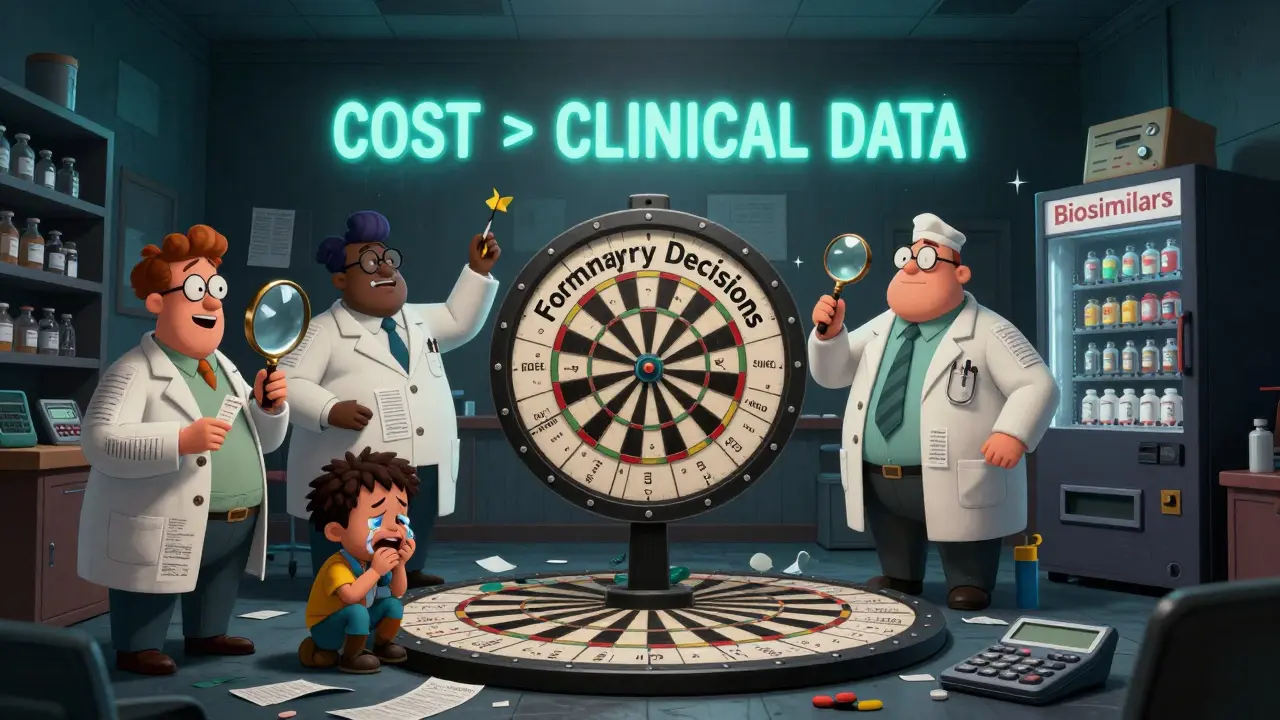
These rules aren’t arbitrary. They’re set by a Pharmacy and Therapeutics (P&T) committee-usually made up of doctors and pharmacists-who review clinical data, safety reports, and cost-effectiveness studies every few months.
Formularies Vary Wildly Between Plans
A drug that’s on Tier 2 with one insurer might be Tier 4-or not covered at all-with another. This isn’t a glitch. It’s by design. Each plan builds its own formulary based on negotiations, patient needs, and cost goals.For example:
- One Medicare Part D plan might cover metformin (a common diabetes drug) as a Tier 1 generic with a $5 copay.
- Another plan might cover the same drug but require prior authorization because they want you to try a different generic first.
- A third plan might not cover it at all because they’ve partnered with a different manufacturer.
A 2022 Kaiser Family Foundation study found that the same medication could cost a patient anywhere from $15 to $150 a month, depending on their plan’s formulary. That’s why you can’t just pick a plan based on premium cost-you have to check if your meds are covered.
What Happens When Your Drug Isn’t Covered?
If your medication isn’t on the formulary, you have options:- Ask your doctor for an alternative - Sometimes, switching to a similar drug on the formulary saves you hundreds. Many patients report better affordability after switching.
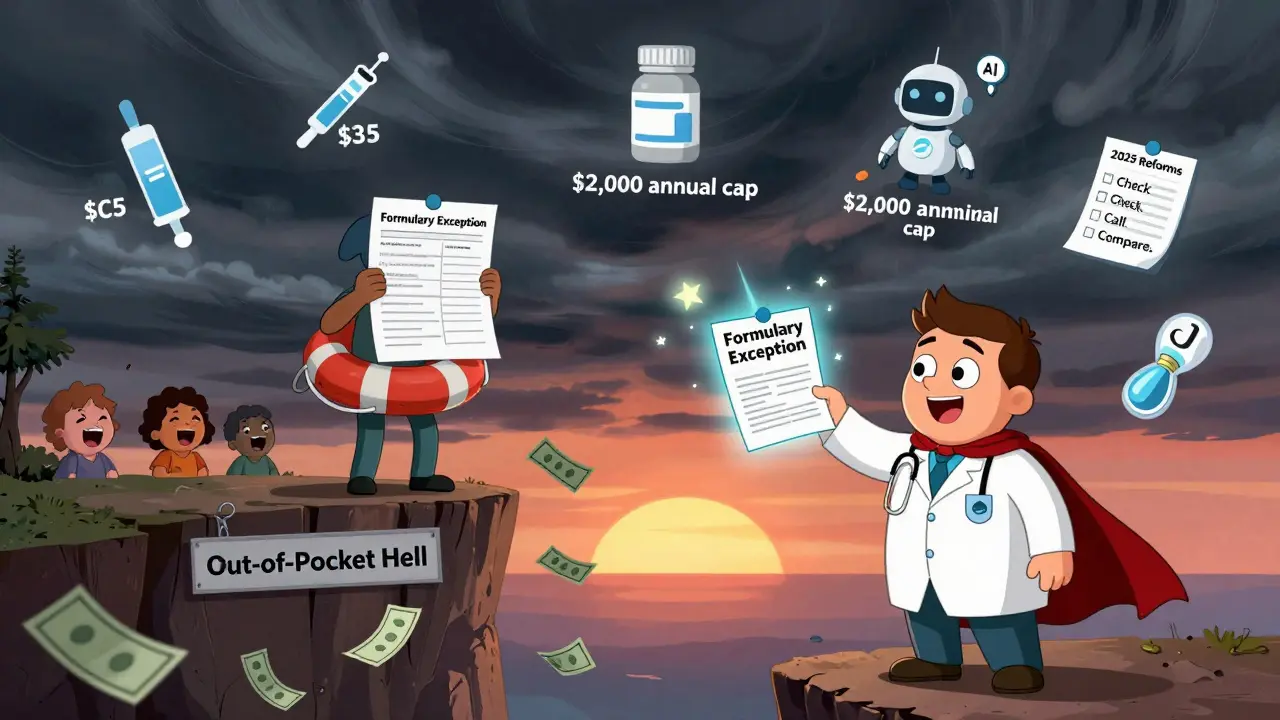
- Request a formulary exception - Your doctor can submit a request to your insurer explaining why you need the non-formulary drug. This might be due to allergies, side effects, or lack of response to alternatives. In 2023, Medicare Part D plans approved 67% of these requests.
- Appeal a denial - If your exception is denied, you can appeal. You have 60 days to do so, and you can get help from patient advocacy groups.
- Pay out of pocket - Some drugs are cheaper without insurance. Use tools like GoodRx to compare cash prices.
For urgent cases-like if you’re starting cancer treatment-expedited exceptions can be approved in as little as 24 hours.
When and How to Check Your Formulary
You can’t wait until you’re at the pharmacy to find out if your drug is covered. Here’s how to stay ahead:- During open enrollment - If you’re on Medicare, open enrollment runs from October 15 to December 7 each year. This is your chance to switch plans based on your medication needs.
- Check your plan’s website - Most insurers publish their full formulary online. Search for “formulary” or “preferred drug list” on your plan’s site.
- Use the Medicare Plan Finder - If you’re on Medicare Part D, go to Medicare.gov and enter your medications to compare plans side-by-side.
- Call your insurer - Ask if your drug is covered, what tier it’s on, and if there are any restrictions.
Remember: formularies change. Even if your drug was covered last year, it might not be this year. About 28% of formulary updates happen outside the annual enrollment period, according to the Patient Advocate Foundation.
Real Stories: How Formularies Affect Lives
One patient on Reddit shared: “My diabetes drug moved from Tier 2 to Tier 3. My copay jumped from $35 to $85. I had to switch-my budget couldn’t handle it.” Another, who uses immunotherapy for cancer, said: “My drug was on Tier 4. Instead of paying $5,000 a month, I paid $95. It saved my life.” A 2023 Kaiser survey found that 68% of insured adults check their formulary before filling a prescription. Nearly half have switched medications because of cost. That’s not just about money-it’s about sticking to treatment. If you can’t afford your drug, you’re less likely to take it, which can lead to worse health outcomes.What’s Changing in 2025?
New rules are making formularies more patient-friendly:- Insulin cap - Since 2023, Medicare Part D plans cap insulin at $35 per month. This will expand to other drugs in 2025.
- Therapeutic caps - Starting in 2025, Medicare will cap out-of-pocket costs for all covered drugs at $2,000 per year.
- Biosimilars - More affordable versions of biologic drugs (like Humira or Enbrel) are being approved. Expect these to replace expensive originals on formularies.
- AI tools - By 2027, insurers may use artificial intelligence to recommend the best drug for your condition based on your health history, not just cost.
These changes won’t fix everything-but they’re moving the system toward better access and transparency.
What You Can Do Today
You don’t need to be an expert to manage your formulary. Here’s a simple checklist:- Make a list of all your current prescriptions, including doses.
- Go to your insurer’s website and search for your plan’s formulary.
- Check each drug’s tier and any restrictions (prior auth, step therapy, quantity limits).
- Call your pharmacy or insurer if anything is unclear.
- During open enrollment, compare plans based on your meds-not just premiums.
- Keep a copy of your formulary. Print it or save it on your phone.
Formularies aren’t perfect. They can feel confusing, even unfair. But they’re also the reason many people can afford life-saving drugs at all. Understanding how they work gives you power-power to ask the right questions, to push back when needed, and to make choices that protect your health and your wallet.
What is a drug formulary?
A drug formulary is a list of prescription medications that your health insurance plan covers, either fully or partially. It’s organized into tiers that determine how much you pay out of pocket. The list is created by your insurer or Pharmacy Benefit Manager (PBM) using clinical data and cost negotiations to balance effectiveness and affordability.
Why is my medication not on the formulary?
Your medication may not be covered because it’s more expensive than alternatives, the drugmaker didn’t negotiate a discount, or your plan requires you to try cheaper options first. It could also be a new drug that hasn’t been reviewed yet. Check your plan’s formulary document or call customer service for details.
Can I get a drug that’s not on the formulary?
Yes, you can request a formulary exception. Your doctor must submit a letter explaining why you need that specific drug-perhaps because other options didn’t work or caused side effects. Approval rates for these requests are around 67% in Medicare Part D plans. Expedited requests can be processed in 24 hours for urgent cases.
How often do formularies change?
Formularies are updated at least once a year, usually in January. But changes can happen anytime-about 28% of updates occur outside the annual enrollment period. Always check your formulary before refilling a prescription, even if you’ve taken the same drug for years.
Do all insurance plans have the same formulary?
No. Each plan builds its own formulary based on negotiations with drug companies. A drug on Tier 2 in one plan might be Tier 4-or not covered at all-in another. That’s why comparing plans during open enrollment based on your medications is critical.
What’s the difference between generic and brand-name drugs on a formulary?
Generics are exact copies of brand-name drugs in dosage, safety, and effectiveness, as required by the FDA. They’re usually on Tier 1 and cost far less-often $0 to $10 per prescription. Brand-name drugs are on higher tiers and cost more because they’re newer or have no generic alternative. Formularies encourage generics to save money without sacrificing quality.
Are there any new rules helping patients with formularies?
Yes. Starting in 2023, Medicare Part D caps insulin at $35 per month. In 2025, a $2,000 annual out-of-pocket cap will apply to all covered drugs. Also, new rules require clearer exception processes and mandatory medication reviews for new Medicare beneficiaries. Biosimilars-cheaper versions of biologic drugs-are being added to formularies, lowering costs for conditions like arthritis and cancer.

Reviews
So let me get this straight-I pay $500 a month for insurance so I can be told my $15 generic is now a $90 specialty drug? Thanks, capitalism.
Also, why does my doctor have to write a novel just to get me my meds? I’m not applying for a loan, I’m trying not to die.
I’ve been on the same medication for 8 years and last year it got moved to tier 4. I had to switch and now I’m having side effects I didn’t even know were possible. The system isn’t designed for people, it’s designed for spreadsheets.
Check your formulary every single time you refill. Even if it’s the same drug. Even if it’s the same pharmacy. Even if you’ve been taking it since 2017. Trust me.
And if your plan changes it mid-year? Call them. Write them. Email them. Don’t just accept it. You’re not alone in this.
This is such an important post. I wish more people understood how formularies work before they pick a health plan.
My sister had to stop her MS medication because it wasn’t covered-she ended up in the hospital. It wasn’t about money, it was about access.
If you’re on Medicare, use the Plan Finder. If you’re on employer insurance, ask HR for the formulary document. Don’t wait until you’re at the counter with a $2,000 bill.
You have rights. Use them.
Let me ask you this: if a drug company can charge $100,000 for a pill that costs $3 to make, why are we still pretending this is healthcare and not a casino?
Formularies aren’t about saving money-they’re about who gets to live and who gets to die quietly.
They call it ‘cost-effectiveness.’ I call it moral bankruptcy dressed in a white coat.
We’re not patients. We’re line items.
And the worst part? We keep voting for the people who let this happen.
Wake up.
It’s not broken. It’s working exactly as designed.
You know, in India, we don’t have formularies like this, but we have our own problems-like when the government suddenly bans a generic drug because some American company bought the patent rights and now it’s illegal to sell it here unless you pay $500 per bottle.
So it’s not just an American problem, it’s a global capitalist problem.
People think insurance is protection, but really it’s just a middleman that takes your money and then tells you which medicine you’re allowed to buy, like a vending machine with a mood swing.
And the worst part? The doctors are just as trapped as we are.
They know what you need, but they’re forced to write prescriptions for the cheapest thing on the list, even if it gives you nightmares or makes you vomit.
It’s not a system, it’s a prison with a co-pay.
And we’re all inmates pretending we chose this.
Formularies are the silent puppeteers of modern medicine-pulling strings no one sees until you’re standing at the pharmacy, holding your breath, hoping the machine doesn’t spit out ‘DENIED’
And then? You cry in the parking lot.
Because you didn’t know your insulin was now ‘non-preferred’-even though you’ve been on it since you were 12.
And your doctor? They’re just trying to fix you, but they’re chained to a spreadsheet.
It’s not your fault.
It’s not your fault.
It’s not your fault.
But you still have to fight.
Because if you don’t? No one else will.
And that? That’s the real tragedy.
Just wanted to say thank you for this post-it’s the clearest explanation I’ve ever seen.
My mom has RA and her drug got kicked off formulary last year. We spent three weeks calling, writing letters, begging. They finally approved it after she got hospitalized.
Don’t give up. Even if it feels hopeless, keep pushing.
And if you’re lucky enough to have a good pharmacist? Treat them like gold. They’re the real heroes.
Also, GoodRx saved us $400/month. Seriously. Use it.
And don’t be shy to ask for help. There are people who want to help you.
We’re all in this together.
Prior auth = bureaucratic delay. Step therapy = trial and error with your health. Tier 4 = financial ruin.
These aren’t features. They’re systemic failures.
Formularies prioritize profit over outcomes.
End of story.
They think we’re stupid. They think we won’t notice. But we do. We see every copay increase. Every formulary change. Every denial letter.
And we’re not just angry-we’re organized.
There are Facebook groups. Reddit threads. Patient coalitions.
We’re sharing formularies. We’re documenting denials. We’re filing appeals together.
This isn’t just about pills. It’s about dignity.
And we’re not backing down.
Not this year. Not ever.
Why do Americans expect free stuff? Get a job. Pay cash. Stop whining.
Formularies keep prices down. If you can’t afford it, don’t take it.
Other countries don’t have this problem because they don’t have healthcare.
So stop complaining.
It’s not a right. It’s a privilege.
And if you want it, earn it.