
Obstructive Sleep Apnea: Causes, Risks, and How to Manage It
When you stop breathing—multiple times a night—because your airway collapses, that’s obstructive sleep apnea, a sleep disorder where breathing repeatedly stops and starts due to blocked airways. It’s not just loud snoring. It’s your body fighting to get air while you’re asleep, and it’s more common than most people realize. If you wake up gasping, feel exhausted even after eight hours in bed, or your partner says you stop breathing at night, this isn’t normal aging. It’s a medical issue that affects over 22 million Americans, and many don’t even know they have it.
CPAP machine, a device that delivers steady air pressure to keep airways open during sleep is the most common treatment, but it’s not the only one. Weight loss, sleeping on your side, oral appliances, and even surgery can help depending on the cause. And it’s not just about feeling less tired. Untreated obstructive sleep apnea raises your risk for high blood pressure, heart attacks, stroke, and type 2 diabetes. It also makes you more likely to have car accidents from drowsy driving.
Many people avoid treatment because they think CPAP is uncomfortable or embarrassing. But newer machines are quieter, lighter, and come with masks designed for comfort. Some people find relief with lifestyle changes alone—cutting alcohol, quitting smoking, or losing just 10% of body weight can make a big difference. Others need a combination of approaches. The key is getting tested. A sleep study doesn’t require an overnight hospital stay anymore—many can be done at home with a simple device.
Obstructive sleep apnea doesn’t care if you’re young or old, fit or overweight. It can show up in kids, athletes, and people who never smoke. It’s often missed because symptoms look like stress, depression, or just being "out of shape." But if you’re constantly tired, forgetful, or irritable without a clear reason, it might be your breathing. The good news? Treating it works. People who stick with treatment report better sleep, clearer thinking, more energy, and even improved mood within weeks.
Below, you’ll find real guides from people who’ve been there—how to handle side effects from CPAP, what to ask your doctor, how to get affordable equipment, and even how supplements or sleep position might help. No fluff. Just practical steps you can take today to start breathing better at night.
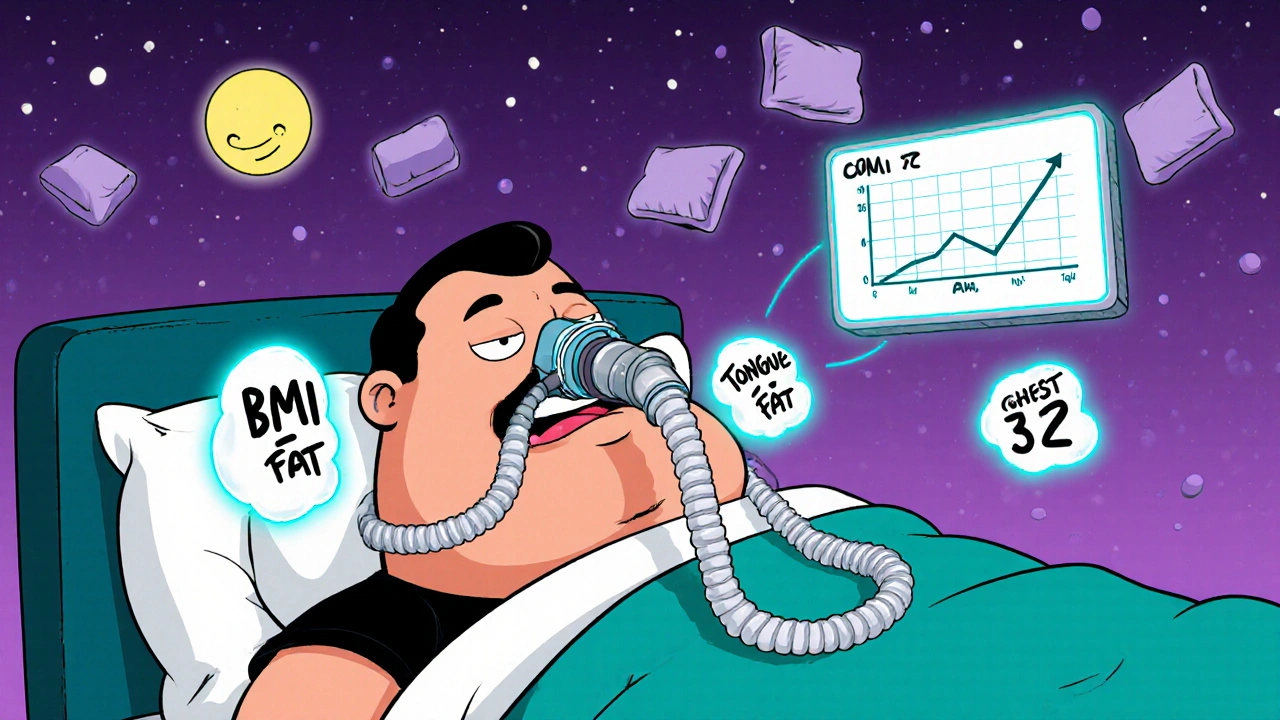
Weight Loss and Sleep Apnea: How BMI Directly Impacts CPAP Pressure Needs
