

When a woman notices milky discharge from her nipples-without being pregnant or breastfeeding-it can be alarming. This isn’t normal lactation. It’s galactorrhea, and it’s often the first sign of a prolactin disorder. Prolactin is the hormone that tells your body to make milk. But when levels go too high-what doctors call hyperprolactinemia-it can trigger milk production at the wrong time, stop periods, and make it harder to get pregnant. The good news? This isn’t rare, and it’s usually treatable. About 20-25% of women will experience galactorrhea at some point in their lives, and for most, the cause is simple to find and fix.
What Exactly Is Galactorrhea?
Galactorrhea isn’t a disease. It’s a symptom. It means your body is making milk even though you’re not nursing. The discharge is usually white, milky, and comes from both breasts in about 70-80% of cases. Sometimes it’s only one side, but that’s less common. You won’t typically feel pain or tenderness. The milk looks different from what you’d see with breast cancer: cancer-related discharge is often bloody, clear, or brownish, and almost always comes from one duct. Galactorrhea? It’s milky, bilateral, and doesn’t drip constantly-it might show up when you squeeze your breast or even just from friction with your bra.What’s surprising is how often it’s overlooked. About 5-10% of all breast complaints in primary care are due to galactorrhea. Many women think it’s just a weird side effect or something they’re imagining. But it’s your body’s way of saying something’s off with your hormones. And prolactin is almost always the culprit.
Why Does Prolactin Go Too High?
Prolactin is made by your pituitary gland, a tiny pea-sized organ at the base of your brain. Normally, dopamine from your brain keeps prolactin in check. If dopamine drops-or if something blocks it-prolactin rises. That’s the core problem in most cases of galactorrhea.Here are the top causes:
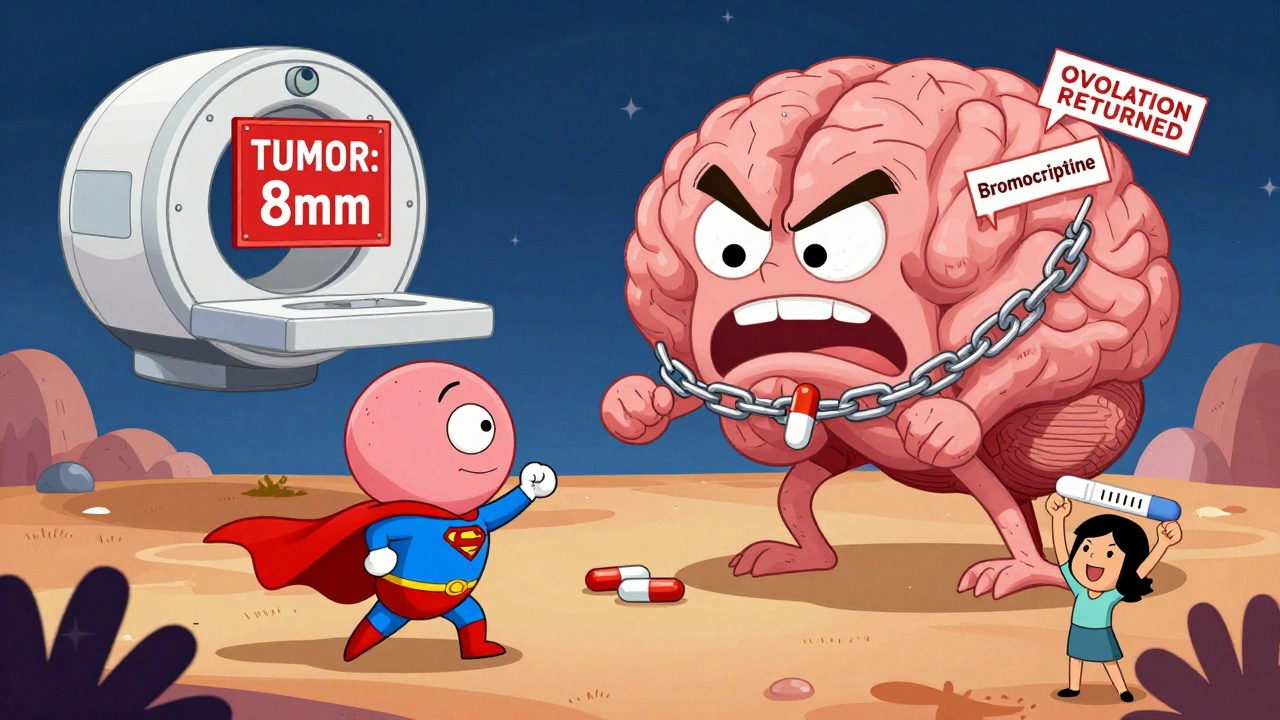
- Prolactinoma: A benign tumor on the pituitary gland that makes extra prolactin. These are the most common cause of high prolactin levels. Microprolactinomas (under 10 mm) are especially common and often don’t cause headaches or vision problems-just galactorrhea and missed periods.
- Medications: Many drugs can raise prolactin. Antidepressants like SSRIs (sertraline, fluoxetine), antipsychotics (risperidone), and even some stomach meds (metoclopramide) can trigger it. Switching from sertraline to bupropion has helped many patients stop discharge without needing hormone therapy.
- Thyroid problems: Low thyroid function (hypothyroidism) can cause prolactin to rise. That’s why doctors always check TSH levels when prolactin is high.
- Stress or improper blood draw: Prolactin spikes with stress, exercise, or even if the blood sample is taken right after a breast exam. That’s why labs often repeat the test after a calm, rested state.
- Idiopathic: In about 35% of cases, no clear cause is found. These are called idiopathic hyperprolactinemia. Many of these cases resolve on their own within a year.
Normal prolactin levels for non-pregnant women range from 2.8 to 29.2 ng/mL. Anything above 25 ng/mL is considered elevated. If levels hit 100 ng/mL or higher, an MRI is usually ordered to check for a pituitary tumor. Most tumors under 10 mm don’t need surgery-they shrink with medication.
How Galactorrhea Leads to Infertility
High prolactin doesn’t just make milk-it shuts down ovulation. Prolactin suppresses GnRH, the hormone that tells your ovaries to release eggs. No GnRH? No ovulation. No ovulation? No period. And no period means you can’t get pregnant.Studies show that 80-90% of women with hyperprolactinemia and missed periods will start ovulating again once prolactin levels drop back to normal. That’s why treating galactorrhea isn’t just about stopping discharge-it’s about restoring fertility. One woman on Reddit shared: “My discharge stopped within 2 weeks of switching antidepressants. My period came back after 18 months. I got pregnant naturally 4 months later.” That’s not rare. It’s predictable with the right treatment.
Men with high prolactin can also have fertility issues-low testosterone, reduced sperm count, and low libido. But the most common presentation is still women with missed periods and milk discharge.
Treatment Options: What Works and What Doesn’t
The goal of treatment isn’t to stop the milk-it’s to fix the hormone imbalance. And dopamine agonists are the gold standard.Cabergoline (Dostinex) is now the first-line treatment in the U.S. It’s taken twice a week, starting at 0.25 mg. Most patients see prolactin levels drop within weeks. In clinical trials, 83% normalized their levels in 3 months. Side effects? Only 10-15% get nausea, and most get used to it quickly. It’s also the most effective for shrinking pituitary tumors-90% of microprolactinomas disappear within 6 months.
Bromocriptine is older and cheaper. But you have to take it daily, and nausea hits 25-30% of users. One patient wrote: “I had to take it at bedtime. Still threw up twice a week for a month.” It’s still used, especially if cost is a barrier, but cabergoline is preferred for tolerability.
Cost matters. Cabergoline runs $300-$400 a month. Bromocriptine is $50-$100. But with insurance, many patients pay under $20 for a 30-day supply of either. A new extended-release version of cabergoline (Cabergoline ER) got FDA approval in January 2025-once-weekly dosing. Early data shows 89% efficacy, even better than the standard form.
Other treatments? If a medication is causing the issue, switching it often fixes everything. Stopping birth control pills, switching from sertraline to bupropion, or replacing metoclopramide with a different stomach med can resolve galactorrhea without drugs. For thyroid-related cases, levothyroxine brings prolactin back down naturally.
When Surgery or Other Options Are Needed
Most cases don’t need surgery. But if a tumor is large (over 10 mm), doesn’t shrink with medication, or causes vision problems, neurosurgery may be considered. Radiation is rare and only used if drugs and surgery fail.For women who want to get pregnant quickly, doctors sometimes pause dopamine agonists once prolactin is normal. Ovulation usually returns within weeks. If it doesn’t, fertility drugs like clomiphene can help restart ovulation.
And if the discharge is unilateral and bloody? That’s not galactorrhea. That’s a red flag. It could be ductal carcinoma in situ (DCIS) or another breast cancer. Those cases need a mammogram, ultrasound, or biopsy-fast. Galactorrhea is milky and bilateral. Anything else? Get it checked.

What Patients Say About Treatment
Patient feedback tells a clear story. On Healthgrades, 78% of people report satisfaction with treatment. The most common praise? “My discharge stopped in weeks.” “I got my period back.” “I conceived naturally.”The biggest complaint? Side effects. Nausea, dizziness, headaches. But most of these fade after the first few weeks. Taking cabergoline with food or at night helps. Some people stop because they don’t understand why they need to keep taking it-even after symptoms are gone. But stopping too soon can bring prolactin back up. Treatment usually lasts 6-12 months for tumors, and sometimes longer if you’re trying to conceive.
One overlooked point: 30% of idiopathic cases resolve on their own within a year. So if your prolactin is only slightly high and you have no symptoms beyond mild discharge, your doctor might suggest watching and waiting. But if you’re trying to get pregnant? Don’t wait. Start treatment.
What’s Next in Treatment?
The field is moving toward precision. By 2027, genetic testing for dopamine receptor variants may help doctors pick the best drug for each patient. Novartis is testing a new drug that blocks prolactin receptors directly-not by boosting dopamine, but by stopping prolactin from acting on breast tissue. That could be a game-changer for people who can’t tolerate dopamine agonists.Hospitals like Mayo Clinic now run integrated clinics where endocrinologists, breast specialists, and fertility experts work together. Diagnostic time dropped from 8 weeks to 3.5 weeks. That’s huge for patients who are stressed, confused, and worried about cancer.
The global market for hyperprolactinemia drugs is growing fast-projected to hit $1.8 billion by 2029. That’s because more women are seeking help, and doctors are getting better at diagnosing it. Galactorrhea isn’t embarrassing. It’s a signal. And now, we have clear, effective ways to respond.
Can galactorrhea happen in men?
Yes, though it’s less common. Men with high prolactin may notice breast discharge, reduced libido, erectile dysfunction, or infertility. The causes are the same-medications, pituitary tumors, or thyroid issues. Treatment is identical: dopamine agonists like cabergoline are equally effective in men.
Will I need to take medication forever?
Not usually. Most people take dopamine agonists for 6-12 months. If a prolactinoma shrinks and prolactin stays normal after stopping, you may not need more. But if the tumor doesn’t fully disappear, or if prolactin rises again, you might need to restart. For idiopathic cases, many stop after a year if symptoms are gone and levels are normal.
Can stress cause high prolactin?
Yes. Stress, intense exercise, or even a poorly timed blood draw can raise prolactin by 10-20 ng/mL. That’s why doctors always repeat the test. If your first result is borderline high, they’ll ask you to come back after a good night’s sleep, no breast stimulation, and no caffeine or exercise for 24 hours.
Is galactorrhea a sign of breast cancer?
Usually not. Galactorrhea is milky and bilateral. Breast cancer-related discharge is often bloody, clear, or brown, and comes from one breast. But if discharge is unilateral or bloody, you need imaging-mammogram or ultrasound-to rule out cancer. Don’t assume it’s just prolactin.
Can I get pregnant while on cabergoline?
Yes, and many women do. Once prolactin is normal, ovulation returns. Some doctors pause cabergoline once pregnancy is confirmed, as it’s not needed during pregnancy. Others continue it if there’s a large tumor. Always talk to your doctor-each case is different.
What to Do Next
If you’re noticing milky discharge, don’t ignore it. Start with your doctor. Ask for:- A blood test for prolactin and TSH
- A review of your medications
- A physical breast exam
If prolactin is above 25 ng/mL, get an MRI if it’s over 100. If it’s borderline, repeat the test after resting. Don’t jump to conclusions. Many cases are mild, reversible, and don’t need drugs. But if you’re trying to get pregnant or your periods have stopped, don’t wait. Treatment works fast-and it works well.




Reviews
Man, this post saved my sanity. I had galactorrhea for over a year and thought I was losing it. Turns out it was just my SSRIs + mild hypothyroidism. Switched to bupropion and started levothyroxine - discharge gone in 3 weeks, period returned after 5. No magic, just science. Thanks for laying it out so clearly.
Ugh. Another ‘medical miracle’ post. Like we don’t all know Big Pharma pushes cabergoline because it’s more profitable than bromocriptine. And don’t get me started on how they scare women into thinking every milky nipple means a tumor. My cousin had this for years, never treated it, and turned out fine. Stop hyping up pharmaceutical fixes.
Just wanted to say - I’m a guy, and yeah, I had this too. Milky discharge, low libido, felt like my body was betraying me. Got diagnosed with a microprolactinoma. Cabergoline made me nauseous at first, but I took it with food at night and it’s been fine for 8 months now. Tumor’s gone. Fertility’s back. I know guys don’t talk about this stuff, but you’re not alone. This isn’t weakness. It’s biology.
Why are we even treating this? In my family, women just deal with hormonal nonsense. My mom had it for decades, never took pills, still had three kids. This whole ‘medicalization’ of female bodies is ridiculous. We’re being pathologized for normal variations. Let people breathe.
Just wanted to say you’re not broken. This stuff is way more common than people admit. If you’re reading this and scared - you’re not alone. Treatment works. You can get your life back. I’m rooting for you.
Quick note for anyone reading: if your prolactin is 30-50 ng/mL and you’re not on meds or stressed - don’t panic. Idiopathic cases often resolve in 6-12 months. I had mine at 42, waited 9 months, and it dropped to 18 on its own. No drugs. Just got my period back. But if you’re trying to conceive? Don’t wait. Get the MRI. Better safe than sorry.
Let me clarify, for the uneducated masses: the fact that you’re even discussing ‘idiopathic’ hyperprolactinemia as a legitimate category reveals the profound epistemological bankruptcy of Western endocrinology. In Ayurveda, this is clearly a Kapha-Vata imbalance, and the true cure lies in Triphala, Brahmi, and abstinence from Western pharmaceuticals. Why are we outsourcing our hormonal regulation to Big Pharma when Vedic science has held the answers for millennia? This post is a symptom of cultural colonialism disguised as medicine.
bro just got diagnosed with this 😭 i was so scared i thought i had cancer… but now i know it’s prolactin and not a tumor?? i’m on cabergoline and it’s kinda gross but i’m gonna stick with it 🙏 i just want to get pregnant one day 💕