
Medicare Extra Help: What It Is, Who Qualifies, and How to Get It
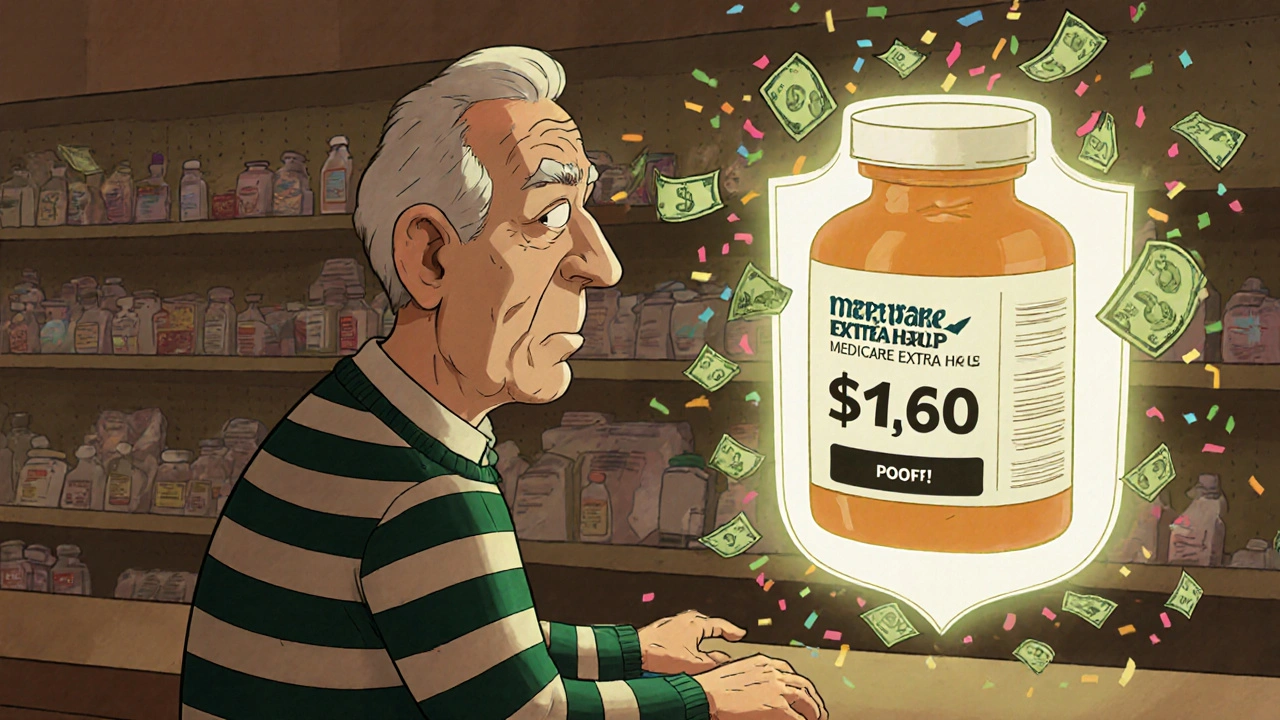
When you’re on Medicare and struggling to pay for prescriptions, Medicare Extra Help, a federal program that lowers the cost of Medicare Part D prescription drugs for people with limited income and resources. Also known as the Low-Income Subsidy (LIS), it’s not a separate plan—it’s financial help that attaches to your existing Part D drug coverage. This isn’t just a discount card or a coupon. It cuts your monthly premiums, eliminates your deductible, and slashes what you pay at the pharmacy—sometimes to just a few dollars per prescription.
Medicare Extra Help is designed for people who can’t afford their meds. If your income is below $22,590 a year (or $30,660 for a couple) and your resources—like bank accounts, stocks, or property (not your home or car)—are under $16,650 (or $33,240 for a couple), you likely qualify. Even if you think you don’t make enough to qualify, check anyway. Many people miss out because they assume they earn too much, or they don’t realize assets like a second car or savings accounts count. The program also helps if you get Medicaid, Supplemental Security Income (SSI), or other state assistance. You don’t need to be on both Medicare and Medicaid to get Extra Help—just Medicare.
Applying is simple. You can do it online at SSA.gov, call Social Security at 1-800-772-1213, or visit your local office. You’ll need your Social Security number, proof of income (like tax returns or pay stubs), and details about your savings and assets. If you’re already getting SSI, you’re automatically enrolled—no application needed. But if you’re not, don’t wait. The sooner you apply, the sooner you start saving. Once approved, your savings kick in immediately, and you’ll get a notice from Medicare with your new cost details.
What does it actually cover? With Extra Help, you pay no more than $4.50 for generics and $11.20 for brand-name drugs in 2025. You won’t face the coverage gap—the "donut hole"—at all. Your plan can’t charge you more than these amounts, even if the drug’s list price is hundreds. And if you switch plans, your Extra Help moves with you. It’s not tied to one pharmacy or one drug list. You can use any Part D plan that accepts Medicare, and your savings stay in place.
Some people think Extra Help is only for seniors over 65. It’s not. If you’re under 65 and on Medicare because of a disability, you can qualify too. Same goes if you have End-Stage Renal Disease. Age doesn’t matter—income and resources do. And if you’re denied, you can appeal. Many denials happen because of paperwork errors, not eligibility. If you’re told no, ask why, get the reason in writing, and reapply with corrected info.
There’s no time limit on Extra Help. Once you’re in, you stay in unless your income or assets go way up. Every year, Social Security reviews your case automatically. If you’re still eligible, you keep your benefits. You don’t have to reapply every year—unless your situation changes. That’s one less thing to worry about when you’re already managing health costs.
You’ll find plenty of posts here that tie into this. From how to use manufacturer coupons alongside Extra Help, to how to avoid common mistakes when applying, to what happens when you switch Part D plans—you’ll see real stories and practical tips. You’ll also learn how people combine Extra Help with community clinics, generic drugs, and patient assistance programs to stretch their dollars even further. This isn’t just about saving a few bucks. It’s about being able to take your meds every day without choosing between food, rent, or your health. If you’re paying too much for prescriptions, this program is there. You just have to ask for it.
How to Use Medicare Extra Help to Save on Generic Prescriptions
