
Drug-Induced TTP: Causes, Risks, and What You Need to Know
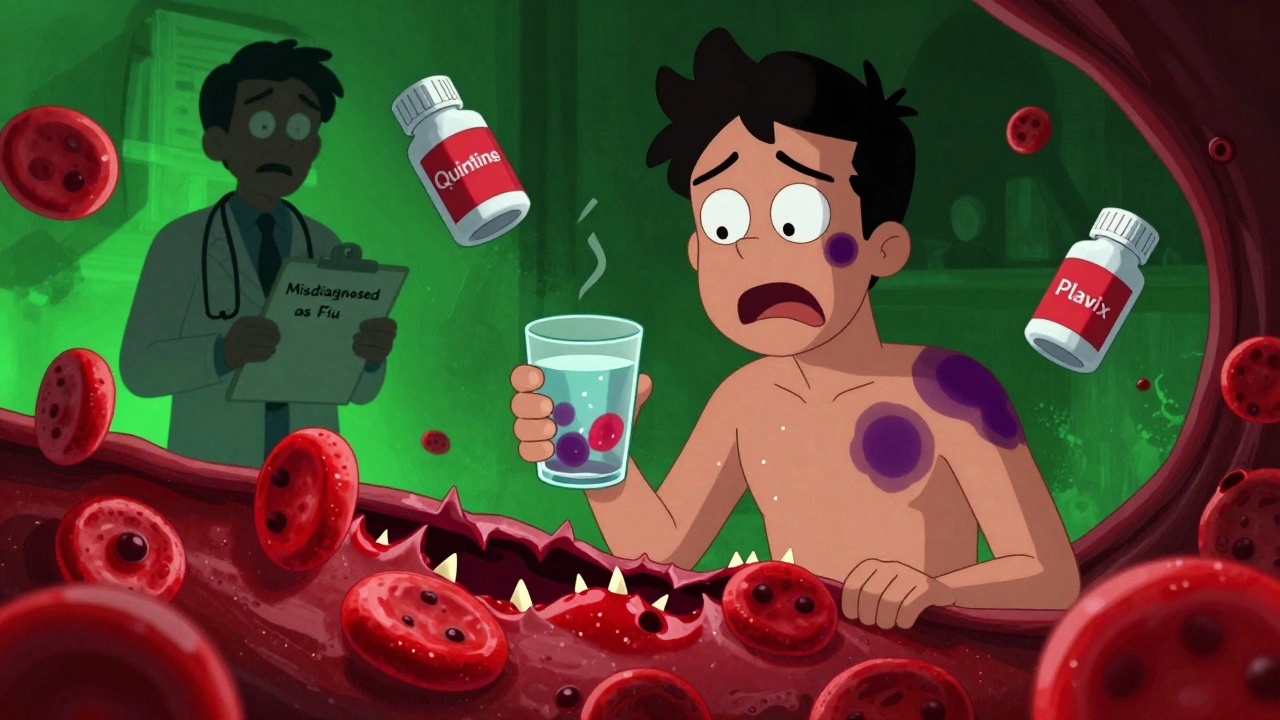
When a medication triggers drug-induced TTP, a rare, life-threatening blood disorder where tiny clots form in small blood vessels, destroying platelets and damaging organs. Also known as thrombotic thrombocytopenic purpura caused by drugs, it’s not common—but when it happens, it moves fast and demands immediate action. Unlike genetic forms of TTP, this version is directly tied to exposure to certain drugs, often after weeks or months of use. It’s not an allergy. It’s not an overdose. It’s a hidden reaction your body can’t predict.
Some of the most common culprits include clopidogrel, an antiplatelet drug used after heart attacks or strokes, ticlopidine, an older blood thinner no longer widely used but still linked to cases, and chemotherapy agents, like mitomycin C and gemcitabine, used in cancer treatment. Even some antibiotics and immunosuppressants have been reported to trigger it. The mechanism? These drugs can confuse your immune system into attacking an enzyme (ADAMTS13) that normally keeps clotting in check. Without it, clots form everywhere—brain, kidneys, heart—and platelets vanish trying to plug the leaks.
Symptoms don’t always show up together, which is why it’s often missed. You might feel tired, have bruising or tiny red dots on your skin, get headaches, or notice your urine turning dark. Fever, confusion, or seizures can follow. If you’re on one of these drugs and suddenly feel off, don’t wait. Early diagnosis means plasma exchange—a treatment that replaces your blood plasma with donor plasma—can save your life. Delay it, and organ failure can happen within days.
What’s interesting is how this connects to other topics you’ll find here. For example, medication adherence matters because if you stop a drug on your own because you feel strange, you might miss the warning signs. On the flip side, generic vs brand identification is critical—some cases of drug-induced TTP have been linked to specific manufacturers, not just the active ingredient. And if you’re on azathioprine or other immunosuppressants, you’re already in a higher-risk group, making awareness even more vital. Even drug potency and medication degradation play a role: if a drug breaks down improperly due to bad storage, could it trigger a reaction? We don’t know for sure—but it’s a question worth asking.
You won’t find every drug that’s ever caused TTP listed here, but you will find real cases, real warnings, and real advice from people who’ve been through it. The posts below cover everything from how pharmacists spot risky drug combinations to what to do if you’re told your medication might be linked to a rare side effect. This isn’t about scaring you. It’s about giving you the facts so you can ask the right questions—and know when to push back.
Medication-Induced Thrombotic Thrombocytopenic Purpura: A Life-Threatening Reaction You Need to Know
