
Statin Sleep Risk Calculator
Your Statin Risk Assessment
Based on FDA adverse event data and clinical studies, certain statins are more likely to cause sleep disturbances due to their ability to cross the blood-brain barrier.
Your Sleep Risk Assessment
Risk Level:
What This Means
For millions of people, statins are a daily part of life-taken without a second thought to lower cholesterol and protect the heart. But for some, these pills come with an unexpected side effect: sleepless nights and strange, vivid dreams. If you’ve been taking a statin and suddenly find yourself wide awake at 3 a.m. or dreaming about flying elephants or reliving your high school graduation, you’re not alone. And you’re not imagining it.
It’s Not Just in Your Head-But It Might Be
The science on statins and sleep is messy. Some studies say there’s no link. Others say certain statins can mess with your sleep big time. And then there’s the nocebo effect-the idea that if you expect side effects, you’re more likely to feel them. A 2018 study of 10,000 people found those taking atorvastatin actually reported fewer sleep problems than those on a placebo. That’s counterintuitive. But another study from 2007 showed people on simvastatin had significantly worse sleep than those on pravastatin or placebo. So what’s going on? The answer might be in the chemistry. Statins aren’t all the same. Some, like simvastatin and lovastatin, are lipophilic-meaning they can easily cross the blood-brain barrier. Others, like pravastatin and rosuvastatin, are hydrophilic-they mostly stay in the bloodstream. That difference matters. If a statin gets into your brain, it might interfere with neurotransmitters or cholesterol pathways that regulate sleep. Simvastatin’s ability to penetrate the brain is about 7 times stronger than pravastatin’s. That’s not a small gap.Which Statins Are Most Likely to Cause Sleep Issues?
Data from the FDA’s adverse event database shows a clear pattern:- Simvastatin: 2.17 times more likely to be linked to sleep disturbances than average
- Lovalstatin: 1.63 times higher risk
- Rosuvastatin: 1.52 times higher risk
- Atorvastatin: No significant link (ROR: 1.05)
- Pravastatin: No significant link (ROR: 0.87)
Is It the Statin-or the Muscle Pain?
Here’s a twist: what if your sleep problems aren’t from the statin itself, but from the muscle pain it causes? A 2024 study found that people with statin-associated muscle symptoms (SAMS) often report poor sleep. When they stopped the statin, their sleep improved-more deep sleep, fewer nighttime awakenings, less tossing and turning. The muscle aches were keeping them up. Not the drug directly affecting the brain. That changes the game. If you’re waking up because your shoulders or legs ache, switching statins might help. But if you’re lying there wide awake with no physical pain, just racing thoughts and strange dreams, it might be the brain effect.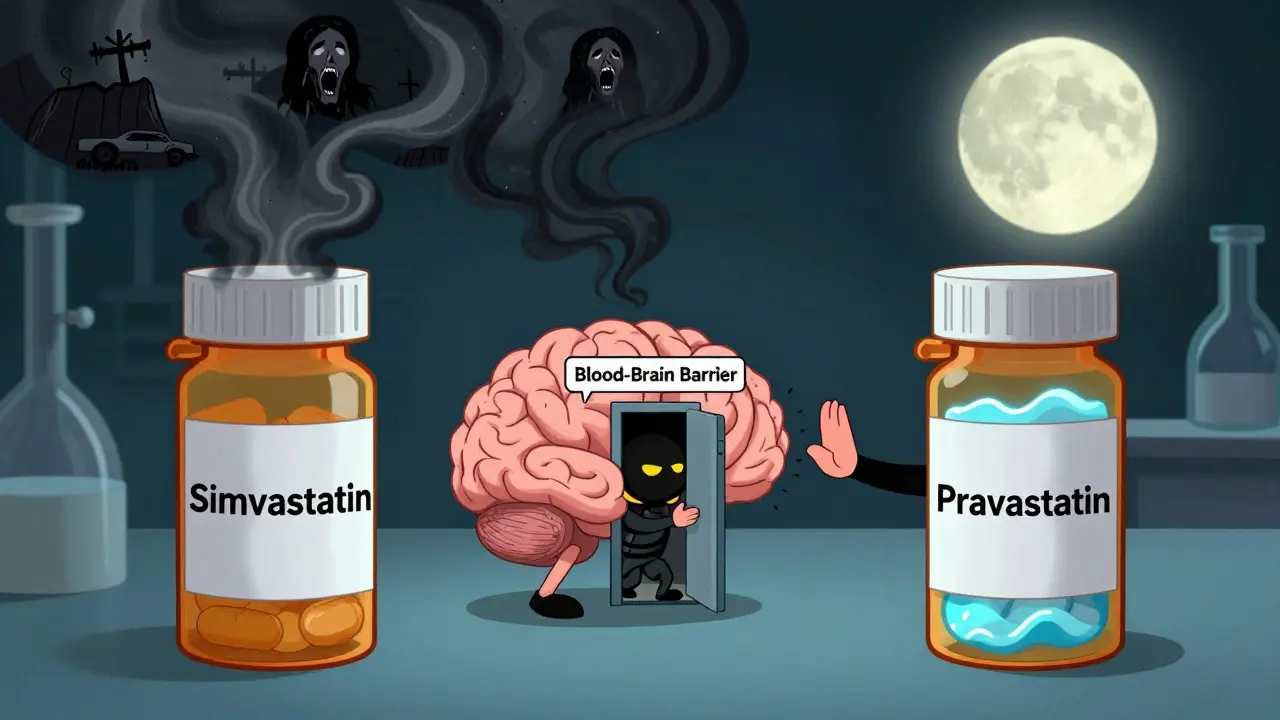
What Should You Do If You’re Having Sleep Problems?
Don’t quit cold turkey. Statins reduce heart attacks and strokes by up to 22% for every 1 mmol/L drop in LDL. That’s life-saving. But if sleep is wrecking your quality of life, here’s what to try:- Track your sleep. For two weeks, write down when you go to bed, when you wake up, how many times you wake, and if you remember dreams. Use a simple notebook or a free app like Sleep Cycle.
- Check your timing. Some people take statins at night because cholesterol production peaks then. But if you’re having sleep issues, try switching to morning dosing. No proof it helps, but it’s low-risk.
- Ask about switching. If you’re on simvastatin or lovastatin, ask your doctor about switching to pravastatin or fluvastatin. Both are less likely to cross into the brain. Rosuvastatin is a gray area-it’s hydrophilic but still linked to sleep issues in some reports.
- Rule out other causes. Stress, caffeine after 2 p.m., screen time before bed, or sleep apnea can mimic statin-related insomnia. A sleep study might be worth it if problems persist.
- Give it time. If you do switch statins, give it 3-4 weeks. Side effects often fade as your body adjusts.
Real Stories, Real Confusion
One patient in Perth wrote to her doctor after three months on simvastatin: “I haven’t slept properly since I started this pill. I dream about being chased. I wake up terrified.” She switched to pravastatin. Two weeks later, she slept through the night for the first time in months. Another man took atorvastatin for seven years. Never had a problem. Then he switched to rosuvastatin for cost reasons-and started having nightmares about falling off cliffs. He went back to atorvastatin. The dreams vanished. These aren’t rare. The FDA recorded over 1,200 sleep disturbance reports linked to statins between 2000 and 2014. Simvastatin made up nearly half of them-even though it wasn’t the most prescribed.

Reviews