
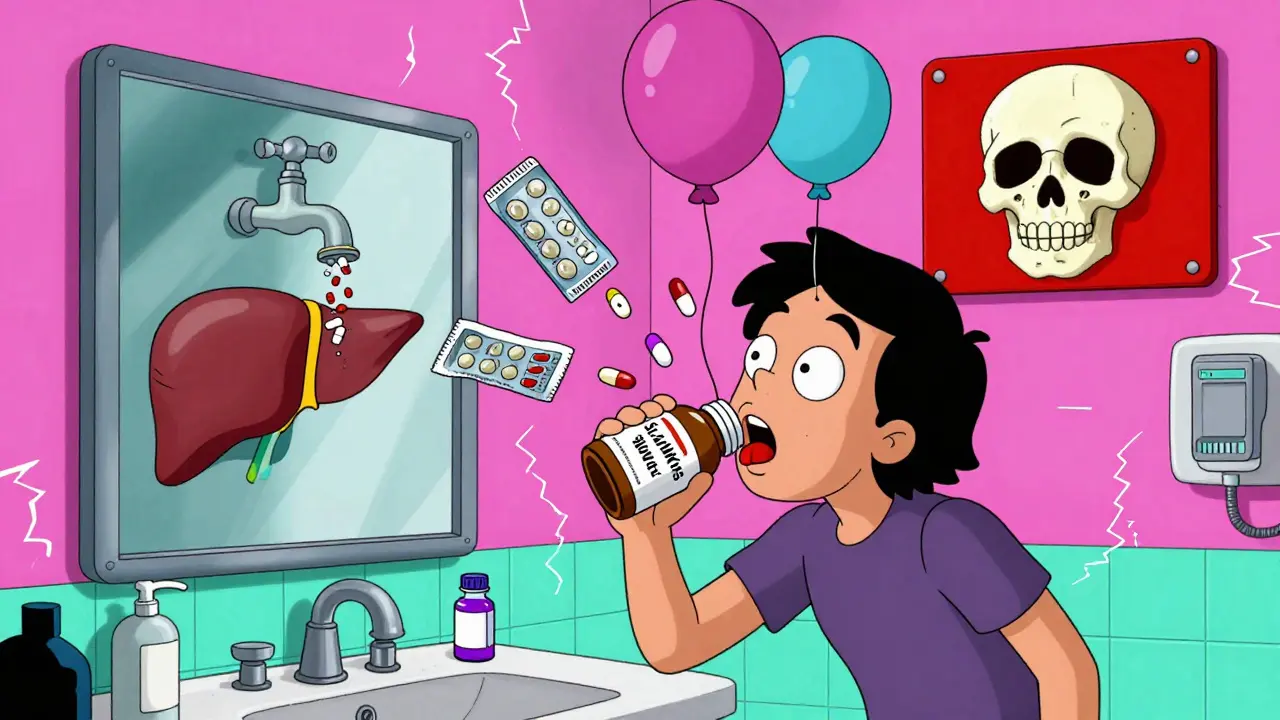
Every year, thousands of people end up in emergency rooms because they took a supplement with their medicine-without knowing it could be dangerous. You might think, "It’s natural, so it’s safe." But that’s a myth that can cost you your health. St. John’s wort, a popular herb for mood support, can drop your blood pressure medication by 50%, make your birth control fail, or cause your HIV drugs to stop working. Ginkgo biloba, often taken for memory, can spike your INR levels and turn a routine blood thinner like warfarin into a bleeding risk. And no, your doctor probably didn’t warn you. Only 27% of people tell their healthcare provider about the supplements they’re taking. That’s not negligence-it’s a system gap. You need to ask the right questions before swallowing anything alongside your prescriptions.
Does this supplement change how your medicine is processed?
Your body uses enzymes-mainly from the CYP3A4 family-to break down most medications. Some supplements trick these enzymes into working too fast or too slow. St. John’s wort is the biggest offender. It turns on CYP3A4 like a faucet, making your liver flush out drugs before they can do their job. Studies show it cuts cyclosporine levels by half in transplant patients, which can lead to organ rejection. It drops HIV meds like indinavir by 57%. Even birth control pills become unreliable-up to 50% higher failure rates. If you’re on anything for heart disease, cancer, depression, or autoimmune conditions, this isn’t a risk you can ignore.On the flip side, some supplements slow down these enzymes. Grapefruit juice is the classic example-it blocks CYP3A4 and can cause toxic buildup of statins or blood pressure pills. But even green tea extract or pomegranate juice can do this. The problem? Most supplement labels don’t say anything about enzyme effects. You can’t assume safety just because it’s sold in a health food store.
Could this make your medicine stronger-or weaker?
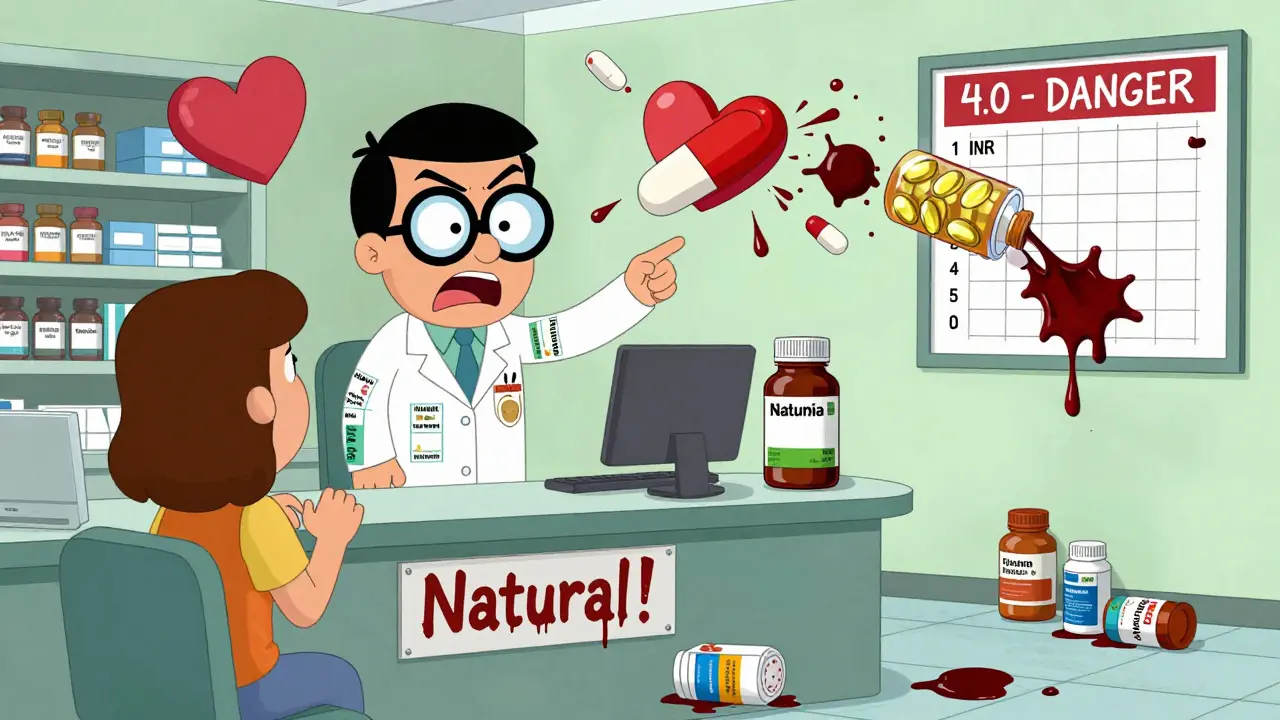
Some supplements don’t change how your body handles drugs. They just add to the effect. Vitamin E at doses over 400 IU daily can boost warfarin’s blood-thinning power by 25-30%. That means more bruising, nosebleeds, or worse-internal bleeding. Ginkgo biloba does the same thing. In one study, 15% of people on warfarin who took ginkgo saw their INR jump to dangerous levels (2.5-3.5). Normal is 2-3 for most people on blood thinners. Anything above 4 is a red flag.Other supplements work in opposite ways. Calcium and iron can bind to antibiotics like tetracycline and make them useless. You need to take them hours apart. Magnesium can reduce the absorption of thyroid meds like levothyroxine. Even magnesium supplements labeled "for sleep" can interfere if taken at the same time. And if you’re on thyroid medication, you need to be extra careful-small changes in absorption can throw off your whole hormone balance.
Has this supplement been studied with my specific medicine?
Here’s the hard truth: only 15% of dietary supplements have been studied for interactions with prescription drugs. That means for most products on the shelf, there’s no reliable data. You’re guessing. And guessing when you’re on heart meds, antidepressants, or cancer drugs is not an option.Take milk thistle. Some cancer patients use it to protect their liver during chemo. A small number of users report fewer side effects, and no major interaction studies have shown it reduces chemo effectiveness. But that’s not the same as proof. Meanwhile, goldenseal-a common ingredient in cold remedies-can block the same liver enzymes that process dozens of medications. It’s been linked to reduced effectiveness of HIV drugs and blood pressure pills. Yet you’ll find it in dozens of store-bought supplements with no warning labels.
Don’t rely on anecdotal reviews on Amazon or Reddit. Real evidence comes from clinical trials and pharmacology databases like LiverTox or the FDA’s DSID-6. These aren’t consumer sites-they’re tools doctors and pharmacists use. If you can’t find a study linking your supplement to your medication, assume it’s unsafe until proven otherwise.
What symptoms should you watch for?
Some interactions happen slowly. Others hit fast-and hard. Serotonin syndrome is one of the most dangerous. It happens when you combine St. John’s wort with SSRIs like fluoxetine or sertraline. Your brain gets flooded with serotonin. Symptoms include confusion, rapid heartbeat, high fever, muscle rigidity, and seizures. It’s rare, but it’s deadly. Between 2022 and 2023, Reddit users documented 147 cases of this exact combo. One person wrote: "I felt like I was melting from the inside. I thought I was having a stroke."Another red flag is unexplained bruising, bleeding gums, or blood in urine or stool. That’s a sign your blood isn’t clotting right-likely from ginkgo, vitamin E, or fish oil mixed with warfarin or aspirin. If you suddenly feel dizzy, nauseous, or your heart races after starting a new supplement, stop it immediately. Don’t wait for your next appointment. Call your pharmacist or go to urgent care.
Are there safer alternatives?
Not all supplements are created equal. American ginseng has fewer drug interactions than Asian ginseng. Black cohosh is generally low-risk for hormone-related meds, while red clover can interfere with estrogen therapies. Milk thistle is considered low-risk for most people on liver-metabolized drugs, but even that needs monitoring if you’re on chemo.Instead of trying to replace a medication with a supplement, ask: "Can I get this benefit another way?" For example, if you’re taking melatonin for sleep, try improving your sleep hygiene first-dark room, no screens before bed, consistent schedule. If you want to lower inflammation, focus on diet: omega-3s from fatty fish, turmeric with black pepper, and avoiding sugar. These changes don’t come with interaction warnings.
And if you’re considering a supplement for anxiety or depression? Talk to your doctor about evidence-backed options like cognitive behavioral therapy or FDA-approved medications. St. John’s wort might seem like a "natural antidepressant," but it’s not regulated. Its potency varies wildly between brands. One bottle might have 500 mg of hypericin; another might have 50. You have no control over what you’re actually taking.
Who should you talk to before taking anything?
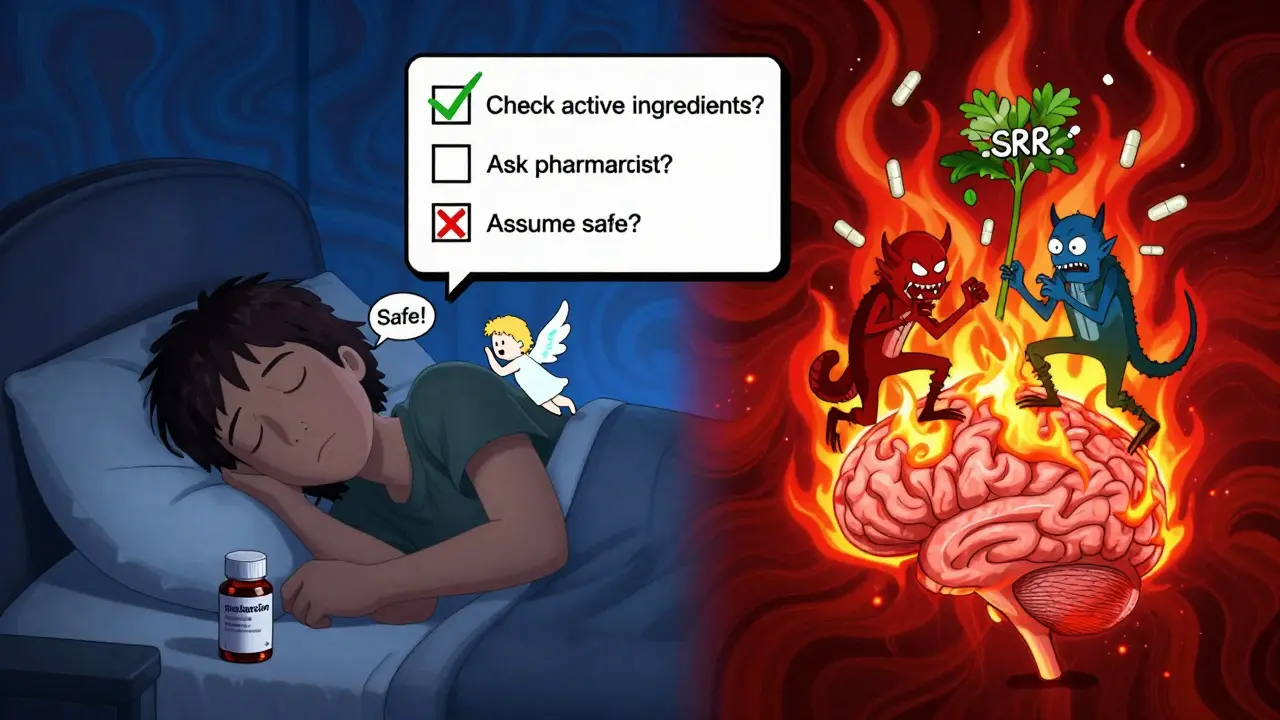
Your doctor probably won’t ask. Only 32% of primary care physicians document supplement use in medical records. But your pharmacist? They’re trained for this. Pharmacists now routinely screen for supplement-drug interactions during medication therapy management visits-and 89% of them do it regularly. Go to the pharmacy when you pick up your prescription. Hand them your supplement bottle. Ask: "Does this interact with anything I’m taking?" They’ll check databases you can’t access. And they won’t judge you.If you’re on immunosuppressants, cancer drugs, anticoagulants, or HIV meds, you need a specialist who knows these interactions cold. Ask for a clinical pharmacist or a medication therapy management (MTM) service. Many insurance plans cover it. Don’t wait until something goes wrong.
What’s the bottom line?
You don’t need to avoid all supplements. But you need to treat them like medicine-not candy. Here’s your checklist before taking anything:- Check the active ingredient. Don’t just look at the brand name. Find out what’s actually in it. Many "natural" blends contain hidden herbs like goldenseal or kava.
- Search your meds and the supplement together. Use trusted sources: NIH’s Office of Dietary Supplements, LiverTox, or the FDA’s DSID-6 database.
- Ask your pharmacist. Bring the bottle. They’ll tell you if it’s risky.
- Watch for symptoms. Unusual bruising, racing heart, confusion, or sudden changes in how you feel? Stop the supplement and get help.
- Document everything. Keep a list of everything you take-supplements, herbs, vitamins, even teas. Bring it to every appointment.
The supplement industry spends billions marketing "natural wellness." But the science doesn’t back most claims. And the risks? They’re real. You’re not alone in thinking supplements are harmless. But the data says otherwise. The FDA can’t regulate them like drugs. So the responsibility falls on you. Ask the questions. Do the research. Protect your health-because no one else will.
Can I take vitamin D with my blood pressure medicine?
Yes, vitamin D generally doesn’t interfere with blood pressure medications. There’s no strong evidence it affects how drugs like lisinopril, amlodipine, or metoprolol work. But if you’re taking high doses (over 4,000 IU daily), it can raise calcium levels, which may indirectly affect heart rhythm or kidney function-especially if you’re already on diuretics. Stick to the recommended dose (600-800 IU for most adults) and get your calcium and kidney function checked yearly if you’re on long-term high-dose vitamin D.
Is fish oil safe with warfarin?
It’s risky. Fish oil has mild blood-thinning effects. When combined with warfarin, it can increase your INR, raising your chance of bleeding. Studies show that people on warfarin who take more than 3 grams of fish oil daily have a higher risk of abnormal INR levels. If you want to take fish oil, talk to your doctor first. You’ll need more frequent INR checks, and your warfarin dose may need adjusting. Never start fish oil without monitoring.
Can I take melatonin with antidepressants?
Melatonin is usually safe with most antidepressants, including SSRIs and SNRIs. Unlike St. John’s wort, it doesn’t affect liver enzymes or serotonin levels. But some people report increased drowsiness or vivid dreams when combining the two. If you’re on medications that already cause drowsiness-like trazodone or mirtazapine-melatonin could make it worse. Start with a low dose (0.5-1 mg) and take it only at night. If you feel overly tired or confused during the day, stop it and talk to your doctor.
Why don’t supplement labels warn about drug interactions?
Because the FDA doesn’t require it. Under the Dietary Supplement Health and Education Act of 1994, supplement makers don’t need FDA approval before selling their products. They don’t have to prove safety, effectiveness, or interaction risks. Labels only need to list ingredients-not potential dangers. That’s why you’ll see St. John’s wort sold as a "mood support" supplement with no warning about birth control or transplant meds. The burden is on you to research the risks.
What if I’ve already been taking supplements with my meds?
Don’t panic, but don’t ignore it either. Stop the supplement immediately if you’re experiencing unusual symptoms-like bleeding, dizziness, heart palpitations, or mood changes. Then, make an appointment with your pharmacist or doctor. Bring a list of everything you’ve taken, including doses and how long. They can check for interactions and decide if you need blood tests or dose adjustments. Many people have been taking supplements with meds for years without problems. But if you’re on critical drugs like immunosuppressants or anticoagulants, even one bad interaction can be life-threatening. Better safe than sorry.


Reviews
Okay but let’s be real - if you’re taking St. John’s wort with SSRIs and you didn’t know it could cause serotonin syndrome, you probably also think ‘natural’ means ‘no side effects’ and that kale smoothies cure cancer. I’ve seen people on Reddit take 1200mg of it daily while on Zoloft and then panic when they start sweating like they’re in a sauna. It’s not a conspiracy, it’s pharmacology. And no, your yoga instructor who sells ‘herbal mood boosters’ isn’t a licensed pharmacist. Stop trusting influencers with your liver.
Also, ginkgo? Yeah, it’s ‘good for memory’ - until you’re bleeding out from a nosebleed because you didn’t check INR. I had a cousin who took it with warfarin for ‘better circulation’ and ended up in the ER with a hematoma the size of a grapefruit. Don’t be that guy.
The supplement industry is basically the Wild West with better packaging. Labels say ‘natural’ like it’s a badge of honor. It’s not. It’s a loophole. The FDA can’t regulate it because Congress got lobbied into oblivion by companies selling ‘organic moon dust’ as ‘immune support.’ You think your turmeric capsule has 500mg of curcumin? Nah. It’s 20mg with 480mg of rice flour and a prayer.
And don’t get me started on ‘detox teas.’ Those are just diuretics with a $20 markup and a Pinterest aesthetic. You don’t ‘detox’ with tea. Your liver does that. It’s not a magic filter you can outsource to a bottle bought at Whole Foods.
Bottom line: if you’re on anything that keeps you alive - anticoagulants, immunosuppressants, antiretrovirals - treat every supplement like a new prescription. Ask your pharmacist. Not your aunt. Not your wellness coach. The guy who graduated from pharmacy school and has access to LiverTox and DSID-6. That’s it.
And yes, I’ve been in ERs. I’ve seen people die because they thought ‘natural’ meant ‘safe.’ Don’t be a statistic.
OMG I’m so glad someone finally said this 😭 I’ve been screaming into the void for years that supplements are NOT harmless!! I took ginkgo with my blood pressure med and ended up dizzy and bleeding from my gums for 3 days 😫 my pharmacist was the only one who cared 😔 why do people think ‘herbal’ = ‘no consequences’?? 🙃 it’s not magic fairy dust!!
Also, St. John’s wort?? Bro, I know someone who lost her birth control efficacy and got pregnant on accident bc she thought ‘it’s just a herb’ 😭 why is no one talking about this??
PS: I’m gonna print this out and tape it to my fridge. #supplementawareness #dontbeadummy
St. John’s wort induces CYP3A4 and P-gp - that’s not speculation, that’s documented in the Journal of Clinical Pharmacology. Ginkgo inhibits platelet aggregation and elevates INR - multiple case reports in Annals of Internal Medicine. These aren’t anecdotes. They’re pharmacokinetic facts.
The problem isn’t just ignorance. It’s the normalization of pseudoscience under the banner of ‘holistic health.’ You don’t get to opt out of biochemistry because you prefer ‘natural’ solutions. Your body doesn’t care if it came from a plant or a lab. It cares about molecular structure and receptor binding.
And yes - your pharmacist is more qualified to assess this than your holistic nutritionist who got certified online in 7 days. If you’re on warfarin, statins, or SSRIs, you’re not ‘taking supplements.’ You’re taking unregulated drugs. Treat them that way.
Also - vitamin D with BP meds? Fine. But if you’re taking 10,000 IU daily without monitoring serum calcium? That’s not wellness. That’s iatrogenic hypercalcemia waiting to happen.
Stop romanticizing plants. Start respecting pharmacology.
YOU THINK THIS IS BAD? WAIT TIL YOU FIND OUT WHAT’S IN THOSE ‘ORGANIC’ ENERGY BARS. I found out my ‘natural’ pre-workout had hidden synephrine - same as ephedrine. I had a heart palpitation so bad I thought I was dying. No warning on the label. No FDA oversight. Just some guy in Colorado selling ‘plant-powered focus’ with a $30 markup.
And don’t even get me started on ‘CBD gummies’ - half of them have THC or synthetic cannabinoids. I know a woman who failed a drug test because she took ‘hemp oil’ for anxiety. She lost her job. Her kid got taken by CPS. All because she trusted a label that said ‘natural’.
People are dying because they think ‘herbal’ means ‘safe.’ It doesn’t. It means ‘untested.’
And the worst part? Doctors don’t ask. Pharmacists do. So why aren’t we demanding pharmacies do mandatory supplement screenings with every script? Because the system is broken. And it’s killing people.
I’m not mad. I’m just done.
Respected sir/madam, I am writing this with utmost sincerity from New Delhi, India. In our traditional Ayurvedic system, we have always emphasized the principle of 'Dravya Guna' - the inherent properties of substances. However, modern pharmacology and ancient wisdom must not be conflated. The interaction between herbal compounds and synthetic pharmaceuticals is not a matter of belief but of biochemistry.
I have personally witnessed a patient on phenytoin develop seizures after consuming ashwagandha, which altered hepatic metabolism. The hospital had no record of such interaction - because it was not studied in Western trials. This is not a Western problem. It is a global problem.
I urge you to consult a qualified Ayurvedic physician who understands both Vedic pharmacology and modern drug metabolism. Do not assume safety. Do not assume tradition equals science. Do not assume ignorance is bliss.
Knowledge is protection.
With respect,
Rakesh Kakkad
Man, I’ve been taking fish oil for years and never thought twice about it until I started on warfarin last year. My pharmacist was the one who caught it - said my INR had spiked from 2.1 to 3.8 in two weeks. I didn’t even realize I was bleeding internally. I had bruising on my thighs I thought was from working out.
After that, I started bringing every supplement I take - even my multivitamin - to the pharmacy. They check it against my meds for free. No judgment. Just facts.
Also, I stopped taking melatonin with my Zoloft. Too sleepy during the day. Switched to magnesium glycinate instead. Same effect, no interaction risk.
Point is: you don’t need to be scared. Just informed. And your pharmacist is your best friend here. Talk to them. They’re not there to sell you stuff. They’re there to keep you alive.
Supplement industry is a controlled distraction. Manufactured by multinational conglomerates with ties to Big Pharma. The FDA’s hands are tied by the DSHEA - a law written by lobbyists. You think this is about health? No. It’s about profit. Natural products are cheaper to produce. Higher margins. No clinical trials needed. No liability.
St. John’s wort? It’s a selective serotonin reuptake inhibitor - same mechanism as fluoxetine. But unregulated. Unstandardized. Untraceable.
And you believe it’s ‘safe’ because it’s ‘natural’? Then why do you not drink poison ivy tea? Because you know better.
Wake up. The system is rigged. And you are the mark.
Let me break this down like a textbook. CYP3A4 induction by St. John’s wort reduces cyclosporine levels by 50% - that’s not a guess, that’s a study from Transplantation 2001. Ginkgo biloba inhibits platelet-activating factor - that’s why it raises INR. These aren’t opinions. They’re published, peer-reviewed facts.
And yet, people still buy ‘herbal mood boosters’ like they’re buying candy. Meanwhile, the pharmaceutical industry is vilified for side effects - while the supplement industry gets a free pass.
It’s cognitive dissonance on a mass scale. You’ll scream about Big Pharma’s profit margins but happily swallow a $40 bottle of ‘natural’ something that’s never been tested for interaction with your anticoagulant.
It’s not hypocrisy. It’s willful ignorance dressed up as ‘wellness.’
Look - I get it. You want to feel better. But you’re not some biohacker. You’re not a scientist. You’re just some guy who Googled ‘natural anxiety cure’ and bought a bottle off Amazon. And now you’re mixing it with your blood pressure med like it’s a smoothie.
This isn’t ‘wellness.’ It’s reckless. And it’s costing the healthcare system billions. ER visits. ICU stays. Kidney failure from herb-drug combos nobody ever studied.
And don’t give me that ‘Big Pharma doesn’t want you to know’ crap. If supplements were safe, they’d be regulated. They’re not. Because they’re dangerous. And the FDA can’t touch them because of a 30-year-old law written by lobbyists who own herbal companies.
So stop being a dumbass. Ask your pharmacist. Or don’t. But don’t blame anyone but yourself when your liver shuts down.
I really appreciate this breakdown. I’ve been taking melatonin with my SNRI for sleep, and I never thought about drowsiness compounding - but now I realize I’ve been feeling foggy all day. I cut it to 0.5mg and it’s way better.
Also, I used to take turmeric capsules for inflammation, but I didn’t know it could interact with blood thinners. I just assumed ‘it’s a spice, how bad could it be?’ Turns out, curcumin inhibits platelet aggregation - same as aspirin.
I started using the NIH ODS database and found out half the supplements I was taking had potential interactions. I threw out 80% of them. My pharmacist thanked me.
It’s not about being paranoid. It’s about being informed. And honestly? It’s kind of empowering. Like, I’m not just taking pills anymore - I’m managing my health like an adult.
They call it ‘natural wellness’ - but what they mean is ‘unregulated, untested, unmonitored chemical roulette.’ You swallow a capsule labeled ‘mood support’ - and inside? A proprietary blend. No doses listed. No active compounds disclosed. Just ‘herbs’ - some of which are known to inhibit CYP2D6, others to induce CYP3A4. You don’t know what you’re taking. You don’t know how much. You don’t know if it’s even real.
And yet, you trust it more than your doctor’s prescription? More than your pharmacist’s warning?
This isn’t freedom. It’s surrender. Surrender to marketing. Surrender to placebo. Surrender to the myth that plants are inherently benign.
They’re not. They’re chemicals. Just because they grow in soil doesn’t mean they’re gentle. Aconite grows in the wild too. So does hemlock.
Stop romanticizing nature. Start respecting pharmacology.
Okay I need to say this - I’m a nurse and I’ve seen this happen TOO MANY TIMES. A sweet 72-year-old lady takes ginkgo because her friend said it helps memory. She’s on warfarin. One day she falls, hits her head, and bleeds into her skull. No one knew she was taking ginkgo. No one asked. She didn’t think it mattered.
She’s fine now - but she has a permanent brain injury.
And I’ve had patients on antidepressants take St. John’s wort and end up in the psych ward with serotonin syndrome. One guy thought it was ‘just a herbal alternative’ - until he was shaking, sweating, and screaming that his skin was on fire.
Listen. I get it. You want to feel better. You want to avoid pills. But you can’t outsmart your biology. Your body doesn’t care if it came from a tree or a lab. It cares about the molecule.
So please - bring your supplements to your pharmacy. Write them down. Tell your doctor. Don’t wait until it’s too late.
I’m not mad. I’m just tired of cleaning up the mess.
This was so helpful! I just started taking magnesium for sleep and was worried it might mess with my thyroid med. I didn’t know it could block absorption! Now I take it at night, 4 hours after my levothyroxine - and I feel way better.
I also stopped the ‘immune booster’ blend I was taking - turned out it had goldenseal. I had no idea. Now I just eat garlic and sleep more 😊
Thanks for reminding me to ask questions. I used to feel silly asking my doctor about supplements - like they were ‘not real medicine.’ But now I realize - if it affects my body, it matters.
And hey - if you’re reading this and taking something with your meds? Go to the pharmacy. They’ll help you. No judgment. Just care. 💛
It’s disgusting how the supplement industry preys on vulnerable people. People with chronic illness. People with anxiety. People who are scared of pharmaceuticals. They’re sold ‘natural cures’ while their real conditions go untreated. And then they die because they trusted a label instead of a doctor.
This isn’t wellness. It’s exploitation.
And the worst part? The people who benefit from this aren’t the consumers. They’re the CEOs of companies selling $50 bottles of ‘miracle herbs’ with no clinical evidence. They’re the influencers. They’re the ‘wellness gurus’ who make millions while people end up in the ER.
Stop buying into the lie. Your health isn’t a product. It’s a responsibility.
And just to drive it home - I once saw a guy on Reddit bragging about how he took 10 different supplements with his HIV meds. Said he was ‘optimizing his immune system.’ He died of a drug-resistant pneumonia six months later. Autopsy showed his antiretrovirals were undetectable. Because St. John’s wort, milk thistle, and turmeric all induced CYP3A4. His meds were flushed out like toilet water.
He wasn’t ‘health-conscious.’ He was just stupid.
Don’t be him.