
Cholinergic Urticaria: Causes, Triggers, and How to Manage It
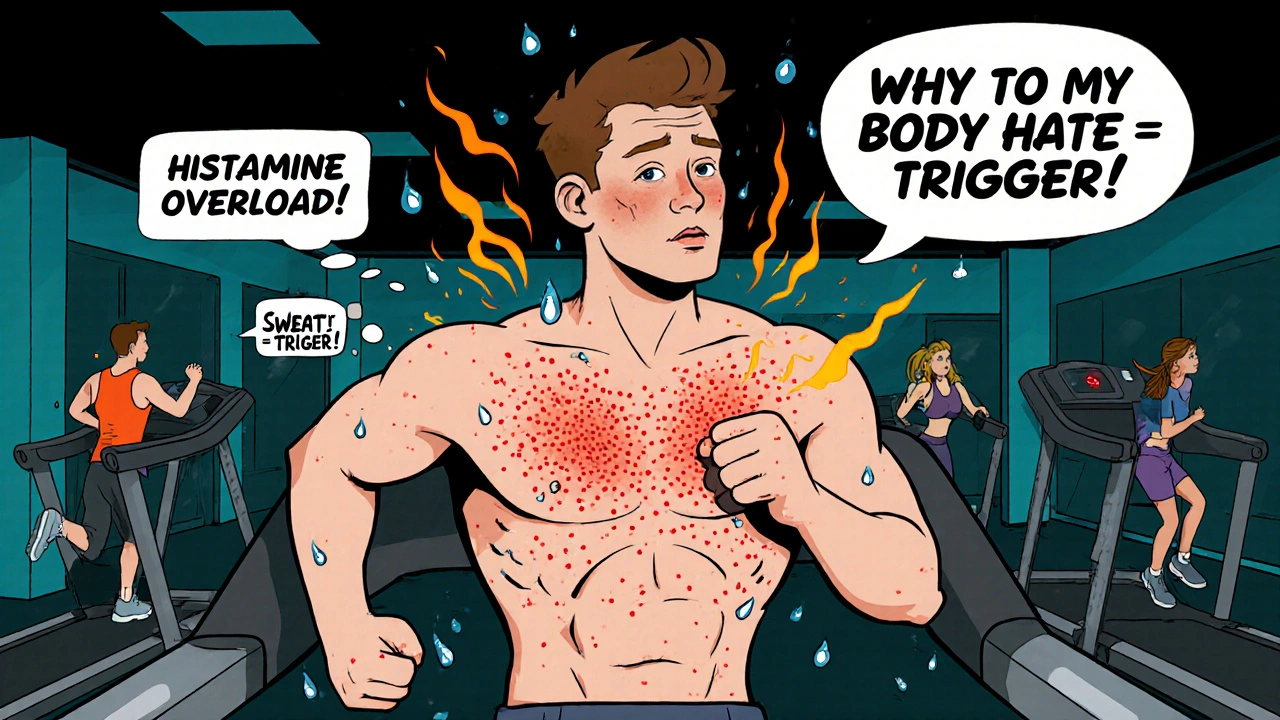
When your skin breaks out in itchy red bumps after a workout, a hot shower, or even just getting nervous, you might be dealing with cholinergic urticaria, a type of hives triggered by a rise in body temperature. Also known as heat-induced hives, this condition isn’t an allergy to sweat itself—but your body’s overreaction to it. It happens when your nervous system signals mast cells in your skin to release histamine, causing tiny welts that sting or burn. Unlike regular hives, these show up fast—often within minutes—and usually fade within an hour.
This isn’t just about sweating after the gym. Cholinergic urticaria can flare from hot weather, spicy food, emotional stress, or even a warm blanket. It’s more common in teens and young adults, and while it can be annoying, it’s rarely dangerous. But if you’ve ever felt like your skin is on fire after climbing stairs or walking to your car on a summer day, you know how disruptive it can be. Many people mistake it for a heat rash or bad acne, but the pattern is different: small, pinpoint bumps, often with a red halo, clustering where sweat collects—neck, chest, arms, back.
Managing it isn’t about avoiding movement—it’s about controlling triggers. Some people find relief with daily non-drowsy antihistamines, medications that block the histamine response like cetirizine or loratadine. Others learn to cool down fast: taking lukewarm showers after exercise, wearing loose cotton clothes, or avoiding spicy meals before working out. There’s no cure, but most people adapt. A few even notice their symptoms fade over time.
What you won’t find in most online guides are the real-life tricks that work. Like keeping a small fan in your gym bag, or using a cold compress right when you feel the first prickles. Or how some patients swear by taking a low-dose antihistamine 30 minutes before exercise—not to stop the reaction entirely, but to make it mild enough to ignore. And yes, stress plays a role too. Anxiety spikes your body temperature the same way exercise does, so breathing techniques and mindfulness can help as much as medication.
The posts below aren’t just about cholinergic urticaria—they’re about how your body reacts to things you can’t always control. You’ll find guides on allergic rhinitis, a condition where environmental triggers cause similar immune responses, how antihistamines, the same drugs used for hives show up in unexpected places like sleep aids and antidepressants, and how natural remedies, like supplements or herbal options can backfire if mixed with prescription meds. You’ll also see how diet, stress, and even medication timing can influence your skin’s reaction. This isn’t theoretical. These are real strategies people use every day to take back control.
Cholinergic Urticaria: How Heat-Induced Hives Work and How to Prevent Them
