
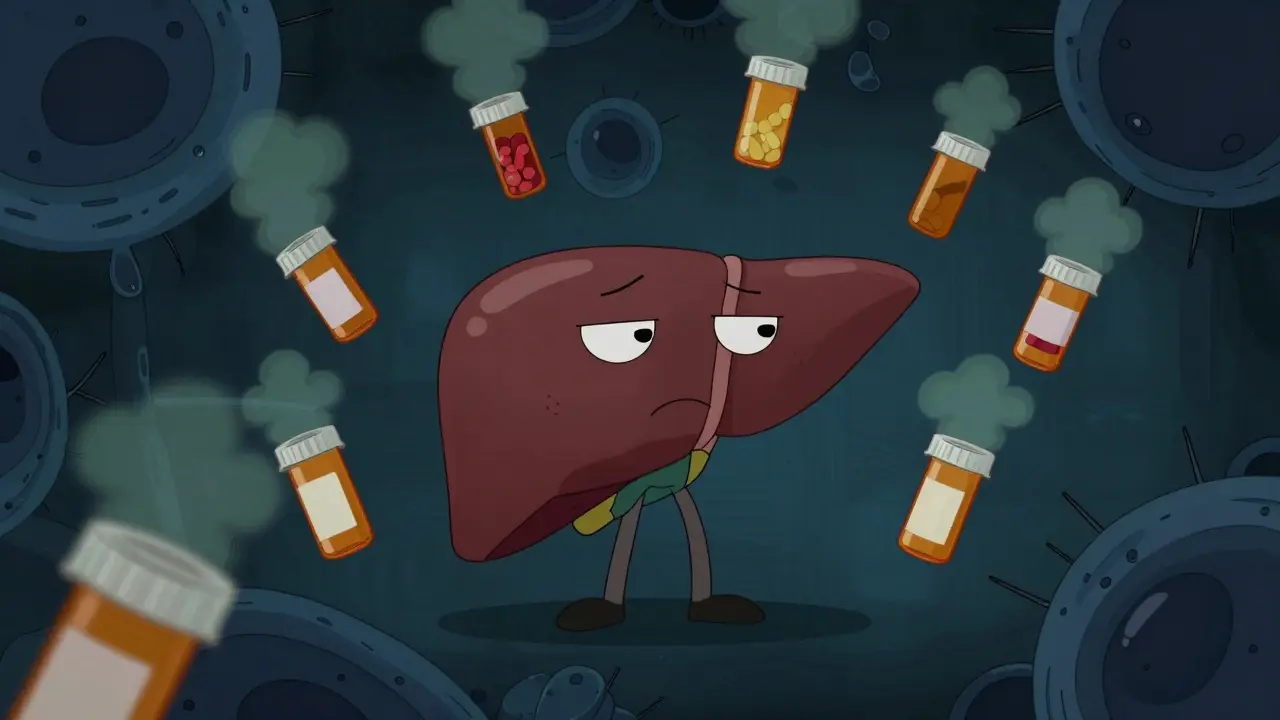
Medication & Liver Safety Checker
Step 1: Substances Taken Recently
Step 2: Current Symptoms
Select any symptoms you have noticed recently.
Step 3: Risk Multipliers
Do you consume alcohol regularly while taking these medications?
Your body handles thousands of chemicals daily, but sometimes a pill meant to help can hurt instead. Drug-Induced Liver Injury (DILI) is a real risk that affects roughly 13 out of 100,000 people every year. This condition happens when the liver gets damaged because of prescription medicines, over-the-counter drugs, or even herbal supplements. While most medications pass through your system safely, certain triggers can cause severe reactions. Understanding the signs early means you act before permanent damage sets in.
Understanding How Medicine Hurts the Liver
Most people think of the liver as a filter, which it is. However, it also processes almost everything you put in your body. When a medication interacts poorly with your specific metabolism, toxins build up. Experts classify these injuries based on how they show up in blood work. You might see a rise in Alanine Transaminase (ALT), signaling direct cell damage, or an increase in alkaline phosphatase, pointing to bile duct issues. Sometimes both happen together in what doctors call mixed patterns.
The timeline matters just as much as the test results. Different drugs strike at different speeds. Antibiotics often trigger issues within one to eight weeks of starting them. Painkillers like acetaminophen can raise liver enzymes within just 24 hours if taken in excess. On the other hand, some anticonvulsants take weeks or months to show their effect. This delay often confuses patients who don’t link their new fatigue to the medication started last month.
High-Risk Medications and Supplements
Not all pills carry the same weight of risk. Data from the Drug-Induced Liver Injury Network shows that antibiotics make up the largest chunk of cases, specifically amoxicillin-clavulanate. Anti-seizure medications follow closely behind. Surprisingly, many people overlook natural options. Herbal products account for a significant portion of severe cases. Green tea extract and turmeric supplements have been linked to liver spikes that mimic hepatitis. Just because something is natural doesn’t mean it’s safe for your organs.
| Substance Type | Risk Level | Typical Onset Time |
|---|---|---|
| Antibiotics | Moderate to High | 1 to 8 weeks |
| Acetaminophen | High (if overdosed) | Within 24 hours |
| Herbal Supplements | Variable | 1 day to 1 year |
| Anticonvulsants | Moderate | Average 45 days |
Even heart medications like statins get blamed often. Some regulators warn users, yet major guidelines suggest actual serious injury from statins is extremely rare, occurring in less than 0.01% of patients. Context is key here. Alcohol use changes the equation entirely. Mixing alcohol with hepatotoxic medications increases your risk of injury three to five times. Your liver simply cannot manage both toxins at once.
Recognizing the Early Warning Signs
Catching this problem early saves lives, but symptoms are easily mistaken for flu or stress. You might notice extreme fatigue that sleep doesn’t fix. Dark urine stands out clearly; it looks like strong tea even if you haven’t eaten anything dark. Another red flag is pale stools. If your stool turns clay-colored while your skin starts turning yellow, that is Jaundice, a sign your liver isn’t clearing bilirubin anymore.
Don’t ignore itching. Many patients report severe skin itching before jaundice appears. This happens when bile salts leak into your bloodstream due to blocked flow. Abdominal pain on the right side under the ribs is another physical clue. Nausea and vomiting often accompany these symptoms. In the American Liver Foundation’s forums, nearly two-thirds of patients said their initial visits missed the diagnosis. Doctors dismissed it as general tiredness until the yellow tint appeared.

How Doctors Confirm the Diagnosis
Diagnosing drug injury isn’t straightforward because viruses cause similar blood markers. There is no single scan that proves a drug caused the damage. Instead, specialists use a scoring system called the Roussel Uclaf Causality Assessment Method (RUCAM). This tool weighs factors like timing, improvement after stopping the drug, and known risks of the substance. If you stop the medicine and your levels drop quickly, it supports the theory.
Blood tests give the hard numbers needed. A healthy adult usually has ALT levels under 40 IU/L. An acute injury often pushes these numbers above 500, sometimes reaching 1,000. Alkaline phosphatase normally stays below 125 IU/L, but cholestatic injury drives this number up sharply. Genetic testing is becoming more common too. Some people carry the HLA-B*57:01 gene, making them far more sensitive to certain antibiotics like flucloxacillin. Knowing your genetic profile helps prevent future episodes.
Immediate Action Steps
You need to act fast when specific combinations appear. If you have yellow eyes plus dark urine and pain, go to the emergency room immediately. Waiting weeks like many forum members did delays critical care. For acetaminophen overdoses, time is absolutely critical. Treatment with N-acetylcysteine works best if started within 8 hours. Every hour you wait reduces the chance of full recovery.
Keep a detailed log of everything you take. Do not leave out vitamins or teas. Doctors often ask "what else do you take?" and forgetfulness leaves gaps in their assessment. If you are on high-risk drugs like isoniazid for tuberculosis, weekly monitoring is standard practice during the first few months. Most clinics check enzymes monthly to catch elevations before they become dangerous. If you start feeling off, request a test rather than waiting for your next scheduled visit.
Preventing Future Episodes
Prevention relies on awareness and communication. Tell your pharmacist about every bottle in your cabinet. They can cross-reference interactions that your computer might miss. Stick to dosing limits strictly. Even standard doses of acetaminophen can accumulate if you take multiple combination cold remedies that all contain the same ingredient. Keep alcohol away from your regimen completely when taking potent prescriptions.
Stay updated on safety alerts. Regulatory bodies like the FDA issue black box warnings when new risks emerge. Recently, authorities mandated stronger labels for antibiotics regarding liver strain. Be skeptical of "detox" claims. Real detoxification happens in your liver, not through aggressive cleanses that add chemical stress. Listen to your body; unusual fatigue is often the first whisper of trouble before the shouting match of jaundice.
Frequently Asked Questions
Can herbal supplements really cause liver damage?
Yes, herbal supplements are a leading cause. Ingredients like green tea extract and kava have been identified in many cases. The lack of regulation means dosage varies widely between brands, increasing the risk of toxicity.
Is liver damage from medication always permanent?
Not necessarily. Many cases resolve fully once the offending drug is stopped. However, severe failure or delayed treatment can lead to chronic fibrosis or scarring that does not reverse. Early action is vital.
What blood tests indicate liver stress?
Doctors look for elevated ALT (cell damage) and ALP (bile flow issues). Bilirubin levels rising suggests the liver isn’t filtering waste properly. These markers often appear before visible symptoms like jaundice.
Does drinking alcohol increase the risk?
Absolutely. Alcohol stresses the liver independently. Combining it with hepatotoxic medications multiplies the risk by three to five times. Complete avoidance is recommended during treatment.
Who is most likely to experience this reaction?
Genetics play a role. People with existing liver conditions, elderly individuals, and those on multiple medications face higher risks. Certain genetic markers like HLA-B*57:01 drastically increase susceptibility to specific drugs.


Reviews
It is absolutely critical that individuals understand the nuance of hepatic metabolism!!! The medical community often overlooks the subtle interplay between pharmaceutical agents and liver function! We see so much negligence in standard practice today! People take pills without reading the contraindications carefully! It is simply unacceptable to ignore the warning signs!!! You must prioritize your health above personal convenience always!!!
This information warrants immediate attention regarding occupational safety protocols as well. Many workers handle chemicals daily without realizing the cumulative effect. Prevention strategies should be integrated into standard training programs everywhere.
Get off your high horse already!
I remember my cousin had this issue last year and it was terrifying for us all to witness. She thought she was fine at first because nothing actually hurt her physically. Then her eyes turned yellow suddenly and we all panicked instantly. We rushed her to the emergency room immediately after noticing the color change clearly. The doctors found high levels in her blood work that shocked everyone involved. They said it was from a common painkiller mix she did not track properly. It takes significant time for the enzymes to settle back down to normal ranges safely. Sometimes you feel extremely terrible before you see visible signs anywhere. Fatigue is a major warning signal many patients tend to miss completely. Ignoring dark urine is never a good idea for anyone in that situation. Her recovery took several months of total rest and strict dietary changes too. She could not drink any alcohol during that entire recovery period specifically. Even small amounts of extra medicine triggered a spike in numbers sharply. You really need to listen to your body closely every single day without fail. Prevention is always better than dealing with severe organ failure eventually.
That sounds like a classic case of idiosyncratic hepatotoxicity manifesting through elevated transaminases. We often see ALT spikes precede clinical symptoms by weeks in similar etiologies. The pharmacokinetics of acetaminophen overload leads to glutathione depletion rapidly. Monitoring hepatic panels is crucial when polypharmacy is involved heavily. Patients should discuss potential metabolic interactions before combining supplements and prescriptions.
nature heals itself but chemicals destroy the balance... liver is sacred tissue... synthetic toxins weigh heavy on the soul... we forget the wisdom of ancient plants... modern medicine ignores the signs... purity matters...
in india we use many herbs so caution is really needed here... trust your doctors fully... do not hide usage... herbal toxicity is real...
Actually the statistics presented seem quite misleading regarding overall incidence rates. Most healthy adults process these compounds without any measurable issue whatsoever. The fear mongering is unnecessary and creates anxiety without basis.
let's keep things civil please... data suggests risk is real for vulnerable groups... empathy helps... understanding varies... stay informed...
Focus on the actionable advice rather than arguing about prevalence numbers. Immediate cessation of the offending agent is the primary intervention required. Follow up testing is non-negotiable for safety confirmation.
Don't give up hope on recovery even if the numbers look scary initially. Your body has incredible resilience to bounce back from toxic insults completely. Keep fighting for your health and trust the healing process forward.
What a kaleidoscope of health risks waiting to happen in our daily lives!!! Be vigilant about every pill you swallow!!! Stay safe and share this info widely!!! Awareness saves lives indeed!!!