
DIAM Risk Assessment Tool
Important Medical Disclaimer
Medication Risk Assessment
Answer the questions below to assess your risk of drug-induced aseptic meningitis (DIAM)
What Is Drug-Induced Aseptic Meningitis?
Drug-induced aseptic meningitis (DIAM) is a rare but serious reaction where certain medications cause inflammation of the membranes surrounding the brain and spinal cord - without any infection present. Unlike bacterial or viral meningitis, there are no germs in the cerebrospinal fluid (CSF). Instead, the body’s immune system overreacts to a drug, triggering swelling and symptoms that mimic a dangerous infection.
This isn’t something you’ll find in most patient brochures. It’s often missed because doctors first assume it’s an infection. In fact, about 10-20% of all aseptic meningitis cases are caused by medications, according to MedLink Neurology’s 2023 review. The real problem? Many cases go unreported. Patients feel better after stopping the drug, so they never connect the dots.
Common Medications That Can Trigger It
Not all drugs cause this reaction - but some are well-documented culprits. The most frequent offenders include:
- Human intravenous immunoglobulin (IVIG) - responsible for nearly 29% of reported cases, especially in patients with autoimmune conditions.
- NSAIDs - like ibuprofen and naproxen. These are common, over-the-counter painkillers, but they can trigger meningitis in people with lupus or other connective tissue diseases. In fact, 35-40% of NSAID-related DIAM cases happen in people with systemic lupus erythematosus.
- Antibiotics - particularly trimethoprim-sulfamethoxazole (TMP-SMX), which causes 70% of all antibiotic-related DIAM cases. It’s often prescribed for urinary tract infections or pneumonia, especially in HIV patients.
- Vaccines - rare, but possible. Only about 0.3% of post-vaccine meningitis cases are true DIAM, according to Vaccine journal (2007). Most are just coincidental viral infections.
- Monoclonal antibodies - newer biologics used in rheumatology and oncology. Their use has risen sharply since 2010, and so have DIAM cases linked to them.
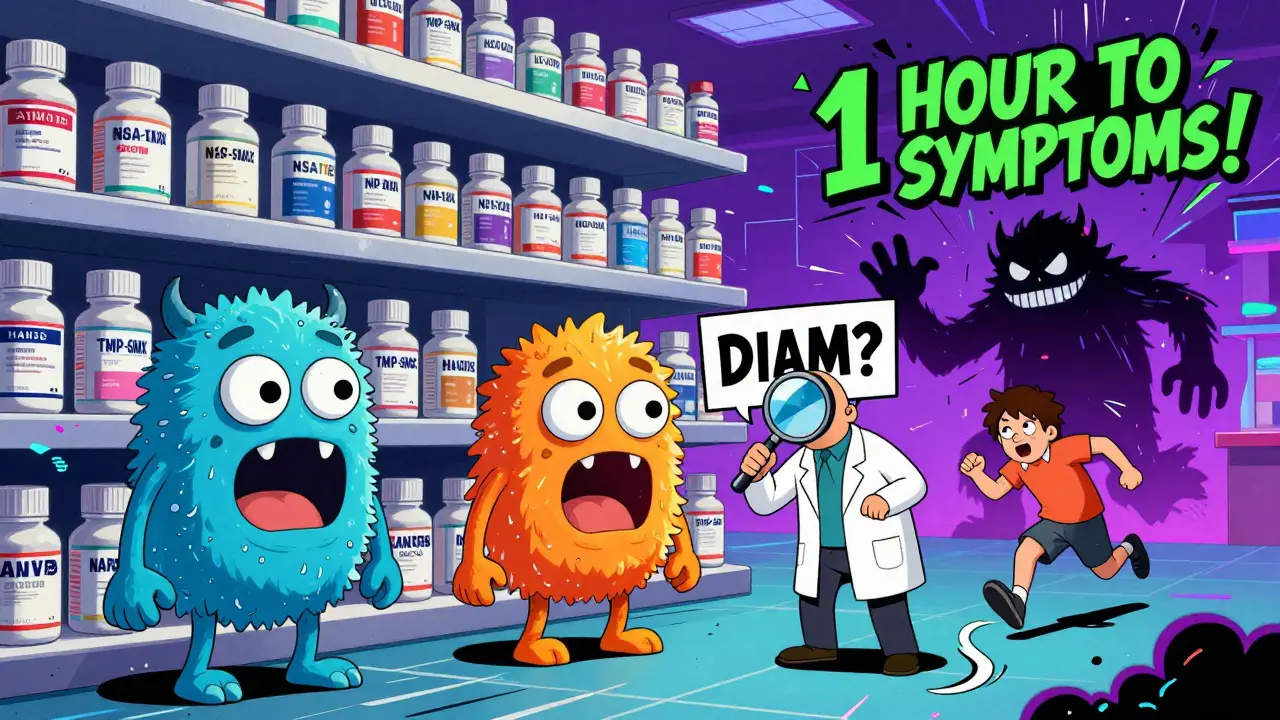
The timing matters. With TMP-SMX, symptoms usually appear within 24-72 hours of starting the drug. For lamotrigine (an epilepsy and mood stabilizer), some patients react within an hour of re-exposure. NSAIDs often need repeated doses before a reaction kicks in.
What Do the Symptoms Look Like?
DIAM doesn’t have a unique signature. Its symptoms are nearly identical to viral or bacterial meningitis:
- Severe headache (98% of cases)
- Fever (76%)
- Stiff neck (89%)
- Sensitivity to light (65%)
- Nausea or vomiting
- Confusion or altered mental status (12%)
If you’re on a new medication and suddenly develop these symptoms, don’t wait. Even if you feel otherwise healthy, this isn’t a typical cold or flu. The key difference from infectious meningitis? Symptoms usually start improving within 24-72 hours after stopping the drug. In most cases, patients feel back to normal within five days of hospitalization.
How Is It Diagnosed?
There’s no single blood test or scan that confirms DIAM. Diagnosis is a process of elimination - and timing is everything.
First, doctors check the CSF through a lumbar puncture. In DIAM, the fluid typically shows:
- White blood cell count between 100-1,000 cells/μL (mostly neutrophils)
- Normal glucose levels (92% of cases)
- Elevated protein (78% of cases, usually 45-250 mg/dL)
- No bacteria or viruses detected in cultures
But here’s the catch: these findings overlap with bacterial meningitis. That’s why doctors start antibiotics right away - just in case. You can’t risk missing a life-threatening infection.
The real diagnostic clues come from your history:
- Did you start a new medication within the last 7 days? (68% of cases occur within this window.)
- Have you taken this drug before? Recurrence after re-exposure is a strong indicator.
- Do you have an autoimmune condition like lupus? That increases your risk with NSAIDs.
- Are you immunocompromised? HIV, transplant recipients, and those on immunosuppressants are at higher risk for antibiotic-related DIAM.
The American Academy of Neurology’s 2022 guidelines say you need all four of these to confidently diagnose DIAM:
- Temporal link between drug and symptoms
- Ruling out infection, cancer, or autoimmune disease
- Symptoms improve after stopping the drug
- Reaction returns if you take the drug again (only done under strict supervision)
Meeting all four gives you 95% diagnostic certainty.
Why Is This So Hard to Spot?
DIAM is sneaky. It hides in plain sight.
In cancer patients on cytosine arabinoside, doctors often assume the meningitis is from the tumor spreading to the meninges. In HIV patients, it’s easy to blame an opportunistic infection. Even in healthy people, a headache and fever after taking ibuprofen might just be labeled as "viral."
One 2023 case report from Norway showed how easily it’s missed. A woman developed severe headache and fever after taking ibuprofen for a migraine. She was treated for bacterial meningitis, given antibiotics, and kept in the hospital for days. Only when her symptoms improved after stopping ibuprofen - and returned when she took it again - did the team realize it was DIAM.
That’s why a detailed medication history is critical. Don’t just list your prescriptions. Include every OTC pill, herbal supplement, or recent vaccine. Even a single dose of ibuprofen can trigger it.
What Happens After Diagnosis?
There’s no special antidote. The only treatment is stopping the drug.
Most people feel better within 1-5 days. Headache can linger for up to two weeks in about 15% of cases, but there’s no lasting damage if caught early. No steroids, no antivirals, no antibiotics needed - unless there’s still uncertainty about infection.
Important: Never restart the drug without medical supervision. Rechallenge is only done in controlled settings, usually in research or when no alternative medication exists.
Doctors now track DIAM through pharmacovigilance databases. In France, over 300 cases were recorded between 2010 and 2020. The trend is rising - especially with newer biologic drugs used for arthritis, psoriasis, and cancer. That’s why awareness among rheumatologists and oncologists is growing.
What’s Next for DIAM Research?
Scientists are working on better ways to tell DIAM apart from infection before it’s too late.
A 2023 NIH-funded study (NCT04892527) is looking at cytokine patterns in CSF. If certain proteins spike only in DIAM, that could become a fast diagnostic tool - no more waiting for cultures to rule out bacteria.
Another goal is creating standardized diagnostic criteria worldwide. Right now, practices vary. Some hospitals test for drug levels in CSF. Others rely on clinical history alone. Better guidelines could save lives.
When to Seek Help
If you’re on any of these medications and suddenly get a bad headache, fever, and stiff neck - go to the ER. Don’t wait. Even if you think it’s "just a virus," ruling out infection is urgent.
And if you’ve had DIAM before, make sure every doctor you see knows. Add it to your medical alert bracelet. Tell your pharmacist. The risk of recurrence is real, and the next episode could be worse.
Bottom Line
Drug-induced aseptic meningitis is rare, but it’s not rare enough to ignore. It’s a silent side effect hiding behind common symptoms. The key is awareness - of your meds, your body’s signals, and the importance of a detailed history. If you’re on long-term NSAIDs, immunoglobulin, or biologics, pay attention. If symptoms appear shortly after starting a new drug, suspect DIAM. Stop the drug. Get tested. You might just avoid a hospital stay - and a misdiagnosis that could have been deadly.

Reviews