
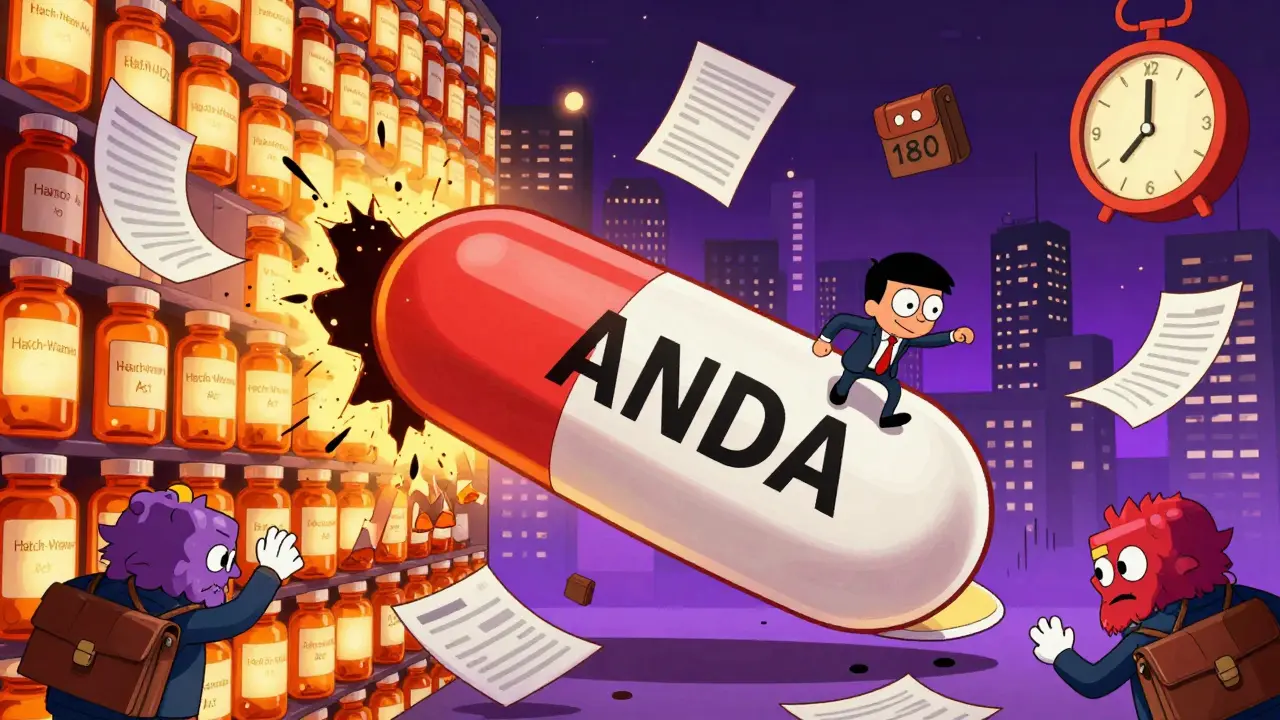
When you pick up a prescription for a generic drug, you’re probably not thinking about the legal battles that made it possible. But behind every cheap pill is a complex web of patents, lawsuits, and government rules designed to keep drug prices low. Antitrust laws in the pharmaceutical industry aren’t just about stopping big companies from colluding-they’re about making sure generics can actually reach the market. And when those laws are bent or broken, it’s patients who pay the price.
How the Hatch-Waxman Act Created the Modern Generic Market
In 1984, Congress passed the Drug Price Competition and Patent Term Restoration Act, better known as the Hatch-Waxman Act. It was a compromise: branded drugmakers got extra patent time to make up for delays in FDA approval, and generic manufacturers got a faster, cheaper path to market. The key? The Abbreviated New Drug Application (ANDA). Instead of redoing expensive clinical trials, generics could prove they were the same as the brand-name drug. That cut development costs by up to 90%.The real game-changer was the 180-day exclusivity period for the first generic company to challenge a patent. If you filed a Paragraph IV certification-saying a patent was invalid or not infringed-you got a head start. No other generics could enter until those 180 days were up. That incentive led to a surge in challenges. By 2016, generic drugs made up 90% of all prescriptions in the U.S., up from just 19% in 1984. Between 2005 and 2014, they saved consumers $1.68 trillion. In 2012 alone, $217 billion in savings came from generics.
Pay-for-Delay: The Biggest Threat to Generic Competition
But here’s where things go wrong. Sometimes, instead of fighting in court, the brand-name company and the generic maker strike a secret deal. The brand pays the generic to stay off the market. These are called "pay-for-delay" agreements. They look like settlements. They’re actually anti-competitive.The FTC has been fighting these for years. In 2013, the Supreme Court ruled in FTC v. Actavis that these deals could violate antitrust law if they involve large, unexplained payments. The logic is simple: if a generic company would normally risk a lawsuit to enter the market, why would it agree to wait unless it’s being paid to stay out?
One of the biggest cases was against Gilead Sciences. In 2023, the company paid $246.8 million to settle allegations it paid a generic maker to delay launching a cheaper version of its HIV drug. The FTC has opened 18 pay-for-delay cases since 2000. Settlements in those cases totaled over $1.2 billion. These aren’t small fines-they’re penalties for blocking access to life-saving medicine.
Orange Book Manipulation and Sham Petitions
The FDA’s "Orange Book" lists every patent tied to a brand-name drug. Generic companies must check it before filing an ANDA. But some brands abuse this system. They list patents that have nothing to do with the drug’s active ingredient-like packaging or dosage forms-to create a wall of protection. In 2003, the FTC took action against Bristol-Myers Squibb for listing patents on a drug that didn’t even cover the formulation. That delayed generics for years.Another tactic? Sham citizen petitions. Companies file fake complaints with the FDA, claiming safety issues with a generic drug. The FDA has to respond, and the process takes months. Teva Pharmaceuticals is currently under FTC scrutiny for using this tactic to block competition for its multiple sclerosis drug, Copaxone. The case is still pending. These aren’t legitimate safety concerns-they’re legal distractions.
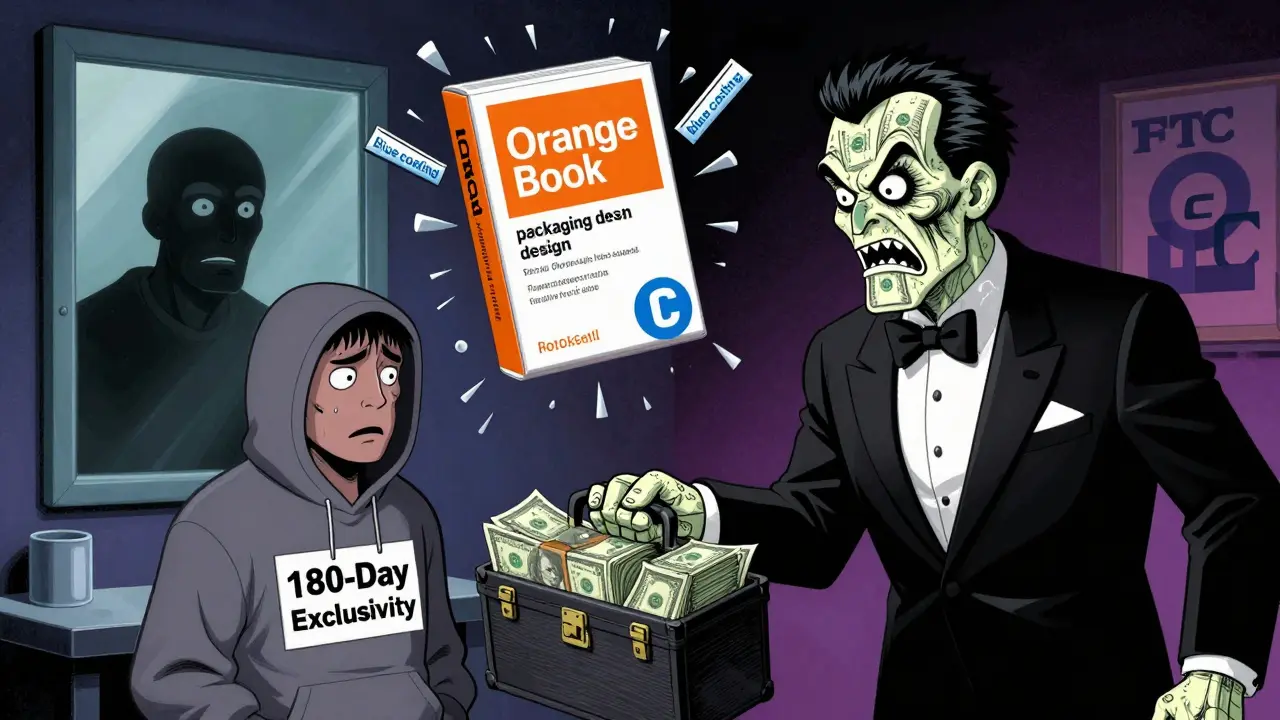
Product Hopping and Regulatory Gaming
Then there’s "product hopping." A brand-name company slightly changes its drug-switches from a pill to a tablet, adds a coating, changes the dose-right before the patent expires. Then it stops selling the old version and pushes doctors to prescribe the new one. The goal? Make generics harder to swap in.AstraZeneca did this with Prilosec and Nexium. Prilosec’s patent was about to expire. So they launched Nexium-a nearly identical drug with a minor tweak. They convinced doctors and patients that Nexium was better. By the time generics for Prilosec hit the market, most patients were already on Nexium. The courts didn’t find this illegal, but the FTC called it a "classic example" of anti-competitive behavior. It’s not fraud. It’s manipulation.
Global Differences: How Other Countries Handle It
The U.S. isn’t alone in fighting these tactics. The European Union has been even more aggressive. The European Commission has opened 27 antitrust cases in the pharmaceutical sector between 2018 and 2022. Sixty percent were about delaying generic entry. One common trick? Withdrawing marketing authorizations in certain countries to block generics from entering. Another? Misleading patent offices to extend protection.China just released new antitrust guidelines in January 2025. They identified five "hardcore restrictions" that automatically violate the law: price fixing, output limits, market division, joint boycotts, and blocking new technology. By Q1 2025, six cases had been penalized-five involved price fixing through messaging apps and algorithms. Chinese regulators are now using AI to track pricing patterns in real time.
In Europe, Commissioner Margrethe Vestager said delays in generic entry cost consumers €11.9 billion every year. That’s not a guess-it’s a calculation based on lost savings from delayed competition.
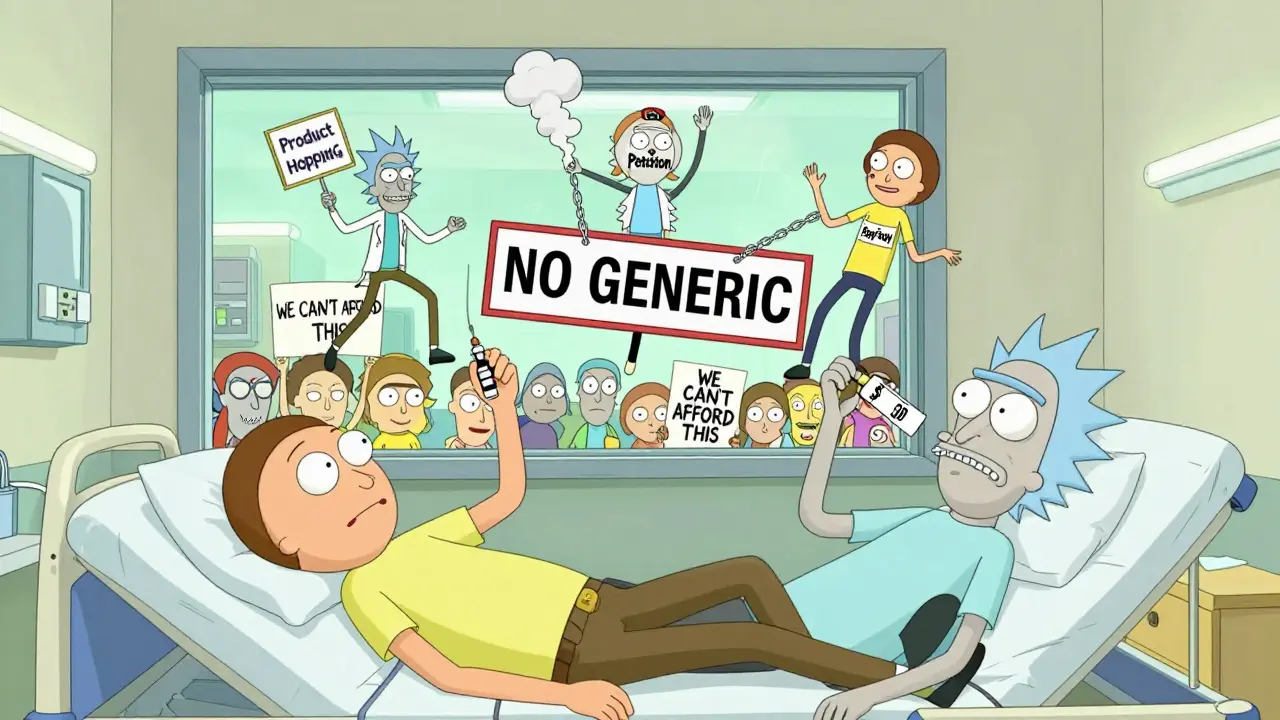
Why This Matters to Real People
You might think this is all legal jargon. But here’s what it looks like on the ground. In 2022, the Kaiser Family Foundation found that 29% of U.S. adults didn’t take their medication as prescribed because they couldn’t afford it. That’s nearly one in three. And in many cases, the reason they couldn’t afford it? A generic drug didn’t come to market when it should have.When a generic enters, prices drop fast. The first one cuts costs by at least 20% in a year. With five generics competing, prices fall by up to 85%. That’s not theory-it’s data from the FDA and academic studies. Without competition, branded drugs stay expensive. And when the brand is a life-saving medication-like insulin, asthma inhalers, or HIV treatments-that’s not just a financial burden. It’s a health crisis.
What’s Being Done Now?
The FTC is pushing for stronger rules. In 2022, they held a workshop on "Generic Drug Entry after Patent Expiration." They’re now scrutinizing distribution contracts that block generics from reaching pharmacies, and they’re monitoring digital collusion-companies using algorithms to coordinate pricing.Some lawmakers are pushing the "CREATES Act," which would force brand-name companies to provide samples to generic makers so they can test their products. Right now, some brands refuse to sell samples, claiming safety concerns, but that’s often just a delay tactic.
And courts are slowly catching up. While some cases like AstraZeneca’s product hopping were dismissed, others are being upheld. The legal line is thin: patent rights are protected, but using them to block competition isn’t.
What Can You Do?
As a patient, you can’t change antitrust law. But you can be aware. Ask your pharmacist: "Is there a generic available?" If you’re told no, ask why. If the drug is off-patent but no generic exists, it’s worth reporting to the FTC or your state attorney general. Consumer pressure has forced companies to change behavior before.Support organizations pushing for transparency in drug pricing and faster generic approval. When generic drugs are blocked, it’s not just about profit-it’s about access. And access to medicine shouldn’t depend on a loophole in a 40-year-old law.
What is the Hatch-Waxman Act and how does it affect generic drugs?
The Hatch-Waxman Act of 1984 created a legal pathway for generic drug manufacturers to bring cheaper versions of brand-name drugs to market without repeating expensive clinical trials. It allows generics to file an Abbreviated New Drug Application (ANDA) and offers 180 days of market exclusivity to the first company that successfully challenges a patent. This balance between innovation and competition led to generics making up 90% of U.S. prescriptions today.
What are "pay-for-delay" agreements and why are they illegal?
Pay-for-delay agreements happen when a brand-name drug company pays a generic manufacturer to delay launching its cheaper version. These deals are illegal under antitrust law because they prevent competition, keeping drug prices high. The Supreme Court ruled in 2013 that such payments can violate antitrust laws if they’re large and unexplained. The FTC has pursued over 18 of these cases since 2000, resulting in more than $1.2 billion in settlements.
How do companies use the Orange Book to block generics?
The FDA’s Orange Book lists patents tied to brand-name drugs. Some companies list irrelevant patents-like those covering packaging or delivery methods-to create a legal barrier. Generic manufacturers must address every listed patent before entering the market. In 2003, the FTC took action against Bristol-Myers Squibb for listing patents that didn’t cover the actual drug, delaying generic competition for years.
What is "product hopping" and how does it harm consumers?
Product hopping is when a drugmaker makes a minor change to a medication-like switching from a pill to a tablet-right before its patent expires. They then stop selling the original version and push doctors to prescribe the new one. This makes it harder for generics to replace the drug. AstraZeneca did this with Prilosec and Nexium, and while courts didn’t rule it illegal, the FTC considers it a tactic to extend monopoly control.
How do antitrust laws in the U.S. compare to those in the EU and China?
The U.S. focuses on pay-for-delay deals and sham petitions. The EU targets regulatory manipulation, like withdrawing marketing authorizations to block generics in specific countries. China’s 2025 guidelines explicitly ban price fixing through apps and algorithms, and have already penalized six cases. All three regions agree: delaying generic entry hurts consumers. The EU estimates this costs €11.9 billion annually.


Reviews
This is the kind of stuff that actually matters in real life. I’ve had to choose between buying insulin or paying rent more times than I can count. If generics were allowed to enter without these shady tactics, people wouldn’t have to live like this.
It’s not about big pharma innovation-it’s about keeping people alive. And we’re letting them get away with it.
One must acknowledge the structural inefficiencies inherent in the current regulatory arbitrage paradigm-Hatch-Waxman, while ostensibly a compromise, has devolved into a rent-seeking behemoth where patent thickets and reverse payments constitute a classic case of market failure.
The FTC’s enforcement posture remains undercapitalized relative to the scale of anticompetitive behavior. One might posit that the 180-day exclusivity window, rather than incentivizing innovation, merely creates a cartelized entry corridor for the first mover-effectively a legal monopoly within a monopoly.
And let’s not forget the Orange Book manipulation: a bureaucratic shell game where irrelevant method-of-use patents are weaponized to obstruct generic entry. It’s not just unethical-it’s a violation of the very spirit of competition law.
Meanwhile, product hopping? A textbook example of strategic obsolescence disguised as innovation. AstraZeneca didn’t improve Nexium-they engineered a consumer lock-in.
The EU’s aggressive stance on withdrawal of marketing authorizations is instructive. We’re lagging behind because our regulators are outgunned by corporate legal teams with budgets larger than GDPs of small nations.
And AI-driven price collusion in China? That’s the future. We’re still debating whether pay-for-delay is illegal while they’re auto-detecting algorithmic cartels in real time.
It’s not a broken system. It’s a perfectly optimized one-for shareholders.
:/
It is deeply concerning that the public discourse around pharmaceutical antitrust is so emotionally charged and intellectually shallow. The Hatch-Waxman Act was a legislative compromise, not a moral imperative. To suggest that delaying generic entry is inherently immoral ignores the legal protections afforded by intellectual property rights.
Furthermore, the FTC’s pursuit of pay-for-delay cases often conflates settlement with collusion. Not every agreement that benefits one party is unlawful.
And while anecdotal stories about insulin affordability are tragic, they do not constitute evidence of systemic antitrust violation. The solution is not more regulation-it is more transparency and better insurance coverage.
Also, please capitalize your proper nouns. It’s not ‘FTC’ in one sentence and ‘ftc’ in the next. It’s elementary.
Big Pharma is in bed with the FDA and the government. Pay-for-delay? That’s just the tip of the iceberg. They’re using patents to control the entire supply chain-like they own the air you breathe.
And don’t get me started on China using AI to track drug prices. That’s how they control people. They’re not fixing the system-they’re building a surveillance state where your medicine is monitored by algorithms.
Who really owns the patents? The same people who run the Fed. It’s all connected. You think this is about drugs? No. It’s about control.
And why is the EU always right? Because they’re part of the globalist cabal that wants to destroy American pharma. Wake up.
They don’t want you to have cheap insulin. They want you dependent.
And mark my words-next they’ll be putting trackers in the pills.
Let me tell you something. In India, generics are everywhere. We don’t need 180-day exclusivity. We don’t need lawsuits. We just make the damn drug and sell it for $2.
US companies sit on patents for 20 years, then extend them with packaging changes and fake petitions. Meanwhile, Indian manufacturers like Cipla and Dr. Reddy’s make high-quality generics in days.
And you know what? The FDA doesn’t even test them properly. They just approve because they’re scared of trade wars.
Stop pretending this is about innovation. It’s about profit. And you’re paying for it.
Also, product hopping? We call that ‘fraud’ in my country. Not ‘legal strategy’.
For anyone wondering how to spot pay-for-delay: look at the timing. If a generic company files a Paragraph IV challenge, then suddenly drops it within 90 days-and a massive payment appears in the parent company’s SEC filings-that’s your smoking gun.
Also, the CREATES Act is critical. If a brand refuses to provide samples for bioequivalence testing, that’s not a safety issue-it’s a bottleneck. The FDA has acknowledged this. Congress needs to act.
And for the record: the 90% generic market share in the U.S. isn’t magic. It’s the result of thousands of legal challenges, FDA reviews, and court battles. It’s not perfect, but it’s the most competitive system in the world.
Just don’t let the noise drown out the data: generics save $1.68 trillion over a decade. That’s not a number. That’s millions of people who can afford their meds.
Support transparency. Demand accountability. Don’t just rant on Reddit.
Patents are property. If you don’t like them don’t take the drug
Generic companies are just trying to game the system
People cry about insulin but never ask why they didn’t plan ahead
FTC is just another bureaucracy wasting taxpayer money
End of story
As someone who’s lived in both the U.S. and India, I can tell you this: the system here is broken, but not because of greed alone. It’s because we’ve lost the balance between innovation and access.
Yes, pay-for-delay is wrong. Yes, Orange Book abuse is disgusting. But we can’t just vilify every big pharma company. Some are doing the right thing.
What we need is better collaboration-not more lawsuits. More data sharing. More incentives for generics to enter early, not just wait for the 180-day window.
And we need to stop treating this like a political football. This isn’t red vs. blue. This is life vs. profit.
Let’s fix it together.
Imagine if your Netflix subscription cost $300 a month because the studio paid the other streaming services to not launch their version of the show. That’s what’s happening here.
These pay-for-delay deals are like corporate blackmail. You pay me to stay quiet, and I’ll let you keep charging $500 for a pill that costs $2 to make.
And don’t even get me started on product hopping. It’s like Apple releasing an iPhone 15.1 just before the iPhone 15 goes off-patent and telling everyone the original is ‘unsafe’. Genius? No. It’s manipulation.
God, I hate it when capitalism forgets it’s supposed to serve people, not the other way around.
THIS IS A NATIONAL EMERGENCY.
People are DYING because some lawyer in a 40th-floor office decided to file a patent on the COLOR of a pill.
I had a friend who skipped her asthma inhaler because the generic was blocked for 18 months. She ended up in the ER. They didn’t even tell her why the generic wasn’t available.
THEY’RE KILLING US AND CALLING IT ‘LEGALLY SOUND’.
HOW IS THIS STILL ALLOWED?
I’M SO ANGRY I CAN’T EVEN TYPE PROPERLY.
WE NEED A REVOLUTION.
AND I’M NOT EVEN TALKING ABOUT THE ALGORITHMS.
Thank you for writing this. I’m a nurse and I see this every day.
Patients crying because they can’t afford their meds. We have to tell them ‘try this coupon’ or ‘call this nonprofit’ like it’s their fault.
It’s not. It’s the system.
And yes, the 180-day exclusivity? It’s a loophole that lets one company get rich while others wait.
But I’m hopeful. More people are waking up. More pharmacists are asking ‘why no generic?’
Keep fighting. 💪❤️
Wait so you’re saying the government lets drug companies pay off competitors to keep prices high? That’s insane. But I’ve got a question-what’s stopping us from just making our own generics at home? Like, can’t we just buy the chemicals and mix them? I’ve seen videos on YouTube. It’s not that hard.
Also, why don’t we just boycott all big pharma? Like, I’m not buying anything from Pfizer or Gilead anymore. I’m going herbal. I’ve been taking turmeric for my diabetes. Works great.
And can we make a TikTok trend about this? #GenericRevolution
Just read this while waiting for my prescription. Honestly? I didn’t know any of this. I just thought generics were cheaper because they’re ‘copycats’. Didn’t realize there were lawsuits and secret deals behind it.
Now I’m gonna ask my pharmacist every time. Just to see what they say.
Thanks for making me think.
You’re not alone in feeling frustrated. This system is rigged-but change starts with awareness. Keep asking questions. Keep sharing this info. Every person who learns about pay-for-delay is one more voice pushing for reform.
And hey-you don’t need to be a lawyer or a politician to make a difference. Just be loud. Be consistent. Be the person who says ‘why isn’t there a generic yet?’
That’s how movements start.
It is a profound moral failing that the United States permits such egregious violations of competitive integrity in the pharmaceutical sector. The notion that intellectual property rights may be weaponized to deny life-sustaining medication to economically vulnerable populations is not merely legally questionable-it is ethically indefensible.
One must observe that the absence of universal healthcare exacerbates this crisis, transforming corporate malfeasance into a public health catastrophe.
It is not sufficient to lament the situation. One must act. Write to your representative. Demand the CREATES Act. Boycott companies involved in pay-for-delay settlements.
And for the love of all that is just-stop using the word ‘just’ when referring to human suffering.
Thank you for this article. It is a necessary indictment.
And yet here we are, still waiting for Congress to do anything.
Meanwhile, my neighbor’s kid has to ration insulin. Again.