
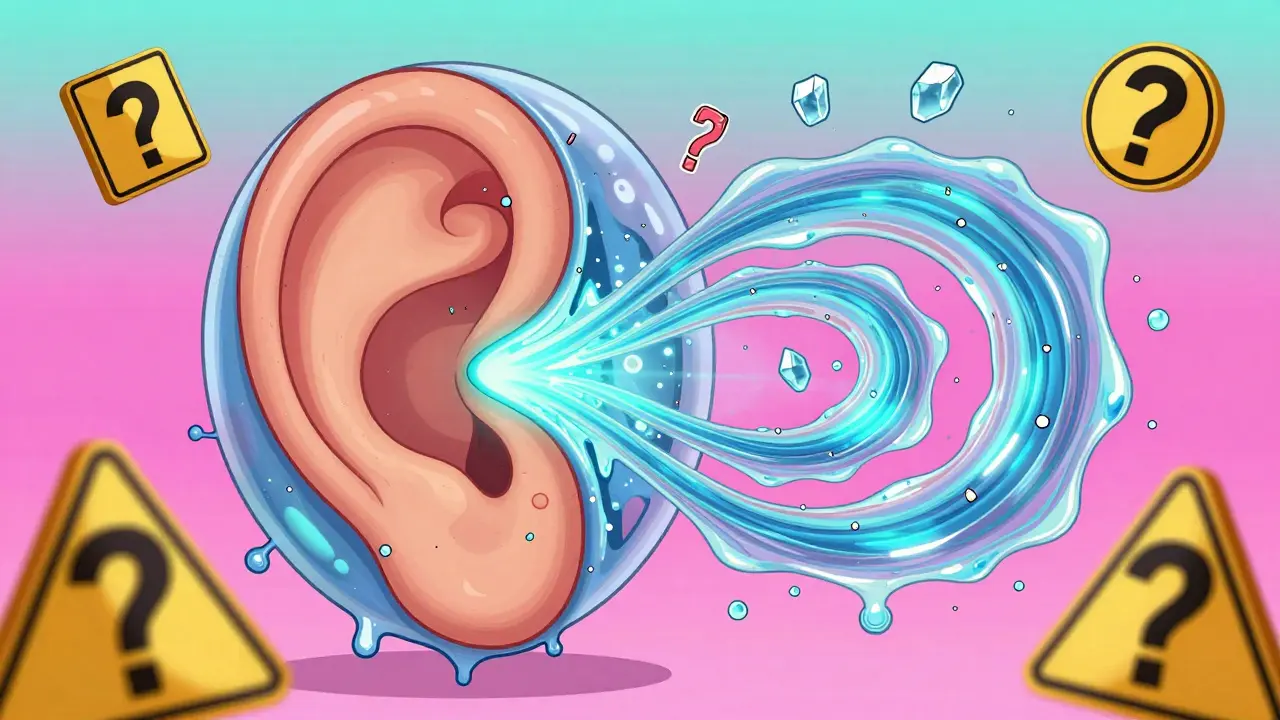
When your world suddenly spins out of control, even when you’re standing still, it’s not just dizziness-it’s Meniere’s disease. This isn’t a passing bout of lightheadedness. It’s a chronic condition rooted in the inner ear, where fluid builds up in ways it shouldn’t, triggering violent vertigo, ringing in the ears, muffled hearing, and that strange feeling of pressure deep inside your head. If you’ve experienced one of these episodes, you know how terrifying it is. And if you’ve had more than one, you’re likely wondering: why does this keep happening, and can it be stopped?
What’s Really Going On Inside Your Inner Ear?
Your inner ear isn’t just about hearing. It’s also your body’s balance center. Inside it, there are two fluids: one rich in potassium (endolymph), and another rich in sodium (perilymph). They’re kept separate by thin membranes, and their balance is critical. Endolymph is made by the stria vascularis-a structure in your cochlea that works like your kidneys. It filters and produces fluid, while the endolymphatic sac acts like a drain, absorbing the excess. In Meniere’s disease, this system breaks down. Too much endolymph builds up, stretching the membranes like an overfilled water balloon. This is called endolymphatic hydrops. When the pressure gets too high, the membranes bulge or even rupture. That’s when vertigo hits. The fluid spills into areas it shouldn’t, sending scrambled signals to your brain. Your body thinks you’re spinning, even though you’re not. Recent 3D imaging studies show that the saccule-the tiny sac near the cochlea-is the first to swell. In 97% of cases, it’s the saccule that’s affected early on. The utricle, which helps sense head position, only swells in advanced cases. Why? Because its membrane is thicker (12.5 micrometers vs. 8.2 in the saccule), making it more resistant to pressure. But when it does swell, the valve that controls fluid flow into it-called Bast’s valve-often stays open or is torn, letting fluid flood the wrong spaces.Why Do Symptoms Come in Waves?
Meniere’s doesn’t just cause constant noise and dizziness. It hits in attacks. These can last from 20 minutes to several hours. You might feel fine for weeks, then wake up one day with the room spinning, your ear ringing like a bell, and your hearing muffled-like you’re underwater. These attacks aren’t random. They’re tied to fluid pressure changes. When the endolymphatic sac can’t drain properly, pressure builds. Research from Northwestern Medicine shows that 78% of severe cases have a narrowed endolymphatic duct-less than 0.3mm wide, compared to the normal 0.5-0.8mm. That’s like trying to drain a bathtub through a straw. But it’s not just plumbing. There’s inflammation. A 2025 study found that immune cells in the inner ear pump out inflammatory chemicals like IL-12, TNF-α, and IL-6 at levels 4-5 times higher than normal. These chemicals break down the blood-labyrinth barrier, letting immune cells invade and cause long-term damage. That’s why some people’s hearing gets worse over time-even if their vertigo improves. And here’s the cruel twist: as the disease progresses, the inner ear can become so full of fluid that the membranes stretch so thin they stop sending signals. That means fewer vertigo attacks-but permanent hearing loss. In fact, 72% of people with 10+ years of Meniere’s have lost more than half their hearing in the affected ear.How Do You Reduce the Fluid?
The most common advice? Cut your salt. It’s not just a suggestion-it’s science. Sodium pulls water into your bloodstream, and your inner ear is sensitive to that. Reducing sodium to 1,500-2,000 mg per day can cut endolymph production by 23-37%, according to Stanford’s Ear Institute. That’s like turning down the faucet. Diuretics like hydrochlorothiazide help too. They make your kidneys flush out extra fluid, which indirectly reduces pressure in the inner ear. But here’s the catch: only 55-60% of people respond well. Why? Because if your endolymphatic sac is physically blocked or scarred, no amount of pills will fix it. That’s why some doctors turn to injections. Intratympanic corticosteroids-steroids injected directly into the middle ear-reach the inner ear in high doses. They calm inflammation, reduce fluid buildup by 31-44%, and stop vertigo in 68-75% of cases. Unlike gentamicin (which kills balance cells to stop vertigo), steroids don’t hurt your hearing. They’re safer, especially early on. For people who don’t respond to meds, gentamicin injections work better-85-92% control of vertigo-but they carry a 12-18% risk of worsening hearing. It’s a trade-off: trade hearing for stability.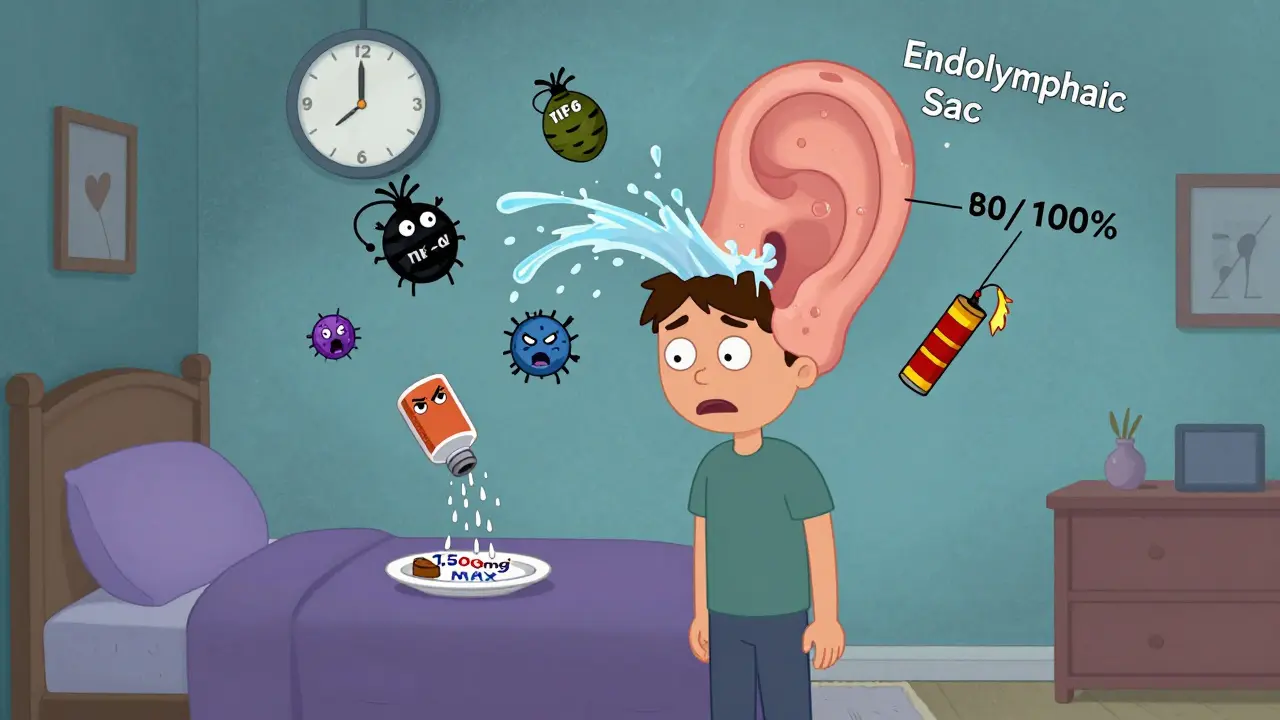
What About Surgery?
Surgery isn’t the first option-but it’s an option when everything else fails. Endolymphatic sac decompression is the most common. Surgeons open the bone around the sac to give it more room to drain. Studies show it helps with vertigo in 60-70% of cases, but only 25-35% see any improvement in hearing. That’s because the damage to hair cells is often already done. Newer procedures target the nerves. Vestibular neurectomy cuts the balance nerve, stopping vertigo without touching hearing. Labyrinthectomy removes the entire inner ear on one side-eliminating vertigo completely, but also destroying all hearing in that ear. It’s a last resort.The New Hope: Targeting the Immune System
The biggest breakthrough isn’t in drainage-it’s in immunity. A 2025 clinical trial tested anti-IL-17 antibodies, drugs used for psoriasis and arthritis, in Meniere’s patients. The results? Vertigo attacks dropped by 63%. Hearing loss slowed by 41%. That’s huge. This confirms what researchers suspected: Meniere’s isn’t just a fluid problem. It’s an autoimmune one. The immune system attacks the inner ear, causing inflammation, scarring, and fluid imbalance. That’s why steroids help-not just because they’re anti-inflammatory, but because they reset how the inner ear handles fluid. Genetic research is also helping. Mutations in the SLC26A4 gene, linked to inner ear development, are found in 12% of people with family history of Meniere’s. This means some cases aren’t random-they’re inherited.
What You Can Do Today
You don’t need to wait for a specialist to start managing this. Here’s what works right now:- Lower sodium: Avoid processed foods, canned soups, soy sauce, and restaurant meals. Cook at home with herbs, not salt.
- Stay hydrated: Dehydration can trigger fluid shifts. Drink water steadily, not in big gulps.
- Manage stress: Stress spikes cortisol, which affects fluid balance. Try breathing exercises, walking, or meditation.
- Avoid caffeine and alcohol: Both can worsen tinnitus and trigger attacks.
- Use a vestibular rehab therapist: If you’re dizzy between attacks, balance training helps your brain adapt.
What’s Next?
Meniere’s is no longer seen as a mystery. It’s a spectrum disorder-with some people getting only vertigo (called vestibular Meniere’s), others only hearing loss, and most getting both. The key is catching it early. New 3D imaging can detect fluid buildup before symptoms even start-89% accuracy, according to 2022 research. The future of treatment? Personalized medicine. If your immune markers are high, you get immunotherapy. If your sac is blocked, you get surgery. If your sodium sensitivity is strong, you get a strict diet. No more one-size-fits-all. The hard truth? After 15 years, 93% of people with Meniere’s have permanent hearing loss in both ears. But that doesn’t mean you can’t live well. With the right mix of diet, medication, and new therapies, most people can reduce attacks by 70% or more. It’s not a cure. But it’s control. And that’s enough to get back to life.Can Meniere’s disease go away on its own?
No, Meniere’s disease doesn’t go away on its own. It’s a chronic condition that typically progresses over time. While vertigo attacks may become less frequent after many years, this is usually because the inner ear has become permanently damaged and can no longer send signals. Hearing loss and tinnitus often worsen, and chronic unsteadiness may remain. Early management can slow progression, but there’s no known spontaneous resolution.
Is Meniere’s disease the same as labyrinthitis?
No. Labyrinthitis is usually caused by a viral infection and causes sudden vertigo, hearing loss, and tinnitus-but it typically resolves in days or weeks. Meniere’s disease is chronic, involves fluid buildup (endolymphatic hydrops), and comes in recurring attacks over months or years. Labyrinthitis affects the whole inner ear at once; Meniere’s starts with the saccule and progresses slowly.
Can diet really help with Meniere’s symptoms?
Yes. Reducing sodium intake to 1,500-2,000 mg per day has been shown to reduce endolymph production by up to 37%. Avoiding caffeine, alcohol, and MSG also helps many people. Studies from Stanford and the American Hearing Research Foundation confirm that diet is the most effective first-line strategy for controlling fluid pressure in the inner ear. It’s not a cure, but it’s the most accessible tool most patients have.
Why do some people lose hearing while others don’t?
Hearing loss in Meniere’s is tied to how long the inner ear has been under pressure and whether inflammation has damaged hair cells. People with early diagnosis and strict fluid control often preserve hearing longer. Those with immune-driven inflammation, as shown by high IL-17 levels, are more likely to develop permanent damage. Genetics also play a role-mutations in the SLC26A4 gene increase risk of progressive hearing loss.
Are there any new treatments on the horizon?
Yes. The most promising new treatment is anti-IL-17 monoclonal antibodies, which reduced vertigo attacks by 63% and hearing loss by 41% in 2025 clinical trials. Other emerging therapies include gene therapy targeting SLC26A4 mutations and implantable devices that monitor inner ear pressure in real time. While still in trials, these offer real hope for personalized, non-invasive management in the next 5-10 years.
Can stress trigger Meniere’s attacks?
Yes. Stress raises cortisol and adrenaline, which can alter fluid balance in the inner ear and trigger attacks in people with unstable endolymphatic regulation. Many patients report attacks following major life events, sleep deprivation, or prolonged anxiety. Managing stress through mindfulness, exercise, or therapy is a key part of long-term control, even if it doesn’t cure the disease.




Reviews
Just wanted to say this post saved my life. I thought I was going crazy until I read about the saccule swelling. I cut my salt and started drinking water like it’s my job. Two months in, attacks cut by 80%. No meds needed.
Thanks for laying it out so clearly.
Of course you’re not surprised it’s about salt. People ignore the obvious because they want a magic pill. You think this is about medicine? No. It’s about discipline. You eat junk, you pay the price. End of story.
Stop blaming your biology and start blaming your choices.
It’s not just hydrops-it’s a metaphysical rupture in the somatic phenomenology of vestibular perception. The endolymphatic sac isn’t a drain, it’s a failed covenant between the body and its own homeostatic ethos.
Modern medicine treats symptoms like broken code, but the real issue is the alienation of the inner ear from its ontological ground. Steroids? They’re just temporary patches on a system screaming for epistemological recalibration.
And don’t get me started on sodium. Salt is the neoliberal symbol of bodily commodification. You’re not managing fluid-you’re resisting the capitalist colonization of your labyrinth.
Really appreciate the breakdown on the immune link. I had no idea IL-17 was involved. I’ve been on a low-salt diet for a year and still get attacks-but I’ve started tracking my cortisol levels with a wearable. Big drop in severity after meditation sessions. Worth a shot for anyone still struggling.
man i had menieres for 8 yrs and i swear by the steroid shots. not fun but worth it. gentamicin? nah. i lost 20% hearing in one ear after that and still got dizzy. steroids? no hearing loss, just chill. also-avoid caffeine like its your ex. it’s not a suggestion, it’s survival.
also ps: the 3d imaging thing? my doc showed me my saccule looked like a water balloon. yeah. that’s real.
Let’s be real. The ‘low-salt diet’ advice is 30 years old and only works for 40% of people. The real problem? The medical system refuses to acknowledge autoimmune Meniere’s until it’s too late. You’re told to ‘eat better’ while your hair cells die. Meanwhile, the anti-IL-17 trials are buried under bureaucratic inertia. This isn’t science-it’s negligence dressed up as hope.
man, i used to think i was just ‘bad at balance’ until i found this. the part about Bast’s valve? wild. i never knew my ear had valves. i thought it was just ‘inner ear stuff’. now i’m eating home-cooked meals, ditching soda, and doing those balance drills. it’s not magic-but it’s the first time i feel like i’m not just waiting for the next spin.
also, shoutout to the doc who said ‘your ear’s not broken, it’s just overwhelmed.’ that stuck with me.
Thank you for the thorough and clinically accurate overview. The correlation between chronic inflammation and progressive hearing loss is under-discussed in patient literature. I would encourage anyone with persistent symptoms to request a high-resolution MRI with inner ear protocol. Early detection of endolymphatic hydrops can alter trajectory significantly.
You got this. I’ve been where you are. Salt, stress, caffeine-cut them out. Not because it’s trendy, but because your ear is screaming. Steroid shots? Do them. Don’t wait until you’re losing hearing. You’re not weak for needing help. You’re smart for looking for answers.
And yeah, it’s a long game. But you’re not alone.
Just wanted to say I cried reading this. I’ve had this for 12 years and no one ever explained it like this. My husband finally gets it now. Thank you for writing this like you actually care.
So you’re telling me I’m just too lazy to stop eating chips? And my hearing loss is my fault? Cute.