

When you take a pill once a day instead of three times, it’s not magic-it’s science. Modified-release (MR) formulations are designed to control how and when a drug enters your bloodstream. This isn’t just about convenience. For drugs with narrow therapeutic windows-like warfarin, lithium, or antiepileptics-even small changes in absorption can mean the difference between effective treatment and dangerous side effects. And when generic versions of these drugs hit the market, regulators don’t treat them like ordinary pills. There’s a whole other layer of testing: bioequivalence.
Why Modified-Release Formulations Are Different
Most pills release their drug all at once. That’s immediate-release (IR). But MR formulations-like extended-release (ER), delayed-release, or biphasic tablets-control the timing. Some release part of the dose quickly, then slowly over hours. Others prevent release until the pill reaches the intestine. This design reduces peaks and valleys in blood concentration, which cuts down on side effects and improves patient adherence. Studies show people are 20-30% more likely to stick to a once-daily regimen than a three-times-a-day one.But here’s the catch: if a generic version doesn’t release the drug the same way as the brand-name product, it might not work the same-even if the total amount absorbed is identical. That’s why regulators don’t just look at total exposure (AUC) and peak concentration (Cmax). For MR products, they dig deeper.
What Bioequivalence Really Means for MR Drugs
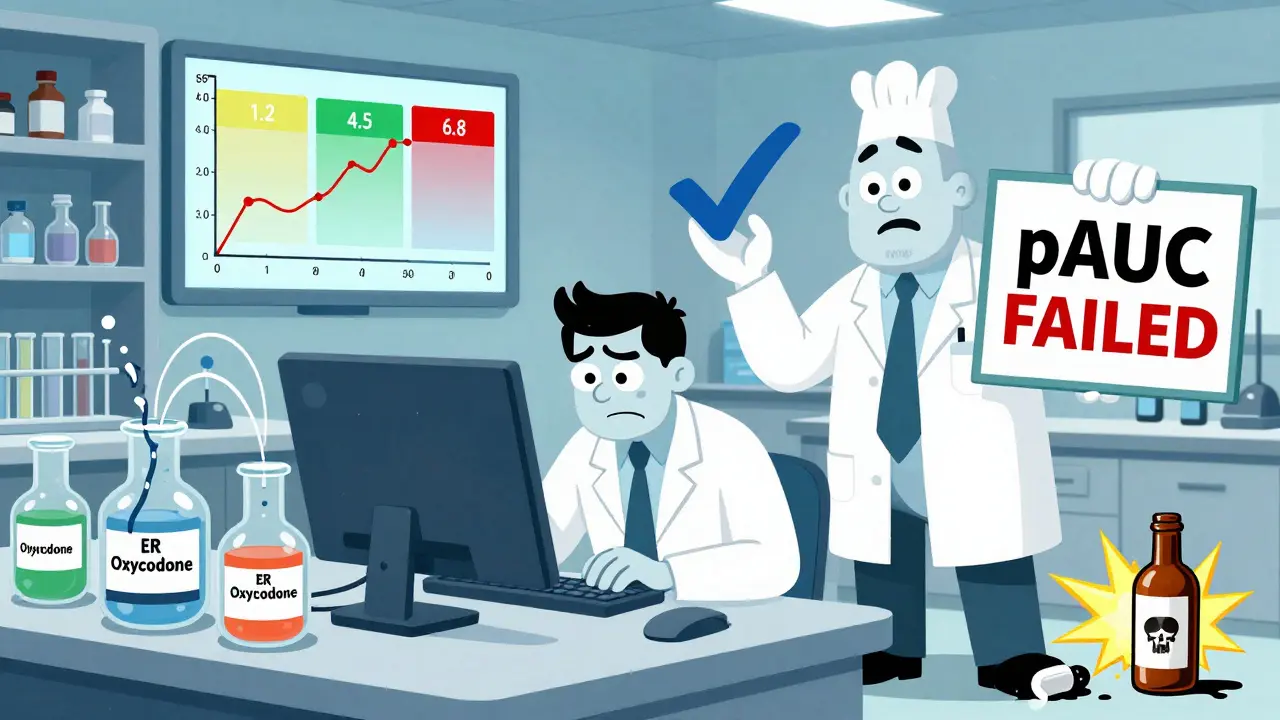
For regular pills, bioequivalence is simple: test two groups, measure AUC and Cmax, and make sure the generic falls within 80-125% of the brand. But for modified-release? That’s not enough. The FDA, EMA, and WHO all agree that timing matters. A drug might release 100% of its content over 24 hours-but if 70% comes out in the first two hours instead of 30%, it could cause nausea, dizziness, or even overdose.That’s why regulators require partial AUC (pAUC) measurements. For example, with Ambien CR (zolpidem extended-release), scientists must measure two separate windows: the first 1.5 hours (the quick-release portion) and then from 1.5 hours to infinity (the slow-release part). Both must fall within the 80-125% range. If one fails, the whole product gets rejected-even if the overall AUC looks perfect.
And it gets more complex. For drugs that release in multiple phases-like some painkillers or ADHD meds-each phase needs its own pAUC. The FDA’s 2022 guidance says this isn’t optional. In fact, 22% of MR generic applications were rejected between 2018 and 2021 because they didn’t properly assess these partial curves.
How Testing Differs Between Regulators
The FDA, EMA, and WHO don’t all agree on how to test MR products. This creates headaches for manufacturers trying to sell globally.The FDA almost always uses a single-dose, fasting study. Why? Because it’s more sensitive. It shows how the drug behaves under worst-case conditions-no food, no accumulation, no interference. According to former FDA director Vinod P. Shah, single-dose studies reveal formulation flaws better than multiple-dose ones. Since 2015, 92% of approved ER generics used this method.
The EMA, on the other hand, sometimes still requires steady-state studies-where patients take the drug daily for days or weeks until blood levels stabilize. They argue this better reflects real-world use, especially for drugs that build up in the body. But critics like Dr. Lawrence Lesko say this adds unnecessary cost and time, with little clinical benefit for most products.
Then there’s dissolution testing. The FDA demands testing at three pH levels-1.2 (stomach), 4.5 (upper intestine), and 6.8 (lower intestine)-to simulate how the tablet behaves as it moves through the GI tract. The EMA accepts this too, but only for tablets. For beaded capsules? They only require one pH condition. And the WHO? It claims MR bioequivalence criteria are “essentially the same” as for IR drugs-a position most regulators reject.
Special Cases: Alcohol, High Variability, and Narrow Therapeutic Index
Some MR drugs have extra tests because they’re risky.Alcohol interaction: If a product contains 250 mg or more of active ingredient, the FDA requires testing in 40% ethanol. Why? Alcohol can cause “dose dumping”-where the whole dose releases at once. Between 2005 and 2015, seven ER products were pulled from the market because alcohol triggered dangerous spikes in blood levels. A generic version of an opioid painkiller failed this test in 2019 and was blocked from approval.
Highly variable drugs: For drugs like warfarin or clopidogrel, where patient-to-patient absorption varies wildly (within-subject CV >30%), regulators use Reference-Scaled Average Bioequivalence (RSABE). This allows wider acceptance limits-but only if the reference product itself is highly variable. The upper limit caps at 57.38% of the reference’s variability. Implementing RSABE adds 6-8 months to development time, according to a Mylan clinical pharmacologist.
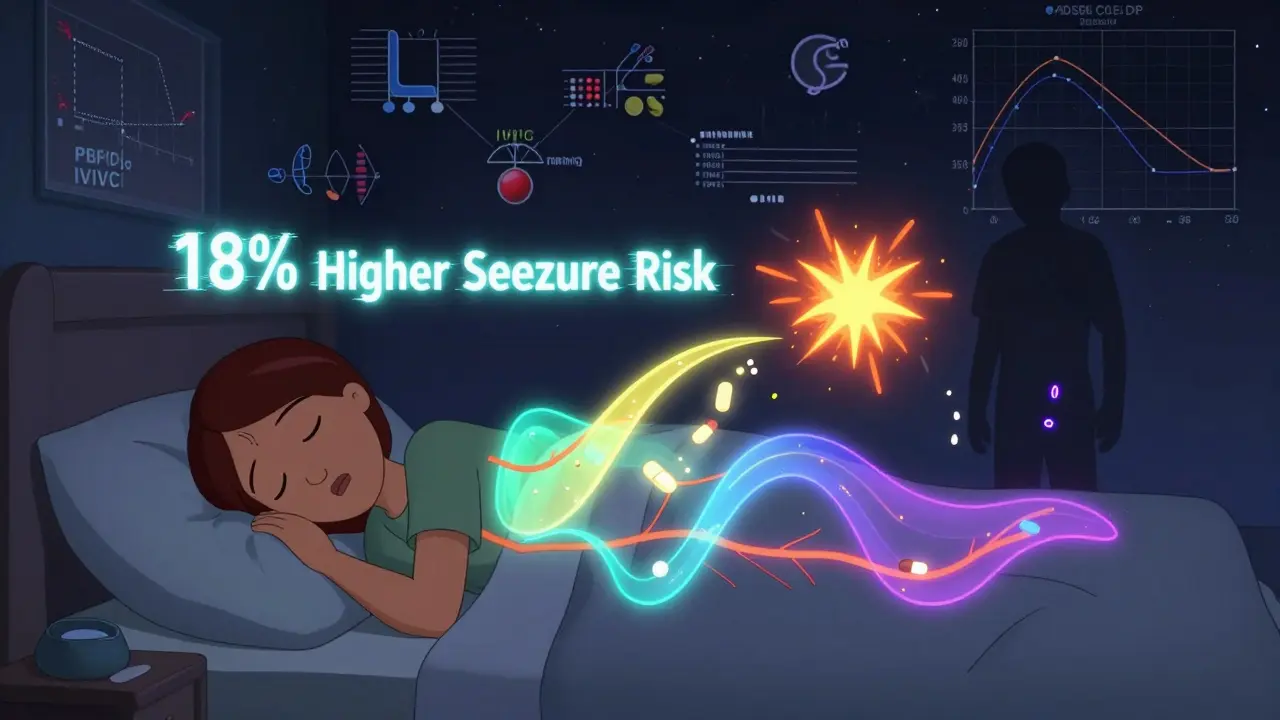
Narrow therapeutic index (NTI): For drugs like levothyroxine or phenytoin, the FDA requires tighter limits: 90.00-111.11% instead of 80-125%. This leaves less room for error. One 2016 study in Neurology found that 18% of generic MR antiepileptic drugs had higher seizure rates than the brand-even though they passed standard bioequivalence tests. That’s why NTI MR drugs need extra scrutiny.
Real-World Challenges and Costs
Developing a generic MR drug isn’t just harder-it’s way more expensive. A typical IR generic costs $3-5 million to bring to market. An MR generic? $8-12 million. Why? Because of the complex studies.Single-dose MR bioequivalence studies cost $1.2-1.8 million. That’s 30-50% more than IR studies. Dissolution testing requires specialized equipment (USP Apparatus 3 or 4), not the standard paddle method. Statistical analysis for RSABE or pAUC needs advanced software like Phoenix WinNonlin or NONMEM. And if you fail? You start over.
One Teva formulation scientist reported that 35-40% of early ER oxycodone prototypes failed dissolution testing across all three pH levels. Another company spent $1.5 million and 10 months developing a biowaiver for tacrolimus ER-only to succeed because their dissolution profile matched the reference so closely (f2=68).
And failure isn’t rare. The 2012 rejection of a generic Concerta (methylphenidate ER) was a landmark case. The FDA said the product didn’t adequately mimic the brand’s early release phase (0-2 hours). Without that, the drug couldn’t control morning symptoms in children. That single failure delayed generic access for years.
What’s Changing? The Future of MR Bioequivalence
The regulatory landscape is shifting. The EMA’s 2023 draft guideline proposes dropping steady-state studies for most MR products-aligning closer to the FDA. That could save millions in development costs.More promising? In vitro-in vivo correlation (IVIVC). If a tablet’s dissolution profile in a lab perfectly predicts how it behaves in the body, regulators may waive clinical studies entirely. The FDA has approved 12 such biowaivers since 2019, including for extended-release paliperidone. This is the future: less testing, faster approvals, lower costs.
And then there’s PBPK modeling-physiologically based pharmacokinetic simulations. By 2022, 68% of big pharma companies were using these models to predict how a generic would behave before running human trials. This isn’t sci-fi-it’s standard practice now.
By 2028, IQVIA predicts MR formulations will make up 42% of all prescription drug sales. Aging populations, chronic diseases, and demand for once-daily dosing will keep driving growth. But only those who master the science of bioequivalence will succeed.
Why can’t we just use the same bioequivalence rules for modified-release drugs as we do for regular pills?
Because timing matters. A regular pill releases all its drug quickly, so total exposure (AUC) and peak level (Cmax) tell you enough. But with modified-release, the drug comes out in stages. If a generic releases too much too soon, or too slowly, it can cause side effects or fail to work. Regulators must check each release phase separately using partial AUCs, which regular bioequivalence rules don’t require.
What’s the biggest mistake generic manufacturers make with MR bioequivalence studies?
Skipping or underestimating partial AUC (pAUC) measurements. Many teams focus only on total AUC and Cmax, assuming those are enough. But for drugs like zolpidem, methylphenidate, or duloxetine ER, the early release phase (first 1-2 hours) is clinically critical. If that phase doesn’t match the brand, the product fails-even if the rest looks perfect. The FDA rejected 22% of MR applications between 2018 and 2021 for this reason.
Do alcohol interaction tests really matter for extended-release drugs?
Yes, especially for opioids, stimulants, and other drugs with high doses. Alcohol can dissolve the coating or matrix holding the drug back, causing the entire dose to flood into the bloodstream at once. This is called “dose dumping.” Between 2005 and 2015, seven ER products were withdrawn because of this risk. The FDA now requires testing in 40% ethanol for any ER product with ≥250 mg of active ingredient. It’s not optional-it’s a safety gate.
Why do some countries require steady-state studies while others don’t?
The EMA believes steady-state studies (where patients take the drug daily for days) better reflect real-world use, especially for drugs that build up in the body. The FDA disagrees, saying single-dose studies are more sensitive at detecting formulation differences. The EMA’s stance is changing-its 2023 draft guideline proposes eliminating steady-state for most products, aligning with the FDA. This shift could cut development time and cost significantly.
Can a generic modified-release drug pass bioequivalence tests but still be less effective?
Yes. A 2016 study in Neurology found that 18% of generic MR antiepileptic drugs had higher seizure breakthrough rates than the brand, even though they met standard bioequivalence criteria. This suggests that current tests may not capture all clinically relevant differences-especially in how the drug behaves over time in real patients. That’s why regulators are pushing for more sophisticated methods like partial AUC, IVIVC, and PBPK modeling.




Reviews