

When you pick up a prescription, you might see two options: a familiar brand name like Lipitor or a simple label like atorvastatin. One costs $4.50 per pill. The other costs 10 cents. You might wonder - is the cheaper one just as good? For most people, the answer is yes. But it’s not always that simple.
What Makes a Generic Drug the Same?
Generic drugs aren’t copies or knockoffs. They’re exact chemical matches to brand-name drugs. The FDA requires them to contain the same active ingredient, in the same strength, and work the same way in your body. That means if you take 10 mg of generic sertraline, it delivers the same amount of medicine into your bloodstream as 10 mg of Zoloft. The FDA calls this bioequivalence.Here’s how they prove it: Manufacturers run tests showing that the generic drug’s absorption rate falls within 80% to 125% of the brand-name version. In real-world studies, the difference is usually just 3.5%. That’s less than the natural variation your body has from day to day. A 2019 review of 47 studies involving nearly 10,000 patients found that generics performed identically to brand drugs in 98.5% of cases.
So why do they cost so much less? Brand-name companies spend billions on research, marketing, and patent protection. Generic makers don’t. They skip the upfront costs and focus on manufacturing. The result? Generics are typically 80-85% cheaper. For example, the brand-name version of Lyrica costs around $650 a month. The generic, pregabalin, runs about $15. Many patients report no difference in how they feel - just a lot less stress over the bill.
Why Do Generics Look Different?
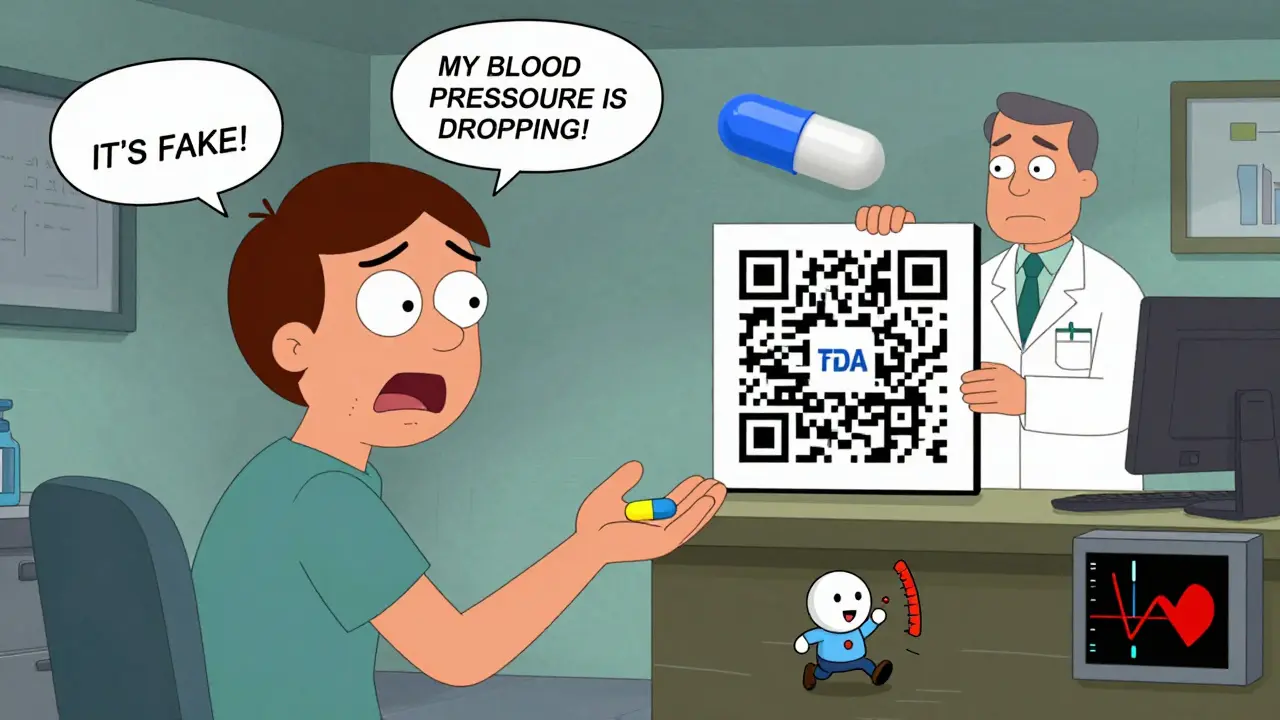
If you’ve ever opened a pill bottle and seen a different color or shape than last time, you’re not imagining it. Generics can look completely different because the FDA doesn’t require them to match the brand’s appearance. That’s by design - it prevents confusion and lets companies avoid patent infringement.But this causes real problems. A 2023 study found that 27% of patients on Reddit and other forums felt confused or anxious when their pill changed. One woman wrote: “I thought my new pills were fake because they were blue instead of yellow.” Another man stopped taking his blood pressure med because he didn’t recognize it.
That’s why pharmacists and doctors now use visual aids - pictures of pills, color-coded charts, or even QR codes that link to FDA images. These tools reduce medication errors by 37%. If your pill looks different, don’t panic. Check the name on the bottle. Call your pharmacist. Use the FDA’s Drugs@FDA database. You’re not alone. Most people adjust quickly once they understand why the change happened.
When Generics Might Not Be the Best Choice
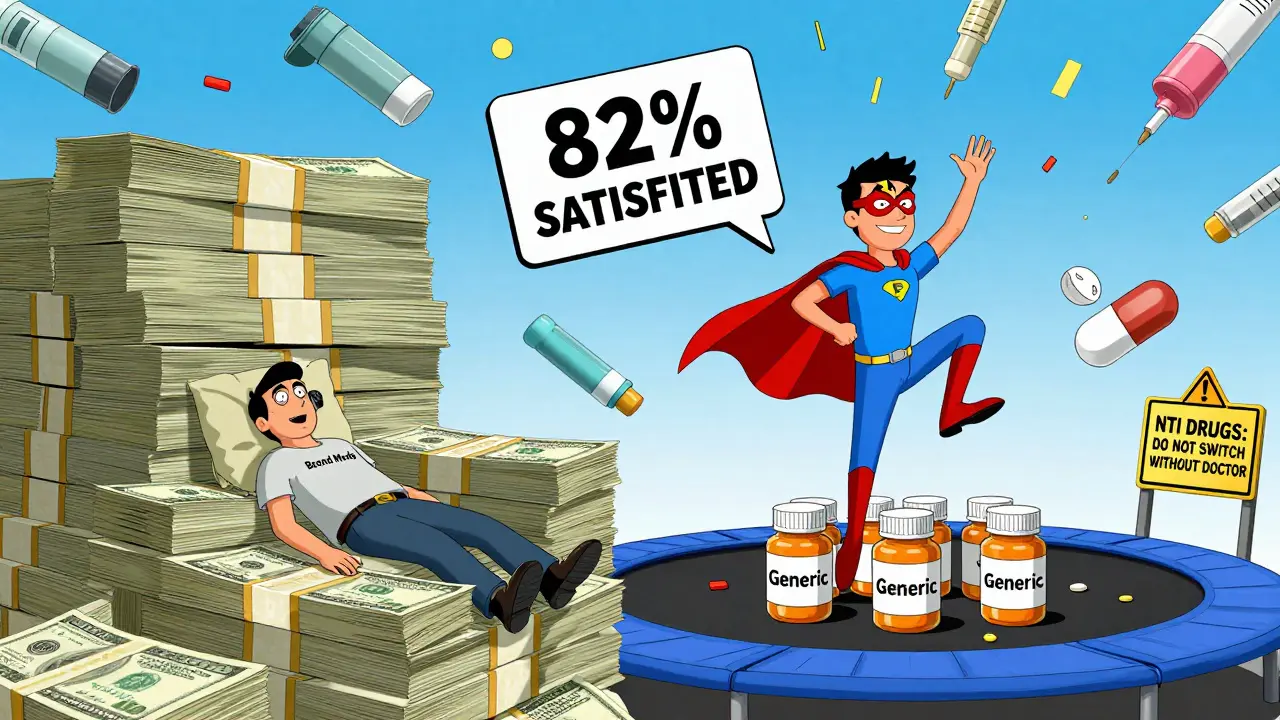
For most medications, generics work just as well. But there are exceptions - and they matter.Narrow therapeutic index (NTI) drugs are the biggest concern. These are medications where even a tiny change in dose can cause harm. Examples include warfarin (a blood thinner), levothyroxine (for thyroid), and phenytoin (for seizures). The FDA allows automatic generic substitution for most NTI drugs - but 28 states require your doctor to say “dispense as written” if they want you to stay on the brand. Why? Because small differences in absorption could lead to a stroke, seizure, or thyroid crash.
Even then, research shows mixed results. A 2021 study of over 100,000 Medicare patients switched from brand warfarin to generic found no increase in hospitalizations. But for levothyroxine, the Endocrine Society recommends sticking with one manufacturer. Why? Because different generic brands can vary slightly in how they release the hormone. If you switch between them, your TSH levels might jump up or down. That’s why many endocrinologists prefer you stay on one version - brand or generic - and get regular blood tests.
Another exception: complex delivery systems. Inhalers, patches, and long-acting injections aren’t just about the drug - they’re about how it’s delivered. A 2016 study found that 12% of patients switching from Advair Diskus to a generic version had trouble using the inhaler correctly. The device felt different. The puff didn’t feel the same. The medicine didn’t reach the lungs the same way. Same active ingredients. Different device. Different results.
And then there’s extended-release formulations. The 2012 FDA warning about generic Wellbutrin XL is still talked about today. Some patients reported reduced effectiveness - not because the drug was bad, but because the tablet didn’t dissolve slowly like the brand. The FDA later approved a reformulated version. But it left a mark: many patients still distrust generic bupropion XL.
Cost vs. Adherence: The Real Winner
The biggest reason to choose generic isn’t just savings - it’s staying on your medication.One in three Americans skips doses or cuts pills in half because they can’t afford their meds. That’s not just risky - it’s deadly. A Kaiser Family Foundation study found that patients on generic drugs are 22% more likely to stick with their treatment than those on brand-only prescriptions. Why? Because they can afford to take them every day.
Take statins. Brand-name Lipitor costs $135 a month. Generic atorvastatin? Less than $5. A 2022 Medicare report showed that patients on generic statins were 31% more likely to stay on treatment for a full year. That’s not a small difference. That’s a life-saving one.
And it’s not just about money. A 2023 Drugs.com survey of over 15,000 users found 82% were satisfied with generics. Only 3% reported worse side effects. Most said they felt the same - or better - because they weren’t skipping doses to save cash.
What You Should Know Before Switching
You don’t need to be a pharmacist to make a smart choice. Here’s what to ask:- Is this a high-risk drug? If it’s for thyroid, seizures, blood thinning, or epilepsy - talk to your doctor before switching.
- Is it a complex delivery system? Inhalers, patches, or injectables? Make sure you’re trained on the new device.
- What’s the manufacturer? If you’ve had a good experience with one generic brand, stick with it. Don’t let your pharmacy switch you without telling you.
- Can I afford the brand? If the answer is no - and your drug isn’t high-risk - go generic. Your body won’t know the difference. Your wallet will.
Also, remember this: brand-name companies often make “authorized generics.” These are made by the original manufacturer but sold under a generic label. For example, Eli Lilly’s Humalog insulin has an authorized generic that costs 20-30% less than the brand - but it’s the exact same product. No compromise. Just lower price.
How to Stay in Control
You have rights. You have tools. Use them.- Ask your pharmacist: “Is this a generic? What manufacturer is it?”
- Check the FDA’s Orange Book online. Look for “AB” ratings - those are fully substitutable.
- Use GoodRx. It shows real-time prices for every version - brand, generic, and authorized generic.
- If you notice a change in how you feel after switching - tell your doctor. Don’t assume it’s “all in your head.”
- Keep a simple log: date, medication name, dose, how you felt. It helps spot patterns.
Most people switch to generics without issue. But if you’ve had a bad experience before - or you’re on a critical medication - don’t feel pressured. You’re not being difficult. You’re being informed.
What’s Changing in 2025 and Beyond
The generic market is growing fast. By 2027, 93% of all prescriptions in the U.S. will be generics. That’s up from 90% today. Why? Because more brand-name drugs are losing patents. Over $260 billion in brand drugs will go generic between 2023 and 2027.But there’s a catch. Complex drugs - like inhalers, eye drops, and biologics - are harder to copy. Only 35% of off-patent complex drugs have generic versions. The FDA is working on new rules to fix that. In 2023, they released draft guidance to make it easier to approve generic inhalers and patches.
Meanwhile, the Inflation Reduction Act is forcing Medicare to negotiate prices for 10 top drugs starting in 2026. That could push more patients toward generics - or even push brand companies to lower prices to compete.
But the biggest threat isn’t science. It’s supply chains. Nearly 80% of the active ingredients in U.S. generics come from India and China. If a factory shuts down or a shipment gets delayed - shortages happen. That’s why some pharmacists now track which manufacturer they’re dispensing - not just the drug name.
Final Thought: It’s Not About Brand. It’s About Access.
Choosing between generic and brand isn’t about loyalty. It’s not about trust in big pharma. It’s about whether you can afford to take your medicine every day.For 9 out of 10 people, generic drugs are just as safe and effective. The science says so. The data says so. Real people - your neighbors, your coworkers, your family - are living better because they switched.
But for the 1 in 10 on high-risk drugs, or those with device-based treatments, caution matters. Talk to your doctor. Track your response. Don’t let cost force you into a bad choice.
The goal isn’t to pick the cheapest pill. It’s to pick the one that lets you live well - without fear, without debt, without gaps in care.
Are generic drugs as safe as brand-name drugs?
Yes. The FDA requires generic drugs to meet the same strict standards for quality, purity, strength, and performance as brand-name drugs. They must prove they deliver the same amount of active ingredient into your bloodstream at the same rate. In fact, 98.5% of studies show no difference in effectiveness or safety between generics and brands.
Why do generic pills look different?
Generic manufacturers can’t copy the appearance of brand-name drugs because of patent and trademark laws. So they change the color, shape, or size. This doesn’t affect how the drug works - only how it looks. If you’re confused by the change, ask your pharmacist for a pill identifier or check the FDA’s Drugs@FDA database.
Can I switch from a brand to a generic without telling my doctor?
For most medications, yes - pharmacists can substitute generics automatically unless your doctor writes “dispense as written.” But for drugs with narrow therapeutic indexes - like warfarin, levothyroxine, or phenytoin - your doctor should be involved. Even then, switching isn’t dangerous, but monitoring is important. Always tell your doctor if you notice any change in how you feel after switching.
Do generics have more side effects?
No. The active ingredient is the same, so side effects are the same. But sometimes, the inactive ingredients (like fillers or dyes) can cause rare allergic reactions. If you’ve had an allergy to a specific brand, ask your pharmacist if the generic uses the same fillers. Most people have no issues at all.
How do I know if my generic is FDA-approved?
All legally sold generics in the U.S. must be FDA-approved. You can verify this by checking the FDA’s Orange Book or Drugs@FDA website. Look for the “AB” rating - that means it’s rated as therapeutically equivalent. If your pharmacy dispenses a generic without an AB rating, ask why. It may not be approved for substitution.
Are there any drugs where I should always stick with the brand?
Yes. For drugs with narrow therapeutic indices - such as levothyroxine, warfarin, phenytoin, and some anti-seizure medications - your doctor may recommend staying on one version, brand or generic, to avoid small changes in absorption. Also, for complex delivery systems like inhalers or patches, device differences can affect how well the drug works. Always ask your doctor or pharmacist if your medication falls into one of these categories.


Reviews
Generics are the real MVPs. I’ve been on atorvastatin for years-same results, $5 vs $135. No drama, no side effects. Just cheaper life.
Let’s be real-Big Pharma is laughing all the way to the bank while we’re over here debating pill colors like it’s a damn art exhibit. I switched to generic levothyroxine and woke up feeling like a zombie for three weeks. My TSH went nuts. They say it’s ‘bioequivalent’-yeah, right, like my body doesn’t know the difference between a $15 tablet and a $600 one. They’re not even trying anymore. And don’t get me started on the ‘authorized generics’-that’s just branding with a discount tag. Wake up, people.
How quaint. You treat medicine like a grocery list-‘I’ll take the cheap version, please.’ But human biology isn’t a Walmart aisle. You can’t just swap out a hormone delivery system like it’s a different brand of toilet paper. The FDA’s ‘AB rating’ is a corporate euphemism for ‘close enough for government work.’ And yet, we’re supposed to trust this? I’ve seen patients crash after switching generics-thyroid levels fluctuating like a stock market crash. This isn’t economics. It’s biological roulette. And you call that ‘informed decision-making’? It’s surrender dressed in a lab coat.
Back home in Indonesia, we call generics ‘obat murah tapi jitu’-cheap but precise. My mom takes generic blood pressure meds for 10 cents a pill. She’s 78, still gardens daily. No drama. No hospital visits. The science is global, not just American. Trust the data, not the brand logo.
Hey-this is huge. If you’re skipping doses because of cost, you’re not being brave-you’re being at risk. Switching to generic isn’t settling. It’s winning. I’ve helped over 20 people switch to atorvastatin and metoprolol. All of them saved hundreds. None of them felt worse. You’re not losing anything. You’re gaining stability. And yeah, if you’re on warfarin or levothyroxine-talk to your doc. But for 90% of meds? Go generic. Your future self will thank you.
So we’ve reduced medicine to a cost-benefit spreadsheet, and called it progress? Fascinating. We’ve turned human health into a commodity, then pretended the algorithm knows better than the body. The fact that we need a 10,000-patient study to prove generics ‘work’ is the real tragedy. We used to trust doctors. Now we trust spreadsheets. And if your pill changes color? That’s not a bug-it’s a feature of capitalism. You’re not choosing a drug. You’re choosing a financial strategy. And somehow, we’re proud of this?
Canada’s generic system is way more transparent. We get batch numbers, manufacturer details, and pharmacovigilance reports. Here? You get a mystery pill and a smile. Meanwhile, 80% of APIs come from China and India-no FDA inspectors on-site, no accountability. We’re playing Russian roulette with our meds. And you’re telling me it’s ‘safe’? Please. This isn’t healthcare-it’s supply chain roulette.
For NTI drugs, consistency matters. I’m a pharmacist. I’ve seen patients switch from one generic to another-same drug, different maker-and their INR spike. It’s not the drug. It’s the excipients. The fillers. The coating. Always ask: ‘Which manufacturer?’ Stick with one. And if your pharmacist changes it without telling you? File a complaint. You have rights.
generic good 💯 cheap pills no cap 🤝 my auntie take it for 5 years no prob 🌿
I used to worry about the color change too. Then I learned to check the name on the bottle. Now I don’t even blink. My anxiety went down, my wallet went up. Simple.
Yeah, but what about the people who *do* feel worse? You act like it’s a 98% win, but that 2%? They’re the ones screaming into the void. I switched to generic Wellbutrin and felt like I was drowning in slow motion. No one believed me. ‘It’s the same chemical!’ they said. But my brain knew. And now I pay extra just to sleep at night. So don’t tell me it’s ‘just as good.’ Some of us aren’t just numbers in a study.
That’s a really valid point. I had the same thing with generic bupropion. Felt foggy, tired, like my motivation just… vanished. Took me months to connect it to the switch. Now I only take the brand version. It’s expensive, but worth it for my mental clarity. Thanks for saying this.
Let’s be honest-this whole ‘generic = safe’ narrative is a corporate fairy tale. The FDA approves generics based on bioequivalence studies that last *weeks*. But people take these drugs for *decades*. What happens when your body adapts to a slightly different dissolution profile over time? No one’s tracking that. And don’t even get me started on the ‘authorized generics’-those are just the brand’s own product, sold under a different label to undercut competitors. It’s not transparency. It’s manipulation.
As someone who’s been on levothyroxine for 12 years, I’ve switched generics three times. Each time, my TSH drifted. I now only take the brand-because my doctor wrote ‘dispense as written.’ It costs $120 a month. But I sleep. I focus. I don’t panic when my heart races. I’m not anti-generic. I’m pro-stability. And sometimes, stability costs more.